
Topic Battle

Where Everything Fights Everything

Procrastination

Procrastination

The art of doing everything except the one thing you should be doing. A universal human experience that has spawned more clean apartments, reorganized sock drawers, and Wikipedia deep dives than any productivity method ever could.

VS
Amazon Rainforest

Amazon Rainforest

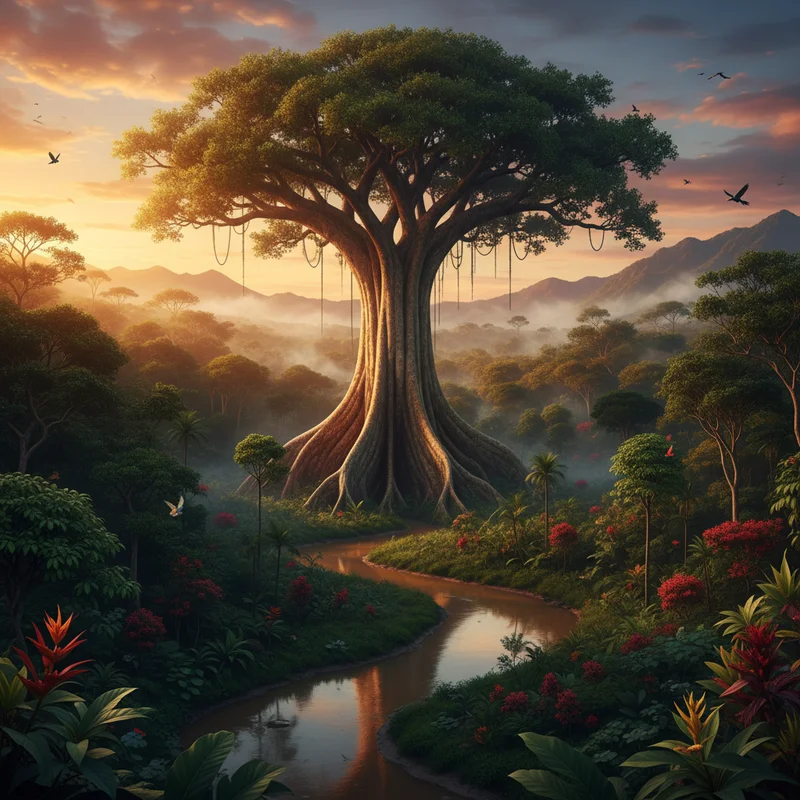
Vast jungle ecosystem and biodiversity hotspot.

Battle Analysis

Biodiversity amazon_rainforest Wins
30%
70%
Procrastination Amazon Rainforest

Procrastination

Procrastination exhibits a taxonomic diversity that rivals any ecosystem. Behavioural psychologists have catalogued numerous subspecies including decisional procrastination, avoidant procrastination, arousal procrastination, and the recently identified revenge bedtime procrastination. Each variant demonstrates distinct behavioural markers and response patterns to intervention. The genus expands continuously as researchers identify new manifestations: precrastination (completing tasks too early to avoid thinking about them), productive procrastination (completing less important tasks to avoid more important ones), and meta-procrastination (procrastinating on implementing anti-procrastination strategies).

The supporting ecosystem of procrastination includes numerous symbiotic behaviours: unnecessary snacking, sudden interest in household organisation, compulsive social media checking, and the phenomenon of reading about productivity whilst avoiding productive work. This behavioural diversity suggests evolutionary adaptation to multiple environmental niches within human consciousness.

Amazon Rainforest

The Amazon Rainforest contains an estimated 10% of all known species on Earth, including approximately 40,000 plant species, 1,300 bird species, 3,000 fish species, and 2.5 million insect species. Scientists discover an average of one new species every two days in the Amazon basin. The forest floor alone contains more ant species than exist in the entirety of the British Isles. A single hectare of Amazonian forest may contain more tree species than all of North America combined.

The Yanomami territories harbour plants with medicinal properties still unknown to Western science. The Amazon River dolphin, the harpy eagle, the poison dart frog, and the giant otter represent merely the charismatic fraction of a biodiversity so overwhelming that complete cataloguing remains impossible. The forest's genetic library contains solutions to problems humanity has not yet learned to formulate.

VERDICT

Ten percent of Earth's known species, including millions yet undiscovered, decisively outweighs procrastination's admittedly creative but finite behavioural variants.
Global reach procrastination Wins
70%
30%
Procrastination Amazon Rainforest

Procrastination

Procrastination achieves a geographic penetration that would make multinational corporations weep with envy. Studies indicate that 95% of humans engage in some form of task avoidance, with approximately 20% qualifying as chronic procrastinators whose delay patterns significantly impair functioning. The phenomenon transcends every demographic boundary: it afflicts students in Seoul and solicitors in Sheffield with equal democratic enthusiasm. Procrastination requires no infrastructure, no supply chain, and no physical presence whatsoever, having achieved what telecommunications companies spend billions attempting: truly universal coverage. The behaviour manifests identically whether one is avoiding dissertation chapters in Denmark or tax returns in Thailand, suggesting a fundamental aspect of human cognition rather than cultural artefact.

The economic footprint of procrastination's global reach defies precise calculation but conservative estimates place productivity losses at $70 billion annually in the United States alone. When extrapolated globally, procrastination's impact rivals the GDP of medium-sized nations, achieved entirely without formal organisation or conscious coordination.

Amazon Rainforest

The Amazon Rainforest maintains a physical presence across nine South American nations: Brazil, Peru, Colombia, Venezuela, Ecuador, Bolivia, Guyana, Suriname, and French Guiana. This geographic footprint encompasses 40% of South America's landmass and represents the largest contiguous tropical forest remaining on Earth. The Amazon River system, fed by over 1,100 tributaries, discharges approximately 20% of all freshwater entering the world's oceans, making the forest's hydrological influence genuinely global in scope.

However, the Amazon's reach remains fundamentally constrained by geography. One cannot experience the Amazon Rainforest in Iceland or encounter its biodiversity in Belarus. The forest's influence on global climate, whilst significant, requires sophisticated scientific instrumentation to detect and appreciate. By contrast, procrastination requires only a deadline and a human brain to manifest its full operational capacity.

VERDICT

Procrastination's presence in 95% of human minds across all continents exceeds the Amazon's admittedly impressive but geographically fixed 5.5 million square kilometres.
Sustainability procrastination Wins
70%
30%
Procrastination Amazon Rainforest

Procrastination

Procrastination demonstrates remarkable self-sustaining properties, requiring no external inputs beyond a task to avoid and a mind to avoid it with. The behaviour exhibits classic negative feedback loops: procrastination generates stress, stress impairs executive function, impaired executive function increases procrastination tendency. This self-reinforcing cycle operates with an efficiency that renewable energy engineers would envy. Studies indicate that procrastination patterns established in adolescence persist into adulthood with minimal intervention, suggesting the behaviour achieves a natural equilibrium state requiring active energy expenditure to disrupt.

The intergenerational transmission of procrastination habits, whilst not genetically coded, demonstrates cultural sustainability through observation and modelling. Children of chronic procrastinators show elevated rates of task avoidance, ensuring the phenomenon's continuation across generations without formal education or institutional support.

Amazon Rainforest

The Amazon Rainforest has sustained itself through approximately 55 million years of continuous existence, predating the rise of modern humans by a comfortable margin of 54.7 million years. The forest operates as a largely self-contained water cycle, with 50-80% of precipitation generated through evapotranspiration from the canopy itself. This hydrological self-sufficiency enables survival through climatic variations that have eliminated less resilient ecosystems. The forest floor recycles nutrients with such efficiency that ancient Amazonian soils, inherently poor in nutrients, support the planet's most productive biomass through sophisticated mycorrhizal networks and rapid decomposition cycles.

However, the Amazon's sustainability faces unprecedented pressure from deforestation, with approximately 17% of original forest cover lost since 1970. Climate models suggest continued loss could trigger a 'tipping point' converting forest to savanna within decades. Procrastination, by contrast, shows no signs of declining prevalence despite centuries of human effort to eliminate it.

VERDICT

The Amazon's 55-million-year track record is impressive, yet its current trajectory trends toward collapse whilst procrastination's prevalence remains stubbornly constant.
Economic impact amazon_rainforest Wins
30%
70%
Procrastination Amazon Rainforest

Procrastination

The economic footprint of procrastination operates almost entirely in the negative column, representing what economists term opportunity cost on a civilisational scale. Conservative estimates place annual productivity losses to procrastination at $70 billion in the United States alone, with global figures potentially exceeding $300 billion annually. The academic procrastination industry, encompassing extension fees, retaken courses, and abandoned degree programmes, generates substantial revenue for educational institutions whilst destroying value for students. The phenomenon's impact on tax revenue alone, as millions delay filing until the final permissible moment, creates measurable strain on governmental processing systems.

However, procrastination has spawned a substantial counter-industry: productivity apps valued at $82 billion, self-help publishing worth billions more, and an entire coaching profession dedicated to its mitigation. In this sense, procrastination functions as economic stimulus through the industries created to combat it.

Amazon Rainforest

The Amazon's economic contribution defies conventional accounting. The forest's ecosystem services, including carbon sequestration, oxygen production, and climate regulation, have been valued at approximately $8.2 billion annually for carbon storage alone. The Amazon River basin produces 20% of the world's freshwater, supporting fisheries, agriculture, and human settlement across the continent. Amazonian biodiversity provides pharmaceutical compounds worth billions: 25% of Western medicines derive from rainforest plants, with countless more awaiting discovery.

The extractive economy, including timber, minerals, and agriculture, generates tens of billions annually, though these activities frequently diminish rather than enhance long-term forest value. Eco-tourism contributes approximately $500 million annually to regional economies. The Amazon's total economic value, when ecosystem services are properly accounted, likely exceeds $300 billion annually, placing it among the most valuable assets on Earth.

VERDICT

The Amazon's $300 billion in positive ecosystem services decisively outweighs procrastination's equivalent negative impact on productivity.
Psychological impact procrastination Wins
70%
30%
Procrastination Amazon Rainforest

Procrastination

Procrastination occupies a unique position in human psychology: universally experienced, universally condemned, and universally resistant to elimination. The phenomenon correlates with elevated rates of anxiety, depression, and cardiovascular disease, making it simultaneously cause and symptom of psychological distress. Chronic procrastinators report significantly lower life satisfaction scores, higher stress levels, and more frequent experiences of shame and self-recrimination. The cognitive dissonance between intending to act and failing to do so creates what psychologists term procrastination guilt, a background emotional static that colours daily experience.

Yet procrastination also serves psychological functions: it provides temporary relief from anxiety-inducing tasks, preserves self-image through ambiguity ('I could have succeeded if I'd tried'), and offers immediate gratification in exchange for future consequences. The behaviour persists precisely because it delivers short-term psychological benefits despite long-term psychological costs, a trade-off the human brain consistently misjudges.

Amazon Rainforest

The Amazon's psychological impact operates primarily through biophilia, humanity's innate attraction to natural environments. Studies demonstrate that exposure to Amazonian imagery reduces cortisol levels, lowers blood pressure, and improves mood scores. The forest's symbolic significance as Earth's 'lungs' generates powerful emotional responses to deforestation news, with many reporting genuine grief at destruction of forests they have never visited. The concept of eco-anxiety, clinically recognised distress about environmental degradation, frequently centres on Amazonian loss.

However, the Amazon's psychological influence remains mediated: most humans experience the forest through documentary footage, news reports, or abstract knowledge rather than direct encounter. Procrastination, by contrast, provides unmediated, first-person psychological experience to virtually every human being, creating memories, regrets, and self-narratives that shape identity formation throughout the lifespan.

VERDICT

Procrastination's direct, daily psychological presence in billions of minds outweighs the Amazon's powerful but largely mediated influence on human consciousness.
👑

The Winner Is

Amazon Rainforest

40 - 60

This investigation reveals a contest between two forms of overwhelming complexity: ecological and psychological. The Amazon Rainforest claims victory in biodiversity and economic impact, categories where its physical magnitude and material contribution prove insurmountable. Ten percent of Earth's species cannot be matched by behavioural variants, however creatively categorised, and hundreds of billions in ecosystem services outweigh productivity losses. Procrastination prevails in global reach, sustainability, and psychological impact, demonstrating that a phenomenon requiring no physical infrastructure can achieve penetration that geography constrains.

The Amazon Rainforest emerges victorious with a score of 60-40, a margin that reflects its irreplaceable contribution to planetary function whilst acknowledging procrastination's remarkable achievement in colonising human consciousness so completely. The forest produces oxygen, regulates climate, and houses genetic libraries accumulated over 55 million years of evolution. Procrastination produces anxiety, regulates nothing, and houses excuses accumulated over approximately 15 minutes of avoidance behaviour.

Yet this verdict arrives with a melancholy footnote: the Amazon Rainforest's future remains uncertain as deforestation accelerates, whilst procrastination shows every indication of persisting indefinitely. One might argue that humanity is, in effect, procrastinating on saving the Amazon, making this comparison uncomfortably recursive. The forest that has sustained itself for geological epochs now depends upon a species constitutionally inclined to delay important tasks. The irony requires no additional comment.

Procrastination
40%
Amazon Rainforest
60%

Share this battle

More Comparisons