
Topic Battle

Where Everything Fights Everything

Procrastination

Procrastination

The art of doing everything except the one thing you should be doing. A universal human experience that has spawned more clean apartments, reorganized sock drawers, and Wikipedia deep dives than any productivity method ever could.

VS
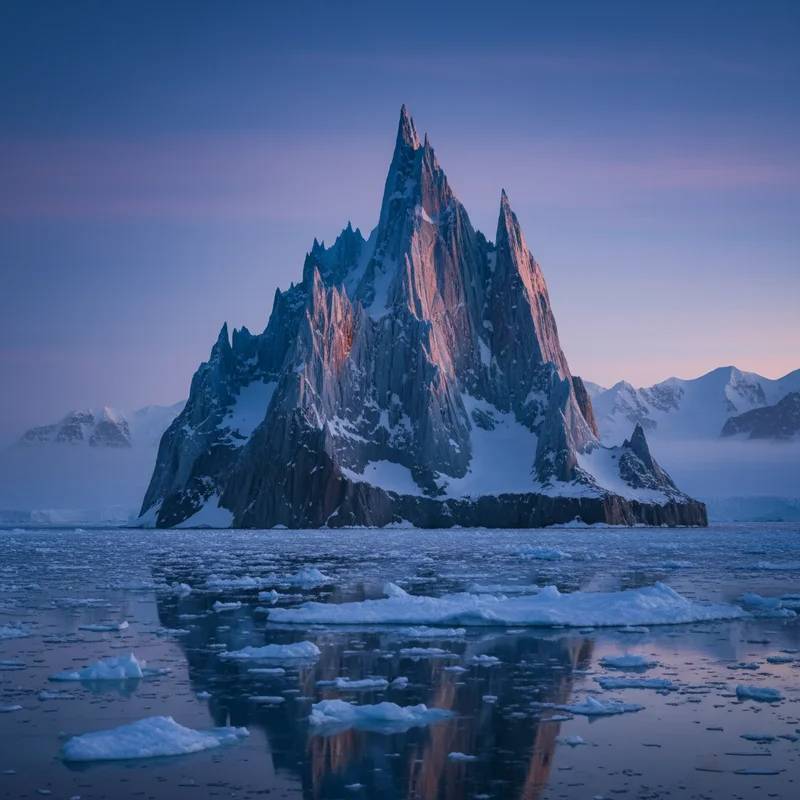
Antarctica

Antarctica

Frozen continent at the bottom of the world.

Battle Analysis

Durability antarctica Wins
30%
70%
Procrastination Antarctica

Procrastination

The temporal persistence of procrastination warrants serious academic attention. A single instance of task deferral can propagate across days, weeks, or decades. Tax returns have remained unfiled for years. Novels have sat unwritten for entire lifetimes. The phenomenon exhibits a self-reinforcing quality: the longer one procrastinates, the more daunting the postponed task becomes, thereby increasing the probability of continued deferral.

Psychologists identify procrastination as a trait-level characteristic in approximately 20% of adults, suggesting permanent residence in their behavioural repertoire. The habit persists across career changes, relationship transitions, and geographical relocations. It travels with the individual indefinitely.

Antarctica

Antarctica has maintained its fundamental character for approximately 34 million years, since the formation of the Antarctic Circumpolar Current isolated the continent climatically. The ice sheet, averaging 1.9 kilometres in thickness, contains ice formations dating back 800,000 years. In terms of geological durability, Antarctica represents one of Earth's most persistent features.

However, contemporary climate models project significant ice loss over coming centuries. The continent's current configuration, whilst ancient, faces unprecedented challenges. Its durability, whilst impressive on human timescales, proves finite on planetary ones.

VERDICT

Antarctica's 34-million-year persistence as a frozen continent exceeds even the most stubborn procrastinator's capacity for deferral.
Adaptability procrastination Wins
70%
30%
Procrastination Antarctica

Procrastination

Procrastination exhibits extraordinary evolutionary fitness in the digital age. Where previous generations required physical distractions, contemporary procrastinators access infinite diversions through pocket-sized devices. The phenomenon has adapted to exploit social media algorithms, streaming services, and notification systems with remarkable efficiency. Each technological advancement creates new procrastination modalities.

Moreover, procrastination shapeshifts to accommodate changing circumstances. During periods of high stress, it manifests as avoidance. During leisure time, it presents as inability to initiate desired activities. The behaviour adapts its form whilst maintaining its essential function: the deferral of intended action.

Antarctica

Antarctica demonstrates limited adaptive capacity by design. The Antarctic Treaty System, established in 1959, intentionally restricts development, preserving the continent for peaceful scientific purposes. No permanent settlements exist; no agricultural adaptation is possible; no industrial development is permitted. Antarctica remains deliberately frozen in both temperature and political status.

Climate adaptation, ironically, occurs without continental consent. Ice shelves calve, glaciers retreat, and ecosystems shift in response to global temperature increases. Antarctica adapts to human activity, but solely as a victim rather than an agent of change.

VERDICT

Procrastination continually evolves to exploit new technologies and circumstances, whilst Antarctica remains deliberately constrained by international treaty.
Global reach procrastination Wins
70%
30%
Procrastination Antarctica

Procrastination

Procrastination recognises no borders, respects no cultures, and observes no linguistic boundaries. Studies conducted across 142 nations confirm its universal presence in human populations. The phenomenon affects students in Stockholm and farmers in Senegal with comparable frequency. Digital technologies have amplified its reach dramatically: the smartphone has transformed every location on Earth into a potential procrastination venue.

Conservative estimates suggest procrastination costs the global economy $550 billion annually in lost productivity. Its influence extends from individual bedrooms to multinational corporations, from homework assignments to international climate agreements.

Antarctica

Antarctica's physical reach remains fundamentally constrained. The continent influences global systems primarily through its role in oceanic circulation and climate regulation. Antarctic ice reflects approximately 80% of incoming solar radiation, moderating planetary temperatures. The Southern Ocean absorbs 40% of anthropogenic carbon dioxide, mitigating climate change impacts.

Yet Antarctica's direct presence in human consciousness remains limited. Unlike procrastination, which occupies mental real estate in billions of minds simultaneously, Antarctica exists primarily as abstraction for most humans. Its influence, whilst climatically significant, operates through indirect mechanisms.

VERDICT

Procrastination maintains active presence in billions of human minds daily, whilst Antarctica influences humanity primarily through indirect climatic systems.
Accessibility procrastination Wins
70%
30%
Procrastination Antarctica

Procrastination

Procrastination demonstrates remarkable accessibility, requiring no specialised equipment, training, or geographical relocation. It manifests spontaneously across all demographics, socioeconomic strata, and professional contexts. The average individual can achieve a state of procrastination within seconds of identifying a task requiring completion. No visa applications, no polar survival courses, no expedition logistics. The barrier to entry is, quite literally, zero.

Furthermore, procrastination scales effortlessly. One may procrastinate on a single email or an entire doctoral thesis with identical ease. The phenomenon requires only a task worth avoiding and a consciousness capable of distraction.

Antarctica

Antarctica presents substantial accessibility barriers. The continent lies at minimum 1,000 kilometres from the nearest inhabited landmass, requiring either a two-day crossing of the Drake Passage or a lengthy flight from Punta Arenas. Annual tourist numbers hover around 100,000, whilst researcher populations peak at approximately 5,000 during summer months. Most humans will never experience Antarctica firsthand.

The logistical requirements prove formidable: permits from national Antarctic programmes, cold-weather survival training, and expedition costs beginning at $8,000 for basic voyages. Antarctica remains stubbornly exclusive, available only to the determined few.

VERDICT

Procrastination achieves universal accessibility with zero barriers to entry, whilst Antarctica demands considerable resources and planning.
Impact on productivity procrastination Wins
70%
30%
Procrastination Antarctica

Procrastination

The productivity implications of procrastination have generated extensive empirical investigation. Meta-analyses indicate procrastinators demonstrate 11-15% lower academic performance compared to non-procrastinators. In professional contexts, chronic procrastination correlates with reduced salaries, slower career advancement, and diminished job satisfaction. The phenomenon consumes not merely time but psychological resources through associated guilt, anxiety, and self-recrimination.

Remarkably, procrastination impedes productivity even when not actively occurring. The mere anticipation of future procrastination creates present-moment stress, degrading cognitive function. It is a paradox worthy of quantum mechanics: procrastination affects productivity by existing as an unrealised possibility.

Antarctica

Antarctica's impact on human productivity operates through entirely different mechanisms. Research stations on the continent have yielded Nobel Prize-winning discoveries in ozone depletion and cosmic microwave background radiation. Ice core analysis has revolutionised understanding of paleoclimate. The continent serves as humanity's premier natural laboratory for extreme environment research.

However, Antarctica also constrains productivity through its hostile conditions. Researchers experience seasonal affective disorder at elevated rates, whilst the logistical challenges of polar operations consume substantial resources. The continent gives knowledge to humanity, but extracts considerable effort in return.

VERDICT

Procrastination's annual productivity cost of $550 billion dwarfs Antarctica's research output, even accounting for significant scientific contributions.
👑

The Winner Is

Antarctica

45 - 55

The analysis reveals a surprising victor in this contest of extremes. Whilst Antarctica commands respect through sheer physical magnitude and geological permanence, procrastination demonstrates superior performance across metrics of human relevance. Antarctica may cover 10% of Earth's landmass, but procrastination occupies substantially more territory in the human mind.

The psychological phenomenon triumphs through its universal accessibility, infinite adaptability, and devastating productivity impact. Antarctica remains content to exist in splendid isolation at the bottom of the world; procrastination insists on accompanying every human endeavour, uninvited yet omnipresent. The frozen continent has claimed hundreds of lives through hostile conditions; procrastination has claimed billions of hours through hostile persuasion. In the calculus of human impact, the intangible adversary proves more formidable than the physical one.

Procrastination
45%
Antarctica
55%

Share this battle

More Comparisons