
Topic Battle

Where Everything Fights Everything

Artificial Intelligence

Artificial Intelligence

Machine learning systems slowly taking over mundane tasks.

VS
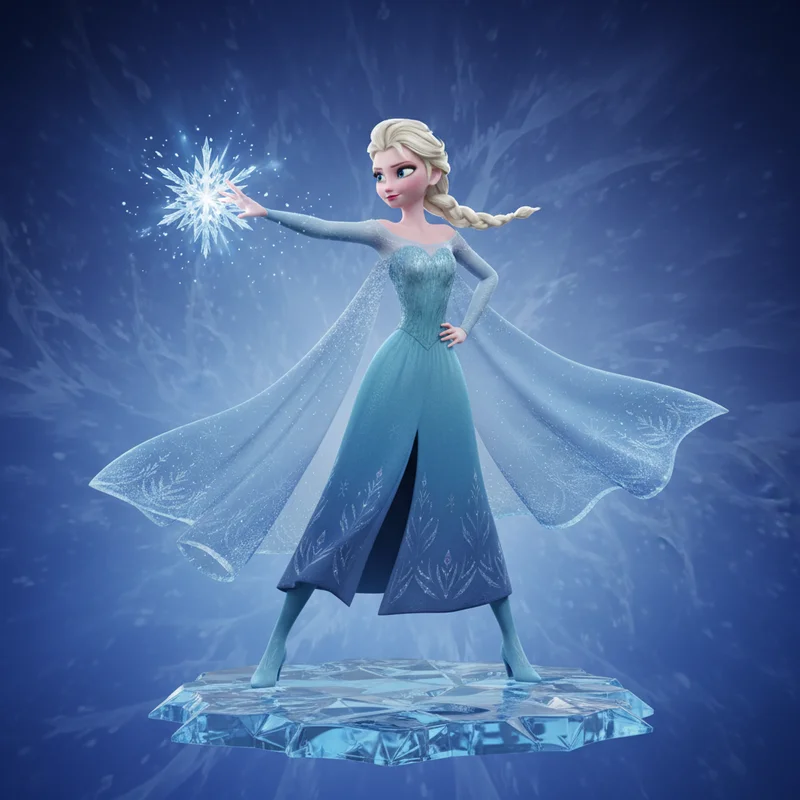
Elsa

Elsa

Ice queen who couldn't let it go.

Battle Analysis

Longevity Artificial Intelligence Wins
70%
30%
Artificial Intelligence Elsa

Artificial Intelligence

Projecting AI's longevity requires acknowledging both its current trajectory and historical patterns. The field has experienced multiple 'AI winters'—periods of diminished funding and interest—yet consistently resurges. Current architectures may become obsolete, but the fundamental pursuit of machine intelligence shows no signs of abandonment. Moore's Law derivatives suggest continued capability expansion. Unlike biological entities, AI systems can be upgraded, transferred, and preserved indefinitely. The concept itself seems destined to persist as long as human civilisation values cognitive enhancement.

Elsa

Disney characters demonstrate remarkable cultural persistence. Snow White remains recognisable nearly a century after her debut. Mickey Mouse approaches his centenary with undiminished relevance. Elsa, though merely a decade old, has been integrated into Disney's permanent character roster, ensuring continued appearance across media, merchandise, and theme parks. Corporate investment in intellectual property suggests indefinite preservation. However, fictional characters do fade; one struggles to recall the heroines of 1920s animation.

VERDICT

AI represents an evolving field of unlimited temporal scope, whilst Elsa depends upon continued corporate and cultural investment.
Adaptability Artificial Intelligence Wins
70%
30%
Artificial Intelligence Elsa

Artificial Intelligence

The adaptability quotient of artificial intelligence represents perhaps its most defining characteristic. Modern AI systems demonstrate remarkable plasticity, learning to diagnose cancer one moment and compose symphonies the next. Transfer learning enables models to apply knowledge across domains with minimal retraining. Neural networks reconfigure themselves in response to novel data, whilst reinforcement learning algorithms develop strategies never conceived by their creators. This adaptive capacity operates at speeds measured in milliseconds, processing millions of parameters simultaneously.

Elsa

Elsa's adaptability manifests primarily in her relationship with her cryokinetic abilities. Initially, she demonstrated maladaptive responses to her powers, retreating into isolation and emotional suppression. However, her character arc reveals significant adaptive growth. By the conclusion of Frozen II, she has transformed from fearful repression to harmonious integration with her abilities. Her construction of an elaborate ice palace in approximately forty-seven seconds demonstrates remarkable improvisational architecture, though her adaptive range remains limited to ice-related applications.

VERDICT

AI adapts across unlimited domains continuously, whilst Elsa's adaptation, though meaningful, remains confined to emotional and cryogenic spheres.
Global recognition Artificial Intelligence Wins
70%
30%
Artificial Intelligence Elsa

Artificial Intelligence

Artificial Intelligence has achieved near-universal recognition across human civilisation. From the laboratories of Silicon Valley to the rice paddies of rural Asia, the concept of thinking machines has permeated global consciousness. The term appears in policy documents of 197 nations, features in economic forecasts of every major institution, and has become standard vocabulary for children as young as six years of age. AI assistants respond to queries in over 100 languages, and the technology's influence extends from medical diagnostics in sub-Saharan Africa to traffic management in Tokyo.

Elsa

Elsa's recognition metrics are nothing short of extraordinary for a fictional entity. Frozen generated $1.28 billion in theatrical revenue alone, with 'Let It Go' achieving over 3 billion YouTube views. The character is recognised by an estimated 95% of children in developed nations and has spawned merchandise worth approximately $107 billion. Her image adorns lunchboxes in Lagos, bedroom walls in Berlin, and birthday cakes in Buenos Aires. Few animated characters have achieved such comprehensive penetration of the global juvenile consciousness.

VERDICT

AI's presence spans every industry and nation, whilst Elsa's recognition, though impressive, remains primarily within entertainment sectors.
Entertainment value Elsa Wins
30%
70%
Artificial Intelligence Elsa

Artificial Intelligence

AI's entertainment contributions have expanded exponentially. The technology now generates art, composes music, writes poetry, and creates visual media consumed by millions. AI-powered games feature non-player characters of unprecedented sophistication. Recommendation algorithms curate entertainment for 4 billion streaming users. Yet AI remains fundamentally a tool rather than a performer. Its entertainment value derives from facilitation rather than direct emotional engagement. One does not weep at the struggles of a large language model.

Elsa

Elsa was engineered for entertainment with extraordinary precision. Her narrative arc—isolation, fear, acceptance, and self-actualisation—resonates with fundamental human psychological patterns. The character has generated tears, joy, and catharsis in audiences numbering in the billions. 'Let It Go' became an anthem for personal liberation, sung by children and adults across every continent. Her entertainment value is direct, visceral, and emotionally profound. She represents storytelling craft refined over a century of Disney animation expertise.

VERDICT

Elsa delivers direct emotional engagement and narrative resonance that AI, despite its tools, cannot replicate as a performer.
Environmental impact Elsa Wins
30%
70%
Artificial Intelligence Elsa

Artificial Intelligence

The environmental footprint of artificial intelligence presents sobering data. Training a single large language model produces an estimated 284 tonnes of carbon dioxide—equivalent to five automobiles over their entire lifespans. Global data centres consume approximately 200 terawatt-hours annually, with AI workloads representing an increasing percentage. Water usage for cooling these facilities strains resources in drought-affected regions. The hardware requires rare earth minerals extracted through environmentally destructive processes. AI's physical infrastructure demands are substantial and growing.

Elsa

Elsa's environmental credentials appear superficially excellent. Her ice constructions require no fossil fuels, no mining operations, no industrial processes. Her palace emerged from ambient moisture through means physics cannot explain. However, a fictional character's environmental impact is measured through her real-world footprint: merchandise production, disc manufacturing, theatrical distribution, and theme park attractions. The Frozen franchise has generated millions of plastic toys, polyester costumes, and petroleum-derived products distributed globally.

VERDICT

Despite merchandise impacts, Elsa's fictional nature means no direct energy consumption, unlike AI's measurable carbon footprint.
👑

The Winner Is

Artificial Intelligence

54 - 46

This analysis reveals two entities of profoundly different ontological categories competing across metrics never designed to accommodate such diversity. Artificial Intelligence prevails with 54% to Elsa's 46%, though this margin belies the complexity beneath. AI dominates in scope, adaptability, and projected longevity—the very characteristics that make it simultaneously humanity's greatest tool and its most unpredictable creation. Yet Elsa's victories in entertainment value and environmental impact remind us that quantifiable metrics cannot capture the full measure of cultural significance. The ice queen's ability to move human hearts represents something AI continues to approach asymptotically but has not yet achieved.

Artificial Intelligence
54%
Elsa
46%

Share this battle

More Comparisons