
Where Everything Fights Everything

Artificial Intelligence vs Pikachu

😜 Just for fun — a tongue-in-cheek, gloriously unscientific showdown.

Artificial Intelligence

Artificial Intelligence

Machine learning systems slowly taking over mundane tasks.

VS
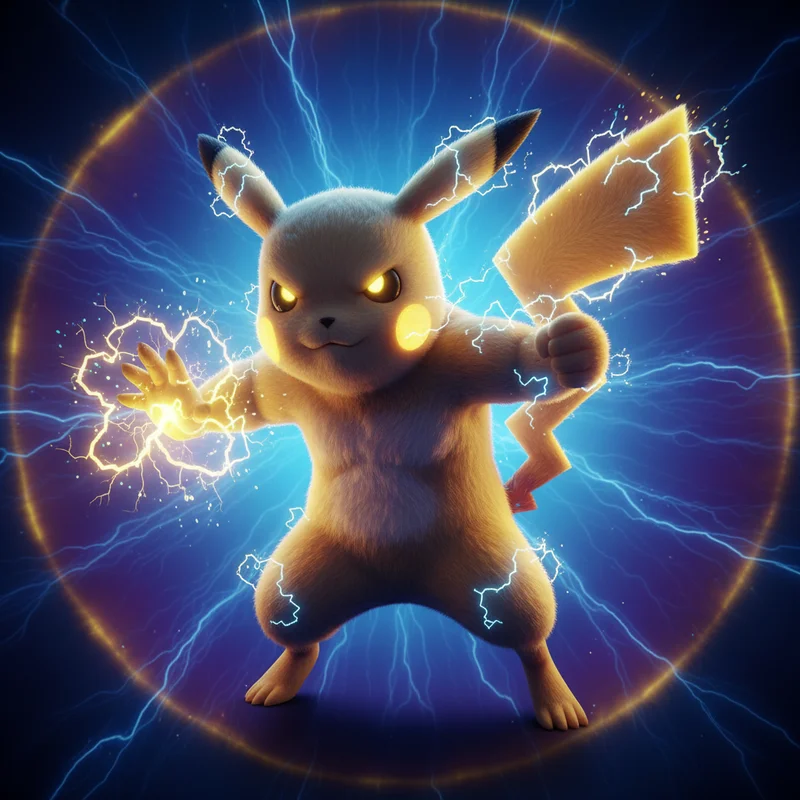
Pikachu

Pikachu

Electric mouse Pokemon and franchise mascot.

Battle Analysis

0 Pikachu Wins
🏆 Pikachu takes this round

Artificial Intelligence

Artificial Intelligence has achieved remarkable penetration into public consciousness over the past decade, with surveys indicating that approximately 85% of the global population now possesses some awareness of the concept. However, this recognition remains stratified by age, education, and technological access. In rural communities across developing nations, the term still carries an air of science fiction rather than present reality. The technology's abstract nature presents an inherent limitation: one cannot point to artificial intelligence in the manner one might indicate a chair or indeed a small yellow creature.

Pikachu

Pikachu transcends the ordinary boundaries of brand recognition to occupy a position of near-universal awareness. Studies conducted across multiple continents reveal that the character achieves recognition rates exceeding 90% even among populations with limited exposure to Japanese media. The creature's distinctive silhouette, consisting of pointed ears, rosy cheeks, and lightning-bolt tail, has been systematically optimised through decades of design refinement. Pikachu serves as the mascot not merely for a franchise but for an entire nation's cultural export strategy.

VERDICT

The electric mouse achieves recognition in demographics where artificial intelligence remains an unfamiliar abstraction.
1 Pikachu Wins
🏆 Pikachu takes this round

Artificial Intelligence

The capacity for adaptation represents perhaps artificial intelligence's most defining characteristic. Neural networks demonstrate an almost unsettling ability to modify their behaviour based upon exposure to new data, effectively rewriting their own operational parameters without human intervention. From language translation to protein folding prediction, from artistic generation to strategic gameplay, artificial intelligence has colonised domains once considered exclusively human. This plasticity, however, comes with significant infrastructure requirements: computational resources, electrical power, and cooling systems.

Pikachu

Pikachu's adaptability manifests across multiple dimensions of its existence. Within the canonical Pokemon universe, the species demonstrates capacity to learn diverse combat techniques, form bonds with various trainer personalities, and survive in environments ranging from urban centres to volcanic regions. More remarkably, the character has adapted to serve commercial, educational, and diplomatic functions with equal facility. Pikachu has appeared on commercial aircraft, in educational materials, and as a cultural ambassador between nations, suggesting an entity capable of occupying almost any conceptual space humanity requires.

VERDICT

The character demonstrates adaptability across commercial, diplomatic, and narrative contexts that transcend computational limitations.
2 Pikachu Wins
🏆 Pikachu takes this round

Artificial Intelligence

Contemporary artificial intelligence systems present a troubling energy profile. Training a single large language model consumes electrical power equivalent to the lifetime carbon footprint of several automobiles. Data centres housing AI infrastructure now represent approximately 1.5% of global electricity consumption, a figure projected to increase substantially. While researchers pursue more efficient architectures, the fundamental thermodynamic costs of computation remain substantial. Each query, each generated image, each automated decision carries an invisible but measurable environmental burden.

Pikachu

As an electric-type Pokemon, Pikachu occupies an enviable position in matters of energy. The creature generates electrical discharge through specialised pouches located in its cheeks, producing current through biological processes that remain poorly understood by human science. This endogenous electricity production requires no external power source, no fossil fuels, no nuclear facilities. Furthermore, canonical sources indicate that Pikachu populations can collectively generate sufficient power to address municipal electrical needs, suggesting net positive energy contribution to any system they inhabit.

VERDICT

Biological electricity generation presents superior efficiency compared to the substantial power demands of modern AI systems.
3 Artificial Intelligence Wins
🏆 Artificial Intelligence takes this round

Artificial Intelligence

Artificial intelligence has cultivated a formidable presence in the collective human imagination. Public figures, researchers, and philosophers have articulated concerns ranging from employment displacement to existential risk. The technology's capacity to generate convincing human-like text and imagery has produced genuine unease regarding questions of authenticity and truth. Survey data reveals that substantial portions of the population harbour significant anxieties regarding AI development. This intimidation, whilst real, remains abstract in nature, predicated upon potential futures rather than immediate threats.

Pikachu

Pikachu's capacity for intimidation has been systematically documented across more than one thousand episodes of animated programming. The creature's electrical discharge, measured at approximately 100,000 volts in canonical sources, presents genuine physiological danger to organic targets. However, the character's design specifically mitigates intimidation through rounded features, large eyes, and diminutive stature. This represents a deliberate commercial strategy: maximum combat capability wrapped in minimal threatening appearance. The result is a creature that fails to intimidate precisely because it was engineered not to.

VERDICT

Existential concerns regarding AI development generate psychological impact that a cute mascot character cannot replicate.
4 Pikachu Wins
🏆 Pikachu takes this round

Artificial Intelligence

The question of artificial intelligence's longevity presents fascinating complexities. Individual AI systems possess theoretical immortality, their operational parameters preserved indefinitely in digital storage. Yet the field itself undergoes such rapid evolution that systems considered cutting-edge merely five years prior now appear antiquated. The concept of artificial intelligence, dating to the Dartmouth Conference of 1956, has demonstrated remarkable persistence. However, specific implementations prove ephemeral, their relevance measured in months rather than decades.

Pikachu

Pikachu emerged in 1996 and has maintained cultural prominence for approaching three decades without meaningful diminishment. The character has survived multiple technological platform transitions, economic recessions, and generational shifts in entertainment preferences. Children who encountered Pikachu in the original media releases now introduce the character to their own offspring, establishing multigenerational cultural transmission. The franchise's total revenue exceeds 100 billion dollars, suggesting commercial longevity that may extend indefinitely into the future.

VERDICT

Nearly three decades of sustained cultural relevance demonstrates proven longevity that AI systems have not yet matched.
👑

The Winner Is

Pikachu

Takes 4 of 5 rounds

The analysis reveals an unexpected result: Pikachu emerges victorious with 53% to artificial intelligence's 47%. This outcome reflects not technological limitation but rather the profound advantages of deliberate design for human emotional resonance. Artificial intelligence, for all its transformative potential, remains fundamentally a tool, a means to ends defined by human operators. Pikachu, by contrast, exists as an end in itself, a carefully constructed entity optimised precisely for the metrics by which we have measured these competitors. The electric mouse succeeds because it was built to succeed at being known, being loved, being remembered.

Share this battle

More Comparisons