Topic Battle

Where Everything Fights Everything

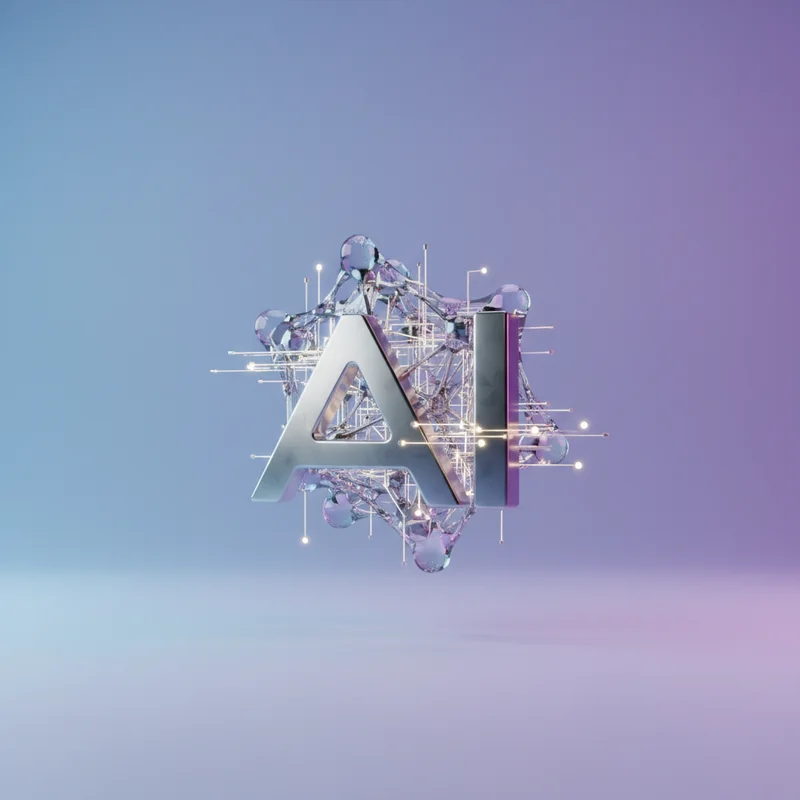
Artificial Intelligence

Artificial Intelligence

Machine learning systems slowly taking over mundane tasks.

VS
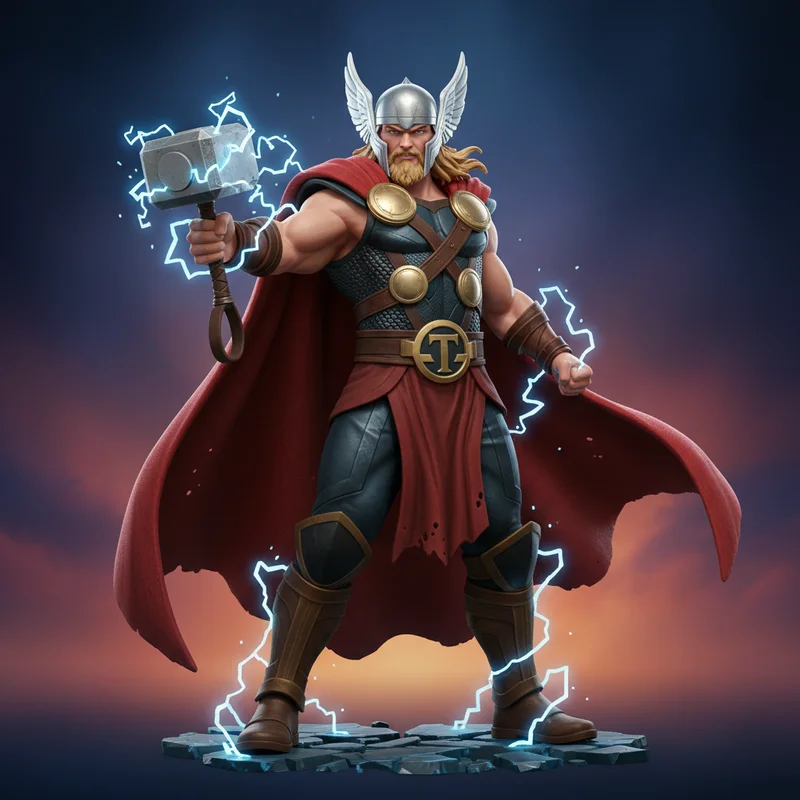
Thor

Thor

Norse god of thunder wielding Mjolnir.

Battle Analysis

Strength Thor Wins
30%
70%
Artificial Intelligence Thor

Artificial Intelligence

The strength of Artificial Intelligence manifests not through physical force but through computational capacity and influence. A single well-trained model can process more information in seconds than a human could manage in several lifetimes. This intellectual musculature has reshaped industries, displaced professions, and altered the trajectory of scientific research.

Yet this strength remains derivative, dependent upon electrical infrastructure and human-designed hardware. Without servers, AI possesses precisely zero strength.

Thor

Thor's strength exists in the most traditional sense imaginable: the capacity to lift, throw, and destroy with physical force. According to mythological accounts, he has wrestled with giants, slain the Midgard Serpent, and wielded a hammer of sufficient density that no unworthy being could lift it.

This is strength measured in tonnes and devastation, the sort that leaves craters where cities once stood. It requires no electrical grid, no cooling systems, no software updates.

VERDICT

Physical strength capable of cosmic-level destruction definitively outranks computational processing power.
Reliability Thor Wins
30%
70%
Artificial Intelligence Thor

Artificial Intelligence

Reliability in artificial systems presents a complicated picture. When functioning within specified parameters, AI demonstrates remarkable consistency. The same input produces the same output with mechanical precision. Recommendation algorithms never tire, never become distracted, never request holiday leave.

Yet hallucinations, bias propagation, and catastrophic failures in edge cases remind us that reliability comes with asterisks. A single corrupted training example can produce systemically flawed outputs.

Thor

Thor's reliability proves paradoxically both stronger and weaker than one might expect from divinity. He has defended the Nine Realms across millennia, demonstrating commitment that transcends mortal attention spans. When cosmic threats emerge, his appearance can be reasonably anticipated.

Yet his emotional volatility introduces uncertainty. Pride, grief, and fraternal rivalry have historically compromised his judgement at inopportune moments.

VERDICT

Millennia of consistent realm defence, despite occasional lapses, outweighs AI's systemic vulnerability to failure modes.
Adaptability Artificial Intelligence Wins
70%
30%
Artificial Intelligence Thor

Artificial Intelligence

Adaptability represents perhaps AI's most celebrated characteristic. Through machine learning and neural network architectures, artificial systems can adjust to novel situations, learn from mistakes, and optimise performance across domains their creators never anticipated.

A model trained for chess can be retrained for Go. Systems designed for language can pivot to image recognition. This plasticity of purpose distinguishes AI from virtually every tool humanity has previously constructed.

Thor

Thor's adaptability, whilst less celebrated, proves nonetheless substantial. The god has navigated political intrigues in Asgard, diplomatic missions to rival realms, and existential threats from beings of cosmic significance. He has adapted from warrior prince to king to Avenger with reasonable facility.

However, his fundamental approach to problem-solving—the application of thunder and physical force—demonstrates certain limitations in adaptive range.

VERDICT

AI's capacity for complete domain transfer and continuous learning exceeds Thor's primarily combat-oriented adaptation.
Energy efficiency Thor Wins
30%
70%
Artificial Intelligence Thor

Artificial Intelligence

The energy demands of modern AI systems have become a matter of considerable environmental concern. Training a single large language model can consume electricity equivalent to the lifetime emissions of several automobiles. Data centres require cooling systems that would shame tropical resorts.

Inference operations, whilst less demanding, still draw power continuously across millions of simultaneous queries. The collective carbon footprint grows with each capability enhancement.

Thor

Thor operates on what one might term divine energy, a power source whose environmental impact remains difficult to quantify through conventional metrics. He draws upon Asgardian life force, cosmic storms, and the mystical properties of uru-forged weaponry.

His lightning generation appears to violate conservation laws as mortals understand them, suggesting an efficiency rating either infinite or beyond measurement.

VERDICT

Divine energy sources with apparent perpetual motion properties exceed the carbon-intensive demands of AI infrastructure.
Global recognition Artificial Intelligence Wins
70%
30%
Artificial Intelligence Thor

Artificial Intelligence

Artificial Intelligence has achieved a peculiar form of omnipresence in contemporary discourse. From academic journals to tabloid headlines, the term permeates virtually every sector of human endeavour. The technology powers recommendation algorithms, drives autonomous vehicles, generates art, and has prompted existential debates in parliamentary chambers worldwide.

Its recognition transcends linguistic barriers, with concepts of machine learning now familiar to schoolchildren and pensioners alike. Corporate valuations hinge upon AI capabilities, and nations have restructured educational priorities accordingly.

Thor

Thor's recognition spans approximately twelve centuries of continuous worship, literature, and cultural reference. From the Poetic Edda to Marvel's cinematic universe, the thunder god has maintained remarkable brand consistency. Thursday itself bears his name across Germanic languages.

The character's modern resurgence through superhero media has introduced him to demographics previously unfamiliar with Norse mythology. Children who cannot locate Scandinavia on a map nonetheless recognise the hammer-wielding deity.

VERDICT

AI's integration into daily technology ensures continuous, inescapable exposure across all demographics and industries.
👑

The Winner Is

Artificial Intelligence

54 - 46

The confrontation between Artificial Intelligence and Thor illuminates fundamental questions about the nature of power in our age. Thor offers the visceral satisfaction of physical dominance—the hammer, the lightning, the divine mandate to smite that which requires smiting. Yet this power, however spectacular, addresses a narrower range of challenges than contemporary existence presents.

Artificial Intelligence, by contrast, has insinuated itself into the fabric of daily existence. It shapes what we read, whom we meet, what we purchase, and increasingly, what we believe. Its influence operates not through thunder but through algorithmic nudges, accumulating impact through repetition rather than dramatic intervention.

The margin proves narrow, for Thor's mythological significance and physical capabilities demand respect. Yet in the ledger of practical influence, AI's pervasive integration into human systems secures victory by the slimmest of margins.

Artificial Intelligence
54%
Thor
46%

Share this battle

More Comparisons