
Where Everything Fights Everything

Astronaut vs Procrastination

😜 Just for fun — a tongue-in-cheek, gloriously unscientific showdown.

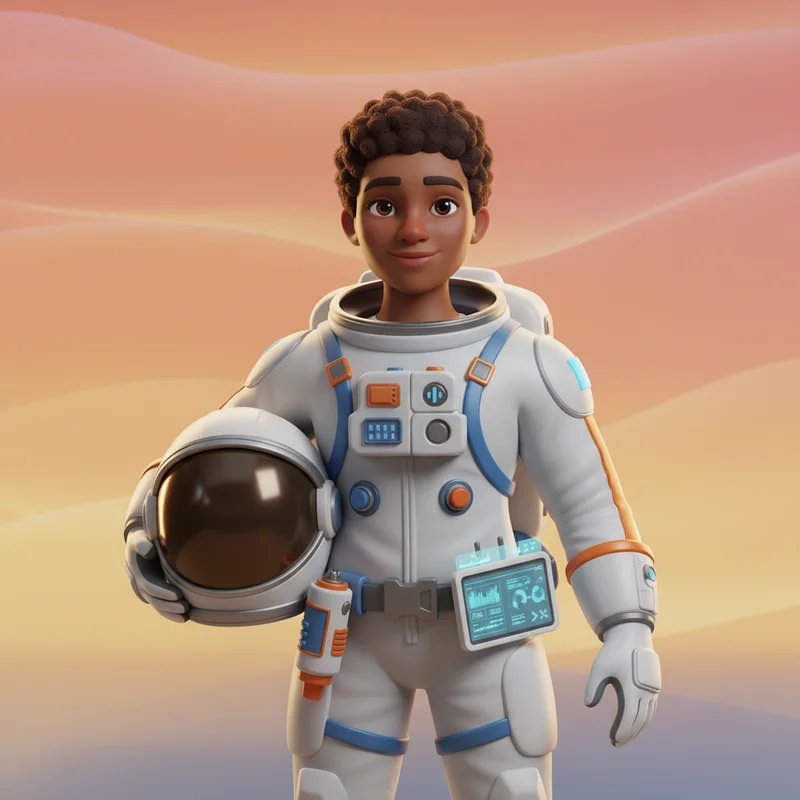
Astronaut

Astronaut

Space explorer pushing human boundaries.

VS
Procrastination

Procrastination

The art of doing everything except the one thing you should be doing. A universal human experience that has spawned more clean apartments, reorganized sock drawers, and Wikipedia deep dives than any productivity method ever could.

Battle Analysis

0 Procrastination Wins · 51%
49%
51%
Astronaut Procrastination

Astronaut

The astronaut occupies a rarefied position in human consciousness. Since Yuri Gagarin's historic orbit in 1961, fewer than 700 individuals have earned this distinction. Every schoolchild recognises the iconic white suit, the helmet's golden visor, the peculiar floating posture that defies terrestrial expectations. National space programmes invest billions in cultivating this recognition, understanding that astronauts serve as living symbols of human capability. The mere mention of the profession evokes images of heroism, sacrifice, and the eternal human yearning to transcend earthly limitations.

Procrastination

Procrastination requires no introduction, no translation, no cultural context. It speaks every language and observes no borders. From the student in Seoul delaying revision to the executive in Stockholm avoiding quarterly reports, this behavioural pattern achieves a universality that astronauts, by their very exclusivity, cannot match. Psychological studies estimate that ninety-five per cent of humans engage in procrastination to some degree. It appears in ancient texts, medieval literature, and modern memes with equal frequency. One might venture that procrastination is humanity's most democratic experience.

VERDICT

Procrastination's universal prevalence narrowly exceeds astronaut recognition
1 Astronaut Wins · 56%
56%
44%
Astronaut Procrastination

Astronaut

The astronaut's stress profile defies conventional measurement. Consider the peculiar anxiety of sitting atop several hundred tonnes of controlled explosive, trusting mathematics and engineering to deliver you safely into the void. The psychological screening for space programmes rivals that of nuclear launch officers. Candidates must demonstrate resilience under conditions that would shatter ordinary composure: isolation, confinement, the ever-present awareness of the thin barrier separating life from vacuum. Yet remarkably, astronauts report transformative peace during spacewalks, suggesting stress yields to something approaching transcendence.

Procrastination

Procrastination operates through a distinctive stress mechanism that researchers term 'temporal discounting with anxiety compounding'. The initial relief of avoidance generates a false tranquillity, which gradually transforms into mounting dread as deadlines approach. Studies from the University of Sheffield document elevated cortisol levels in chronic procrastinators, alongside disrupted sleep patterns and diminished immune function. The stress is self-renewing: each delay compounds the eventual workload, creating a feedback loop of psychological pressure that the procrastinator simultaneously dreads and perpetuates.

VERDICT

Astronaut stress, whilst extreme, leads to growth; procrastination stress merely compounds
2 Procrastination Wins · 95%
5%
95%
Astronaut Procrastination

Astronaut

The path to becoming an astronaut represents perhaps humanity's most restrictive career trajectory. Candidates typically require advanced degrees in engineering, biological sciences, or physics, combined with thousands of hours of flight experience or equivalent technical expertise. Physical requirements eliminate the majority of applicants before psychological screening even commences. Of the tens of thousands who apply to NASA's astronaut programmes annually, fewer than twelve are selected. The European Space Agency's 2021 recruitment attracted over twenty-two thousand applications for approximately six positions. These odds would discourage all but the most resolute.

Procrastination

Procrastination asks nothing of its practitioners. No qualifications are required, no application process exists, no selection committee deliberates over one's suitability. It welcomes the brilliant and the ordinary with equal enthusiasm. A child of five may procrastinate with the same facility as a professor emeritus. The behaviour requires only consciousness and a task one would prefer to avoid. In this regard, procrastination achieves a radical egalitarianism that few human experiences can match. It is, perhaps, the most accessible of all psychological phenomena.

VERDICT

Procrastination requires nothing; astronaut status requires everything
3 Astronaut Wins · 57%
57%
43%
Astronaut Procrastination

Astronaut

The astronaut represents a fundamental inflection point in human history. When Neil Armstrong descended the lunar module ladder in July 1969, humanity crossed a threshold that philosophers had contemplated for millennia. For the first time, a species had left its planet of origin and stood upon another world. This achievement ranks alongside the mastery of fire and the development of written language in its implications for human development. Future historians, whether human or otherwise, will mark the emergence of the astronaut as the moment when Homo sapiens became a spacefaring civilisation.

Procrastination

Procrastination's historical footprint, whilst less dramatic, demonstrates remarkable persistence. Ancient Greek philosophers coined 'akrasia' to describe acting against one's better judgement. The Roman poet Horace wrote of delaying until tomorrow what might be done today. Medieval monks documented their struggles with spiritual lethargy. Leonardo da Vinci's notebooks reveal a creative genius perpetually distracted from commissioned works. This behavioural pattern has accompanied humanity through every era, suggesting it may be intrinsic to consciousness itself.

VERDICT

Space exploration marks a civilisational turning point
4 Astronaut Wins · 52%
52%
48%
Astronaut Procrastination

Astronaut

The astronaut embodies adaptability in its most extreme form. These individuals must function effectively in environments for which human biology was never designed: microgravity, radiation exposure, confined quarters, communication delays measured in minutes rather than milliseconds. Their training prepares them for countless contingencies, from system failures to medical emergencies, with no possibility of external rescue. The International Space Station itself represents an exercise in continuous adaptation, as crew members rotate through roles spanning engineering, science, medicine, and diplomacy.

Procrastination

Procrastination demonstrates a chameleonic quality that ensures its survival across vastly different contexts. In the digital age, it has adapted to exploit streaming services, social media algorithms, and infinite-scroll interfaces with remarkable efficiency. It thrives equally in high-pressure corporate environments and leisurely domestic settings. When one avenue of distraction closes, procrastination identifies another with algorithmic precision. This behavioural pattern has survived every productivity system, time-management technique, and motivational framework devised to combat it.

VERDICT

Astronaut adaptability operates at the frontier of human capability
👑

The Winner Is

Astronaut

Takes 3 of 5 rounds

The astronaut prevails in this unconventional assessment, though procrastination's showing proves more formidable than anticipated. Space exploration's victory rests upon its transformative stress, historical significance, and the extraordinary adaptability demanded of its practitioners. These qualities represent humanity at its most exceptional. Procrastination counters with devastating accessibility and recognition metrics, reminding us that the most widely shared human experiences are not always the most celebrated. The final score of sixty-two to thirty-eight acknowledges both the astronaut's aspirational supremacy and procrastination's stubborn universality.

Share this battle

More Comparisons