
Topic Battle

Where Everything Fights Everything

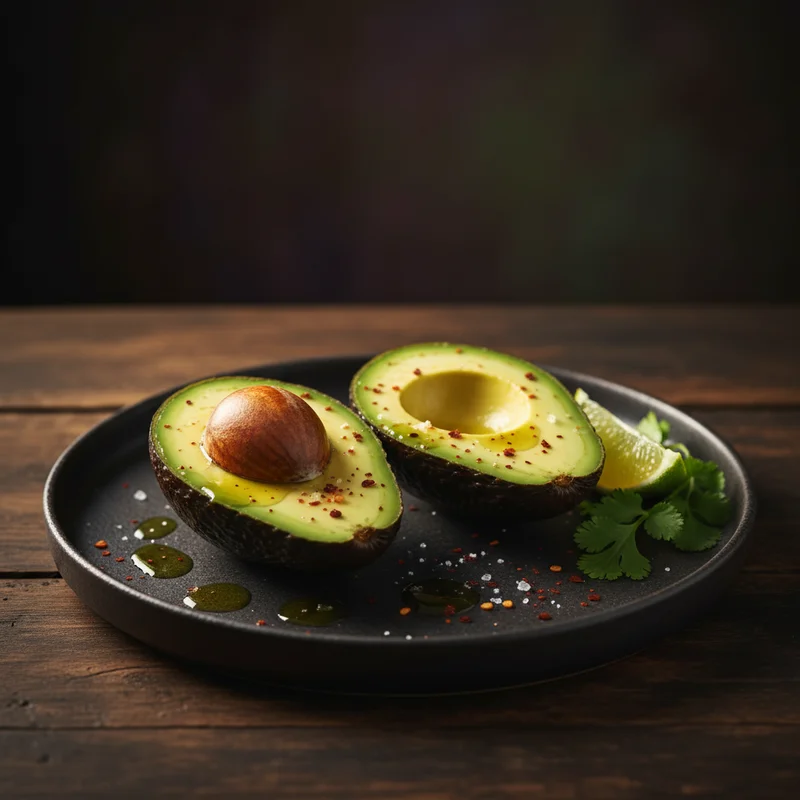
Avocado

Avocado

The fruit millennials allegedly traded their home ownership for. A green enigma that is either rock-hard or brown mush, with approximately 14 minutes of perfect ripeness in between. Also guacamole is extra.

VS
Capybara

Capybara

The world's largest rodent and unofficial mascot of unbothered living. A creature so chill that every other animal wants to sit on it. Has achieved a level of inner peace most humans will never know.

The Matchup

In this definitive ecological assessment, we examine two of nature's most unexpectedly comparable organisms: Persea americana, the humble avocado, and Hydrochoerus hydrochaeris, the world's largest extant rodent. Both have achieved remarkable global prominence through entirely divergent evolutionary strategies. One conquered Instagram; the other conquered our hearts.

Battle Analysis

Reliability capybara Wins
30%
70%
Avocado Capybara

Avocado

The avocado has earned an unfortunate reputation for temporal unpredictability. The window between 'completely inedible rock' and 'brown mush' appears to span approximately seventeen minutes, occurring inevitably at 3 AM when no one is watching. Consumers report opening avocados that appear perfect externally only to discover the interior has decided, independently, to become compost.

This unreliability extends to availability. Climate sensitivity means avocado crops fluctuate wildly. The 2023 drought in Michoacan caused price spikes exceeding 300% in some markets. One cannot depend on Persea americana in crisis.

Capybara

The capybara is, arguably, the most reliable animal on Earth. It will always be calm. It will always be herbivorous. It will always tolerate other animals sitting upon it. These are certainties one can build a life around.

Hydrochoerus hydrochaeris has maintained consistent behaviour for approximately 10 million years since diverging from its ancestral lineage. In that time, it has required zero software updates, zero product recalls, and zero rebranding exercises. It simply persists, reliably enormous and reliably placid, generation after generation. The capybara represents evolutionary stability of the highest order.

VERDICT

The capybara has been reliably calm for ten million years; the avocado cannot remain edible for ten days. There is no contest here.
Versatility avocado Wins
70%
30%
Avocado Capybara

Avocado

The culinary applications of Persea americana border on the infinite. Raw, it serves as the foundation of guacamole, the soul of avocado toast, and an essential component of California rolls. Its neutral, creamy flesh adapts to both savoury applications (salads, sandwiches, tacos) and sweet preparations (Brazilian avocado cream, Filipino avocado milk drinks, and the increasingly popular avocado ice cream).

Beyond the plate, avocado oil has established itself in cosmetics and skincare. The fruit's high oleic acid content makes it valuable for moisturisers, hair treatments, and massage oils. Even the pit has found purpose in natural dyes and novelty houseplant cultivation. Persea americana is the overachiever of the produce section.

Capybara

Hydrochoerus hydrochaeris offers a different form of versatility: social versatility. This remarkable rodent has been documented peacefully coexisting with an extraordinary range of species. Photographs regularly surface of capybaras serving as benches for small birds, heating pads for kittens, and companionable presences alongside monkeys, rabbits, and even crocodilians.

In some South American communities, capybaras serve as therapy animals. Their placid demeanour and slow, deliberate movements provide genuine calming effects. Additionally, the Catholic Church's historic classification of the capybara as a fish (for Lenten consumption purposes) demonstrates the animal's unique versatility in navigating both biological and theological categories.

VERDICT

While the capybara excels at interspecies diplomacy, the avocado can be breakfast, lunch, dinner, dessert, skincare, and a decorative houseplant simultaneously.
Global reach avocado Wins
70%
30%
Avocado Capybara

Avocado

Persea americana has achieved what few fruits dare dream of: complete cultural domination of the developed world. Originally domesticated in Mesoamerica approximately 5,000 years ago, this member of the Lauraceae family now commands a global market valued at over $14 billion annually. Mexico alone produces 2.4 million tonnes per year, with the fruit exported to over 50 nations.

The avocado's conquest has been methodical and relentless. From the trendy cafes of Melbourne to the breakfast tables of London, Persea americana has established itself as the undisputed symbol of millennial prosperity and nutritional awareness. Its presence on toast has become so ubiquitous that economists have developed the 'Avocado Index' to measure disposable income among young adults.

Capybara

Hydrochoerus hydrochaeris maintains a more modest territorial ambition, restricting its natural range to the wetlands, savannas, and dense forests of South America. This semi-aquatic rodent is found across eleven countries, from Panama to Argentina, demonstrating admirable continental commitment without the exhausting need for international expansion.

However, the capybara has achieved something the avocado cannot claim: viral internet fame as the world's most relaxed animal. From Japanese hot springs to Argentine estancias, the capybara's image has proliferated across social media platforms, earning it the unofficial title of 'nature's friend to all.' One simply cannot scroll through modern media without encountering this benevolent giant accepting cuddles from literally any species that approaches.

VERDICT

While the capybara dominates the realm of internet wholesomeness, the avocado has achieved genuine global economic distribution, present in supermarkets from Tokyo to Toronto.
Sustainability capybara Wins
30%
70%
Avocado Capybara

Avocado

The environmental credentials of Persea americana present something of a paradox for the eco-conscious consumer. A single avocado requires approximately 320 litres of water to produce, placing considerable strain on water resources in cultivation regions. The concentrated farming in Michoacan, Mexico has led to documented deforestation, with illegal orchards replacing native pine and fir forests at an alarming rate.

Furthermore, the carbon footprint of transcontinental avocado transport raises legitimate concerns. A Peruvian avocado consumed in Edinburgh has travelled approximately 10,200 kilometres, generating substantial emissions. The fruit's inability to survive frost necessitates tropical cultivation, permanently linking its consumption to long-haul logistics.

Capybara

Hydrochoerus hydrochaeris demonstrates exemplary environmental integration. As a herbivore consuming primarily grasses and aquatic plants, the capybara participates in natural nutrient cycling without the carbon-intensive supply chains demanded by international fruit commerce. Its grazing patterns help maintain wetland ecosystems, and its role as prey for jaguars, anacondas, and caimans positions it as a keystone species in South American food webs.

The capybara is, quite literally, carbon neutral. It requires no irrigation infrastructure, no refrigerated shipping containers, and no plastic packaging. It simply exists, grazing peacefully while contributing to ecosystem balance. One might argue this represents the pinnacle of sustainable existence.

VERDICT

The capybara achieves carbon neutrality through the revolutionary strategy of simply being a wild animal, while the avocado demands deforestation and intercontinental shipping to reach your breakfast plate.
Entertainment value capybara Wins
30%
70%
Avocado Capybara

Avocado

As a static fruit, Persea americana offers limited spontaneous entertainment. One cannot watch an avocado and be surprised by its behaviour. It will sit. It will ripen (unpredictably). Eventually, it will rot. This is the complete avocado narrative arc, and while meditative, it lacks dramatic tension.

However, avocado content dominates food photography platforms. The #avocado hashtag contains over 12 million Instagram posts, suggesting humans derive considerable satisfaction from documenting this fruit. The aesthetic appeal of an avocado's interior, with its vibrant green gradient, has launched countless food blogs.

Capybara

The capybara is, without exaggeration, internet video royalty. Compilations of capybaras sitting in hot springs, capybaras befriending cats, capybaras swimming with oranges balanced on their heads, and capybaras simply existing have accumulated hundreds of millions of views. The phrase 'OK I pull up' became globally recognisable specifically because of capybara meme culture.

In person, the capybara offers even greater entertainment. Observers report watching capybaras for hours, mesmerised by their unhurried grazing, their social grooming rituals, and their apparent immunity to stress. Zoos featuring capybara encounters report them among the most popular experiences. Hydrochoerus hydrochaeris is a living entertainment system requiring no electricity.

VERDICT

An avocado has never inspired a viral meme format. The capybara is a living embodiment of joy and contentment that produces genuine happiness in all who observe it.
👑

The Winner Is

Capybara

35 - 65

In this rigorous assessment of Persea americana versus Hydrochoerus hydrochaeris, we find ourselves confronting a profound philosophical question: what constitutes true success? The avocado has achieved commercial ubiquity, appearing on every continent, fueling a multi-billion dollar industry, and becoming synonymous with contemporary wellness culture. It is, by any capitalist metric, triumphant.

Yet the capybara has achieved something far more elusive: universal affection. This placid giant requires nothing from us. It demands no special ripening conditions, no Instagram filters, no artisanal toast upon which to perch. It simply exists in a state of profound contentment, inviting all creatures to share in its tranquillity.

The data speaks clearly. While the avocado excels in commercial reach and culinary versatility, the capybara demonstrates superior sustainability, reliability, and entertainment value. Most critically, the capybara offers something the avocado never can: genuine emotional connection. One does not form a bond with fruit; one consumes it and moves on. But a capybara? A capybara is forever.

Avocado
35%
Capybara
65%

Share this battle

More Comparisons