
Topic Battle

Where Everything Fights Everything

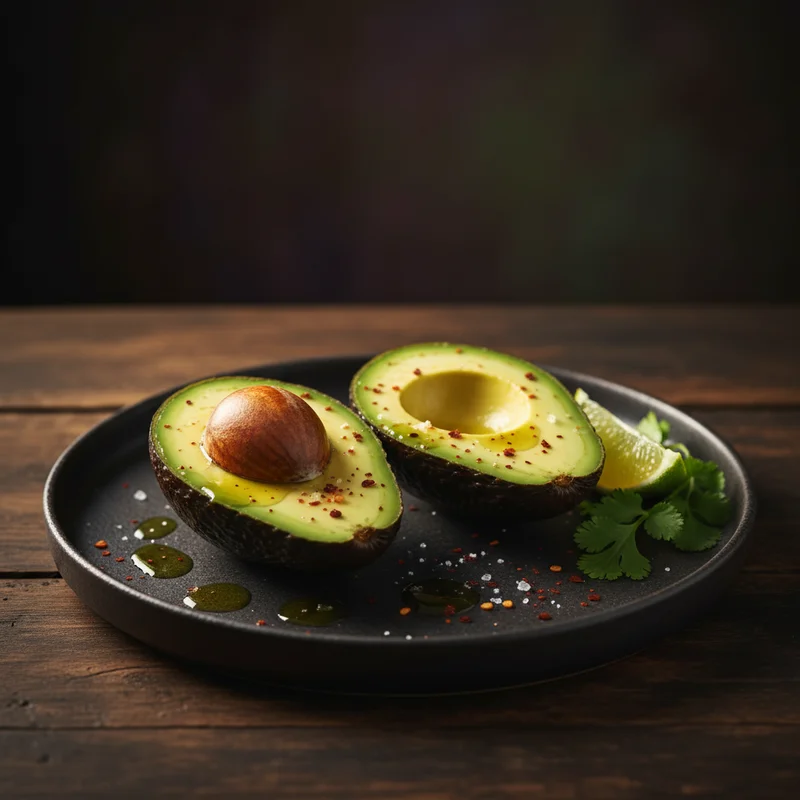
Avocado

Avocado

The fruit millennials allegedly traded their home ownership for. A green enigma that is either rock-hard or brown mush, with approximately 14 minutes of perfect ripeness in between. Also guacamole is extra.

VS
Dog

Dog

Loyal canine companion celebrated for unconditional love, tail wagging, and being humanity's best friend for millennia.

Battle Analysis

Adaptability dog Wins
30%
70%
Avocado Dog

Avocado

The avocado demonstrates remarkable inflexibility in its environmental requirements. The fruit demands specific temperature ranges, consistent moisture, and particular soil conditions that limit viable cultivation to a narrow band of global geography. Climate change threatens existing growing regions while potentially opening new ones, but the tree's seven-year maturation period makes adaptation agonisingly slow. In the kitchen, the avocado's window of perfect ripeness spans approximately forty-eight hours, outside of which it oscillates between rock-hard inedibility and brown, mushy disappointment. This is not an organism designed for flexibility.

Dog

The domestic dog represents perhaps the most adaptable large mammal on Earth. Canis familiaris thrives from the Arctic tundra to the Saharan fringe, from Himalayan villages to Pacific island atolls. The species has diversified into over four hundred recognised breeds, ranging from the two-kilogram Chihuahua to the ninety-kilogram English Mastiff. Dogs adapt their behaviour to human emotional states, adjust their activity levels to their owners' lifestyles, and modify their sleep patterns to match household rhythms. This is an organism that has effectively outsourced its survival strategy to partnership with humans, achieving thereby a flexibility that few species can match.

VERDICT

The dog thrives in virtually every climate and social context, whilst the avocado demands narrow environmental parameters.
Daily utility dog Wins
30%
70%
Avocado Dog

Avocado

The avocado's utility in daily human existence has expanded dramatically since its introduction to global markets. Once merely a regional curiosity, it now serves as the cornerstone of countless breakfast establishments, the secret ingredient in hair masks and face treatments, and the primary subject of approximately twelve percent of all food photography. Its applications extend beyond consumption: the oil finds use in cosmetics, the pit is carved into artisanal jewellery, and the skin provides natural dye. The average Western consumer now encounters avocado in some form at least three times weekly, whether in smoothies, salads, or the ubiquitous toast preparation that has become synonymous with contemporary urban dining.

Dog

The domestic dog's daily utility transcends mere function to enter the realm of psychological necessity. Studies demonstrate that dog ownership correlates with reduced cortisol levels, lower blood pressure, and decreased incidence of cardiovascular disease. The dog serves as alarm system, exercise motivation, social facilitator, and emotional support with unwavering consistency. For the elderly, dogs reduce isolation; for children, they accelerate emotional development; for the anxious, they provide a grounding presence that no medication can fully replicate. The dog does not merely occupy space in daily life; it structures the entire rhythm of the household, demanding walks that force sedentary humans into motion and creating routines that provide meaning and purpose.

VERDICT

The dog provides irreplaceable emotional and physical health benefits that no fruit, however nutritious, can approximate.
Global recognition dog Wins
30%
70%
Avocado Dog

Avocado

The avocado's global recognition has experienced meteoric growth within a single generation. From relative obscurity outside the Americas, it has become one of the most searched food items on the internet, with global production exceeding eight million tonnes annually. The fruit appears on menus from Tokyo to Oslo, its distinctive silhouette immediately recognisable even to those who have never tasted it. Instagram hosts over thirteen million posts tagged with avocado-related content. The Mexican state of Michoacan has become so dependent on avocado exports that criminal organisations now wage territorial wars over orchards. This is recognition of a rather complicated sort, but recognition nonetheless.

Dog

The dog achieves a level of global recognition that borders on the universal. Every human culture on Earth maintains some relationship with canines, whether as working partners, companions, or cultural symbols. The dog appears in the mythologies of civilisations from ancient Egypt to pre-Columbian America, guards the gates of the underworld in Greek mythology, and accompanies saints in Christian iconography. In China, a year of the zodiac is dedicated to the dog. In Britain, the monarchy's corgis became celebrities in their own right. Unlike the avocado, whose fame is a modern phenomenon, the dog's recognition spans the entirety of recorded human history and extends into prehistory itself.

VERDICT

Fifteen millennia of universal cultural presence eclipses even the most viral food trend in the annals of recognition.
Entertainment value dog Wins
30%
70%
Avocado Dog

Avocado

The avocado's entertainment value resides primarily in the theatrical possibilities of its preparation. The ritual of testing ripeness, the satisfying cleave around the pit, the elegant twist that separates the halves, the tap of knife into seed and the twist that removes it - these constitute a minor culinary performance. Social media has transformed avocado arrangement into an art form, with elaborate presentations garnering millions of views. The fruit has inspired songs, become a popular emoji, and serves as visual shorthand for an entire lifestyle aesthetic. Yet this entertainment is fundamentally passive and visual, offering no ongoing interaction.

Dog

The dog provides entertainment of an entirely different order: active, reciprocal, and inexhaustible. The simple act of throwing a ball can occupy a dog for hours, its enthusiasm undimmed by repetition that would bore any human. Dogs perform accidental comedy through their reactions to mirrors, their battles with vacuum cleaners, their attempts to fit oversized sticks through doorways. They dream visibly, legs twitching in pursuit of imaginary rabbits. They develop distinct personalities that reveal themselves over years of cohabitation. Dog videos constitute a significant percentage of viral content, and unlike avocado content, they capture genuine spontaneous behaviour rather than staged arrangements.

VERDICT

Active, reciprocal entertainment with genuine personality surpasses the static visual appeal of even the most photogenic fruit.
Environmental impact dog Wins
30%
70%
Avocado Dog

Avocado

The environmental ledger of avocado cultivation presents a troubling accounting. Each kilogram of avocados requires approximately two thousand litres of water to produce, placing extraordinary strain on water resources in growing regions. In Michoacan, illegal deforestation to create avocado plantations has destroyed over twenty thousand hectares of native forest. The fruit's popularity has transformed subsistence agriculture into industrial monoculture, with attendant pesticide use and soil degradation. The carbon footprint of transportation from distant growing regions to northern consumers further compounds the environmental cost. The avocado's beauty, it seems, conceals a rather troubling ecological reality.

Dog

The domestic dog's environmental impact presents its own complexities. Studies estimate that a medium-sized dog produces approximately 770 kilograms of carbon dioxide equivalent annually, primarily through meat-based food consumption. Dog waste contributes to waterway pollution and nitrogen loading in urban environments. The pet food industry alone accounts for approximately twenty-five percent of the environmental impact of meat production in developed nations. However, dogs require no deforestation for their existence, do not deplete aquifers, and their impact, while significant, is distributed rather than concentrated in vulnerable ecosystems. The comparison reveals no environmental saints, merely different patterns of ecological burden.

VERDICT

The dog's distributed environmental impact proves less catastrophic than the avocado's concentrated destruction of specific ecosystems.
👑

The Winner Is

Dog

42 - 58

The contest between avocado and dog illuminates a fundamental distinction in the nature of human attachment. The avocado represents a consumption-based relationship: it is purchased, admired briefly, consumed, and replaced. The pleasure it provides is genuine but ephemeral, lasting only as long as the fruit remains edible. The dog, by contrast, represents a commitment-based relationship that spans years and demands ongoing investment of time, attention, and emotional energy. The returns on this investment prove proportionally greater.

Where the avocado offers nutritional benefit and aesthetic pleasure, the dog provides companionship that alters human neurochemistry, reduces mortality risk, and creates bonds that outlast the organism itself. The avocado may have conquered Instagram and disrupted housing economics, but these achievements pale before fifteen thousand years of co-evolution that have made dogs and humans uniquely attuned to one another's emotional states.

The final score of 58-42 in favour of the dog reflects not a dismissal of the avocado's genuine merits, but rather an acknowledgment that companionship ultimately outweighs consumption in the hierarchy of human needs. The avocado will continue its reign over brunch menus and social media feeds, but when humans seek comfort in moments of genuine distress, they do not reach for fruit.

Avocado
42%
Dog
58%

Share this battle

More Comparisons