Topic Battle

Where Everything Fights Everything

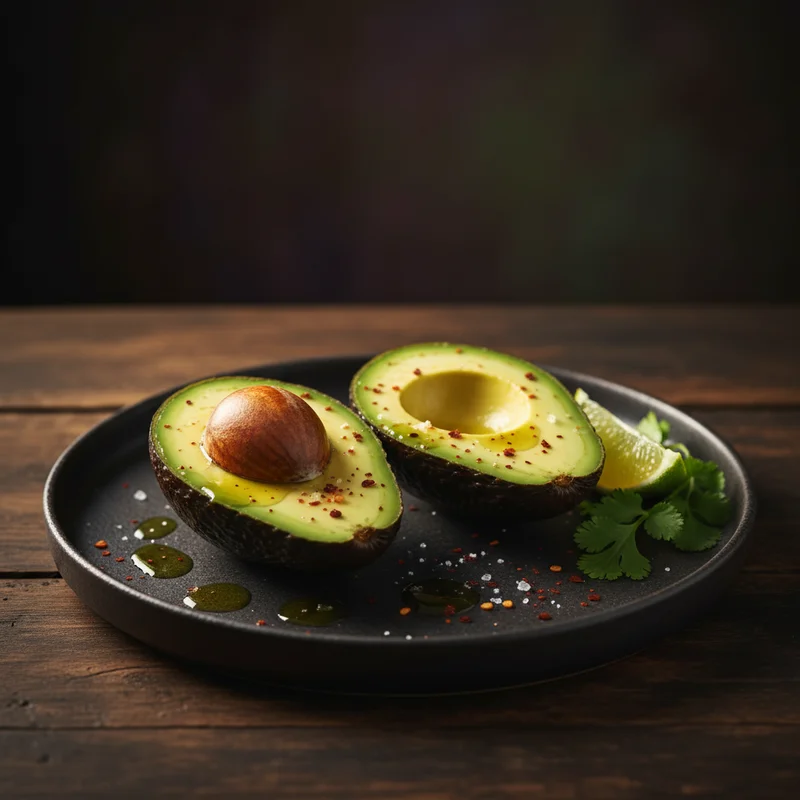
Avocado

Avocado

The fruit millennials allegedly traded their home ownership for. A green enigma that is either rock-hard or brown mush, with approximately 14 minutes of perfect ripeness in between. Also guacamole is extra.

VS
Rocket

Rocket

Spacecraft propulsion system reaching for the stars.

Battle Analysis

Speed rocket Wins
30%
70%
Avocado Rocket

Avocado

The avocado operates on geological timescales that would test the patience of continents. From flower to fruit requires twelve to eighteen months—a development period exceeding that of most mammalian pregnancies. The Hass variety, which dominates global markets with eighty percent market share, was discovered purely by accident in 1926 when postal worker Rudolph Hass noticed a peculiar seedling in his California garden. The fruit's ripening window proves equally leisurely, demanding four to seven days at room temperature, followed by a consumption window measured in mere hours. One moment, the avocado remains stubbornly unyielding; the next, it has descended into brown mush suitable only for composting.

Rocket

The rocket exists in a realm where speed itself becomes the primary currency. The Saturn V, humanity's most powerful launch vehicle, achieved velocities of 39,897 kilometres per hour—sufficient to escape Earth's gravitational influence entirely. Modern rockets routinely exceed Mach 25, a velocity at which friction transforms atmospheric particles into plasma. The Falcon 9, now landing with routine precision, completes its descent burns in approximately thirty seconds, adjusting its trajectory thousands of times per second. Where the avocado measures progress in seasons, the rocket measures it in microseconds. The differential in operational tempo spans approximately fifteen orders of magnitude.

VERDICT

Achieving velocities forty thousand times faster than sound renders the avocado's ripening schedule rather pedestrian by comparison.
Daily utility rocket Wins
30%
70%
Avocado Rocket

Avocado

The avocado demonstrates remarkable versatility within its domain. Beyond the ubiquitous toast application, the fruit serves in guacamole, smoothies, salads, sushi, desserts, and face masks. Its nutritional profile—rich in monounsaturated fats, potassium, and fibre—has earned endorsement from cardiologists worldwide. The average British consumer now eats 1.1 kilograms of avocado annually, a figure that has increased tenfold since 2000. The fruit's healthy fats support nutrient absorption, making accompanying vegetables more nutritionally available. For millions, the avocado represents a daily ritual of self-care and culinary satisfaction.

Rocket

The rocket's daily utility proves paradoxically immense yet invisible. Every GPS navigation, every weather forecast, every international phone call relies upon infrastructure placed in orbit by rockets. The constellation of satellites enabling modern life—approximately 7,500 currently operational—required rockets for deployment. Internet connectivity reaching remote villages, precision agriculture optimising harvests, disaster response coordination: all depend upon rocket-delivered technology. Yet the rocket itself remains absent from daily experience. One might use rocket-enabled services hundreds of times daily without once contemplating the launch vehicles that made such services possible.

VERDICT

Enabling GPS, telecommunications, weather forecasting, and internet connectivity affects billions of daily interactions across virtually all human activities.
Global recognition avocado Wins
70%
30%
Avocado Rocket

Avocado

The avocado has achieved a cultural penetration that marketing executives study with reverent bewilderment. Instagram hosts over twelve million posts tagged with avocado-related content, whilst the phrase 'avocado toast' has transcended food category to become generational shorthand. Australian property developer Tim Gurner's 2017 suggestion that millennials might afford houses if they stopped purchasing avocado toast generated international headlines for weeks. The fruit appears on menus from Tokyo to Toronto, Berlin to Buenos Aires. Mexico's Super Bowl Sunday consumes over 105,000 tonnes of avocados—a quantity requiring approximately 300,000 trees working at peak capacity.

Rocket

The rocket occupies a unique position in human consciousness—simultaneously familiar and mysterious. Every child can draw a rocket; vanishingly few can explain how one functions. The Apollo programme's cultural impact remains undiminished fifty years hence, with Saturn V imagery appearing across countless media properties. SpaceX launches now attract millions of live viewers, transforming rocket science into spectator sport. The 2020 Crew Dragon mission drew ten million concurrent viewers—audience figures rivalling major sporting events. Yet rockets remain fundamentally exotic, their appearances marking extraordinary occasions rather than daily rituals.

VERDICT

The avocado's daily presence in homes, cafes, and social media feeds across six continents surpasses even the rocket's spectacular appearances.
Environmental impact avocado Wins
70%
30%
Avocado Rocket

Avocado

The avocado's environmental ledger reads with troubling complexity. A single fruit requires approximately 320 litres of water—sufficient to fill two standard bathtubs. In Chile's Petorca province, avocado cultivation has been linked to river depletion affecting indigenous communities. Mexico's Michoacan region loses 15,000 hectares of forest annually to illegal avocado plantations, as cartels recognise the fruit's profitability. The carbon footprint of transporting avocados from Chile to Britain generates approximately 1.8 kilograms of CO2 per kilogram of fruit. Yet the plant itself functions as a carbon sink, and properly managed orchards can support biodiversity.

Rocket

The rocket presents an environmental paradox of considerable proportions. A single Falcon 9 launch consumes 440 tonnes of propellant, releasing substantial carbon dioxide and water vapour directly into the upper atmosphere. The space industry's annual carbon footprint approximates that of a medium-sized city. However, satellite technology enables climate monitoring, deforestation tracking, and agricultural optimisation that may prevent emissions orders of magnitude larger than those generated. The environmental calculus proves genuinely non-trivial, with reasonable experts reaching opposite conclusions.

VERDICT

Despite significant concerns, the avocado's per-unit environmental impact remains substantially below rocket launches measured in hundreds of tonnes of propellant.
Historical significance rocket Wins
30%
70%
Avocado Rocket

Avocado

The avocado's history spans approximately ten thousand years of human cultivation, with archaeological evidence suggesting domestication in Mexico's Tehuacan Valley around 5,000 BCE. The Aztecs believed the fruit possessed aphrodisiac properties, whilst Spanish conquistadors initially rejected it as unpalatable. The modern industry traces to 1871, when Judge R.B. Ord planted California's first avocado trees. The fruit's transformation from botanical curiosity to cultural phenomenon occurred primarily within the past two decades, representing one of agricultural history's most rapid ascents to global prominence.

Rocket

The rocket compresses transformative history into a remarkably brief span. Robert Goddard's 1926 liquid-fuelled launch—reaching 12.5 metres altitude—initiated an engineering revolution. Forty-three years later, humans walked on the Moon. The rocket enabled humanity's most significant expansion since our ancestors left Africa, extending our presence beyond Earth's atmosphere for the first time in four billion years of terrestrial life. The Space Age fundamentally altered human consciousness, providing the iconic 'Earthrise' photograph that catalysed environmental awareness and challenged nationalistic boundaries with images of a borderless planet.

VERDICT

Extending human presence beyond Earth represents arguably the most significant achievement in the history of terrestrial life forms.
👑

The Winner Is

Rocket

42 - 58

This investigation reveals a profound asymmetry operating beneath surface-level absurdity. The avocado, for all its cultural dominance and nutritional merit, operates within entirely terrestrial parameters. It grows, ripens, nourishes, and decomposes according to biological rhythms unchanged since the Pleistocene. The rocket, by contrast, represents humanity's categorical refusal to accept such limitations—a technological organism designed specifically to transcend the planetary boundaries that constrain all other earthly entities.

Yet the avocado's virtues should not be dismissed. Its journey from Mesoamerican obscurity to global breakfast staple demonstrates extraordinary adaptive success within human systems. The fruit has colonised menus, infiltrated social media, and influenced housing affordability debates—achievements no rocket has matched. In the realm of daily tangible pleasure, the avocado reigns supreme.

The rocket prevails, ultimately, through sheer categorical expansion. It has carried human footprints to the Moon, human instruments to interstellar space, and human dreams beyond the atmosphere that once defined the absolute limits of possibility. The avocado may dominate brunch; the rocket has begun to dominate the solar system. In this particular contest of trajectories, the vertical proves more significant than the horizontal.

Avocado
42%
Rocket
58%

Share this battle

More Comparisons