Where Everything Fights Everything

Bear vs King Kong

😜 Just for fun — a tongue-in-cheek, gloriously unscientific showdown.

Bear

Bear

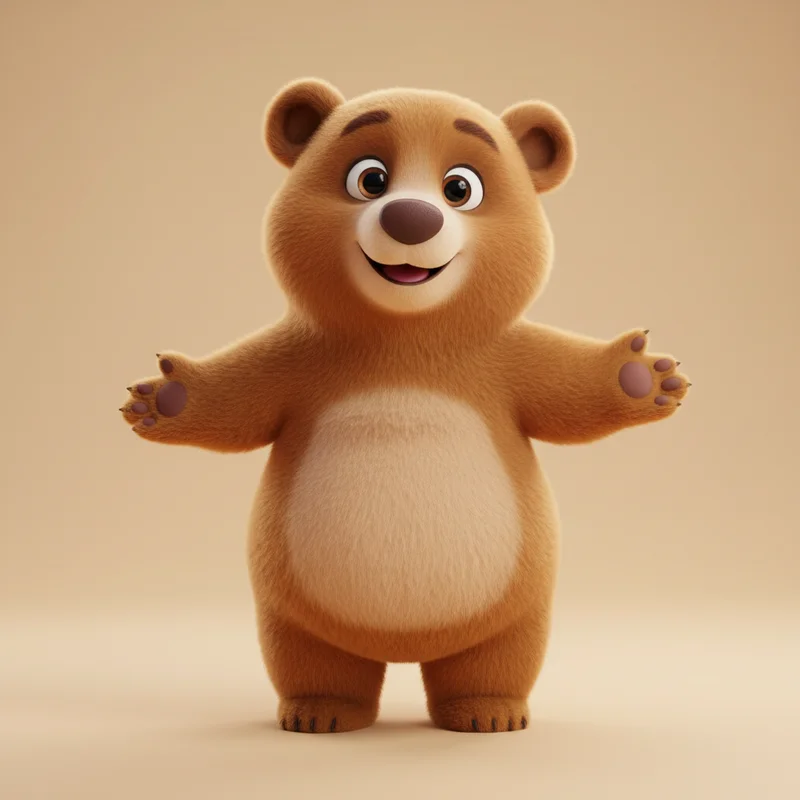
Powerful omnivore ranging from polar ice to forest streams, equally skilled at fishing and frightening campers.

VS
King Kong

King Kong

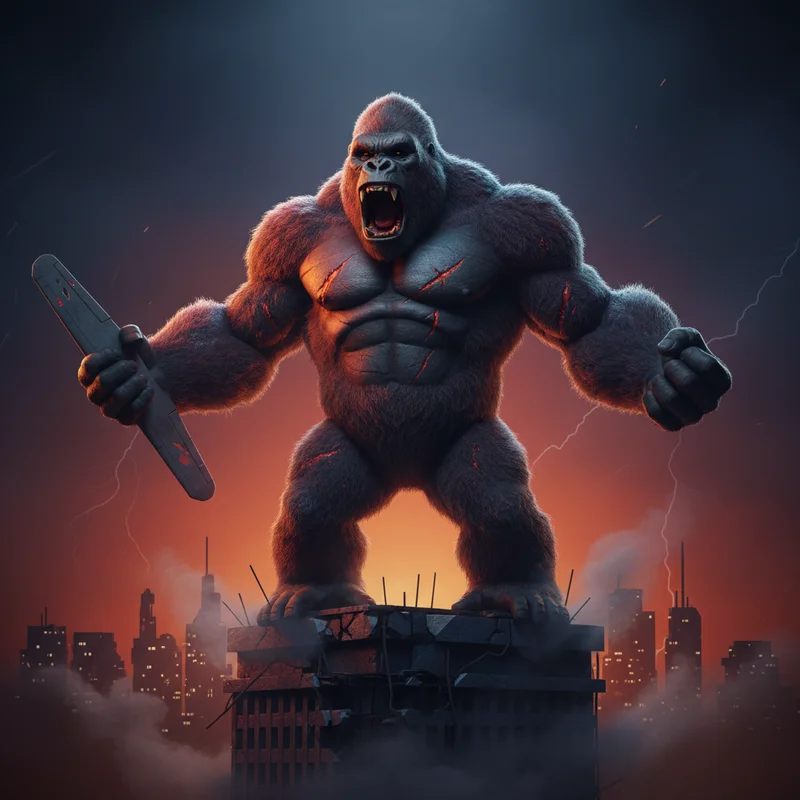
Giant ape with a thing for tall buildings.

Battle Analysis

Cinematic legacy King Kong Wins
🏆 King Kong takes this round

Bear

Bears have featured in cinema since the medium's earliest days, appearing in hundreds of documentaries and dramatic films. 'The Revenant' earned Leonardo DiCaprio his long-awaited Oscar partly through bear-related suffering. 'Grizzly Man' explored humanity's fatal misunderstanding of ursine nature. 'Paddington' demonstrated that bears from Peru could achieve beloved status through marmalade-related adventures. Yet bears in cinema typically serve as supporting characters, obstacles, or symbols rather than protagonists. No bear has achieved top billing consistently.

The bear remains cinema's most versatile large mammal without becoming its most iconic.

King Kong

King Kong's cinematic legacy stands virtually unmatched in monster cinema. The original 1933 film pioneered special effects techniques that influenced generations of filmmakers. Kong has been remade, reimagined, and crossovered more times than can be conveniently counted. The character has fought Godzilla, climbed multiple skyscrapers, and inspired an entire cinematic universe at Warner Brothers. Kong's influence extends beyond his own films to shape audience expectations of what cinema can achieve.

The great ape is not merely a film character but a cornerstone of the medium itself.

VERDICT

Whilst bears contribute reliably to cinema, Kong has fundamentally shaped it. The creature's influence on special effects and monster cinema proves decisive. Kong dominates through transformative cinematic impact.

Cultural mythology King Kong Wins
🏆 King Kong takes this round

Bear

Bears occupy a privileged position in human mythology spanning millennia. The constellation Ursa Major features in astronomical traditions from Greek to Native American cultures. Norse berserkers derived their name from 'bear-shirt' warriors believed to channel ursine ferocity. Russian culture has elevated the bear to national symbol status, whilst Finnish tradition includes the bear as a sacred ancestor figure. Contemporary culture continues this reverence through the teddy bear, an artefact so culturally significant that over one billion units have been manufactured, making it possibly humanity's most produced toy.

The bear represents strength, introspection, and the uncomfortable reminder that nature remains capable of eating us.

King Kong

King Kong has achieved mythological status through fundamentally different means: cinematic saturation since 1933. The image of an enormous ape atop the Empire State Building has become visual shorthand for impossible romance, colonial anxiety, and the question of whether aeroplanes constitute fair play against climbing primates. Kong has inspired academic symposia, feminist analyses, and at least seven major films. The character transcends mere monster status to embody humanity's complex relationship with the primitive, the powerful, and the fundamentally Other.

Few fictional creations have so thoroughly colonised the collective unconscious.

VERDICT

Whilst bears boast millennia of mythological presence, King Kong achieved comparable cultural penetration in merely ninety years. The efficiency of this conquest proves remarkable. Kong takes this criterion through concentrated symbolic power.

Emotional resonance Bear Wins
🏆 Bear takes this round

Bear

Bears occupy a peculiar position in human emotional response, simultaneously terrifying and endearing. The same creature capable of disembowelling a moose has been transformed into the teddy bear, childhood companion to billions. Bear cubs trigger protective instincts powerful enough to override self-preservation. Adult bears inspire profound respect tempered by genuine fear. This emotional complexity extends to conservation efforts, where bears serve as charismatic megafauna capable of mobilising public support. The bear bridges the gap between apex predator and cuddly toy in ways no other creature has achieved.

Humans have developed an emotionally complicated relationship with bears that defies simple categorisation.

King Kong

King Kong provokes emotions of considerable intensity but narrower range. The creature inspires awe, pity, and existential contemplation but rarely tenderness. Kong's death scene has drawn tears from audiences for ninety years, yet no one has created a cuddly Kong for childhood comfort. The emotional response to Kong tends toward the tragic sublime: recognition of beauty destroyed, power misunderstood, nature conquered by technology. This emotional register, whilst profound, lacks the versatility of bear-induced feelings.

Kong touches hearts; bears touch hearts, trigger survival instincts, and occasionally sell honey.

VERDICT

Bears achieve emotional resonance across a broader spectrum, from terror to tenderness, whilst Kong operates primarily in tragic mode. Bear secures victory through emotional range.

Biological credibility Bear Wins
🏆 Bear takes this round

Bear

The bear possesses impeccable biological credentials. Eight distinct species have evolved across diverse ecosystems, from the polar bear's Arctic dominion to the spectacled bear's Andean territory. The brown bear alone boasts a 500-year documented history of human interaction, most of it inadvisable. Bears demonstrate genuine evolutionary adaptations: hibernation capabilities that would revolutionise human productivity, omnivorous diets that include salmon, berries, and the occasional unfortunate hiker, and maternal instincts that make approaching cubs a statistical gamble of the highest order.

Biologists have studied bear physiology extensively, cataloguing everything from their remarkable sense of smell (2,100 times more sensitive than humans) to their sprint speeds of 35 miles per hour.

King Kong

King Kong's biological status remains, to employ scientific terminology, entirely fictional. The creature's proposed dimensions violate the square-cube law with cheerful disregard for physics. An eight-story gorilla would require a skeletal structure incapable of supporting its own weight, cardiovascular equipment that does not exist in nature, and a metabolic intake that would require consuming approximately 50,000 calories daily. No peer-reviewed journal has documented Kong specimens. No DNA samples exist in any repository. The creature's taxonomy remains unclassified beyond 'implausible primate of cinematic origin.'

Zoological consensus holds that Kong exists primarily in the imagination and Universal Studios' intellectual property portfolio.

VERDICT

Bears offer the considerable advantage of actually existing. This proves decisive in matters of biological credibility. Bear claims this criterion through the simple expedient of being real.

Practical threat level Bear Wins
🏆 Bear takes this round

Bear

Bears present a genuine, quantifiable threat to human wellbeing. Approximately 40 fatal bear attacks occur globally each year, with brown bears and polar bears accounting for the majority. The grizzly bear's bite force of 1,160 PSI can crush a bowling ball. Their claws extend four inches. Their territorial range can exceed 1,500 square kilometres. National park services worldwide maintain extensive bear safety protocols, and the phrase 'bear-proof container' exists because ordinary containers proved insufficient. Encountering a bear requires specific survival knowledge that varies by species, mood, and season.

The statistical probability of bear encounter, whilst low for urban dwellers, remains non-zero for anyone venturing into appropriate habitats.

King Kong

King Kong's threat level, whilst theoretically catastrophic, suffers from a crucial limitation: probability of encounter approaches zero. The creature has never attacked anyone outside fictional narratives. No insurance actuary has been required to calculate Kong-related premiums for genuine clients. Urban planning departments maintain no Kong contingency documents outside film props. Whilst Kong's hypothetical destructive capacity would exceed any bear's by several orders of magnitude, this potential remains entirely academic.

One cannot be harmed by entities that exist exclusively within entertainment media.

VERDICT

A non-zero threat outranks an impossible one. Bears have actually harmed people; Kong has only harmed fictional New Yorkers and property values. Bear wins through the advantage of genuine danger.

👑

The Winner Is

Bear

Takes 3 of 5 rounds

This investigation concludes with Bear achieving victory at 52-48, a result closer than taxonomic reality might suggest. The bear's triumph rests upon fundamentals: biological existence, genuine threat capacity, and emotional versatility that spans from apex predator to childhood companion. These advantages prove sufficient to overcome Kong's formidable cultural and cinematic achievements.

King Kong, despite victories in cultural mythology and cinematic legacy, ultimately suffers from a limitation that no amount of spectacular filmmaking can overcome: he does not exist. The great ape's influence upon human imagination is undeniable, yet imagination remains his only habitat. Bears, meanwhile, continue to roam four continents, raid camping supplies, and remind humanity that the wilderness retains the capacity to eat us.

The bear's narrow victory reflects a deeper truth about human psychology. We may dream of giant apes climbing our tallest buildings, but we must actually prepare for the creatures that occupy our forests, mountains, and national parks.

Share this battle

More Comparisons