Where Everything Fights Everything

Bear vs Mickey Mouse

😜 Just for fun — a tongue-in-cheek, gloriously unscientific showdown.

Bear

Bear

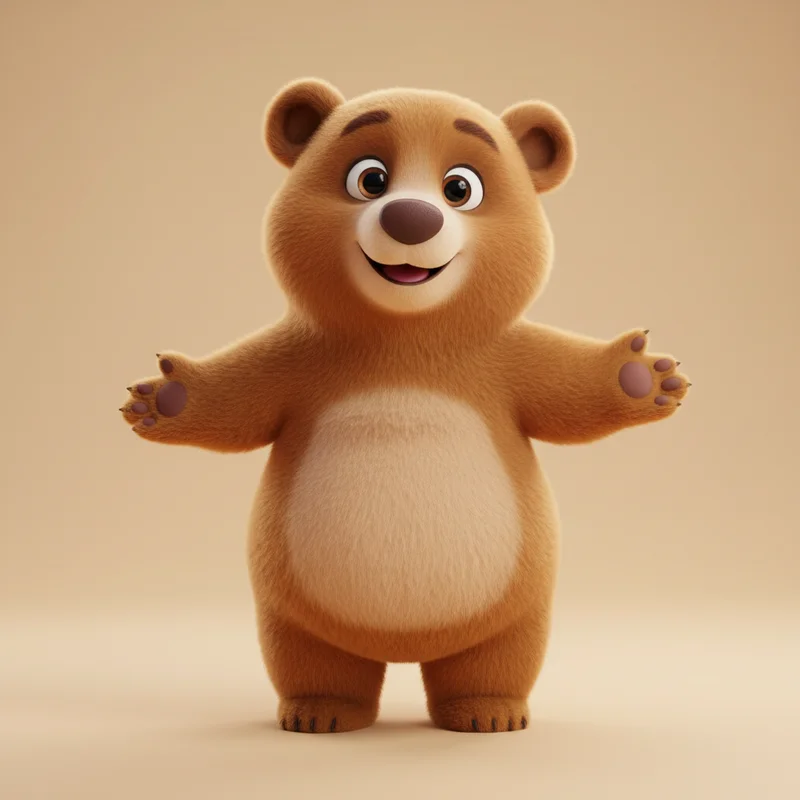
Powerful omnivore ranging from polar ice to forest streams, equally skilled at fishing and frightening campers.

VS
Mickey Mouse

Mickey Mouse

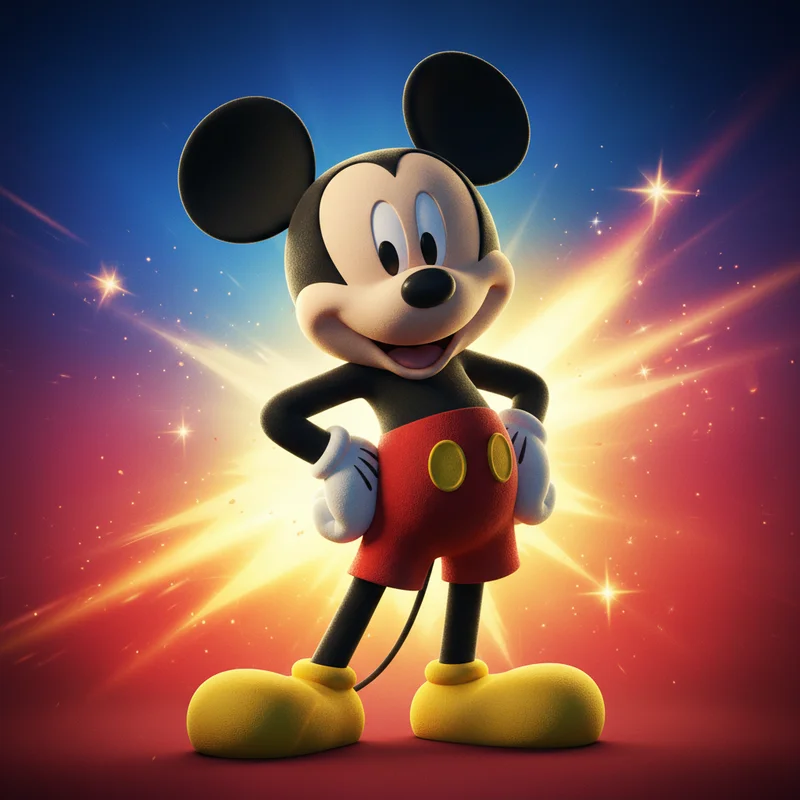
Disney's original mascot and corporate icon.

Battle Analysis

Authenticity Bear Wins
🏆 Bear takes this round

Bear

Bears exist in a state of absolute authenticity that fictional characters cannot approach. Every behaviour, every physical adaptation, every ecological relationship represents millions of years of genuine evolutionary pressure. When a grizzly catches salmon mid-leap, it performs an action refined across countless generations—not scripted, not animated, not focus-grouped. Bears experience hunger, fear, maternal devotion, and territorial aggression as genuinely felt states rather than narrative conveniences. Their existence requires no suspension of disbelief, no corporate maintenance, no brand management. A bear is simply, irreducibly, authentically a bear.

Mickey Mouse

Mickey Mouse exists as a carefully constructed simulacrum of personality, maintained by teams of brand managers, lawyers, and creative directors. The character's voice, appearance, and behaviour are controlled with precision rivalling pharmaceutical manufacturing. Mickey cannot age, cannot die, cannot behave inconsistently with brand guidelines established across decades of market research. Every smile is calculated, every adventure approved by committee, every product placement negotiated. The character represents not authentic existence but optimised commercial appeal—a hollow vessel filled with whatever attributes testing suggests will maximise engagement and revenue.

VERDICT

Bears exist genuinely; Mickey exists only as maintained commercial construct.
Global reach Mickey Mouse Wins
🏆 Mickey Mouse takes this round

Bear

Bears maintain physical presence across four continents—North America, South America, Europe, and Asia—with species adapted to environments ranging from Arctic ice to tropical forests. The brown bear alone spans territory from Spain to Japan, from Alaska to India. Polar bears patrol 19 distinct populations across five Arctic nations. The spectacled bear holds dominion over Andean cloud forests. Yet bears are notably absent from Africa, Australia, and Antarctica, and their total global population—approximately 2 million individuals—represents a fraction of their historical range. Human expansion has compressed bear territories dramatically over the past century.

Mickey Mouse

Mickey Mouse's reach acknowledges no geographical limitations whatsoever. Disney theme parks operate on three continents, with the Tokyo resort alone attracting 30 million visitors annually. Disney+ streaming service launched in over 150 countries, carrying Mickey into homes from Mumbai to Melbourne. The character appears on merchandise sold in virtually every nation permitting international commerce. Mickey Mouse has been to space aboard the Space Shuttle Discovery and to the ocean floor via research submarines. The character's image has been spotted in locations bears could never survive—shopping centres in Dubai, street markets in Lagos, homes in Iceland. Coverage is essentially planetary.

VERDICT

Mickey achieves true global omnipresence; bears remain constrained by habitat requirements.
Economic value Mickey Mouse Wins
🏆 Mickey Mouse takes this round

Bear

Bears generate substantial economic activity through multiple channels. Wildlife tourism centred on bear viewing contributes an estimated $3 billion annually to North American economies alone. The teddy bear industry exceeds $1 billion in annual sales. Bear-related media—from nature documentaries to animated films—generates hundreds of millions in revenue. However, bears also impose significant economic costs: property damage from black bears in North America exceeds $100 million annually, whilst livestock losses to brown bears create ongoing agricultural expense. The net economic contribution, whilst positive, remains modest relative to major entertainment properties.

Mickey Mouse

Mickey Mouse functions as the cornerstone of the world's largest entertainment conglomerate. The Walt Disney Company's market capitalisation fluctuates around $200 billion, with Mickey serving as both mascot and legal foundation. Character licensing alone generates approximately $5 billion annually. Disney theme parks—all featuring Mickey prominently—produced $28 billion in revenue in their peak year. The character's image appears on products ranging from luxury watches to budget stationery, extracting value across every price point and demographic. Mickey Mouse may constitute the single most valuable intellectual property in human history, measured by cumulative revenue generation since 1928.

VERDICT

Mickey anchors a $200 billion enterprise; bears generate modest tourism and merchandise revenue.
Cultural impact Mickey Mouse Wins
🏆 Mickey Mouse takes this round

Bear

Bears have embedded themselves deeply within human mythology and symbolism across millennia. From the berserker warriors of Norse tradition, who believed themselves possessed by bear spirits, to the Great Bear constellations guiding navigation since antiquity, these creatures have shaped human consciousness profoundly. The teddy bear, named after Theodore Roosevelt's 1902 hunting trip, became one of the most ubiquitous childhood companions in Western civilisation. Bears feature in national symbols—Russia's bear, California's grizzly—and in countless fairy tales, from Goldilocks to Winnie-the-Pooh. Yet this cultural presence emerged organically from genuine encounters with genuinely dangerous animals.

Mickey Mouse

Mickey Mouse represents perhaps the most successful deliberate act of cultural colonisation in human history. Appearing in Steamboat Willie in 1928, the character rapidly became synonymous with American entertainment itself. Mickey's face achieves 97 percent recognition globally, surpassing most world leaders and religious figures. The character anchors a media empire encompassing theme parks across four continents, merchandise generating billions annually, and intellectual property protections that have literally shaped international copyright law. Mickey's white gloves, red shorts, and circular ears constitute a visual language more universally understood than most national flags.

VERDICT

Mickey Mouse achieved deliberate global cultural saturation; bears achieved organic but less coordinated influence.
Survival capability Bear Wins
🏆 Bear takes this round

Bear

Bears represent 38 million years of evolutionary refinement producing near-perfect survival machines. The polar bear thrives in Arctic conditions where temperatures plummet to minus 40 degrees Celsius. The grizzly can sprint at 35 miles per hour despite weighing 400 kilograms. Black bears demonstrate problem-solving abilities that consistently defeat 'bear-proof' containers designed by teams of engineers. Bears hibernate for up to seven months without eating, drinking, urinating, or defecating—a metabolic feat that continues to baffle medical researchers. Their bite force exceeds 1,200 pounds per square inch, sufficient to crush a bowling ball. In virtually any natural environment, bears not only survive but dominate.

Mickey Mouse

Mickey Mouse has demonstrated a different form of survival entirely. The character has outlived its creator by nearly six decades, survived the Great Depression, World War II, the Cold War, and the digital revolution without significant diminishment. Mickey has adapted from silent film to sound, from black-and-white to colour, from cinema to television to streaming platforms. The character's copyright, originally set to expire in 2003, prompted legislative action resulting in the Copyright Term Extension Act—colloquially known as the Mickey Mouse Protection Act. When a fictional character inspires nations to rewrite intellectual property law, it has achieved a survival mechanism without biological parallel.

VERDICT

Bears survive through genuine biological adaptation; Mickey survives through legal and corporate machinery.
👑

The Winner Is

Mickey Mouse

Takes 3 of 5 rounds

This examination reveals a fundamental tension between biological reality and commercial fiction. The bear represents nature's patient craftsmanship—38 million years of evolutionary refinement producing creatures of genuine power, intelligence, and ecological importance. Mickey Mouse represents humanity's capacity to manufacture meaning—a simple sketch transformed through relentless marketing into one of the most recognised images on Earth. Bears inspire awe through authentic existence; Mickey inspires affection through calculated design. Yet in the metrics that matter to modern civilisation—economic value, global reach, and cultural penetration—the fictional mouse has achieved what the apex predator cannot match. Mickey Mouse wins this comparison not because fiction exceeds reality in worth, but because humanity has chosen to invest more heavily in comfortable fantasy than in wild authenticity. The mouse's victory says rather more about us than about either competitor.

Share this battle

More Comparisons