Where Everything Fights Everything

Bear vs Spongebob

😜 Just for fun — a tongue-in-cheek, gloriously unscientific showdown.

Bear

Bear

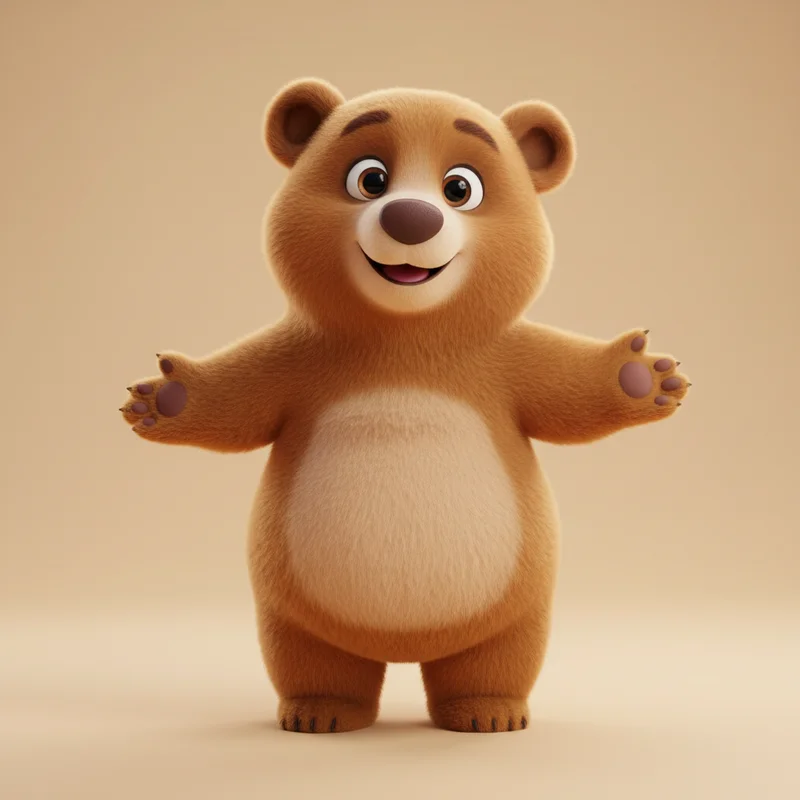
Powerful omnivore ranging from polar ice to forest streams, equally skilled at fishing and frightening campers.

VS
Spongebob

Spongebob

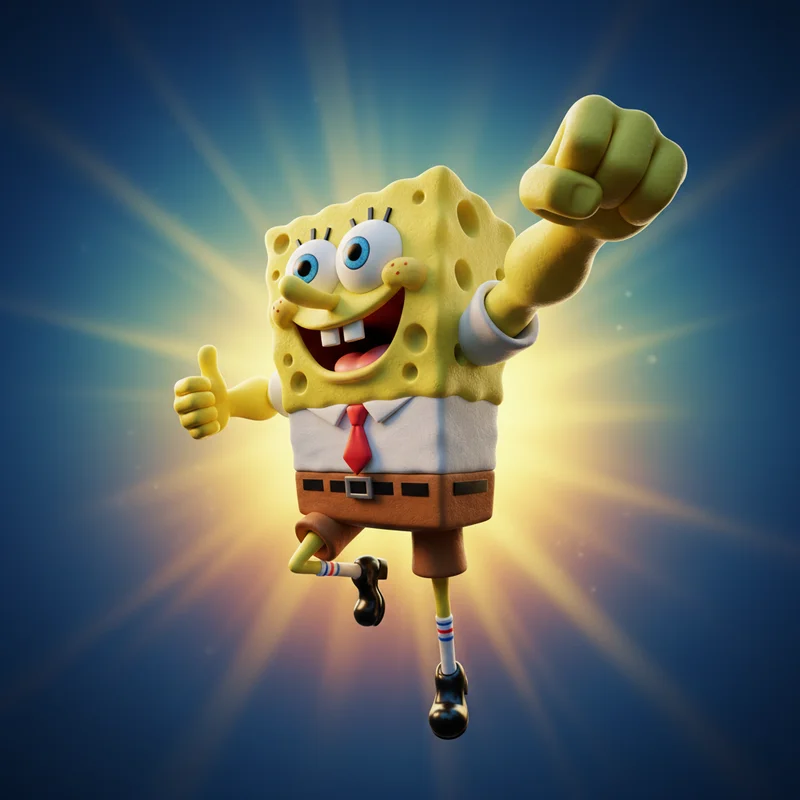
Absorbent yellow sea sponge living in a pineapple.

Battle Analysis

Economic impact Spongebob Wins · 65%
35%
65%
Bear Spongebob

Bear

The bear generates substantial economic activity through both direct and indirect mechanisms. Bear-watching tourism contributes $3.2 billion annually to North American economies alone. The salmon industry, valued at $2.1 billion, depends upon bear-mediated nutrient cycling that fertilises riparian ecosystems. Conversely, bear-related infrastructure costs including reinforced rubbish bins, wildlife corridors, and property damage claims total approximately $200 million annually in the United States. The net economic contribution remains decisively positive.

Spongebob

SpongeBob SquarePants functions as a remarkably efficient commercial engine. Licensing revenue alone exceeds $8 billion historically, with the character appearing on products ranging from breakfast cereals to automobile accessories. The 2004 film grossed $140 million theatrically; subsequent releases maintained profitability. Nickelodeon attributes approximately 30% of total network revenue to SpongeBob-related content. The character requires no feeding, produces no waste, and faces no conservation concerns threatening future revenue streams.

VERDICT

SpongeBob generates superior direct revenue without associated infrastructure costs or conservation requirements.
Survival instinct Bear Wins · 75%
75%
25%
Bear Spongebob

Bear

The bear's survival capabilities have been refined across 38 million years of evolutionary pressure. Omnivorous dietary flexibility allows exploitation of food sources from berries to whale carcasses. Hibernation enables survival through resource-scarce winters without external sustenance. Spatial memory permits precise recall of food locations across territories spanning 1,500 square kilometres. The bear adapts to environments ranging from Arctic tundra to temperate forests, demonstrating resilience that has outlasted ice ages, volcanic events, and human expansion.

Spongebob

SpongeBob's survival strategy relies primarily upon narrative immunity. Within his canonical universe, he has survived circumstances that would terminate most biological entities: extended periods without water, direct heat exposure, and psychological warfare from his neighbour Squidward. However, this survival depends entirely upon continued audience interest and network renewal decisions. Outside his animated context, SpongeBob possesses no independent survival capability whatsoever. His existence is contingent upon Nickelodeon's programming strategy.

VERDICT

The bear survives through evolved biological mechanisms; SpongeBob survives through entertainment industry scheduling.
Inspirational value Spongebob Wins · 60%
40%
60%
Bear Spongebob

Bear

Bears inspire a complex emotional palette in human observers. They represent wilderness authenticity, maternal devotion (the protective mother bear trope), and self-sufficient power. Conservation efforts for bears have galvanised environmental movements, with the polar bear becoming the emblematic species of climate change discourse. Children's literature featuring bears promotes values of courage and independence. However, bears also inspire legitimate fear, restricting certain recreational activities in bear-inhabited regions.

Spongebob

SpongeBob embodies relentless optimism in circumstances that would defeat more sensible characters. His enthusiasm for menial employment challenges capitalist alienation narratives. His friendship with Patrick demonstrates loyalty unmarred by intellectual compatibility requirements. The character has been embraced by the LGBTQ+ community as an icon of joyful authenticity. SpongeBob inspires without intimidation, representing the possibility that happiness can be cultivated through attitude rather than circumstance. His catchphrase 'I'm ready!' has become a genuine motivational mantra.

VERDICT

SpongeBob provides accessible inspiration without associated fear; bears inspire through grandeur that maintains emotional distance.
Physical capability Bear Wins · 70%
70%
30%
Bear Spongebob

Bear

The brown bear (Ursus arctos) represents one of nature's most comprehensively equipped predators. An adult male weighs between 180 and 680 kilograms, depending on subspecies and seasonal variation. Running speeds reach 56 kilometres per hour, sufficient to overtake most Olympic sprinters. The bear possesses claws measuring up to 10 centimetres, bite force exceeding 1,200 pounds per square inch, and the capacity to survive temperatures as low as minus 50 degrees Celsius through hibernation. It swims competently, climbs trees with unexpected agility, and has been documented flipping 300-kilogram boulders in pursuit of insects.

Spongebob

SpongeBob SquarePants demonstrates physical properties that defy conventional biological classification. As an animated character, he possesses functionally infinite regeneration, having survived dismemberment, incineration, and dehydration across 280 episodes. His porous structure allows passage through grates and tight spaces. However, documented lifting capacity rarely exceeds household objects, and his running speed, whilst enthusiastic, proves insufficient to catch a bus reliably. His primary physical attribute remains absorbency, a quality of limited utility in competitive contexts.

VERDICT

The bear possesses measurable apex predator capabilities; SpongeBob's regeneration, whilst impressive, serves primarily comedic functions.
Cultural penetration Spongebob Wins · 65%
35%
65%
Bear Spongebob

Bear

Bears have permeated human culture with extraordinary thoroughness. They feature in the mythology of every civilisation within their native range, from the Greek cult of Artemis to Native American creation narratives. Modern manifestations include the teddy bear (named after Theodore Roosevelt, annual sales exceeding $1.5 billion), the California state flag, and the mascot of at least 47 professional sports franchises. The constellation Ursa Major guides navigation across the Northern Hemisphere. Bear imagery communicates power, protection, and wilderness authenticity.

Spongebob

Since premiering on Nickelodeon on 17 July 1999, SpongeBob SquarePants has achieved cultural saturation unprecedented for an animated invertebrate. The franchise spans films, video games, a Tony-nominated Broadway musical, and countless internet memes that have shaped digital communication for a generation. SpongeBob's laugh is recognised across demographic boundaries. The character has been referenced in academic papers on absurdist humour, discussed in United Nations climate presentations, and inspired a genuine species of fungus named Spongiforma squarepantsii.

VERDICT

SpongeBob achieved global cultural saturation within 25 years; bears required millennia to achieve comparable ubiquity.
👑

The Winner Is

Spongebob

Takes 3 of 5 rounds

The comparative analysis reveals an unlikely upset in the annals of apex-presence theory. The bear claimed convincing victories in physical capability and survival instinct — categories where 38 million years of evolutionary refinement and a bite force exceeding 1,200 pounds per square inch speak rather loudly. SpongeBob, to his credit, did not contest these rounds so much as cheerfully ignore them.

Yet the sponge from Bikini Bottom took three decisive rounds: cultural penetration, economic impact, and inspirational value. SpongeBob saturated global consciousness within 25 years, outpaced bear-related tourism revenue by a factor of several billion, and inspired without the inconvenience of triggering a fight-or-flight response. When the margins are tallied, optimism backed by $8 billion in licensing revenue turns out to be a formidable competitive moat. SpongeBob wins three rounds to two.

Share this battle

More Comparisons