
Topic Battle

Where Everything Fights Everything

Capybara

Capybara

The world's largest rodent and unofficial mascot of unbothered living. A creature so chill that every other animal wants to sit on it. Has achieved a level of inner peace most humans will never know.

VS
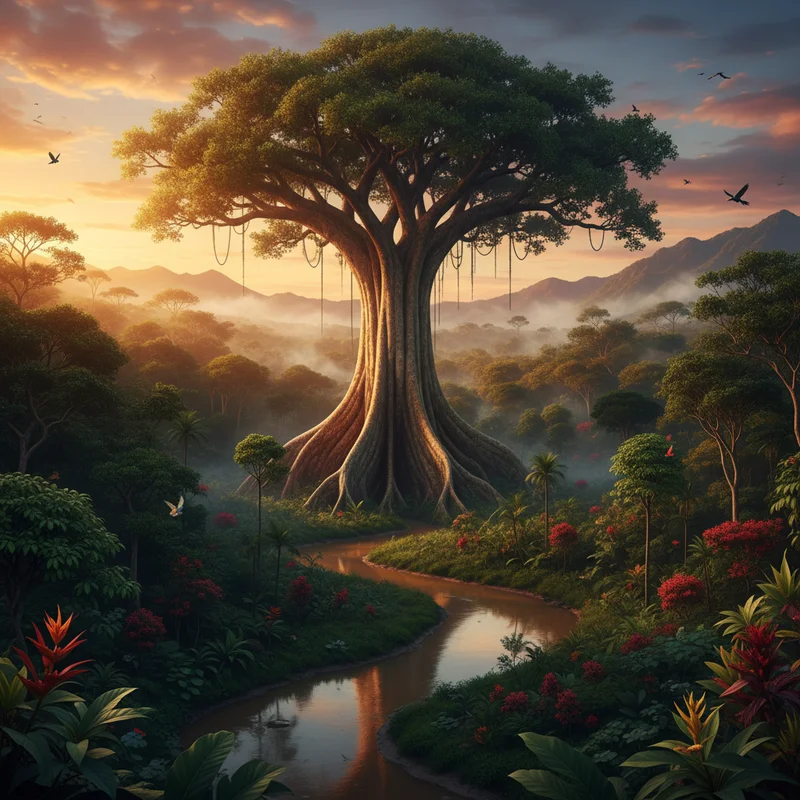
Amazon Rainforest

Amazon Rainforest

Vast jungle ecosystem and biodiversity hotspot.

Battle Analysis

Adaptability capybara Wins
70%
30%
Capybara Amazon Rainforest

Capybara

The capybara has demonstrated remarkable geographic plasticity, colonising habitats from Panamanian lowlands to Argentine grasslands across a range spanning 3,000 kilometres of latitude. These adaptable rodents thrive in seasonal wetlands, permanent swamps, gallery forests, and increasingly in agricultural landscapes where traditional predators have been eliminated. Their semi-aquatic physiology enables exploitation of terrestrial and freshwater resources simultaneously, doubling their available ecological niches.

More remarkably, capybaras have demonstrated capacity for behavioural adaptation to human presence. Japanese onsen operators report capybaras adjusting to captive routines with equanimity bordering on enthusiasm. The species' fundamental requirement—access to water for thermoregulation and predator evasion—represents its only non-negotiable constraint. Given water, the capybara adapts to virtually everything else.

Amazon Rainforest

The Amazon presents a paradox regarding adaptability: it has survived 55 million years of geological and climatic transformation, yet remains critically vulnerable to changes occurring within human timescales. The forest weathered ice ages, continental drift, and the Andean uplift that fundamentally reorganised South American hydrology. Its species composition shifted continuously whilst its fundamental character persisted—a ship of Theseus that replaced every plank whilst remaining recognisably itself.

However, the Amazon's adaptability operates at timescales measured in millennia, not decades. Current deforestation rates and climate projections threaten to push the system beyond tipping points from which recovery may require tens of thousands of years. The forest adapts magnificently to slow change but may prove fatally rigid when confronted with the velocity of human modification. Adaptability, it transpires, is a function of available time.

VERDICT

The capybara's demonstrated ability to thrive across diverse habitats and adjust to human presence within individual lifetimes represents adaptability at relevant timescales.
Social complexity amazon_rainforest Wins
30%
70%
Capybara Amazon Rainforest

Capybara

Capybara social organisation represents a masterclass in harmonious coexistence. Groups typically comprise ten to twenty individuals, though drought conditions may concentrate over one hundred capybaras at diminishing water sources without apparent conflict. Their hierarchical structure features dominant males whose authority is maintained through scent-marking rather than violence, and communal nursing arrangements where females care for any group offspring regardless of biological relationship.

Most remarkably, capybaras extend their social tolerance across species boundaries with a generosity that puzzles evolutionary biologists. Birds perch upon their backs, monkeys share their spaces, and even predators appear to treat resting capybaras with curious forbearance. Scientists have documented caimans sharing basking spots with capybaras they might reasonably consume. The capybara has achieved something approaching universal social acceptance—a diplomatic triumph with few parallels in the animal kingdom.

Amazon Rainforest

The Amazon contains social complexity beyond comprehensive human understanding. Within its boundaries exist 350 indigenous human groups whose cultures, languages, and knowledge systems have developed in intimate relationship with forest ecosystems over millennia. Beyond human society, the forest harbours 2.5 million insect species, each with behavioural repertoires evolved through countless generations of social and environmental interaction.

The mycorrhizal networks connecting forest trees—the Wood Wide Web—facilitate resource sharing, warning signals, and kin recognition through chemical communication. Leafcutter ant colonies demonstrate division of labour rivalling human cities. Harpy eagles maintain pair bonds lasting decades. The Amazon does not possess social complexity; it contains every form of social organisation that evolution has produced, from bacterial biofilms to multi-generational human communities. It is less a single social entity than a library of social possibility.

VERDICT

Containing 350 indigenous human cultures and 2.5 million insect species with diverse social systems represents complexity that no individual species can approach.
Cultural resonance capybara Wins
70%
30%
Capybara Amazon Rainforest

Capybara

The capybara's cultural moment arrived with the digital revolution—a development the species cannot possibly comprehend yet has exploited with remarkable success. Internet searches for capybara content have increased over 2,000 percent since 2019. The phrase 'OK I pull up' achieved viral status, whilst photographs of capybaras relaxing in Japanese hot springs have accumulated hundreds of millions of views. The creature has been adopted as an unofficial mascot for millennial and Gen-Z anxiety, its apparent immunity to stress offering philosophical instruction to stressed humanity.

This cultural resonance, whilst recent, demonstrates extraordinary velocity. The capybara transformed from obscure South American herbivore to global phenomenon within approximately five years—a timeline unprecedented in the history of animal celebrity. Whether this cultural moment persists remains to be determined, but its current intensity is undeniable.

Amazon Rainforest

The Amazon has functioned as a cultural touchstone for human civilisation since Europeans first penetrated its interior. Indigenous peoples have structured entire cosmologies around the forest's rhythms for at least 11,000 years. Western culture has projected upon the Amazon its deepest anxieties and aspirations: the Garden of Eden, El Dorado, the green lung of the planet, the lungs of the Earth requiring salvation.

The forest appears in literature from Conan Doyle's Lost World to contemporary climate narratives. Documentary filmmaking has invested hundreds of millions chronicling Amazonian biodiversity. Environmental movements invoke the Amazon as the ultimate symbol of what humanity stands to lose. Yet this cultural resonance, whilst deep and enduring, lacks the personal intimacy that the capybara has achieved. One does not form emotional attachment to the Amazon; one forms abstract concern. The capybara, conversely, inspires something approaching love.

VERDICT

The capybara's transformation into a symbol of contemporary mental health and stress relief achieves cultural intimacy that the Amazon's abstract grandeur cannot match.
Ecological influence amazon_rainforest Wins
30%
70%
Capybara Amazon Rainforest

Capybara

The capybara's ecological influence operates through what scientists term bioturbation—the physical rearrangement of soil and vegetation through daily activities. These prodigious grazers consume approximately 3 kilograms of vegetation daily, their selective feeding patterns shaping plant community composition across wetland habitats. Their substantial faecal deposits, strategically concentrated in aquatic environments, redistribute nutrients with a generosity that smaller herbivores cannot match. The capybara serves as mobile fertilisation infrastructure for riverside ecosystems.

Furthermore, capybaras function as prey species of considerable importance, supporting populations of jaguars, caimans, and anacondas whose presence structures entire food webs. Remove the capybara, and predator populations face caloric crisis. Yet one must acknowledge the fundamental constraint: the capybara influences ecosystems measured in hectares, not hemispheres.

Amazon Rainforest

The Amazon Rainforest does not merely influence its ecosystem—it is an ecosystem of planetary significance. Through evapotranspiration, the forest generates approximately 50 percent of its own rainfall, functioning as a self-sustaining hydrological engine that influences precipitation patterns across South America. The so-called flying rivers—atmospheric moisture transported westward—deposit more water on southern Brazil than the Amazon River itself delivers to the Atlantic Ocean.

The forest sequesters an estimated 150-200 billion tonnes of carbon, rendering it Earth's largest terrestrial carbon sink and a critical buffer against catastrophic climate change. Its canopy produces chemicals that seed cloud formation, its root systems prevent continental-scale erosion, and its biodiversity represents a genetic library whose full value remains incalculable. The Amazon does not participate in ecology; it defines the terms of ecological discourse for an entire hemisphere.

VERDICT

A self-sustaining hydrological engine influencing continental climate patterns categorically outperforms even the most enthusiastic fertilisation efforts of individual herbivores.
Existential significance amazon_rainforest Wins
30%
70%
Capybara Amazon Rainforest

Capybara

The capybara's existential contribution to Earth systems, whilst locally meaningful, registers as statistically negligible at planetary scales. Remove the capybara from existence, and South American wetland ecology would adjust within decades. Predator populations would shift to alternative prey; vegetation patterns would reorganise around different grazing pressures; nutrient cycling would continue through different channels. The capybara is, in existential terms, replaceable—a role player rather than a keystone.

This assessment may seem harsh, yet it reflects the fundamental nature of individual species within complex systems. The capybara matters profoundly to the capybara, modestly to its immediate ecosystem, and hardly at all to planetary processes. Its significance lies in what it represents rather than what it does.

Amazon Rainforest

The Amazon's existential significance transcends any category that individual organisms can occupy. The forest generates 20 percent of global oxygen and influences weather patterns across continents. Its destruction would release sufficient carbon to accelerate climate change beyond recovery thresholds. The biodiversity within its boundaries represents genetic information accumulated across tens of millions of years—information that once lost cannot be recovered within civilisation-relevant timeframes.

More fundamentally, the Amazon represents one of Earth's few remaining examples of planetary-scale biological process operating relatively unimpeded by human modification. Its continued function demonstrates what healthy ecosystems can achieve; its degradation would demonstrate the limits of planetary resilience. The Amazon is not merely significant—it may prove essential to the long-term habitability of Earth for human civilisation.

VERDICT

Generating 20 percent of global oxygen and influencing planetary climate stability represents existential significance that individual species cannot possess.
👑

The Winner Is

Amazon Rainforest

42 - 58

The investigation concludes with the Amazon Rainforest prevailing at 58 to 42—a margin that feels simultaneously inevitable and somehow unfair to the capybara. This was never a contest between equals but rather an examination of the relationship between container and contained, between the ecosystem and one of its most charismatic products. That the container should prove more significant than the contained surprises no one; what surprises is how close the contest became.

The capybara's victories in adaptability and cultural resonance reveal something profound about what contemporary humanity values. We find ourselves more moved by a single relatable creature than by the incomprehensible complexity of an entire biome. The capybara fits in our imagination; the Amazon exceeds it. Yet this emotional accessibility, whilst genuine, cannot compensate for the fundamental asymmetry of scale. The Amazon created the capybara through millions of years of evolutionary refinement; the capybara cannot reciprocate. The relationship between them is not competition but origin.

Capybara
42%
Amazon Rainforest
58%

Share this battle

More Comparisons