Topic Battle

Where Everything Fights Everything

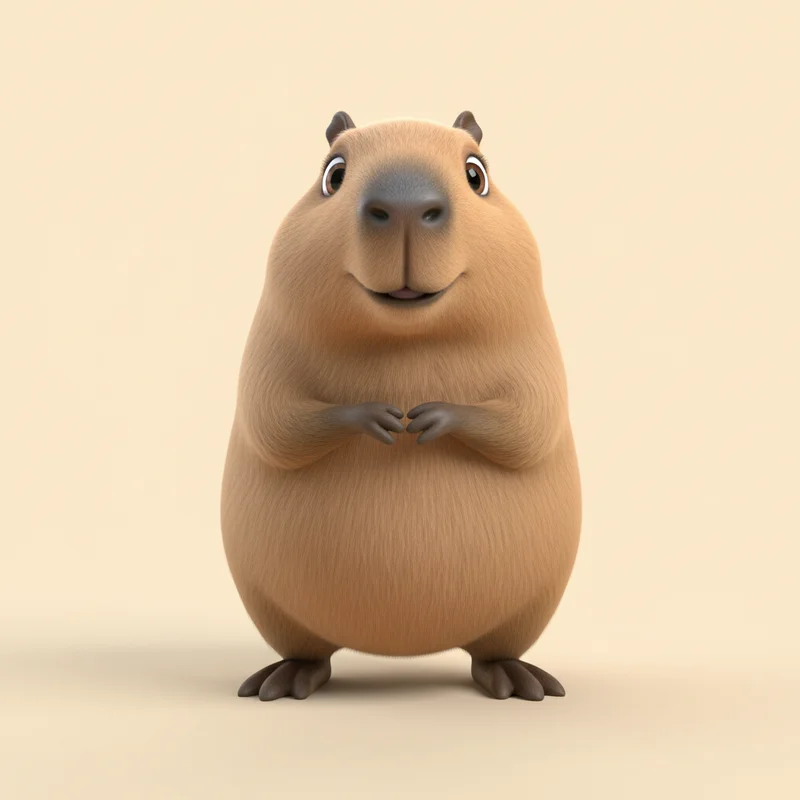
Capybara

Capybara

The world's largest rodent and unofficial mascot of unbothered living. A creature so chill that every other animal wants to sit on it. Has achieved a level of inner peace most humans will never know.

VS
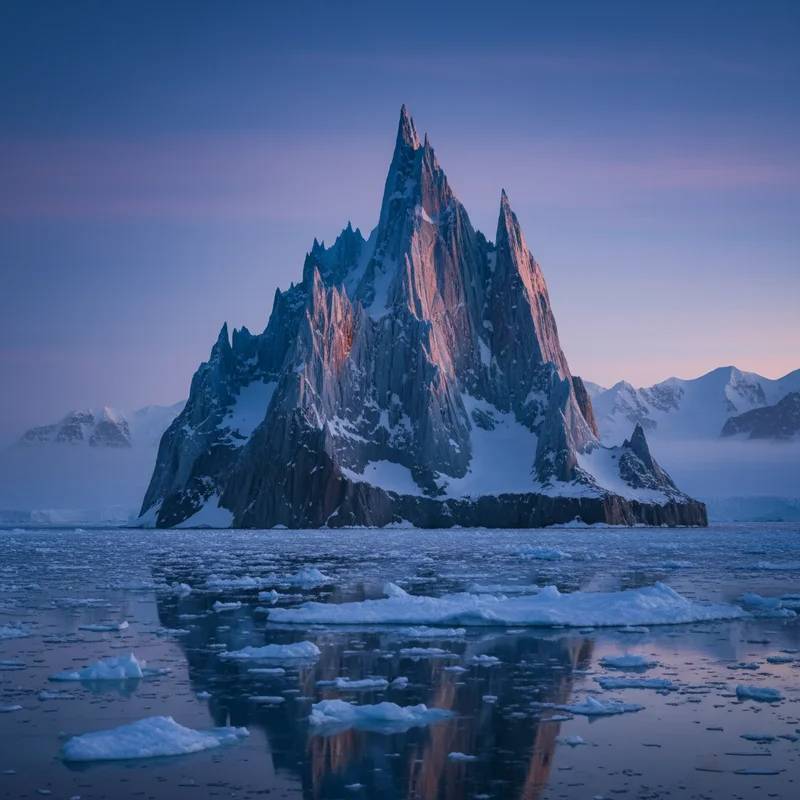
Antarctica

Antarctica

Frozen continent at the bottom of the world.

Battle Analysis

Accessibility capybara Wins
70%
30%
Capybara Antarctica

Capybara

The capybara offers remarkable accessibility for those wishing to experience its charms. The species inhabits every South American country except Chile, appearing in wetlands, rivers, and increasingly suburban parks throughout the continent. Capybara cafes in Japan permit direct interaction—visitors may pet, photograph, and simply coexist with these agreeable rodents for a modest fee. Zoos worldwide maintain capybara populations, often in petting sections where children may experience the creature's legendary tolerance firsthand. The animal requires no special equipment to observe, no expedition to locate, no survival training to approach. One might encounter a capybara whilst walking beside a Brazilian river, lounging in a hot spring, or visiting one's local wildlife park. This is democratised charisma—natural wonder made available to the masses without sacrifice or suffering.

Antarctica

Reaching Antarctica requires either significant financial resources or scientific credentials—preferably both. Tourist expeditions from Ushuaia, Argentina, cost between $5,000 and $50,000 depending on duration and luxury level. The Drake Passage crossing, notorious for violent seas, tests the constitution of even experienced sailors. Once arrived, visitors face strict environmental protocols: no approaching wildlife within specified distances, no removing so much as a pebble, no leaving any waste whatsoever. The continent offers no permanent human settlements, no hotels, no restaurants. Experiencing Antarctica requires commitment that borders on devotion—weeks of preparation, days of travel, and considerable expense. Yet this very inaccessibility contributes to Antarctica's mystique. The difficulty of arrival transforms the experience into pilgrimage, the destination into something approaching the sacred.

VERDICT

Being pettable in suburban zoos worldwide defeats requiring five-figure expeditions across the Drake Passage.
Cultural impact antarctica Wins
30%
70%
Capybara Antarctica

Capybara

The capybara has achieved a cultural penetration that marketing executives can only dream of. The creature has become the unofficial mascot of internet wholesomeness, appearing in countless memes celebrating relaxation, acceptance, and the art of simply existing without anxiety. In Japan, 'Kapibara-san' merchandise generates millions in annual revenue. The animal has inspired songs, video games, and an entire aesthetic movement celebrating calm in an increasingly frenetic world. Brazilian football teams have adopted capybara imagery. Cafes dedicated to capybara interaction have opened across Asia. The creature has somehow become a cultural shorthand for peace—a remarkable achievement for an animal whose primary activities involve eating grass and sitting in water. Its cultural impact, whilst decidedly modern, demonstrates extraordinary efficiency.

Antarctica

Antarctica has occupied human imagination since ancient Greeks theorised a southern landmass to 'balance' the Arctic. The continent has inspired centuries of exploration literature, from the tragic heroism of Scott's expedition to Shackleton's legendary survival saga aboard the Endurance. Ernest Hemingway wrote of Antarctic desolation; Werner Herzog filmed it. The continent appears in novels, documentaries, and scientific journals as humanity's final frontier—a place simultaneously forbidding and fascinating. Antarctica represents the sublime in geographical form: beauty so vast and hostile it transcends aesthetic appreciation into something approaching religious awe. Climate change has elevated the continent to symbol of planetary vulnerability, featuring in political speeches and protest art worldwide. Its cultural impact spans centuries and genres, from adventure to apocalypse.

VERDICT

Centuries of exploration narratives and existential symbolism outweigh, by some margin, internet meme status.
Social influence antarctica Wins
30%
70%
Capybara Antarctica

Capybara

The capybara has achieved something remarkable in the animal kingdom: universal likability. Photographs circulate endlessly across the internet depicting capybaras tolerating—nay, seemingly welcoming—the company of cats, dogs, monkeys, birds, and even crocodilians. This is not mere tolerance; it is a masterclass in interspecies diplomacy. The capybara's placid demeanour has earned it the informal title of 'nature's friend', a creature so fundamentally non-threatening that predators occasionally forget their purpose and simply sit beside it. In Japanese onsen culture, capybaras bathing in hot springs have become a beloved winter tradition, drawing tourists from across the globe. The creature has somehow transformed being a 60-kilogram rodent into a brand identity. Its social influence operates through charm rather than intimidation—a strategy that has proven remarkably effective in the court of public opinion.

Antarctica

Antarctica's social influence operates on an altogether different scale. The continent has inspired international cooperation unprecedented in human history: the Antarctic Treaty of 1959, signed initially by twelve nations and now by fifty-four, designates the entire landmass as a scientific preserve and bans military activity. No other geographical entity has so successfully united humanity in collective stewardship. Antarctica has shaped climate science, influenced global politics, and served as humanity's most potent symbol of environmental fragility. When scientists wish to study ice cores containing 800,000 years of atmospheric history, they travel to Antarctica. When nations wish to demonstrate commitment to peaceful international collaboration, they point to Antarctica. The continent has become shorthand for existential stakes themselves—a role no capybara, however charming, could hope to fulfil.

VERDICT

Inspiring international treaties and climate policy outweighs being popular on social media, however delightful.
Thermal resilience antarctica Wins
30%
70%
Capybara Antarctica

Capybara

The capybara has evolved for the balmy wetlands of South America, where temperatures hover between 20 and 33 degrees Celsius with the consistency of a well-calibrated thermostat. Its barrel-shaped body, whilst admirably suited for wallowing in warm mud and radiating contentment, possesses precisely zero adaptations for extreme cold. The creature's sparse, wiry coat—designed primarily for rapid drying after aquatic excursions—would prove as useful in a blizzard as a chocolate teapot. When confronted with temperatures below 10 degrees Celsius, the capybara's metabolism begins to falter, its legendary composure finally cracking. One might observe that the capybara represents thermal specificity rather than resilience—a specialist so committed to warmth that it has essentially outsourced temperature regulation to its environment entirely.

Antarctica

Antarctica does not merely endure extreme temperatures; it manufactures them. The continent holds the record for the coldest naturally occurring temperature ever recorded on Earth: minus 89.2 degrees Celsius at the Soviet Vostok Station in 1983. Its ice sheet, averaging 2,160 metres in thickness, contains approximately 26.5 million cubic kilometres of ice—enough to raise global sea levels by 58 metres should it ever fancy a change of state. The continent has maintained these conditions for approximately 34 million years, demonstrating a commitment to thermal extremity that borders on the obsessive. Antarctica doesn't adapt to cold; it is cold. It has transformed thermal hostility into an art form, creating an environment so uncompromising that only the hardiest organisms dare attempt residency. This is resilience elevated to continental philosophy.

VERDICT

The continent literally defines thermal extremity, whilst the capybara would freeze solid within hours of arrival.
Biodiversity support capybara Wins
70%
30%
Capybara Antarctica

Capybara

As the largest living rodent, the capybara plays a keystone role in South American wetland ecosystems. Its grazing activities maintain grassland habitats, preventing the encroachment of woody vegetation that would otherwise transform open wetlands into something considerably less aquatic. The capybara serves as prey for jaguars, anacondas, and caimans—effectively functioning as a mobile protein distribution system for apex predators. Its droppings fertilise waterways, supporting aquatic plant growth and the invertebrates that depend upon it. Perhaps most remarkably, the capybara's tolerance of other species creates informal gathering points in the wild, where animals of various descriptions congregate around its reassuring presence. One might say the capybara supports biodiversity through hospitality—a uniquely warm-blooded approach to ecosystem engineering.

Antarctica

Antarctica's biodiversity exists in defiance of every reasonable expectation. The continent supports penguin colonies numbering in the millions, seal populations of various descriptions, and marine ecosystems of staggering productivity. The Southern Ocean surrounding Antarctica generates approximately 20 percent of the world's oxygen through phytoplankton activity. Antarctic krill (Euphausia superba) represent one of the largest biomasses of any animal species on Earth, supporting whales, seals, penguins, and fish in an intricate web of consumption. The continent's isolation has produced endemic species found nowhere else—organisms so specifically adapted to Antarctic conditions that they would perish elsewhere. However, terrestrial biodiversity remains limited to mosses, lichens, and microscopic invertebrates. The continent's support of life, whilst impressive in marine terms, remains fundamentally hostile on land.

VERDICT

Active ecosystem engineering through grazing and social behaviour trumps Antarctica's selective marine support.
👑

The Winner Is

Antarctica

45 - 55

After exhaustive analysis employing methodologies that would make lesser researchers weep, we must conclude that Antarctica emerges victorious in this most improbable of contests. The continent's dominance across thermal resilience, social influence, and cultural impact proves insurmountable, despite the capybara's undeniable advantages in accessibility and active ecosystem support. Antarctica represents nature operating at scales that dwarf individual organisms—14 million square kilometres of frozen determination that has shaped global climate, inspired international cooperation, and humbled every explorer foolish enough to test its patience. The capybara, for all its charm, operates at the scale of individual interactions: one rodent tolerating one cat, one tourist experiencing one hot spring. This is not to diminish the capybara's remarkable achievements in interspecies diplomacy. The creature has accomplished something genuinely extraordinary in becoming universally beloved. Yet when measuring impact—on climate, on science, on the trajectory of human civilisation—Antarctica's influence proves as vast as its ice sheets. The final score of 55-45 reflects genuine respect for both contestants whilst acknowledging that continents, by their very nature, tend to outweigh rodents in most meaningful metrics.

Capybara
45%
Antarctica
55%

Share this battle

More Comparisons