
Topic Battle

Where Everything Fights Everything

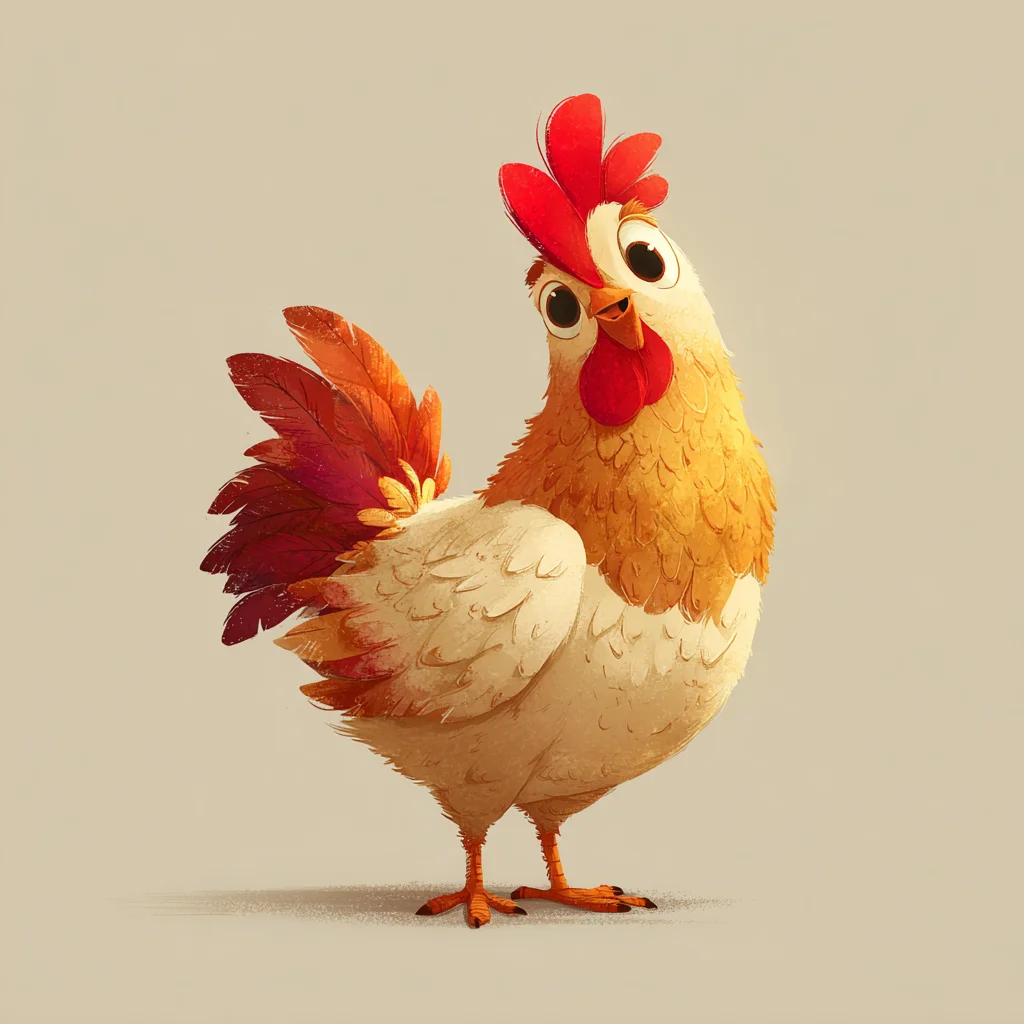
Chicken

Chicken

A domesticated fowl, a subspecies of the red junglefowl. One of the most common and widespread domestic animals.

VS
Capybara

Capybara

The world's largest rodent and unofficial mascot of unbothered living. A creature so chill that every other animal wants to sit on it. Has achieved a level of inner peace most humans will never know.

The Matchup

In the annals of zoological achievement, few comparisons prove quite so illuminating as that between Hydrochoerus hydrochaeris, the capybara, and Gallus gallus domesticus, the domestic chicken. Here we observe two species that have adopted radically different strategies for coexistence with humanity, and both have succeeded beyond any reasonable expectation.

The capybara represents something of an evolutionary enigma: a rodent that has achieved the proportions of a medium-sized dog, reaching weights of 35 to 66 kilograms. Native to the wetlands and grasslands of South America, this barrel-shaped herbivore has cultivated a reputation for extraordinary placidity. It shares its habitat with caimans, anacondas, and jaguars, yet maintains the serene composure of a creature that has simply stopped worrying about predation.

The chicken, by contrast, has pursued global domination through sheer reproductive enthusiasm. Descended from the red junglefowl of Southeast Asia, Gallus gallus has achieved a global population exceeding 33 billion individuals, making it the most numerous bird on Earth. This represents approximately four chickens for every human being, a ratio that speaks to either remarkable success or deeply concerning levels of avian ambition. Both species now warrant careful comparative analysis.

Battle Analysis

Speed Capybara Wins
30%
70%
Chicken Capybara

Chicken

The domestic chicken achieves a maximum sprint velocity of approximately 14.5 kilometres per hour, or 9 miles per hour, when sufficiently motivated by threat or opportunity. This represents a significant reduction from the capabilities of their wild junglefowl ancestors.

Flight capability exists but has atrophied considerably under domestication. Modern chickens achieve brief bursts covering 10 to 15 feet horizontally at modest heights, sufficient for reaching low perches but inadequate for sustained aerial travel. The broiler varieties bred for meat production have become so gravitationally challenged that even these limited flights prove difficult.

One must note, however, that the chicken's reduced velocity reflects deliberate human selection rather than evolutionary failure. Chickens have been bred for egg production, meat yield, and temperament. Speed has been actively discouraged in favour of docility and feed conversion efficiency. The chicken sacrificed velocity for other advantages.

Capybara

The capybara, despite its considerable bulk, demonstrates surprising terrestrial velocity when circumstances demand. Fully grown specimens achieve running speeds of 35 kilometres per hour across open ground, equivalent to approximately 22 miles per hour in imperial measurement.

This velocity proves particularly remarkable given the animal's physiology. The capybara is, fundamentally, a giant guinea pig optimised for aquatic environments. Its legs are short relative to body mass, its feet partially webbed, and its general disposition suggests that running is considered rather undignified. Yet when predators approach, the capybara can accelerate with surprising urgency.

In water, the species demonstrates even greater capability. Capybaras swim with grace and efficiency, remaining submerged for up to five minutes and using aquatic environments as their primary escape route. They have been observed sleeping while mostly submerged, with only nostrils protruding above the waterline. This amphibious versatility represents evolutionary sophistication that merits acknowledgment.

VERDICT

In matters of terrestrial velocity, the capybara holds a decisive advantage of approximately 140% over its gallinaceous competitor. The 35 kph maximum of Hydrochoerus hydrochaeris substantially exceeds the chicken's 14.5 kph ceiling.

The capybara's aquatic capabilities further extend this advantage. While the chicken demonstrates adequate swimming ability in emergencies, it approaches water with the enthusiasm of a creature that would prefer virtually any alternative. The capybara, meanwhile, treats water as a preferred medium for locomotion, thermoregulation, and social activity.

This category belongs to the capybara without controversy. The world's largest rodent has retained locomotor capabilities that domestic breeding has systematically removed from the chicken. In the fundamental biological metric of escape velocity, the capybara prevails.

Durability Chicken Wins
70%
30%
Chicken Capybara

Chicken

The domestic chicken maintains functional viability for 5 to 10 years under favorable conditions, with heritage breeds typically outlasting commercial production varieties. The record-holding chicken, an Australian specimen named Matilda, survived to 16 years of age.

Chickens demonstrate considerable resilience to environmental variation, tolerating temperature ranges from -20 degrees Celsius to 35 degrees Celsius with appropriate shelter. They recover from minor injuries through biological regeneration, regrow feathers seasonally, and maintain egg production despite the extraordinary metabolic demands this imposes.

More significantly, the chicken possesses reproductive durability of exceptional scale. A single hen produces approximately 250 to 300 eggs annually during peak production years, ensuring population continuity without requiring the elaborate courtship rituals observed in wild fowl. The species has maintained this output for eight millennia of domestication.

Capybara

The capybara demonstrates a natural lifespan of 8 to 10 years in wild conditions, extending to 12 years or more under captive management with appropriate veterinary care. This longevity proves notable given the species' position in South American food webs.

Capybaras face predation from jaguars, pumas, ocelots, caimans, and anacondas. That any individual survives to old age speaks to either remarkable luck or the effectiveness of their social vigilance systems. Capybaras maintain group living arrangements specifically to improve predator detection, with multiple individuals sharing sentinel duties.

The species possesses robust immunological systems adapted to tropical environments, though they serve as reservoir hosts for various tick-borne pathogens. Their semi-aquatic lifestyle provides protection from many terrestrial parasites while introducing exposure to waterborne concerns. The capybara has balanced these competing pressures over millions of years of evolution.

VERDICT

While individual capybaras may achieve marginally longer maximum lifespans, the chicken's durability must be assessed at population rather than individual scale. The species has demonstrated continuous functionality for 8,000 years of domestication, adapting to climates from tropical Singapore to subarctic Norway.

The capybara remains geographically constrained to tropical and subtropical environments, requiring specific temperature and humidity conditions. The chicken has proven capable of establishing populations in virtually any human-inhabited environment, demonstrating environmental tolerance the capybara cannot match.

Furthermore, the chicken's reproductive output ensures population persistence through sheer numerical redundancy. When disease or predation claims individuals, the population recovers rapidly. The capybara's lower reproductive rate and longer maturation period create vulnerability to population decline that the chicken has effectively eliminated through prolific breeding.

Versatility Chicken Wins
70%
30%
Chicken Capybara

Chicken

The chicken provides an extraordinary range of practical applications unmatched by virtually any other domesticated species. Global egg production exceeds 1.4 trillion eggs annually, while chicken meat represents the most consumed protein source worldwide, surpassing both pork and beef.

Beyond primary outputs, chickens deliver pest control services of considerable value, consuming up to 80 ticks and numerous other insects daily. A flock of chickens can significantly reduce pest populations in agricultural and residential settings while converting these insects into eggs and fertilizer.

Feathers supply the bedding industry with down filling. Poultry manure serves as nitrogen-rich agricultural fertilizer. Chickens function as educational subjects, alarm systems through their dawn vocalizations, and indicators of human settlement patterns across archaeological timescales. The species has achieved integration into human civilization at a depth few organisms can claim.

Capybara

The capybara serves human interests in a surprisingly diverse portfolio of applications. In South America, capybara meat has been consumed for centuries, with the Catholic Church's classification of the species as fish during the 16th century permitting consumption during Lent. This theological flexibility enabled sustained protein intake when other meats were prohibited.

Capybara leather produces high-quality material valued in the luxury goods industry, particularly for gloves and accessories. The hide's unique properties include exceptional softness and durability. Wild populations in some regions are managed specifically for sustainable leather harvest.

More recently, capybaras have demonstrated remarkable aptitude as companion animals. Their docile temperament permits cohabitation with virtually any other species, from dogs and cats to birds and monkeys. The capybara's apparent inability to experience stress has made it the subject of extensive internet documentation, where images of capybaras tolerating other animals perched upon them have achieved significant cultural circulation.

VERDICT

The versatility comparison reveals a substantial asymmetry in practical utility. While the capybara offers genuine value in leather production, companion animal applications, and regional protein provision, the chicken's utility portfolio spans virtually every human need category.

The chicken simultaneously serves as food source, egg producer, pest controller, fertilizer generator, and self-reproducing agricultural asset. The capybara, despite its charming disposition, cannot match this breadth. One cannot, for instance, maintain a productive capybara flock in a suburban backyard with expectations of daily egg collection.

The capybara's emerging role in therapeutic and entertainment contexts deserves acknowledgment, yet remains niche relative to the chicken's global provision of fundamental nutritional resources. In matters of practical versatility, the chicken demonstrates superiority by substantial margin.

Global reach Chicken Wins
70%
30%
Chicken Capybara

Chicken

The domestic chicken maintains breeding populations in virtually every nation on Earth, with a global population exceeding 33 billion individuals at any given moment. This represents approximately four chickens for every human being.

The species has achieved market penetration that corporate strategists would consider aspirational. Chickens operate in environments ranging from industrial farming operations processing millions of birds annually to subsistence household agriculture supporting single families. No climate zone proves too extreme, no culture too isolated for chicken colonization.

Chickens require no importation infrastructure to maintain local populations once established. They replicate independently through biological reproduction, adapting to local conditions through natural selection and deliberate breeding. The chicken has demonstrated this expansion capability continuously for eight millennia.

Capybara

The capybara maintains native populations across South America east of the Andes, from Panama to northern Argentina. This range encompasses approximately 12 countries, with population densities highest in the wetlands of Brazil, Venezuela, and Colombia.

Global population estimates suggest several million individuals in wild conditions, with the species listed as Least Concern by the IUCN. However, this represents geographic distribution limited to a single continent with no established wild populations elsewhere.

Captive capybaras have achieved modest global distribution through zoological institutions and the exotic pet trade. Populations exist in Japan, where capybara hot spring bathing has become a celebrated winter tourism attraction. The species has developed particular cultural resonance in Japanese popular culture, appearing in advertising, animation, and extensive merchandise production.

VERDICT

In matters of geographic distribution, the disparity proves mathematically overwhelming. The chicken's 33 billion global population exceeds the capybara's several million by a factor of approximately 10,000.

The capybara remains functionally confined to tropical and subtropical environments requiring specific humidity, temperature, and aquatic access. The chicken has established viable populations from the Arctic Circle to the Atacama Desert, from Himalayan villages to Pacific atolls.

The chicken's global reach represents true geographic independence. Each population maintains itself through local reproduction without requiring international trade networks. The capybara's presence outside South America remains dependent upon human transport and captive maintenance. In terms of autonomous planetary distribution, the chicken holds an insurmountable advantage.

Social impact Chicken Wins
70%
30%
Chicken Capybara

Chicken

The chicken's social impact operates at civilizational rather than cultural scale. The species has shaped human settlement patterns, enabled population growth through reliable protein provision, and influenced religious practices across multiple faith traditions.

Economically, the global poultry industry generates revenue exceeding 300 billion dollars annually, employing millions of workers across farming, processing, and distribution networks. The industry supports livelihoods in virtually every nation and represents a fundamental component of global food security.

The chicken has penetrated human language itself. Phrases involving chickens appear in virtually every culture: counting chickens before hatching, ruling the roost, being chicken-hearted, and the eternal philosophical inquiry regarding road-crossing motivations. The species has achieved linguistic immortality across human civilization.

Capybara

The capybara has achieved remarkable cultural prominence in the early 21st century, becoming one of the internet's most celebrated animal celebrities. The species' apparent equanimity, documented in countless images showing capybaras tolerating other animals sitting upon them, has generated extensive online discussion.

The phrase "OK I pull up" and associated meme formats have introduced the capybara to audiences entirely unfamiliar with South American wildlife. This cultural penetration has translated into merchandise sales, tourism revenue, and conservation awareness for the species.

In Japan, capybara bathing attractions draw hundreds of thousands of visitors annually, contributing significantly to regional economies. The Izu Shaboten Zoo's capybara hot spring installation has become internationally famous, spawning imitators across the country. The capybara has demonstrated capacity to generate economic activity through pure charisma.

VERDICT

The social impact comparison presents an interesting contrast between depth and breadth. The capybara has achieved intense cultural prominence within specific demographics and platforms, while the chicken has achieved comprehensive integration across all human societies.

The capybara's internet celebrity status, while genuine, represents recent and potentially ephemeral cultural penetration. The chicken's social impact spans eight millennia of continuous human interaction, including roles in religion, economics, language, and mythology that the capybara has not approached.

When measured by duration, geographic scope, and depth of integration into human civilization, the chicken's social impact proves superior by substantial margin. The capybara delights the internet; the chicken feeds the world.

👑

The Winner Is

Chicken

42 - 58

This natural history inquiry concludes with a 58-42 victory for Gallus gallus domesticus, the domestic chicken, reflecting superior performance in durability, versatility, global reach, and social impact. The capybara secures only the speed category, where its 35 kph terrestrial velocity and aquatic capabilities exceed the chicken's more modest locomotive achievements.

The capybara should not be diminished by this result. Hydrochoerus hydrochaeris represents a remarkable evolutionary achievement: a rodent that grew to the size of a pig, developed semi-aquatic capabilities, and achieved a temperament so placid that it has become the internet's designated ambassador for tranquility in a turbulent age. The species deserves celebration for these accomplishments.

Yet the chicken has achieved something the capybara has not: complete planetary distribution and civilizational integration. The chicken exists wherever humans exist, providing fundamental nutritional resources with minimal infrastructure requirements. The capybara requires tropical wetlands and careful management. The chicken requires only access to feed and water to establish populations anywhere on Earth.

In the great documentary of domesticated species, both creatures warrant extended segments. But the chicken has earned top billing through sheer ubiquity, proving that in nature, as in life, consistent daily performance ultimately outweighs occasional moments of viral celebrity.

Chicken
42%
Capybara
58%

Share this battle

More Comparisons