
Topic Battle

Where Everything Fights Everything

Capybara

Capybara

The world's largest rodent and unofficial mascot of unbothered living. A creature so chill that every other animal wants to sit on it. Has achieved a level of inner peace most humans will never know.

VS
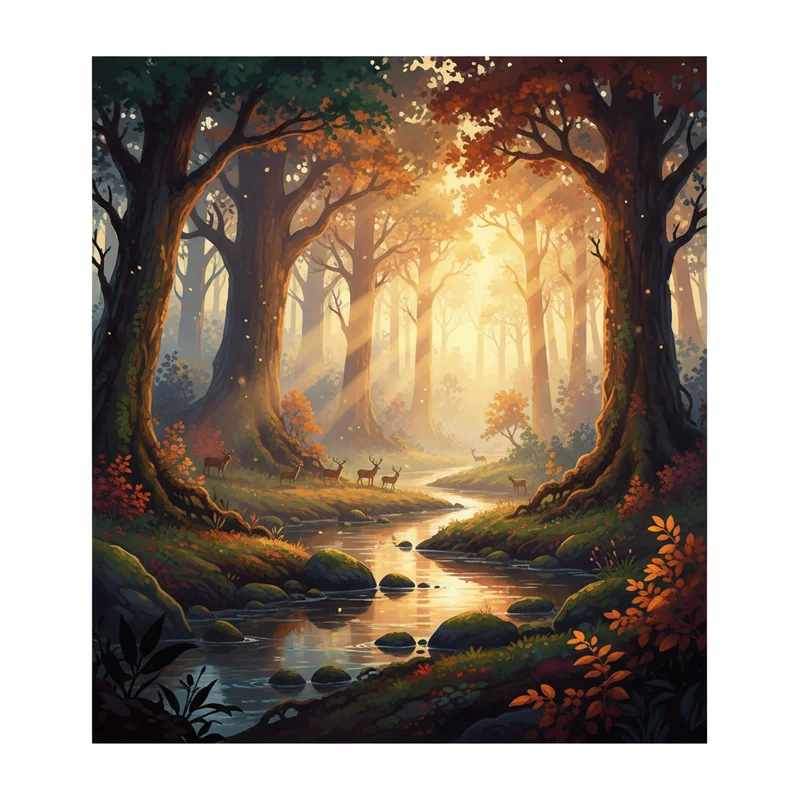
Forest

Forest

Tree-dominated ecosystem and planetary lungs.

Battle Analysis

Adaptability forest Wins
30%
70%
Capybara Forest

Capybara

The capybara demonstrates remarkable plasticity within certain strict parameters. These semi-aquatic rodents require access to water for thermoregulation, mating, and escaping predators—their webbed feet rather give away their aquatic commitments. They have adapted splendidly to human-modified environments, appearing in Brazilian golf courses, Argentinian suburbs, and Japanese hot springs with equal aplomb. Their digestive system can process a wide variety of vegetation, including crops that farmers would rather they didn't. Yet they remain fundamentally tied to tropical and subtropical climates, unable to survive freezing temperatures. The capybara's adaptability, whilst impressive, operates within a thermal comfort zone that would make a Floridian seem adventurous.

Forest

Forests have conquered nearly every terrestrial environment on Earth, from the frozen taiga of Siberia to the steaming tropics of Borneo. They have survived ice ages, mass extinctions, and continental drift. Forests adapt not merely as individuals but as systems, with species composition shifting over centuries to match changing conditions. When one tree species falters, others expand to fill the gap. Boreal forests endure temperatures of minus 50 degrees Celsius; rainforests thrive in 35-degree heat with 90 percent humidity. Forests have existed for approximately 350 million years, adapting continuously whilst individual species come and go. This is adaptability measured not in lifetimes but in geological epochs.

VERDICT

Forests have adapted across 350 million years and every climate zone; capybaras prefer things warm and wet.
Ecological impact forest Wins
30%
70%
Capybara Forest

Capybara

The capybara (Hydrochoerus hydrochaeris) serves as a keystone species in its native habitat, though this is rather like calling a single brick a keystone in a cathedral. These sociable rodents create grazing patterns that influence vegetation growth, and their wallowing behaviour helps maintain wetland depressions. They serve as prey for jaguars, anacondas, and caimans, thus contributing to the food web with characteristic selflessness. Their droppings fertilise surrounding vegetation, completing a nutrient cycle of modest proportions. One must note, however, that removing all capybaras from an ecosystem would cause localised disruption; removing all forests would rather abruptly end civilisation as we know it.

Forest

Forests represent nothing less than the lungs of our planet, a metaphor that becomes distressingly literal when one considers deforestation rates. A single hectare of tropical forest may contain over 480 species of trees and harbour some 1,500 species of flowering plants. Forests regulate global climate, anchor soil against erosion, and maintain the water cycle through evapotranspiration. The Amazon alone produces approximately 20 percent of the world's oxygen. Forests provide habitat for an estimated 80 percent of terrestrial biodiversity. They are, in effect, the operating system upon which most land-based life runs, and they have been running this programme since long before mammals were anything more than a hopeful glint in evolution's eye.

VERDICT

One contributes to an ecosystem; the other is the ecosystem upon which countless species depend.
Social capabilities capybara Wins
70%
30%
Capybara Forest

Capybara

If there were a Nobel Prize for Being Agreeable, the capybara would win annually by unanimous decision. These rotund herbivores have achieved legendary status for their ability to coexist peacefully with virtually any creature. Photographs abound of capybaras serving as living sofas for birds, monkeys, and even small crocodilians who have apparently forgotten their dietary preferences. They live in groups of 10-20 individuals, communicating through an elaborate vocabulary of clicks, whistles, and barks. Their social hierarchy is remarkably egalitarian, with dominant males tolerating subordinates in a manner that would shame most primate societies. The capybara's social intelligence represents millions of years of evolutionary refinement in the art of not causing problems.

Forest

Forests conduct perhaps the most sophisticated social network on Earth, though it operates on timescales that render human social media rather impatient. Through mycorrhizal networks—affectionately dubbed the 'Wood Wide Web' by researchers with a gift for nomenclature—trees share nutrients, water, and chemical warning signals about pest attacks. Mother trees preferentially feed their offspring through these underground networks. Different species form alliances and trade agreements that would impress any economist. However, this communication occurs over years and decades, making the forest's social life rather difficult to appreciate at human cocktail parties. One cannot, unfortunately, scroll through a forest's status updates.

VERDICT

The capybara has mastered real-time social grace; the forest networks brilliantly but on geological timescales.
Cultural significance capybara Wins
70%
30%
Capybara Forest

Capybara

The capybara has achieved something genuinely unprecedented in the age of social media: becoming a universal symbol of tranquillity and acceptance. The phrase 'OK I pull up' accompanied by capybara imagery has become a cultural phenomenon transcending language barriers. In Japan, capybara hot spring bathing has become a tourist attraction, with visitors travelling considerable distances to observe rodents doing essentially nothing in warm water. Venezuela adopted the capybara as an acceptable meat during Lent, the Vatican having classified it as fish-adjacent—a theological decision of remarkable creativity. The capybara represents the modern aspiration to simply exist peacefully, bothering no one, asking only for snacks and perhaps a warm bath.

Forest

Forests have shaped human culture since consciousness first flickered in our ancestors' minds. They appear in our earliest myths as places of transformation and trial—from the dark woods of fairy tales to the sacred groves of ancient religions. Forests have inspired artists from Constable to Monet, writers from the Brothers Grimm to Tolkien. The very concept of 'wilderness' is bound up with forested landscapes. Yet forests suffer from a curious familiarity problem; they are so fundamental to human experience that we often fail to notice them, like fish failing to notice water. Forests do not trend on social media. No one photographs their dinner next to a forest for likes. Their cultural significance is profound but has become atmospheric, invisible, assumed.

VERDICT

The capybara has captured modern cultural imagination with an intensity forests cannot currently match.
Existential importance forest Wins
30%
70%
Capybara Forest

Capybara

If every capybara were to vanish tomorrow, the ecological consequences would be localised but manageable. Predator populations would adjust, vegetation patterns would shift slightly, and certain wetland areas might require a few decades of recalibration. The internet would mourn extensively. Meme formats would need updating. Japanese hot springs would seem rather emptier. The capybara is beloved, charismatic, and biologically fascinating, but its removal from Earth's ledger would not trigger cascading system failures. This is not a criticism—very few individual species are genuinely irreplaceable. The capybara's importance, whilst real, operates on a scale that biological systems can accommodate.

Forest

The removal of Earth's forests would constitute nothing less than biospheric collapse. Without forests to regulate the water cycle, continental interiors would become uninhabitable deserts. Atmospheric carbon dioxide would rise catastrophically. Some 80 percent of terrestrial species would face immediate extinction. Soil erosion would strip continents to bedrock within centuries. Human agriculture would fail as weather patterns became unpredictable. The forest is not merely important to Homo sapiens—it is the infrastructure upon which terrestrial civilisation depends. We exist because forests exist. This is not poetic licence but ecological fact. The question of forest importance answers itself with rather alarming finality.

VERDICT

Forests are essential infrastructure for terrestrial life; their loss would end civilisation as we know it.
👑

The Winner Is

Forest

42 - 58

In concluding this analysis, one is struck by the fundamental asymmetry of the comparison. The capybara is a single species, approximately 66 million years old, occupying a specific ecological niche with considerable charm and minimal fuss. The forest is a biome, 350 million years in development, comprising millions of species and providing the life-support systems upon which all terrestrial creatures—including capybaras—depend. It is rather like comparing a particularly lovely brick to the entire concept of architecture. The capybara wins hearts; the forest sustains lives. Yet one must acknowledge the capybara's remarkable achievements in the domains of social grace and cultural resonance. In an age of anxiety, the image of a capybara sitting peacefully in a hot spring offers something the forest cannot: an aspirational model for human behaviour. The forest says 'you need me to breathe.' The capybara says 'perhaps relax a little.' Both messages have merit. The forest claims victory by virtue of being fundamentally irreplaceable, but the capybara secures its place as the most endearing component of that irreplaceable system.

Capybara
42%
Forest
58%

Share this battle

More Comparisons