
Topic Battle

Where Everything Fights Everything

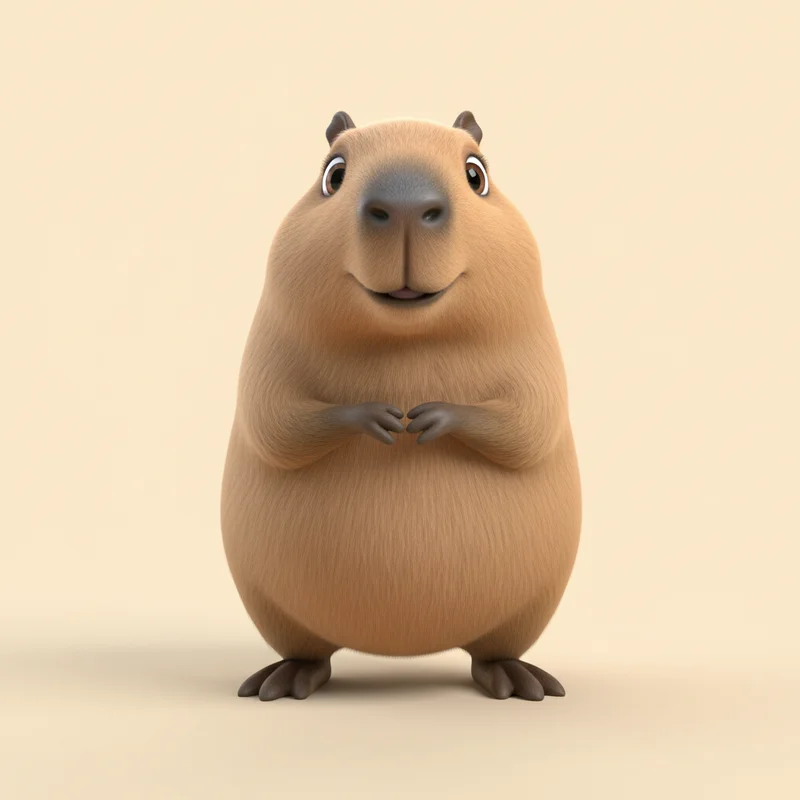
Capybara

Capybara

The world's largest rodent and unofficial mascot of unbothered living. A creature so chill that every other animal wants to sit on it. Has achieved a level of inner peace most humans will never know.

VS
Glacier

Glacier

Slow-moving ice mass reshaping continents.

Battle Analysis

Adaptability capybara Wins
70%
30%
Capybara Glacier

Capybara

The capybara demonstrates remarkable biological adaptability within its ecological niche. Its semi-aquatic lifestyle allows it to exploit both terrestrial and aquatic food sources. Webbed feet enable proficient swimming, whilst dense fur provides insulation and buoyancy. Capybaras can hold their breath for up to five minutes, allowing them to evade predators by submerging entirely. They have colonised habitats ranging from densely forested riverbanks to open savannas, requiring only access to water and vegetation. Perhaps most impressively, capybaras have proven adaptable to human presence, thriving in urban parks and golf courses where other species have perished. They seem genuinely untroubled by modernity, treating lawn sprinklers as acceptable substitutes for natural waterholes.

Glacier

The glacier's relationship with adaptability is, to put it charitably, complicated. Glaciers cannot adapt in any biological sense—they respond mechanically to environmental conditions. When temperatures rise, they retreat; when snowfall increases, they advance. This is not adaptation but rather thermodynamic inevitability. Glaciers cannot migrate to cooler regions when their current location becomes inhospitable. They cannot develop new behaviours or physiological responses to changing conditions. Their inflexibility is absolute and, in our current climate crisis, tragically consequential. The Thwaites Glacier—nicknamed the 'Doomsday Glacier'—cannot adapt to warming ocean waters; it can only collapse, potentially raising sea levels by metres.

VERDICT

Capybaras actively adapt their behaviour; glaciers can only passively respond to physics.
Social intelligence capybara Wins
70%
30%
Capybara Glacier

Capybara

The capybara has achieved something truly remarkable in the animal kingdom: it has become universally tolerated. Photographs circulate endlessly of capybaras surrounded by birds, monkeys, rabbits, and even caimans—all apparently content to share space with this rotund rodent. This is no accident. The capybara has evolved what scientists describe as 'exceptionally low aggression thresholds' combined with a social structure that promotes harmony. They live in groups of ten to twenty individuals, communicating through an sophisticated vocabulary of clicks, whistles, and barks. Mother capybaras practice communal nursing, caring for offspring that may not be their own. This species has essentially solved the problem of social conflict by simply refusing to participate in it—a strategy that has earned them the internet's adoration and the title of 'nature's chillest animal'.

Glacier

The glacier, it must be said, maintains an absolute indifference to social dynamics. It neither seeks companionship nor provides it. When a glacier encounters other geological features, it does not negotiate—it grinds them to dust. Whilst this might seem antisocial, one could argue the glacier demonstrates a certain purity of purpose that transcends petty social concerns. Glaciers interact with their environment through physics rather than emotion, responding to temperature and precipitation rather than social cues. They form part of the global climate system, connecting distant regions through atmospheric patterns, but this can hardly be called 'social intelligence' in any meaningful sense. The glacier is profoundly alone, and appears entirely comfortable with this arrangement.

VERDICT

The capybara's ability to befriend virtually every species demonstrates unparalleled social intelligence.
Environmental impact glacier Wins
30%
70%
Capybara Glacier

Capybara

The capybara, for all its considerable charm, operates on a relatively modest ecological footprint. As a semi-aquatic herbivore, it grazes upon grasses and aquatic plants, contributing to wetland ecosystem balance across South America. Its droppings, whilst perhaps not a topic for polite dinner conversation, provide essential nutrients to riverine ecosystems. The capybara serves as prey for jaguars, caimans, and anacondas, positioning itself as a crucial link in the food chain. Its burrows offer refuge to smaller creatures, and its tendency to host various bird species upon its back has earned it the unofficial title of 'nature's taxi service'. However, one must acknowledge that the capybara's influence, whilst meaningful, remains geographically limited to tropical and subtropical regions of its native continent.

Glacier

The glacier operates on an entirely different scale of environmental influence—one might say it rewrites geography itself. These massive ice formations have carved the fjords of Norway, sculpted the Great Lakes of North America, and deposited the fertile soils that feed billions. Glaciers hold approximately 69 percent of the world's fresh water, making them humanity's most significant frozen reservoir. Their calving creates icebergs that influence ocean currents, whilst their meltwater feeds rivers upon which entire civilisations depend. The glacier is, quite simply, a landscape architect of planetary proportions. Its retreat due to climate change threatens coastal cities and island nations alike, demonstrating an environmental significance that extends far beyond its frozen boundaries.

VERDICT

Glaciers literally reshape continents and hold the majority of Earth's fresh water reserves.
Cultural significance capybara Wins
70%
30%
Capybara Glacier

Capybara

The capybara has achieved an extraordinary position in contemporary digital culture. The phrase 'OK I pull up' has become inextricably linked with this placid rodent, spawning countless memes, songs, and social media phenomena. Capybaras star in viral videos viewed billions of times, often depicted lounging in hot springs or tolerating the presence of unlikely companions. In their native South America, capybaras hold practical significance as a traditional food source, particularly during Lent when the Catholic Church historically classified them as fish (a theological interpretation that stretches credulity but not appetite). Japanese hot spring resorts have discovered that capybara exhibits dramatically increase visitor numbers, recognising the animal's peculiar ability to embody relaxation itself.

Glacier

Glaciers occupy a profound place in human mythology and consciousness. From the Norse concept of Niflheim, the primordial realm of ice, to indigenous Andean beliefs in glaciers as deities, frozen landscapes have shaped spiritual traditions across cultures. Glaciers feature prominently in scientific discourse as climate archives, their ice cores providing irreplaceable records of atmospheric history. Romantic poets celebrated glacial sublimity; modern environmentalists invoke retreating glaciers as powerful symbols of planetary crisis. The glacier functions as both scientific instrument and spiritual symbol, representing nature's awesome power and, increasingly, its vulnerability. No capybara meme, however amusing, carries quite the existential weight of a collapsing ice sheet.

VERDICT

The capybara's viral cultural moment has achieved unprecedented global reach and emotional resonance.
Longevity and persistence glacier Wins
30%
70%
Capybara Glacier

Capybara

A well-cared-for capybara might live eight to twelve years in captivity, somewhat less in the wild where predators take their toll. In evolutionary terms, capybaras have existed in their current form for approximately two million years—a respectable tenure by mammalian standards. They reproduce efficiently, with females capable of producing one or two litters annually, each containing up to eight offspring. This reproductive strategy ensures population persistence despite predation pressure. However, when measured against geological time scales, the capybara remains a relative newcomer to Earth's stage. Their persistence depends upon maintaining suitable wetland habitats, which are increasingly threatened by agricultural expansion and climate change.

Glacier

Glaciers exist in a temporal dimension that renders mammalian lifespans virtually meaningless. Some Antarctic ice contains bubbles of atmosphere trapped 800,000 years ago. The Greenland ice sheet began forming approximately 18 million years ago, predating the capybara by a factor that defies casual comprehension. Glaciers advance and retreat over centuries, their movements measured in metres per year—sometimes per decade. They have witnessed the rise and fall of countless species, including our own ancestors' entire evolutionary journey from tree-dwelling primates to smartphone users. Yet glaciers are not immortal; they are, at this moment in Earth's history, retreating at unprecedented rates. The very persistence that defines them is now under threat from anthropogenic climate change.

VERDICT

Glaciers have persisted for millions of years, containing ice older than humanity itself.
👑

The Winner Is

Capybara

55 - 45

This confrontation between the warm-blooded and the frozen, the social and the solitary, the adaptable and the inexorable, reveals profound truths about what we value in nature. The glacier possesses advantages that seem, at first glance, insurmountable: geological timescales, planetary influence, and sheer physical magnitude. One cannot cuddle a glacier or share a hot spring with a continental ice sheet. Yet it is precisely the glacier's inhuman qualities that ultimately work against it in this most human of competitions. The capybara has achieved something the glacier never could: it has made itself loved. In an age of anxiety and division, the capybara offers a vision of peaceful coexistence that resonates deeply with our collective psyche. Its apparent contentment feels almost aspirational. Meanwhile, glaciers remind us primarily of what we stand to lose—a necessary but melancholy function. By a margin of 55 to 45, the capybara emerges victorious, not because it is objectively superior, but because it embodies qualities we desperately wish to cultivate in ourselves.

Capybara
55%
Glacier
45%

Share this battle

More Comparisons