
Topic Battle

Where Everything Fights Everything

Capybara

Capybara

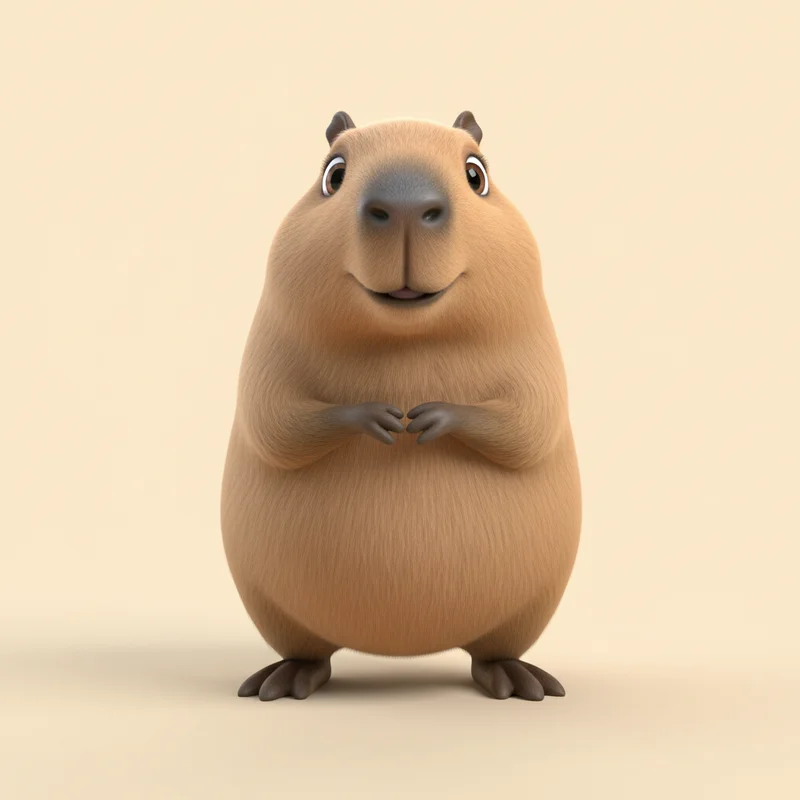
The world's largest rodent and unofficial mascot of unbothered living. A creature so chill that every other animal wants to sit on it. Has achieved a level of inner peace most humans will never know.

VS
Great Wall of China

Great Wall of China

Ancient defensive structure visible from... well, not space actually.

Battle Analysis

Durability Great Wall of China Wins
30%
70%
Capybara Great Wall of China

Capybara

The individual capybara presents modest durability credentials, with natural lifespans of 8-10 years in the wild and up to 12 years in captivity. Their semi-aquatic lifestyle exposes them to various predators including jaguars, anacondas, and caimans, against which their primary defence mechanism involves running into water and hoping for the best.

However, the capybara's durability must be measured at the species level. Hydrochoerus hydrochaeris has maintained continuous operation across South American wetlands for approximately 10 million years, surviving ice ages, continental drift, and the arrival of humans with characteristic calm. The species demonstrates what ecologists term persistent adequacy: the capacity to simply continue existing through all circumstances.

Great Wall of China

The Great Wall's durability record demands nuanced analysis. The oldest sections, dating to the 7th century BCE, have largely crumbled to archaeological suggestion. The iconic Ming Dynasty segments, constructed between 1368 and 1644, remain standing through a combination of quality masonry and aggressive restoration programmes.

Approximately 30% of the original Wall has been lost to erosion, agriculture, and souvenir hunters who apparently believed removing stones would somehow enhance their holiday photographs. The remaining structure requires constant maintenance, with the Chinese government investing millions annually in preservation efforts. The Wall endures, but it does not endure effortlessly.

VERDICT

Whilst the capybara species boasts 10 million years of continuous existence, the Wall's physical structure has demonstrably survived 2,300 years of weather, warfare, and tourism; individual capybaras rarely survive a decade.
Reliability Great Wall of China Wins
30%
70%
Capybara Great Wall of China

Capybara

The capybara can be relied upon to do precisely what capybaras do: swim, graze, socialise, and appear content. This consistency extends across all documented populations regardless of geographic location. A capybara in Venezuela behaves substantially identically to one in Brazil. They do not experience software glitches, structural failures, or existential crises.

However, individual capybara reliability remains subject to biological constraints. They require water access, adequate vegetation, and moderate temperatures to function optimally. Remove these conditions and the capybara's reliability degrades rapidly. Their operational parameters, whilst consistent, remain environmentally contingent.

Great Wall of China

The Great Wall has reliably occupied the same geographic coordinates for over 2,000 years. Visitors can depend upon finding it where maps indicate. It does not migrate seasonally, does not require feeding, and remains accessible regardless of weather conditions, though certain sections become inadvisable during winter storms.

The Wall's reliability as a defensive structure proved less consistent. It was breached multiple times throughout history, most notably when the Ming Dynasty fell despite the Wall's existence. As a tourist attraction, however, its reliability approaches 100% uptime, excepting brief closures for restoration or pandemic-related restrictions.

VERDICT

The Wall has maintained its position and basic function for 2,300 years without requiring water, food, or temperature regulation; capybaras require daily operational inputs.
Global reach Great Wall of China Wins
30%
70%
Capybara Great Wall of China

Capybara

The capybara's native range encompasses all South American countries except Chile, with populations concentrated in wetland habitats from Panama to northern Argentina. This represents substantial territorial coverage within a single continent, though the species shows little ambition for transcontinental expansion.

In recent years, the capybara has achieved remarkable cultural globalisation through internet proliferation. Images of capybaras lounging peacefully with various companion species have generated billions of engagements across social platforms. The phrase OK I pull up has entered vernacular lexicon in countries where no wild capybara has ever set foot. The species has conquered the digital realm without leaving home.

Great Wall of China

The Great Wall occupies a fixed geographic position across northern China, which represents both its strength and limitation. Unlike the capybara, it cannot relocate to exploit new opportunities. Its 21,196 kilometres of length remain stubbornly confined to a single nation's borders.

Yet the Wall's cultural reach extends far beyond its physical coordinates. It appears in virtually every textbook covering human history, features on China's currency, and attracts over 10 million visitors annually. The persistent myth that it is visible from space, though scientifically debunked, demonstrates extraordinary penetration into global consciousness. The Wall need not move to be everywhere.

VERDICT

The capybara has conquered social media; the Great Wall has conquered textbooks, tourism boards, and the collective imagination of humanity for over two millennia.
Social impact Capybara Wins
70%
30%
Capybara Great Wall of China

Capybara

The capybara has achieved something that eludes most organisms: universal likeability. No documented evidence exists of humans expressing animosity toward capybaras. They have been photographed peacefully coexisting with cats, dogs, birds, monkeys, rabbits, and even crocodilians, demonstrating what behavioural scientists describe as indiscriminate amiability.

In Japan, capybara hot spring bathing has become a significant tourism phenomenon, with facilities across the country offering observation of capybaras enjoying thermal waters during winter months. The species has become a symbol of relaxation, acceptance, and the philosophical position that most problems resolve themselves if one simply sits in warm water long enough.

Great Wall of China

The Great Wall's social impact operates on a fundamentally different register. It was constructed specifically to exclude people, representing perhaps history's most emphatic statement about territorial boundaries. The labour required for its construction cost hundreds of thousands of lives over centuries, making it one of the deadliest infrastructure projects ever undertaken.

Today, the Wall serves as a unifying symbol of Chinese cultural identity and a significant driver of international tourism revenue. It brings people together by providing a shared climbing experience and universal complaints about the steepness of certain sections. The Wall has transitioned from exclusionary barrier to inclusive attraction with notable irony.

VERDICT

The capybara achieves positive social impact through mere existence; the Great Wall's positive impact required centuries of rebranding from deadly exclusion project to heritage tourism destination.
Sustainability Capybara Wins
70%
30%
Capybara Great Wall of China

Capybara

The capybara operates as a fully sustainable biological system. It consumes grasses and aquatic vegetation, produces organic waste that fertilises wetland ecosystems, and participates in natural nutrient cycling. Its carbon footprint, whilst technically measurable, integrates seamlessly into established ecological parameters.

As a native species, the capybara provides essential ecosystem services including vegetation management and serving as prey for apex predators, thus maintaining trophic balance. At life's end, each capybara returns entirely to the environment from which it drew sustenance. The capybara represents what systems theorists term a closed-loop biological entity.

Great Wall of China

The Great Wall's sustainability credentials present significant challenges. Its construction required the extraction and processing of billions of bricks, tonnes of stone, and vast quantities of mortar, all achieved through pre-industrial methods with no environmental impact assessments. The Wall consumes rather than produces.

Modern preservation efforts demand ongoing resource inputs: mortar, labour, scaffolding, and the infrastructure to support 10 million annual visitors. Tourism itself generates substantial carbon emissions through transportation. The Wall exists only through continuous human intervention. Without maintenance, it returns to scattered stones within centuries.

VERDICT

The capybara operates carbon-neutrally within natural systems; the Great Wall requires continuous resource extraction merely to continue existing.
👑

The Winner Is

Great Wall of China

45 - 55

This investigation reveals unexpected philosophical dimensions within an ostensibly straightforward comparison. The capybara prevails in social impact and sustainability, demonstrating that effortless existence and universal amiability carry genuine value. The species has achieved what marketing departments spend billions attempting: positive brand recognition without apparent strategy.

The Great Wall of China claims victory in durability, global reach, and reliability, metrics that reflect humanity's capacity for grand undertakings and stubborn persistence. With a final score of 55-45, the Wall edges ahead through sheer scale and temporal longevity. It is simply more wall than the capybara is rodent.

Yet the capybara's narrow defeat should not obscure its remarkable achievement. It has competed respectably against one of humanity's most celebrated constructions whilst requiring no construction at all. The capybara merely evolved and then remained, contentedly, whilst civilisations rose and fell around it.

Capybara
45%
Great Wall of China
55%

Share this battle

More Comparisons