
Where Everything Fights Everything

Capybara vs King Kong

😜 Just for fun — a tongue-in-cheek, gloriously unscientific showdown.

Capybara

Capybara

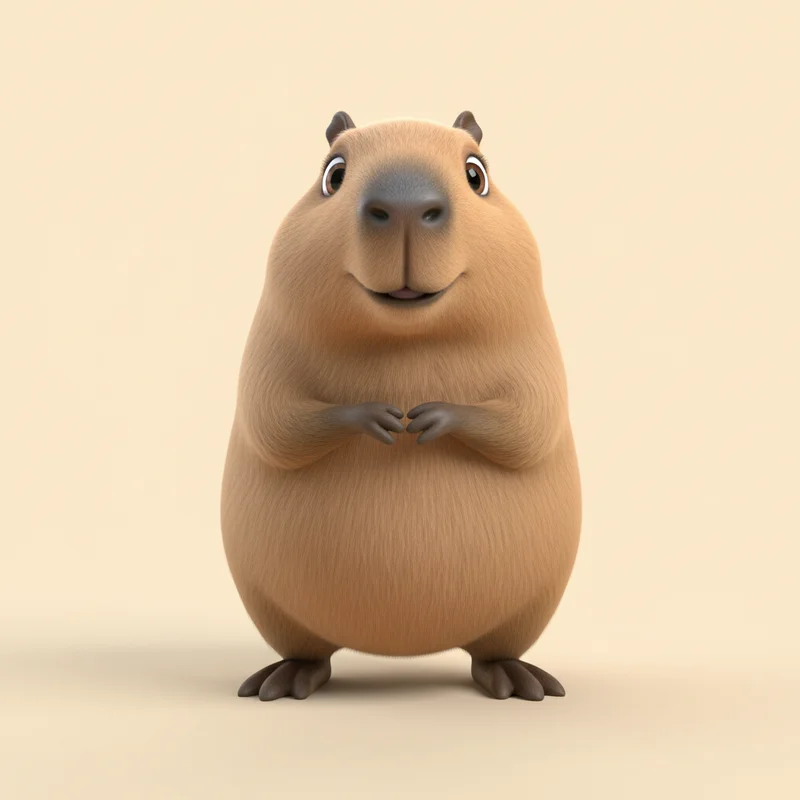
The world's largest rodent and unofficial mascot of unbothered living. A creature so chill that every other animal wants to sit on it. Has achieved a level of inner peace most humans will never know.

VS
King Kong

King Kong

Giant ape with a thing for tall buildings.

Battle Analysis

Cultural impact King Kong Wins
🏆 King Kong takes this round

Capybara

The capybara has experienced a remarkable cultural renaissance in the digital age. Once known primarily to South American farmers and specialist zoologists, it has become an internet phenomenon, appearing in countless memes celebrating its extraordinary capacity to simply vibe. The phrase "capybara energy" has entered the popular lexicon, denoting a state of unbothered contentment that millions aspire to achieve. Japanese onsen capybara videos accumulate hundreds of millions of views. The capybara has become a symbol of tranquillity in an increasingly anxious world, achieving cultural penetration through sheer likability rather than spectacle.

King Kong

King Kong has dominated popular culture since 1933, spawning numerous films, television appearances, and crossover events with other giant monsters. He represents humanity's complex relationship with nature, power, and the allure of the untameable. Academic papers analyse his symbolic significance. The image of Kong atop the Empire State Building remains one of cinema's most iconic moments. Yet one might argue that Kong's cultural impact derives primarily from fear and spectacle rather than genuine affection. People admire Kong from a distance, whilst they simply love capybaras with unguarded enthusiasm.

VERDICT

Kong has dominated global cinema for nearly a century, though the capybara's modern meme dominance suggests shifting cultural preferences.
Stress management Capybara Wins
🏆 Capybara takes this round

Capybara

The capybara has mastered something that eludes most of the animal kingdom and virtually all of humanity: genuine contentment. Scientific observation reveals that capybaras spend their days eating, swimming, and sitting in what can only be described as meditative stillness. Their heart rates remain remarkably low. Their cortisol levels suggest an organism that has simply never encountered the concept of anxiety. Japanese hot spring resorts have discovered that capybaras will sit in warm water for hours, eyes half-closed, radiating such palpable serenity that tourists travel considerable distances merely to observe them doing essentially nothing.

King Kong

Kong exists in a state of near-constant emotional turbulence. He is perpetually defending territory, battling prehistoric monsters, or experiencing complex feelings about blonde actresses that he lacks the linguistic capacity to process. His resting facial expression suggests a creature carrying the weight of considerable psychological burden. When not actively fighting, Kong appears to brood, gazing into middle distances with an intensity that speaks to profound existential unease. One suspects that if Kong were offered a warm bath and the opportunity to simply sit, he would find himself incapable of relaxing, too conditioned to expect the next attack.

VERDICT

The capybara exists in a state of profound peace, whilst Kong appears to suffer from chronic combat-related stress.
Social intelligence Capybara Wins
🏆 Capybara takes this round

Capybara

The capybara has achieved something that evolution rarely permits: universal likability. Observe any capybara in the wild or captivity, and you will witness a creature around which other animals simply congregate. Birds perch upon its back. Monkeys groom its fur. Even crocodiles, those prehistoric harbingers of death, appear to extend a professional courtesy when encountering the capybara. This is not coincidence, but rather the result of millions of years of evolutionary refinement. The capybara has perfected what behavioural scientists term non-threatening coexistence, radiating such profound calm that predators simply cannot be bothered to attack.

King Kong

King Kong's approach to social interaction follows a rather different methodology. His primary means of communication involves roaring at considerable volume, followed by the physical destruction of whatever has displeased him. While this strategy does command attention, it rather limits one's social calendar. His most notable relationship, with the actress Ann Darrow, was conducted largely through kidnapping, an approach that modern relationship counsellors would describe as suboptimal. One cannot help but notice that Kong's social circle consists primarily of frightened humans and adversarial dinosaurs, neither of which suggests a gift for interpersonal connection.

VERDICT

The capybara forms genuine cross-species friendships, whilst Kong's relationships tend to involve property damage and restraining orders.
Combat effectiveness King Kong Wins
🏆 King Kong takes this round

Capybara

In matters of direct physical confrontation, the capybara employs a strategy best described as radical pacifism. Its primary defensive mechanism involves simply not being there when conflict arises. When cornered, it may emit a bark-like warning, though this sound communicates mild inconvenience rather than genuine threat. The capybara possesses large incisors capable of delivering a significant bite, yet documented instances of capybara aggression remain vanishingly rare. One might say the capybara has transcended combat entirely, achieving a form of diplomatic immunity through sheer inoffensiveness.

King Kong

King Kong represents perhaps the most formidable individual combatant in the history of fictional megafauna. He has successfully defeated Tyrannosaurus rex specimens, giant serpents, and various military aircraft whilst simultaneously managing complex emotional states. His upper body strength defies conventional physics, allowing him to scale skyscrapers and hurl automobiles with equal facility. In any direct physical confrontation, Kong's victory would be assured within moments. Yet one must ask whether constant combat readiness truly represents an evolutionary advantage, or merely a response to perpetually hostile circumstances of one's own creation.

VERDICT

Kong could defeat literally any opponent in direct combat, though he seems rather exhausted by the constant necessity of doing so.
Environmental adaptability Capybara Wins
🏆 Capybara takes this round

Capybara

The capybara thrives in the wetlands of South America, having evolved to occupy a remarkably specific ecological niche with extraordinary efficiency. Its webbed feet propel it through water with surprising grace. Its eyes, ears, and nostrils are positioned atop its head, allowing it to remain almost entirely submerged whilst maintaining full sensory awareness. When threatened, it simply slips beneath the surface and vanishes, a technique requiring neither dramatic confrontation nor the destruction of public property. The capybara has colonised environments from Venezuela to Argentina, adapting to each with characteristic equanimity.

King Kong

King Kong's native habitat, Skull Island, represents one of the most hostile environments ever documented in cryptozoological literature. The island teems with prehistoric predators, venomous insects, and geological instability, yet Kong has not merely survived but dominated this hellscape for presumably centuries. His adaptability to urban environments, however, proves somewhat more problematic. Whilst he can certainly exist in New York City, his presence tends to trigger military responses, mass evacuations, and significant depreciation in surrounding property values. One might argue that any environment requiring aerial bombardment to manage is not truly adapted to.

VERDICT

The capybara integrates seamlessly into ecosystems, whilst Kong's presence typically necessitates evacuation protocols.
👑

The Winner Is

Capybara

Takes 3 of 5 rounds

In this unlikely confrontation between nature's most relaxed rodent and cinema's most famous primate, we find ourselves forced to reconsider what constitutes true greatness. King Kong possesses attributes that humanity has traditionally valued: raw power, combat prowess, and the ability to command attention through sheer physical presence. He is, by any conventional measure, the superior specimen in matters of destruction and spectacle.

Yet the capybara offers something far more elusive and, perhaps, more valuable: a template for peaceful existence. In an age of increasing anxiety and conflict, the capybara's ability to simply be, without drama, without territorial disputes, without the constant need to prove itself through violence, represents an evolutionary achievement that Kong, for all his strength, cannot match.

The capybara wins not through power, but through the radical act of not needing to fight at all. It has achieved what Kong never could: genuine contentment.

Share this battle

More Comparisons