
Topic Battle

Where Everything Fights Everything

Capybara

Capybara

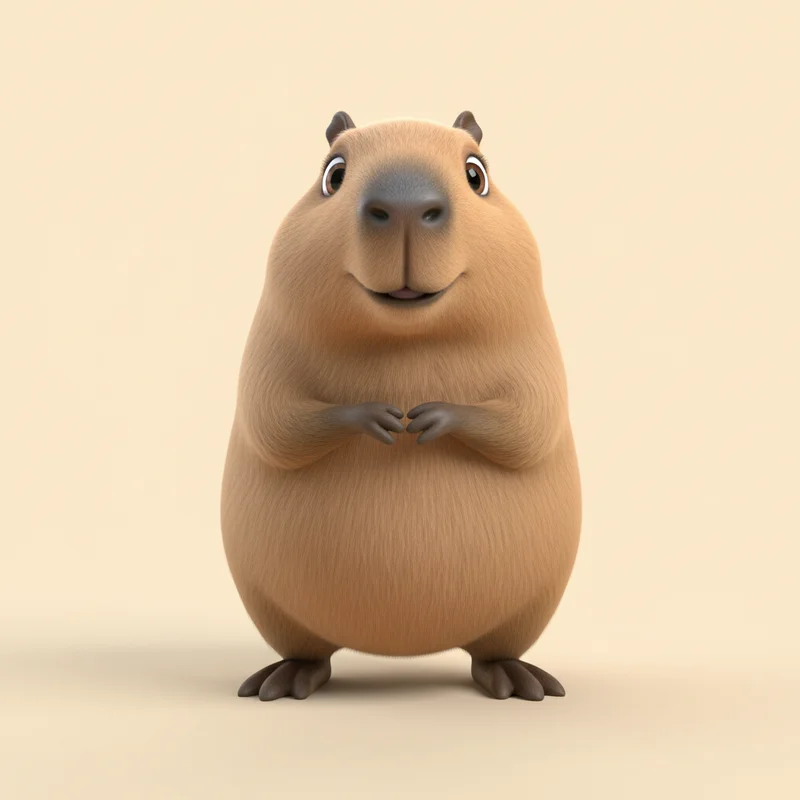
The world's largest rodent and unofficial mascot of unbothered living. A creature so chill that every other animal wants to sit on it. Has achieved a level of inner peace most humans will never know.

VS
Mario

Mario

Nintendo's mustachioed plumber and gaming icon.

Battle Analysis

Cultural legacy mario Wins
30%
70%
Capybara Mario

Capybara

The capybara's cultural legacy is surprisingly recent but remarkably potent. Once merely an obscure South American rodent known primarily to zoologists and ranchers, it has become the mascot of millennial and Generation Z wellness culture. The phrase "OK I pull up" has become synonymous with the capybara's laid-back approach to existence, spawning countless memes, merchandise, and musical remixes. Japan has embraced the capybara with particular enthusiasm, installing permanent exhibits where visitors can observe and interact with these creatures. The capybara represents a cultural shift toward valuing tranquillity over achievement, presence over productivity. It is, in essence, the anti-hustle culture icon.

Mario

Mario's cultural legacy is virtually unassailable within the entertainment industry. He has single-handedly saved the video game industry from the crash of 1983, established Nintendo as a global entertainment powerhouse, and defined the platforming genre for four decades. Super Mario Bros. is often cited as the most influential video game ever created, and its musical themes are among the most recognisable compositions in human history. Mario has appeared in over 200 games, an animated film grossing over $1.3 billion, and countless pieces of merchandise. His cultural impact is objectively immense, yet it comes with an asterisk: Mario represents relentless productivity, the need to constantly achieve, rescue, and progress. He is the embodiment of the culture the capybara provides respite from.

VERDICT

Mario's four-decade dominance of gaming culture edges out the capybara's recent viral ascendancy.
Social influence capybara Wins
70%
30%
Capybara Mario

Capybara

The capybara has achieved something truly remarkable in the digital age: universal approval without effort. Across every social media platform, this oversized guinea pig has become the patron saint of relaxation, amassing millions of devoted followers who share images of capybaras sitting placidly with citrus fruits balanced upon their heads. They have been photographed consorting with cats, crocodiles, monkeys, and birds, all of whom inexplicably find their presence profoundly calming. Scientists theorise this may be due to their neutral, non-threatening demeanour and the pheromones they emit whilst wallowing. The capybara has become a symbol of the modern wellness movement, a living embodiment of the phrase "good vibes only" that requires no marketing budget whatsoever.

Mario

Mario commands unprecedented brand recognition, with studies suggesting he is more recognisable to American children than Mickey Mouse himself. Nintendo has deployed this moustachioed mascot across hundreds of titles, generating revenues exceeding $40 billion over four decades. His influence extends beyond gaming into animated films, theme parks, breakfast cereals, and an infamous 1993 live-action film that we have collectively agreed never happened. Mario's cultural penetration is so complete that the sound of collecting a coin has become universal shorthand for success. Yet this influence comes at tremendous cost: an estimated annual marketing expenditure of hundreds of millions, endless sequels, and the occasional disastrous corporate crossover. Mario works tirelessly for his fame; the capybara simply exists.

VERDICT

The capybara achieves viral fame through effortless existence, whilst Mario requires billions in marketing spend.
Stress management capybara Wins
70%
30%
Capybara Mario

Capybara

The capybara is the undisputed champion of serenity. Scientific observation has revealed that capybaras maintain remarkably low cortisol levels even in situations that would send other rodents into cardiac arrest. They have been observed peacefully coexisting with crocodilians, allowing birds to perch upon their heads, and tolerating the company of monkeys who use them as furniture. Japanese hot springs have capitalised on this phenomenon, offering tourists the spectacle of capybaras soaking in thermal waters with expressions of absolute transcendence. The capybara does not manage stress; it simply refuses to acknowledge stress as a concept worthy of attention. In human terms, the capybara has achieved a state of mindfulness that would take decades of meditation to approximate.

Mario

Mario exists in a state of perpetual crisis. Every adventure begins with a kidnapping, proceeds through escalating threats, and concludes only to restart immediately with another kidnapping. His girlfriend Pauline was kidnapped by a gorilla. Princess Peach has been kidnapped so frequently that it constitutes a pattern of concerning regularity. Mario's response to stress is not management but acceleration: run faster, jump higher, throw more fireballs. His blood pressure, were it measurable, would almost certainly be concerning. The famous power-up sound effects serve to temporarily elevate his mood, but the fundamental anxiety of his existence remains. He is a hamster on a wheel, sprinting eternally toward castles that invariably contain the wrong princess.

VERDICT

The capybara exists in a state of permanent tranquillity whilst Mario lives in perpetual crisis mode.
Survival strategy capybara Wins
70%
30%
Capybara Mario

Capybara

The capybara's survival strategy represents evolutionary genius of the highest order. In a world of predators, this rotund rodent has survived by being too boring to bother with. Jaguars, anacondas, and caimans could certainly kill a capybara, but doing so would require more effort than the calories gained. The capybara spends most of its day wallowing in water, eating grass, and staring into the middle distance with an expression of profound contentment. When threatened, it simply submerges itself in the nearest body of water and waits, sometimes for hours, until the threat loses interest. This is not cowardice; this is tactical patience. The capybara has mastered the art of making itself the least interesting option in any predator's menu.

Mario

Mario's approach to survival is aggressively proactive: identify problems, jump on them, and consume mushrooms of questionable origin. His methods include throwing fireballs, donning the skins of raccoons and cats, and recruiting dinosaurs as disposable transport. While effective within the Mushroom Kingdom's particular physics, this strategy has notable drawbacks. Mario has died countless millions of times across four decades of gameplay, respawning only through the intervention of extra lives and frustrated players. His survival depends entirely on external power-ups and the willingness of others to keep trying. Remove the magic mushrooms, the fire flowers, and the star power, and Mario is simply a middle-aged man in overalls with dangerously optimistic jumping habits.

VERDICT

The capybara has survived 2.5 million years through strategic indifference; Mario requires constant respawning.
Physical capabilities mario Wins
30%
70%
Capybara Mario

Capybara

The capybara is a semi-aquatic marvel, capable of remaining submerged for up to five minutes whilst evading predators. Its webbed feet make it an excellent swimmer, and its eyes, ears, and nostrils are positioned atop its head for periscope-like surveillance. At full sprint, a capybara can reach 35 kilometres per hour, though it rarely bothers. Its teeth grow continuously throughout its life, requiring constant gnawing on vegetation to maintain proper length. The capybara's digestive system is a fermentation masterpiece, extracting maximum nutrition from grasses through coprophagy, the technical term for eating one's own droppings. This may seem undignified, but it is ruthlessly efficient.

Mario

Mario defies the fundamental laws of physics with casual disregard. He can jump approximately five times his own height, alter his trajectory mid-air, and survive falls from any height provided he lands on an enemy. His physical form is infinitely malleable: mushrooms double his size, fire flowers grant pyrokinesis, and stars render him temporarily invincible. He can breathe underwater indefinitely in some titles, yet drowns in seconds in others. He can punch through brick walls, yet takes damage from touching turtles gently. Mario's physical capabilities are wildly inconsistent but undeniably impressive, operating under whatever rules the current game designer has arbitrarily decided.

VERDICT

Mario's physics-defying abilities outperform the capybara's admirable but reality-bound capabilities.
👑

The Winner Is

Capybara

55 - 45

This confrontation between supreme relaxation and perpetual motion has yielded a result that may surprise those who measure success by traditional metrics. Mario possesses the greater cultural legacy, the more impressive physical capabilities, and the longer track record of commercial success. And yet, it is the capybara that emerges victorious with a 55-45 advantage.

The reasoning is elegantly simple: in an age of burnout, anxiety, and hustle culture, the capybara offers something Mario never could, permission to simply exist. Mario teaches us that every problem requires action, that rest is merely the pause between challenges, and that there is always another castle requiring liberation. The capybara teaches us that sometimes the wisest action is no action at all, that predators often lose interest if you remain sufficiently boring, and that true contentment comes from accepting the present moment whilst partially submerged in warm water.

The capybara prevails not despite its lack of ambition, but because of it. In the eternal race between doing and being, being has crossed the finish line whilst doing is still looking for its power-ups.

Capybara
55%
Mario
45%

Share this battle

More Comparisons