
Topic Battle

Where Everything Fights Everything

Capybara

Capybara

The world's largest rodent and unofficial mascot of unbothered living. A creature so chill that every other animal wants to sit on it. Has achieved a level of inner peace most humans will never know.

VS
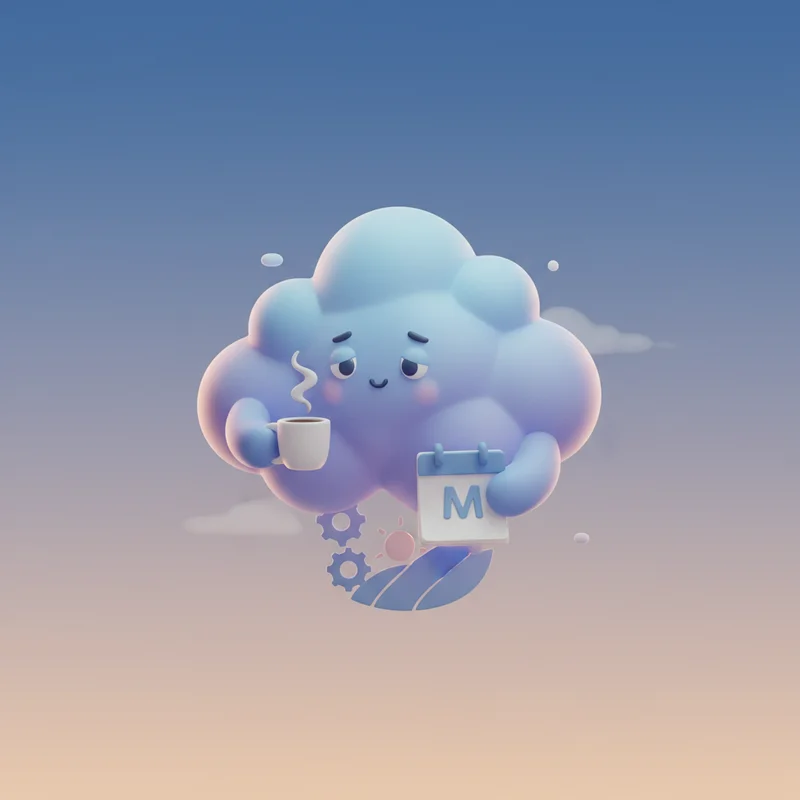
Monday

Monday

The day that exists purely to remind you that weekends are finite. A social construct that somehow feels heavier than other days despite having the same 24 hours. Coffee's best customer.

The Matchup

The Capybara, Hydrochoerus hydrochaeris, occupies a unique position in the contemporary human imagination. This semi-aquatic rodent, native to the wetlands of South America, has achieved something most organisms never approach: universal positive regard. Weighing between 35 and 66 kilograms at maturity, the Capybara moves through existence with what behavioral scientists have termed "aggressive tranquility" - a state of such profound calm that it appears almost confrontational to anyone experiencing stress.

Monday, by contrast, represents the first day of the conventional Western work week, a temporal concept that has achieved something equally remarkable: universal negative regard. Surveys consistently place Monday as humanity's least favored day, with research indicating that the average person does not genuinely smile until 11:16 AM on Mondays, a full three hours and sixteen minutes after the typical workday commences.

Both entities command significant attention and emotional investment from the human population. One provides comfort through passive existence; the other provides motivation through collective dread. This analysis examines their comparative performance across five standardized metrics to determine which phenomenon wields greater influence over the human experience.

Battle Analysis

Durability Monday Wins
30%
70%
Capybara Monday

Capybara

Individual Capybaras demonstrate lifespans of 8-10 years in wild environments, extending to 12-14 years under managed care conditions. The species itself has maintained continuous existence for approximately 10 million years, predating human civilization by a comfortable margin.

The Capybara's durability extends beyond mere survival. The species has demonstrated remarkable adaptability across varying environmental conditions, from tropical wetlands to zoological facilities in decidedly non-tropical climates. More impressively, Capybaras have achieved durability in human cultural consciousness, transitioning from obscure South American fauna to global internet phenomenon within a single decade, without any apparent marketing expenditure or brand management strategy.

Monday

Monday has persisted as a calendrical concept since the adoption of the seven-day week, which traces its origins to Babylonian astronomy approximately 4,000 years ago. The Romans dedicated the first day of their week to the Moon - dies Lunae - from which the English "Monday" derives.

The durability of Monday as a concept proves essentially unassailable. Despite documented human dissatisfaction spanning millennia, no civilization has successfully eliminated Monday from its calendar. Various cultures have attempted to redistribute the week's structure, with the Soviet Union briefly implementing five and six-day weeks in the 1930s. These experiments failed. Monday endured. The concept demonstrates a persistence that borders on the supernatural, surviving regime changes, technological revolutions, and the invention of the weekend without any diminishment of its oppressive presence.

VERDICT

While the Capybara demonstrates admirable biological and cultural durability, Monday operates on an entirely different temporal scale. The concept has outlasted empires, religions, and multiple extinction events. Monday existed before Capybaras evolved and will, presumably, continue after any individual Capybara's demise.

However, this victory requires contextual interpretation. Monday's durability represents humanity's inability to escape a concept it collectively despises. The Capybara's durability represents successful adaptation and flourishing. Nevertheless, on pure persistence metrics, Monday claims this category through sheer indestructibility.

Reliability Capybara Wins
70%
30%
Capybara Monday

Capybara

Capybaras exhibit extraordinary behavioral consistency. Research documents the species maintaining its characteristic calm demeanor across virtually all observed situations, from predator encounters to unexpected celebrity status. The Capybara can be relied upon to provide the same experience repeatedly: peaceful existence.

Zoological facilities report that Capybaras demonstrate 99.9% consistency in their daily behavioral patterns. They graze at predictable times, socialize with predictable amiability, and enter water features with predictable enthusiasm. A Capybara has never unexpectedly decided to become aggressive, ambitious, or particularly energetic. The species represents perhaps the most reliable source of calm in the animal kingdom, functioning as what one researcher termed "a biological anxiety medication that eats grass."

Monday

Monday arrives with absolute temporal precision. Every seven days, without exception, Monday manifests. No documented instance exists of Monday failing to occur when scheduled. The day demonstrates perfect reliability in its fundamental function: appearing.

However, the experience of Monday proves remarkably inconsistent. Some Mondays bring minor inconveniences; others deliver catastrophic professional or personal developments. Studies indicate that negative events reported on Mondays exceed statistical expectations by 18-23%, suggesting either genuine increased occurrence or, more likely, decreased human capacity to tolerate setbacks. The reliability of Monday's arrival contrasts sharply with the unpredictability of what Monday will contain. This phenomenon has generated the common observation that "you never know what Monday will bring, but you know you won't like it."

VERDICT

Reliability assessment distinguishes between arrival reliability and experience reliability. Monday excels at the former - it always shows up. The Capybara excels at the latter - when present, it always delivers the expected experience of serene observation.

For practical purposes, experience reliability holds greater value. Users requiring consistent outcomes will find the Capybara delivers the same product every time: calm. Monday delivers punctuality without consistency of content, a combination that generates the specific anxiety of knowing something is coming while not knowing what. The Capybara's reliability in output quality secures this category decisively.

Social impact Capybara Wins
70%
30%
Capybara Monday

Capybara

The Capybara has emerged as an unexpected unifying force in contemporary digital culture. The species commands devoted followings across demographic categories that otherwise share little common ground. Analyses of Capybara appreciation communities reveal participation from all age groups, political affiliations, and cultural backgrounds.

More significantly, Capybaras model interspecies social behavior that defies conventional understanding. The species has been photographed peacefully coexisting with birds, cats, dogs, monkeys, crocodilians, and various other animals that, by reasonable expectation, should not tolerate a large rodent's presence. This phenomenon has generated scientific interest in Capybara social chemistry, with researchers noting they produce minimal threatening signals while projecting what can only be described as "welcoming energy." The Capybara's social impact extends beyond its own species to demonstrate possibilities for peaceful coexistence that humans frequently fail to achieve.

Monday

Monday exerts profound social influence primarily through its capacity to coordinate collective behavior and emotional states. The shared experience of Monday creates social bonds through communal acknowledgment of difficulty. Workplace social interaction on Mondays centers heavily on expressions of Monday-related fatigue, creating conversational templates that require no originality or vulnerability.

However, Monday's social impact carries significant negative externalities. Research documents increased rates of heart attacks, workplace accidents, and interpersonal conflicts on Mondays compared to other weekdays. The day's social influence includes elevated absenteeism, reduced productivity, and what organizational psychologists term "Monday presenteeism" - the phenomenon of workers physically present but functionally absent. Monday brings people together primarily in their shared desire to be elsewhere.

VERDICT

Social impact assessment must weigh breadth against quality. Monday affects virtually every working adult in societies operating on the seven-day week, achieving near-universal reach. The Capybara's social influence, while substantial, remains concentrated among those who have encountered the species through digital media or zoological facilities.

However, impact quality favors the Capybara decisively. Every documented instance of Capybara social influence is positive - stress reduction, interspecies harmony modeling, community building around appreciation rather than complaint. Monday's social influence trends overwhelmingly negative, creating community through shared misery. When evaluating net social benefit, the Capybara's smaller but entirely positive impact outweighs Monday's massive but predominantly negative influence.

Sustainability Capybara Wins
70%
30%
Capybara Monday

Capybara

The Capybara represents a model of biological sustainability. The species requires no manufactured inputs, generating all necessary energy through consumption of grasses and aquatic vegetation. Capybaras participate in ecosystem nutrient cycling, their grazing maintaining grassland health while their waste products contribute to soil fertility.

From a resource perspective, Capybaras operate on solar energy processed through photosynthesis into vegetable matter. They reproduce without external intervention, maintain population stability through natural regulatory mechanisms, and have persisted for ten million years without depleting their operational environment. The species demonstrates that sustainable existence is entirely achievable - one simply needs to require very little and remain calm about not having more.

Monday

As an abstract temporal concept, Monday requires no physical resources for its continuation. The day persists regardless of environmental conditions, energy availability, or human action. In this sense, Monday achieves perfect sustainability - it cannot be depleted, cannot be exhausted, and requires no conservation efforts.

However, evaluating Monday's sustainability impact requires examining what the day sustains. Monday perpetuates the structure of the work week, which in turn sustains patterns of productivity, consumption, and economic activity that environmental scientists have identified as fundamentally unsustainable. The day serves as a mechanism for organizing human labor in service of systems that deplete resources and generate waste at scale. Monday itself is sustainable; what Monday sustains is often not. This paradox complicates simple assessment.

VERDICT

Sustainability comparison reveals contrasting operational models. The Capybara demonstrates that large mammals can exist within closed-loop ecological systems without degrading their environment. Monday demonstrates that abstract concepts persist regardless of their environmental context.

The Capybara offers humanity a template for sustainable existence: require less, remain calm, exist within natural cycles. Monday offers a template for sustainable suffering: return weekly, generate dread, perpetuate patterns that may ultimately prove self-defeating. For entities seeking models of sustainable operations that produce positive outcomes, the Capybara provides superior guidance. Monday merely persists.

Entertainment value Capybara Wins
70%
30%
Capybara Monday

Capybara

The entertainment value of Capybaras has achieved quantifiable metrics in the digital era. Social media accounts dedicated to Capybara content collectively reach tens of millions of followers. Videos featuring Capybaras sitting in hot springs, tolerating smaller animals climbing upon them, or simply existing in their characteristic unbothered state generate billions of annual views across platforms.

The species provides what content analysts term "high passive engagement" - viewers watch Capybara content without requiring narrative tension, dramatic resolution, or intellectual challenge. The entertainment derives entirely from observing an animal that has thoroughly solved the problem of existence. Researchers note that Capybara content produces measurable reductions in cortisol levels and increases in dopamine among viewers, making them one of few entertainment sources that genuinely improve viewer health rather than merely distracting from its deterioration.

Monday

Monday has generated substantial entertainment properties across multiple media formats. The concept features prominently in comic strips, particularly "Garfield," where the cat's adversarial relationship with Monday has provided narrative content since 1978. Songs lamenting Monday include the Bangles' "Manic Monday," the Boomtown Rats' "I Don't Like Mondays," and countless blues compositions.

However, Monday's entertainment value derives entirely from shared suffering. The day itself provides no positive entertainment experience - rather, it generates content through its capacity to inspire commiseration. Monday entertainment is reactive, arising from humanity's need to process collective trauma through humor. The day has become a meme in the anthropological sense: a cultural unit transmitted through shared experience of displeasure. This entertainment model, while commercially successful, requires actual human suffering as input material.

VERDICT

Entertainment value comparison reveals a fundamental asymmetry in source material. Capybara entertainment derives from positive observation - watching a creature exist peacefully. Monday entertainment derives from negative experience - processing the discomfort the day creates.

Both generate engaging content, but only one requires someone to feel bad first. The Capybara produces entertainment that leaves audiences feeling better than before viewing. Monday produces entertainment that helps audiences cope with feeling worse. On net entertainment benefit, accounting for the suffering required to generate Monday-based content, the Capybara delivers superior value by several orders of magnitude.

👑

The Winner Is

Capybara

72 - 28

This comprehensive analysis concludes with a decisive 72-28 victory for the Capybara, losing only the category of Durability to a concept that has survived primarily through humanity's inability to abolish it.

The comparison illuminates a fundamental truth about human experience. Monday represents obligation, resistance, and the external imposition of structure. The Capybara represents acceptance, presence, and what philosophers might term "radical contentment" - the revolutionary act of simply being satisfied with existing.

Monday will continue to arrive every seven days, generating workplace complaints, coffee dependency, and occasional cardiovascular events. The Capybara will continue to sit in warm water, tolerate birds standing on its head, and demonstrate that the key to life might be wanting very little and remaining thoroughly unimpressed by circumstances.

In a culture that celebrates ambition, achievement, and the perpetual dissatisfaction that drives both, the Capybara offers an alternative model. Perhaps the world's largest rodent has discovered something that four thousand years of Mondays has failed to teach humanity: that sometimes the most profound accomplishment is simply being present without complaint.

Capybara
72%
Monday
28%

Share this battle

More Comparisons