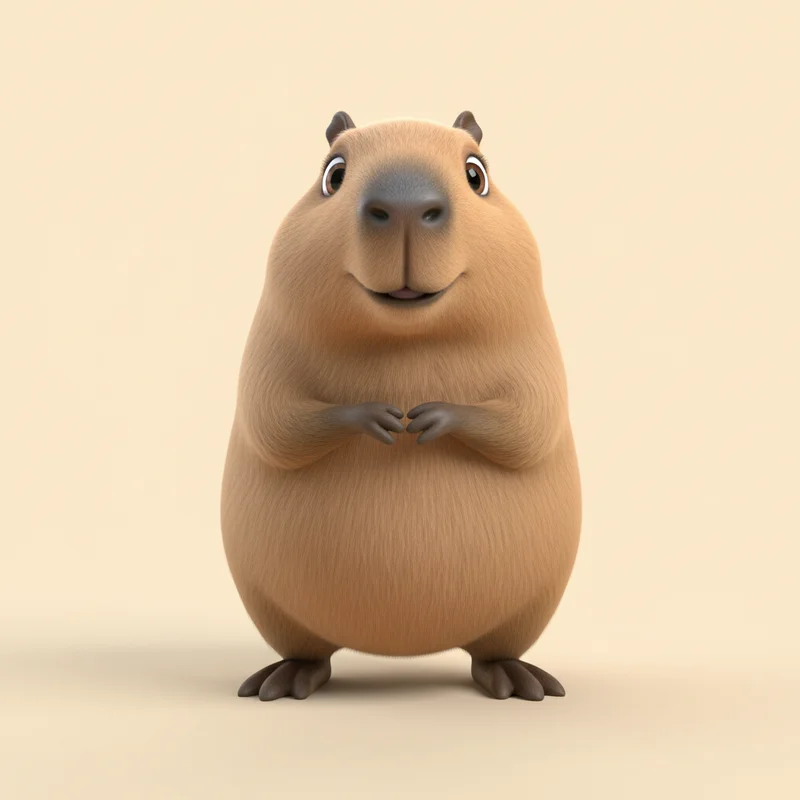
Capybara
The capybara demonstrates substantial biological longevity in favorable conditions, with wild specimens achieving lifespans of 8-10 years and captive individuals regularly exceeding 12 years under proper care.
More remarkable is the capybara's psychological durability. This species maintains its characteristic placidity under circumstances that would induce stress responses in virtually any other mammal. Capybaras have been documented remaining calm while surrounded by apex predators, tolerating the attentions of dozens of other species simultaneously, and navigating human environments with what observers describe as Zen-like equanimity. The capybara appears to have evolved beyond the concept of stress itself.
Their semi-aquatic physiology provides additional resilience. Capybaras can hold their breath for up to five minutes, regulate body temperature through water immersion, and escape terrestrial threats by simply submerging. This aquatic capability serves as an organic escape mechanism that requires no energy expenditure beyond swimming away from one's problems.
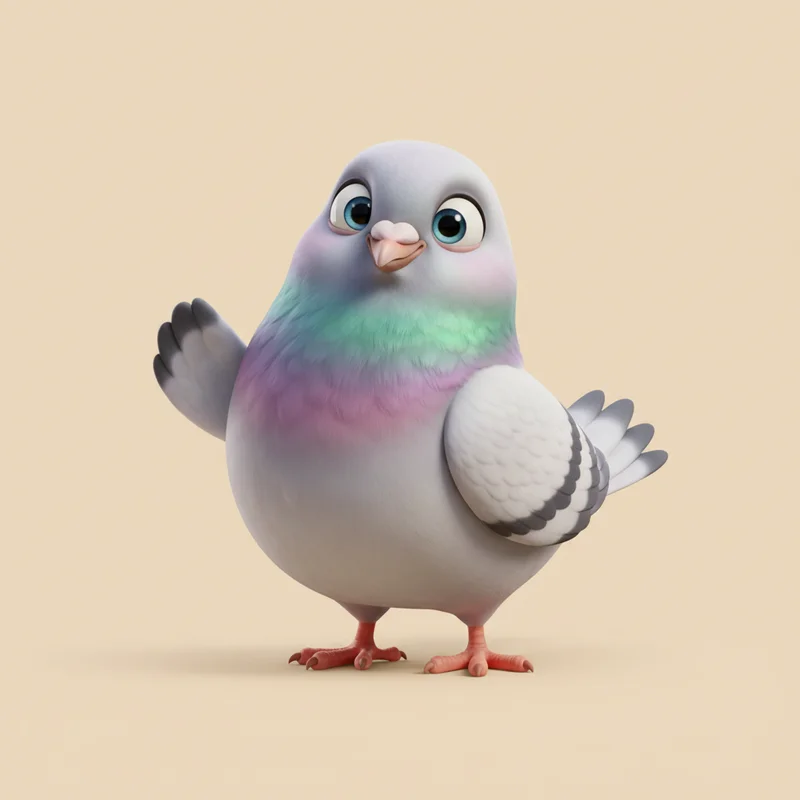
Pigeon
Urban pigeons achieve average lifespans of 3-6 years in metropolitan environments, though protected specimens have been documented surviving beyond 15 years. The oldest recorded pigeon reached 35 years of age, suggesting substantial biological potential rarely realized in wild conditions.
The pigeon's durability manifests primarily through population resilience rather than individual longevity. Municipal governments have spent centuries attempting to reduce pigeon populations through deterrents, removal programs, and occasionally more aggressive measures. None have succeeded. The species absorbs losses through prolific breeding, compensating for individual mortality through sheer reproductive output.
Pigeons demonstrate remarkable tolerance for urban pollutants, dietary inconsistency, and environmental stressors that would compromise more delicate species. A pigeon can subsist on discarded chips, contaminated water sources, and scraps of dubious nutritional value while maintaining reproductive capacity. This is not elegant survival; it is persistence through sheer biological stubbornness.
VERDICT
When evaluating durability across both individual and psychological dimensions, the capybara demonstrates superior holistic resilience. While pigeons excel at population-level persistence, individual specimens face considerably shorter average lifespans and substantially higher stress levels.
The capybara's ability to maintain physiological and psychological equilibrium across diverse circumstances represents a more sophisticated durability model. A capybara lives longer, lives calmer, and has developed what appears to be an evolutionary immunity to anxiety. The pigeon survives through numbers; the capybara survives through inner peace. For sustainable long-term durability, serenity outperforms stress.