
Where Everything Fights Everything

Capybara vs Spider-Man

😜 Just for fun — a tongue-in-cheek, gloriously unscientific showdown.

Capybara

Capybara

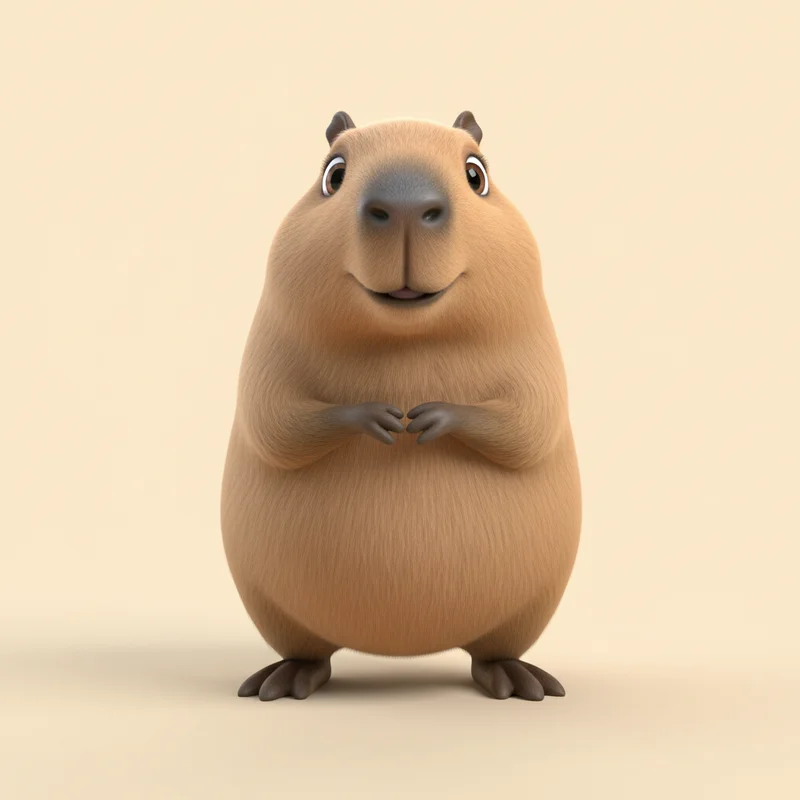
The world's largest rodent and unofficial mascot of unbothered living. A creature so chill that every other animal wants to sit on it. Has achieved a level of inner peace most humans will never know.

VS
Spider-Man

Spider-Man

Web-slinging hero with great responsibility.

Battle Analysis

Cultural impact Spider-Man Wins
🏆 Spider-Man takes this round

Capybara

The capybara has achieved internet apotheosis, becoming a symbol of relaxation and unbothered existence that resonates deeply with humanity's collective exhaustion. Memes featuring capybaras in hot springs, capybaras befriending unlikely animals, and capybaras simply existing have generated billions of impressions across social platforms. Japan has elevated them to cultural institution status, with dedicated capybara cafes and onsen experiences. The phrase 'OK I pull up' has become synonymous with capybara energy, representing an attitude of casual confidence that millions aspire to embody. The capybara asks nothing of its admirers except that they consider, perhaps, relaxing a bit more. This message arrives precisely when humanity needs it most.

Spider-Man

Spider-Man has maintained cultural relevance across six decades, appearing in comics, television series, films, video games, and merchandise generating billions in revenue. The character has been reimagined across multiple iterations, from Peter Parker to Miles Morales, adapting to contemporary sensibilities whilst maintaining core thematic elements. Spider-Man represents the everyman hero, proving that ordinary individuals can achieve extraordinary things through responsibility and perseverance. The character has influenced fashion, language, and moral philosophy, with 'great power, great responsibility' entering common parlance. Multiple academy award-winning films bear his name. His cultural penetration exceeds virtually any other superhero property, with merchandise appearing in every nation with commerce.

VERDICT

Six decades of multimedia dominance outweighs viral meme status, however adorable.
Resource efficiency Capybara Wins
🏆 Capybara takes this round

Capybara

The capybara operates on a diet of grasses and aquatic plants, resources so abundant in their natural habitat as to be effectively limitless. They practice coprophagy, consuming their own droppings to extract maximum nutrition from their food, a strategy that whilst aesthetically questionable, demonstrates remarkable metabolic efficiency. A capybara requires no special equipment, no custom-fitted suit, no technological gadgetry. Their housing needs consist of proximity to water and sufficient vegetation. The entire capybara lifestyle could be maintained indefinitely with minimal environmental impact. They generate no carbon footprint beyond their own biological processes, require no electricity, and produce no waste that isn't immediately biodegradable. From a sustainability perspective, the capybara represents optimal organism design.

Spider-Man

Spider-Man's resource requirements present a more complex calculation. The spider suit alone demands specialised materials, regular repairs, and occasional complete replacement following battles with particularly destructive adversaries. Web fluid, whether organic or synthetic depending on continuity, requires either biological energy or chemical manufacture. Peter Parker must maintain civilian employment to fund his lifestyle, yet his superhero obligations frequently compromise his professional reliability. The economic model proves precarious: saving lives generates no income, whilst the time investment prevents career advancement. Various benefactors have subsidised operations, but this introduces dependency and potential compromise. Spider-Man operates perpetually near resource exhaustion, one major battle away from financial and physical collapse.

VERDICT

The capybara thrives on grass; Spider-Man requires a small fortune in equipment and medical expenses.
Social intelligence Capybara Wins
🏆 Capybara takes this round

Capybara

The capybara has developed what behavioural scientists describe as universal cross-species diplomacy. This remarkable rodent maintains harmonious relationships with birds, monkeys, rabbits, and even crocodiles, who inexplicably choose not to consume them. Capybaras have been photographed serving as living sofas for various species, their backs hosting everything from songbirds to small mammals. This is not mere tolerance; this is interspecies hospitality elevated to an art form. The capybara asks nothing in return, demands no rent, initiates no territorial disputes. In group settings, capybaras demonstrate sophisticated social hierarchies whilst maintaining an atmosphere of such profound calm that wildlife photographers report feeling personally judged for their own stress levels.

Spider-Man

Spider-Man's social intelligence manifests quite differently, operating primarily through a combination of quips, puns, and emotional avoidance. Peter Parker maintains a complex web of relationships characterised by chronic lateness, unexplained absences, and a tendency to disappear mid-conversation when danger calls. His social circle includes a genius best friend who became a supervillain, an aunt perpetually worried about his wellbeing, and various romantic partners who eventually discover his secret identity and respond with varying degrees of concern. Spider-Man compensates for his interpersonal chaos by being remarkably charming to strangers he's actively fighting, delivering memorable one-liners whilst preventing them from committing crimes. This approach has earned him a complex public reputation.

VERDICT

The capybara befriends crocodiles; Spider-Man accidentally creates supervillains from former friends.
Environmental adaptability Capybara Wins
🏆 Capybara takes this round

Capybara

Native to South America, the capybara has achieved remarkable aquatic adaptation whilst remaining decidedly terrestrial in appearance. These rotund engineers can hold their breath for up to five minutes, sleep partially submerged with only their nostrils exposed, and escape predators by vanishing beneath murky waters. Their webbed feet provide efficient locomotion through marshy terrain, and their dense, oily fur dries rapidly upon emergence. The capybara has conquered environments ranging from rainforest riversides to suburban Japanese hot springs, demonstrating an adaptability that extends beyond mere survival to encompass lifestyle optimisation. They have been observed in onsen facilities, soaking alongside human patrons with an air of belonging that suggests they may have invented the spa concept.

Spider-Man

Spider-Man's environmental adaptability centres primarily on vertical surfaces and urban infrastructure. His ability to adhere to any surface has transformed New York City into a three-dimensional playground, with skyscrapers serving as both transportation corridors and dramatic backdrop for villain confrontations. The Spider-Sense provides environmental awareness that borders on the supernatural, alerting him to dangers before they materialise. However, this adaptability remains distinctly urban-centric. Remove Spider-Man from his concrete jungle, and his effectiveness diminishes considerably. He cannot breathe underwater, operates poorly in extreme temperatures, and his web-slinging becomes theoretically impossible in environments lacking tall structures. One imagines him attempting to traverse the Serengeti with considerable difficulty.

VERDICT

Capybaras thrive in water, land, and hot springs; Spider-Man requires skyscrapers to function optimally.
Threat response methodology Spider-Man Wins
🏆 Spider-Man takes this round

Capybara

When confronted with danger, the capybara employs a strategy that psychologists might term radical acceptance. Rather than fighting or fleeing in panic, the capybara often simply continues existing with such profound indifference that predators reportedly lose interest. When escape proves necessary, they slide into water with minimal disturbance, disappearing like furry submarines. This approach conserves energy, avoids injury, and maintains the capybara's characteristic unflappable demeanour. Studies suggest that capybara heart rates remain remarkably stable even when jaguars are present, indicating either supreme confidence or a philosophical acceptance of mortality that Zen masters would envy. Their threat response essentially amounts to existing so peacefully that violence feels inappropriate.

Spider-Man

Spider-Man's threat response involves immediate physical engagement combined with verbal provocation designed to unsettle opponents. Upon detecting danger via Spider-Sense, he typically swings directly toward it whilst formulating contextually appropriate jokes. This methodology, whilst cinematically spectacular, results in significant property damage, personal injury, and the occasional accidental creation of more dangerous adversaries. Spider-Man has been hospitalised repeatedly, had his identity exposed multiple times, and exists in a perpetual state of high cortisol vigilance. His approach saves lives but exacts tremendous personal cost, raising questions about long-term sustainability. The contrast with capybara methodology could not be more stark: one absorbs threats through serenity, the other punches them repeatedly.

VERDICT

When Green Goblin attacks, philosophical acceptance proves less effective than superhuman reflexes.
👑

The Winner Is

Capybara

Takes 3 of 5 rounds

The evidence, when examined with appropriate academic rigour, presents a fascinating paradox. Spider-Man possesses objectively superior capabilities: enhanced strength, precognitive awareness, vertical surface adhesion, and the ability to generate binding materials from his person. He has saved New York City from destruction on numerous occasions and maintains cultural relevance that spans generations. Yet these advantages come packaged with chronic stress, financial instability, complicated relationships, and regular near-death experiences. The capybara, by contrast, has achieved something Spider-Man never could: contentment. The world's largest rodent navigates existence without anxiety, maintains universally positive relationships, and has become an international symbol of peace. When one examines quality of life metrics rather than mere capability assessments, the capybara emerges as the more successful organism. Spider-Man can defeat Doctor Octopus; the capybara would never need to, because Doctor Octopus would inexplicably wish to sit beside it in comfortable silence.

Share this battle

More Comparisons