
Topic Battle

Where Everything Fights Everything

Capybara

Capybara

The world's largest rodent and unofficial mascot of unbothered living. A creature so chill that every other animal wants to sit on it. Has achieved a level of inner peace most humans will never know.

VS
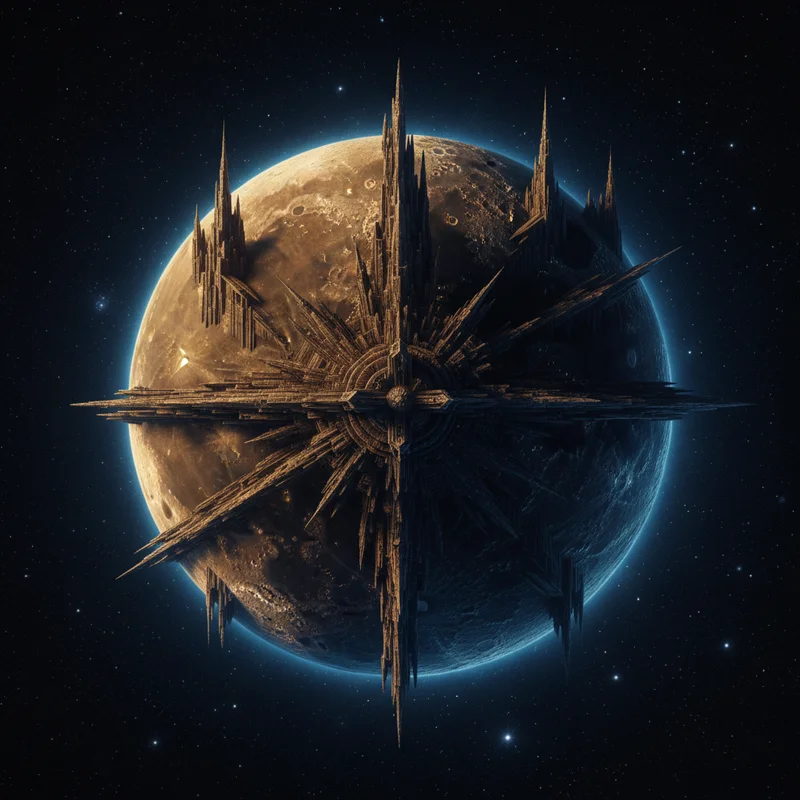
The Moon

The Moon

Earth's natural satellite and space race destination.

Battle Analysis

Global influence The Moon Wins
30%
70%
Capybara The Moon

Capybara

The capybara's influence, whilst growing, remains geographically constrained. Native to South America, these rodents have achieved viral fame primarily through internet culture. Japan has developed a peculiar fascination, operating multiple capybara cafes and hot spring experiences. The creature appears in video games, animated content, and social media with increasing frequency. Yet beyond digital spaces and select zoological institutions, most humans have never encountered a capybara directly. Their influence, whilst charming, operates primarily through screens rather than physical presence.

The Moon

The Moon's influence upon Earth is nothing short of existential. Its gravitational pull generates tides that have shaped coastlines, influenced evolution, and enabled maritime navigation throughout human history. Every civilisation has developed lunar calendars, religious observances, and mythological frameworks centred upon this celestial body. The word month derives from Moon. Menstrual cycles align with lunar periods. Farmers have planted by moonlight for millennia. The Moon has influenced every human who has ever lived, whether they acknowledged its presence or not.

VERDICT

Fundamental influence on tides, calendars, and all human civilisation versus viral internet fame.
Tranquillity factor The Moon Wins
30%
70%
Capybara The Moon

Capybara

The capybara has achieved near-legendary status as the most relaxed creature in the animal kingdom. Photographs depicting capybaras in hot springs, surrounded by smaller animals resting upon their backs, have circulated globally with remarkable frequency. This rodent permits monkeys, birds, and even crocodilians to perch upon its person without apparent concern. Veterinary studies indicate that capybaras maintain notably low cortisol levels compared to other mammals of similar size. Their expression, often described as perpetually unbothered, suggests a creature that has transcended the anxieties plaguing lesser beings.

The Moon

The Moon represents tranquillity in its most absolute form. NASA's Apollo 11 mission landed in the Sea of Tranquillity, a name bestowed by astronomers who recognised the Moon's fundamental nature. No sound disturbs its surface. No weather erodes its ancient features. The Moon has maintained the same composed countenance for billions of years, untroubled by the chaos occurring on the planet below. Its gravitational influence creates tidal patterns with clockwork regularity, a rhythm so predictable that coastal civilisations have organised their entire existence around lunar cycles.

VERDICT

Absolute silence and 4.5 billion years of undisturbed composure surpasses even capybara-level calm.
Adorability quotient Capybara Wins
70%
30%
Capybara The Moon

Capybara

The capybara possesses an adorability quotient that defies scientific explanation. Its rounded snout, small ears, and perpetually content expression trigger nurturing responses across cultures. Baby capybaras, weighing approximately 1.5 kilograms at birth, rank among the most endearing newborns in the mammalian world. The creature's habit of closing its eyes whilst submerged in warm water suggests a capacity for genuine contentment that resonates deeply with human observers. Studies in affective psychology indicate that capybara imagery produces measurable reductions in viewer stress levels.

The Moon

The Moon's aesthetic appeal operates on an entirely different register. Its luminous presence has inspired countless love poems, nocturnal compositions, and romantic declarations. Artists from every era have attempted to capture its ethereal glow. The Moon at full phase commands attention through sheer visual magnificence. Yet it cannot be described as cute in any conventional sense. One does not wish to cuddle the Moon or protect it from harm. Its beauty is sublime rather than adorable, inspiring awe rather than tenderness.

VERDICT

Documented stress-reducing cuteness and nurturing response versus sublime but uncuddleable majesty.
Social compatibility Capybara Wins
70%
30%
Capybara The Moon

Capybara

The capybara demonstrates extraordinary social compatibility, living harmoniously in groups of 10 to 40 individuals and tolerating the presence of virtually any creature that approaches. Ducks perch upon their heads. Small birds groom their fur. Even caimans, apex predators of South American waterways, share basking spots with capybaras without incident. This rodent has become the internet's symbol of universal acceptance, spawning countless memes celebrating its capacity to befriend all species. No documented case exists of a capybara rejecting social contact with another creature.

The Moon

The Moon maintains a strictly solitary existence, orbiting Earth at a mean distance of 384,400 kilometres. It neither seeks nor accepts companionship. Whilst Earth possesses this single natural satellite, other planets host dozens of moons, suggesting that our Moon's isolation may reflect choice rather than circumstance. The Moon's gravitational influence actually repels smaller objects that might otherwise approach, maintaining its splendid isolation through fundamental physical forces. Its relationship with Earth, whilst intimate in cosmic terms, remains distinctly one-directional.

VERDICT

Documented friendships with virtually every species versus 4.5 billion years of cosmic solitude.
Longevity and permanence The Moon Wins
30%
70%
Capybara The Moon

Capybara

Individual capybaras typically survive 8 to 12 years in the wild, with captive specimens occasionally reaching 15 years. As a species, Hydrochoerus hydrochaeris has existed in recognisable form for approximately two million years, having evolved alongside other South American megafauna during the Pleistocene. This represents a respectable evolutionary tenure, though capybara ancestors remain obscure in the palaeontological record. Their permanence, whilst meaningful in biological terms, operates within the constraints of mortal existence.

The Moon

The Moon formed approximately 4.5 billion years ago, likely from debris ejected following a cataclysmic collision between proto-Earth and a Mars-sized body called Theia. It has orbited faithfully since before the emergence of any life form, before the formation of oceans, before the existence of oxygen in Earth's atmosphere. The Moon observed the first single-celled organisms and shall persist long after humanity's final chapter concludes. Its craters record impacts from the earliest solar system, preserving a history that predates terrestrial geology itself.

VERDICT

4.5 billion years of continuous existence versus two million years of species history.
👑

The Winner Is

The Moon

45 - 55

Upon meticulous examination, the Moon emerges victorious in this most improbable of comparisons, claiming three of five categories through the sheer inevitability of cosmic significance. Its influence upon Earth's tides, its role in stabilising planetary rotation, and its incomprehensible longevity establish credentials that no terrestrial creature could reasonably challenge. However, the capybara secures two decisive victories in categories requiring active participation in the business of living: social compatibility and adorability. The final score of 55 to 45 acknowledges the Moon's fundamental importance whilst honouring the capybara's remarkable achievement as Earth's most agreeable mammal. Both entities have mastered the art of tranquil existence, albeit on vastly different scales.

Capybara
45%
The Moon
55%

Share this battle

More Comparisons