
Topic Battle

Where Everything Fights Everything

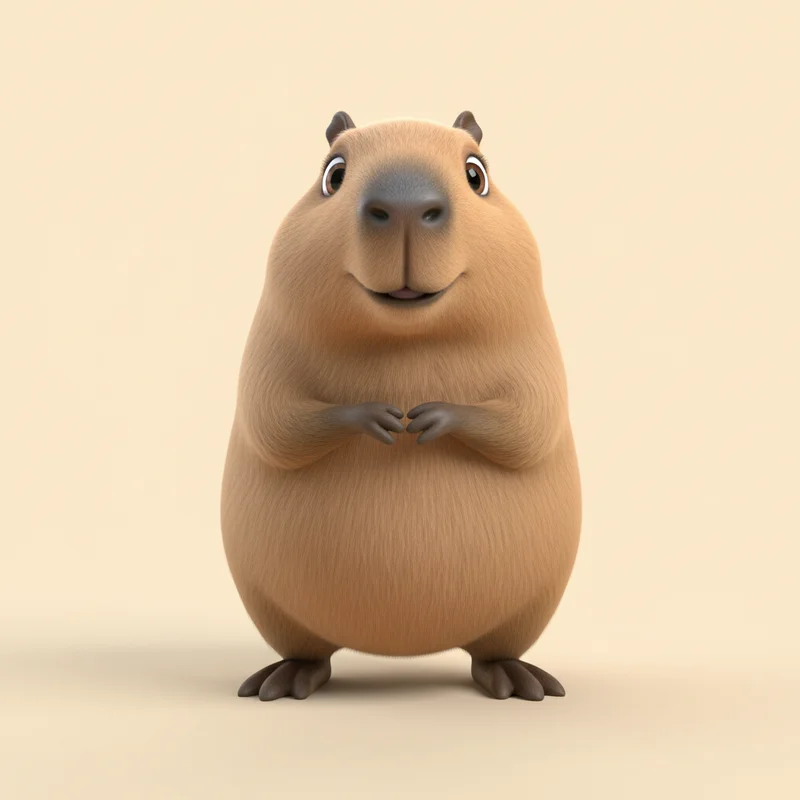
Capybara

Capybara

The world's largest rodent and unofficial mascot of unbothered living. A creature so chill that every other animal wants to sit on it. Has achieved a level of inner peace most humans will never know.

VS
Tornado

Tornado

Violent rotating column of air touching ground.

Battle Analysis

Social influence capybara Wins
70%
30%
Capybara Tornado

Capybara

The capybara has achieved extraordinary social influence entirely through passive existence. Without marketing campaigns, public relations professionals, or intentional brand-building, the capybara has become one of the most shared and discussed animals on social media platforms. The phrase "OK I pull up" has become inextricably linked with capybara imagery, spawning countless memes and remixes.

This influence extends beyond entertainment into genuine cultural impact. The capybara has become a symbol of mental health awareness, with therapists reportedly referencing "capybara energy" as a desirable emotional state. Fashion brands have incorporated capybara imagery into products, and the creature's image commands premium prices in the merchandise economy. The capybara influences human behaviour whilst doing absolutely nothing, a feat of passive social power that active influencers struggle to replicate.

Tornado

The tornado exerts social influence primarily through fear-based compliance, fundamentally altering human behaviour in tornado-prone regions. The existence of tornadoes has prompted the construction of underground shelters, the development of warning systems, and the establishment of architectural codes designed to minimise storm damage. Entire communities have relocated following devastating tornado events.

The tornado has also influenced popular culture, inspiring films such as Twister and its sequel, whilst storm chasing has become a recognised, if hazardous, profession. Weather Channel coverage of tornado season generates significant viewership, and tornado-related content reliably attracts media attention. However, this influence derives from threat rather than admiration, a distinction that carries significant qualitative weight.

VERDICT

Inspiring positive behavioural change through admiration surpasses compelling compliance through existential threat
Unpredictability tornado Wins
30%
70%
Capybara Tornado

Capybara

The capybara demonstrates remarkable behavioural consistency, rarely deviating from its established patterns of grazing, swimming, and allowing other animals to sit upon it. Zoological researchers have noted that capybara behaviour can be predicted with considerable accuracy based on environmental conditions: warm water results in soaking, grass results in grazing, and the presence of other creatures results in quiet tolerance.

This predictability, far from being a limitation, represents one of the capybara's most valuable attributes. In an uncertain world, the capybara offers something increasingly rare: absolute reliability. One can depend upon a capybara to remain calm regardless of circumstances. This consistency has made the capybara an anchor of stability in the chaotic digital landscape, a creature whose responses to stimuli require no interpretation.

Tornado

The tornado epitomises meteorological unpredictability, emerging from storm systems that may or may not produce rotation, touching down in locations that confound even sophisticated forecasting models. Tornado Alley experiences approximately 1,000 tornadoes annually, yet pinpointing exactly where each will manifest remains beyond reliable prediction.

This unpredictability extends to tornado behaviour once formed. A tornado may skip over one house whilst destroying its neighbour, may dissipate suddenly or persist for hours, may travel in straight lines or execute seemingly random turns. The Tri-State Tornado of 1925 maintained ground contact for 219 miles, whilst other tornadoes vanish within seconds of formation. This fundamental randomness makes the tornado simultaneously terrifying and scientifically fascinating.

VERDICT

Atmospheric chaos defying prediction models demonstrates unpredictability that consistent rodent behaviour cannot match
Emotional resonance capybara Wins
70%
30%
Capybara Tornado

Capybara

The capybara generates overwhelmingly positive emotional responses in virtually every human who encounters its placid countenance. Research into social media engagement patterns reveals that capybara content consistently outperforms other animal content in metrics associated with stress reduction and positive affect. The creature's perpetual expression of benevolent indifference has made it the unofficial mascot of the anti-anxiety movement.

Japanese hot spring establishments have capitalised on this phenomenon, with capybara onsen experiences becoming significant tourist attractions. Visitors pay considerable sums to observe capybaras sitting motionless in warm water, an activity that delivers therapeutic value despite its apparent simplicity. The capybara asks nothing of humanity except perhaps occasional fruit, and in return offers a living demonstration that existence need not be characterised by perpetual distress.

Tornado

The tornado's emotional resonance trends decisively negative, inducing terror, anxiety, and in extreme cases, long-term psychological trauma requiring professional intervention. The sound of tornado sirens has been specifically engineered to trigger instinctive fear responses, and survivors of significant tornado events frequently report persistent hypervigilance during storm seasons.

The tornado does inspire a certain awe in storm chasers and meteorology enthusiasts, creating a small but passionate subculture of individuals who actively pursue these phenomena. However, this represents a minority response. For most humans, the tornado exists as a source of existential dread, a reminder that the atmosphere can, without warning, develop a localised vendetta against everything one owns. The emotional legacy of tornado encounters rarely includes feelings of calm or reassurance.

VERDICT

Generating universal serenity provides greater emotional value than generating widespread terror and insurance claims
Longevity of impact capybara Wins
70%
30%
Capybara Tornado

Capybara

The capybara's impact demonstrates remarkable persistence in human consciousness, with memes and cultural references maintaining relevance across multiple internet generations. The capybara's association with calm and acceptance has created an enduring brand identity that shows no signs of diminishing despite the typically ephemeral nature of internet celebrity.

Furthermore, capybara-positive experiences create lasting memories. Individuals who have encountered capybaras at zoos or in the wild consistently report these experiences among their most cherished animal encounters. The capybara's impact on human wellbeing appears to be cumulative and durable, with repeated exposure reinforcing rather than diminishing positive associations. This creates a sustainability of influence that exceeds typical cultural phenomena.

Tornado

The tornado's impact, whilst initially catastrophic, follows a pattern of gradual diminution. Communities struck by tornadoes typically rebuild within years, psychological trauma fades with time and treatment, and specific tornado events are eventually supplanted in public memory by subsequent disasters. The Galveston Hurricane of 1900 killed more than 8,000 people yet receives minimal contemporary attention.

Physical infrastructure damage from tornadoes is temporary by definition: destroyed buildings are replaced, vegetation regrows, and debris is eventually cleared. The tornado leaves scars, certainly, but these scars heal. The tornado makes a powerful initial impression but lacks staying power in cultural memory compared to ongoing, consistent presences. Last decade's tornado is rarely discussed; last decade's capybara meme still circulates.

VERDICT

Enduring positive cultural presence outlasts temporary physical destruction in long-term human significance
Destructive capacity tornado Wins
30%
70%
Capybara Tornado

Capybara

The capybara's destructive capacity remains negligible by any reasonable metric. Whilst agricultural communities occasionally report capybara-related crop damage, the scale of this destruction rarely exceeds what might be accomplished by a particularly enthusiastic goat. Capybara teeth, though capable of processing tough vegetation, pose minimal threat to infrastructure.

Individual capybaras have been known to bite humans when provoked, resulting in wounds requiring medical attention but rarely causing permanent damage. The species has never destroyed a building, derailed a vehicle, or rendered a postcode temporarily uninhabitable. This lack of destructive capacity, viewed from one perspective, represents a significant limitation. Viewed from another, it represents the capybara's primary appeal: a large creature that poses essentially no threat to anything except lawns.

Tornado

The tornado commands awesome destructive capacity, with EF5-rated tornadoes capable of levelling reinforced concrete structures and transforming ordinary objects into lethal projectiles. The 2011 Joplin tornado killed 158 people and caused $2.8 billion in damage, whilst the 2013 Moore tornado generated winds exceeding 340 kilometres per hour.

Tornadoes have deposited vehicles miles from their original locations, stripped asphalt from roadways, and debarked trees through the sheer force of wind-driven debris. The fujita scale, now enhanced to the EF scale, exists specifically to categorise levels of tornado destruction. No biological entity native to Earth approaches the tornado's capacity for rapid, concentrated devastation. This represents either a significant advantage or disadvantage depending entirely upon one's criteria for evaluation.

VERDICT

Capacity to reduce cities to debris fields exceeds capacity to damage lawns by orders of magnitude
👑

The Winner Is

Capybara

52 - 48

In a result that confounds conventional wisdom about power dynamics, the capybara secures a 52-48 victory over the tornado. The world's most relaxed rodent prevails not through force or speed but through qualities that prove surprisingly valuable when evaluated systematically: emotional consistency, positive social influence, and an enduring presence in human consciousness.

The tornado's victories in unpredictability and destructive capacity cannot overcome its fundamental inability to generate positive outcomes for anyone. Its power is undeniable yet ultimately counterproductive to human flourishing. The capybara, by contrast, improves every situation it enters merely by existing, a form of passive value creation that active destruction cannot match.

This outcome reflects a deeper truth about what ultimately matters in the human experience. Raw power impresses briefly; consistent benevolence accumulates influence over time. The tornado will continue its atmospheric rampages, but it will never inspire the genuine affection that the capybara receives daily whilst doing nothing more remarkable than sitting quietly near a body of water.

Capybara
52%
Tornado
48%

Share this battle

More Comparisons