
Topic Battle

Where Everything Fights Everything

Cat

Cat

Domestic feline companion known for independence, agility, and internet fame. Masters of napping and keyboard interruption.

VS
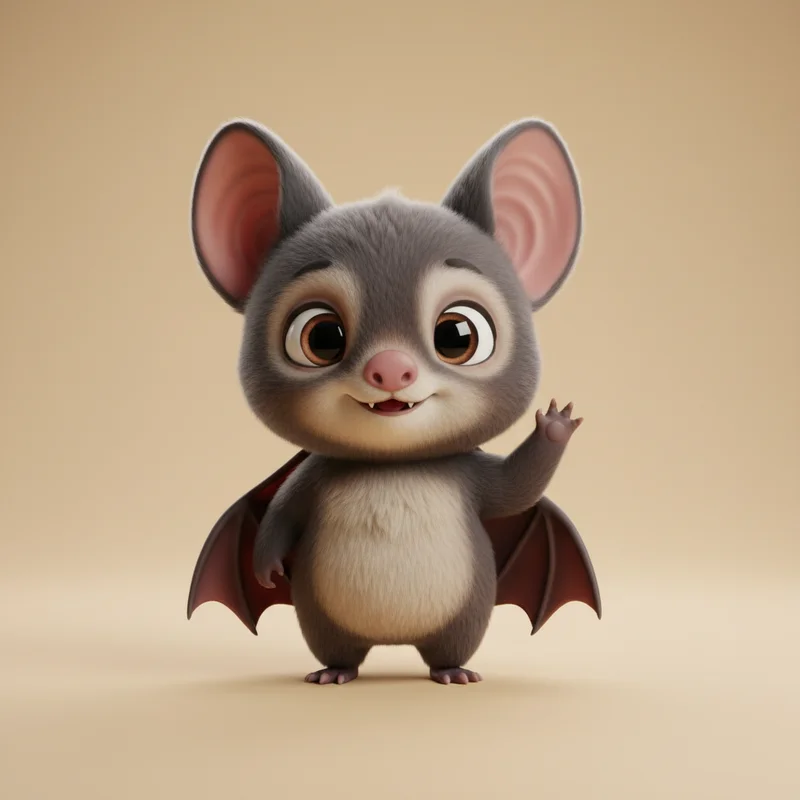
Bat

Bat

Only mammal capable of sustained flight, providing crucial ecosystem services through pollination and pest control.

Battle Analysis

Ecological impact bat Wins
30%
70%
Cat Bat

Cat

The domestic cat's ecological impact presents something of a controversial ledger. On the asset side, cats provide rodent control services valued in agricultural and urban contexts since ancient Egypt. On the liability side, cats are responsible for an estimated 1.3 to 4 billion bird deaths annually in the United States alone, contributing to population declines in numerous species. Cats occupy the peculiar position of being simultaneously beloved companions and significant ecological disruptors—a tension their owners largely prefer not to examine too closely.

Bat

Bat ecological contribution operates almost entirely in the positive column. Insectivorous bats consume vast quantities of agricultural pests, providing pest control services valued at billions of dollars annually. Fruit bats serve as essential pollinators and seed dispersers for hundreds of plant species, including economically crucial crops. Bat guano functions as premium fertiliser. Even vampire bats contribute anticoagulant compounds useful in medical research. The bat, unlike the cat, can claim an almost unblemished record of ecological beneficence.

VERDICT

Bats provide crucial ecological services; cats represent a conservation concern
Hunting efficiency cat Wins
70%
30%
Cat Bat

Cat

The domestic cat employs what might be termed the ambush capitalism model of predation. Cats stalk prey with extraordinary patience, minimising energy expenditure until the moment of explosive action. A hunting cat may spend twenty minutes in motionless observation before a sub-second strike. Domestic cats demonstrate a capture success rate of approximately 32% for birds and 60% for rodents, figures that would impress any corporate efficiency consultant. The cat's retractable claws, preserved in pristine sharpness until deployment, function as precision hunting implements.

Bat

Bat hunting efficiency varies dramatically by species and strategy. Insectivorous bats employing echolocation demonstrate capture rates exceeding 90% for detected prey, making them among the most efficient predators on Earth. A single bat may consume up to 1,200 insects per hour, processing prey with industrial efficiency. However, this efficiency applies primarily to small, airborne targets. Bats hunting larger or stationary prey show considerably lower success rates. The bat excels at what it does, but what it does is rather narrowly defined.

VERDICT

Cats demonstrate versatile efficiency across diverse prey types and hunting contexts
Physical adaptations bat Wins
30%
70%
Cat Bat

Cat

The feline form represents a masterwork of terrestrial predator engineering. Cats possess a flexible spine with 53 vertebrae enabling extraordinary contortion and the famous always-land-on-feet reflex. Their muscle composition favours fast-twitch fibres, enabling explosive acceleration to speeds exceeding 48 kilometres per hour in short bursts. Retractable claws maintain edge sharpness; cushioned paw pads enable silent approach; and a bite force of approximately 70 newtons dispatches prey efficiently. The domestic cat essentially carries a complete murder kit concealed within an adorable exterior.

Bat

Bat physical adaptation centres on the extraordinary achievement of powered flight. Bat wings consist of a thin membrane stretched between elongated finger bones, creating an aerofoil of remarkable manoeuvrability. Bats can hover, perform aerial U-turns, and navigate spaces that would challenge the most advanced drones. Some species demonstrate cruising speeds of 160 kilometres per hour. However, this aerial specialisation comes at terrestrial cost—most bats are clumsy crawlers at best, their limbs optimised for hanging rather than walking.

VERDICT

Powered flight represents a more remarkable evolutionary achievement than terrestrial agility
Sensory capabilities bat Wins
30%
70%
Cat Bat

Cat

The domestic cat possesses a sensory array optimised for low-light operations. Its eyes contain a tapetum lucidum, a reflective layer that effectively doubles available light by bouncing photons back through the retina. Cat pupils can expand to nearly full eye coverage, gathering maximum illumination in darkness. Beyond vision, feline whiskers detect air currents and spatial boundaries with remarkable precision, whilst ears rotate independently through 180 degrees to triangulate sound sources. This multi-modal sensing system permits effective hunting in conditions humans would consider pitch black.

Bat

The bat has taken sensory evolution in an altogether different direction. Through echolocation, bats emit ultrasonic pulses at frequencies between 20 and 200 kilohertz, then interpret returning echoes to construct detailed three-dimensional maps of their environment. This biological sonar operates with such precision that bats can detect objects as fine as human hair and track insects mid-flight in complete darkness. Some species have additionally developed infrared sensing capabilities for locating warm-blooded prey. The bat has essentially invented radar millions of years before humanity stumbled upon the concept.

VERDICT

Echolocation provides complete environmental awareness regardless of light conditions
Cultural significance cat Wins
70%
30%
Cat Bat

Cat

The domestic cat has achieved cultural penetration rivalling any creature in human history. Ancient Egyptians elevated cats to divine status, mummifying them by the million. Medieval Europeans associated cats with witchcraft, to dubious effect on rat populations. The modern internet has essentially constructed a cat-worship infrastructure, with feline content generating billions of annual views. Cats appear in the folklore of virtually every culture, typically as symbols of independence, mystery, or questionable loyalty. The cat has leveraged human civilisation for food and shelter whilst contributing nothing but companionship—arguably the most successful interspecies negotiation ever conducted.

Bat

Bat cultural significance trends considerably darker. Western culture has associated bats with vampires, darkness, and death since at least the medieval period—associations reinforced by certain blood-drinking species in Latin America. Batman has done something to rehabilitate bat imagery, but the creature remains more commonly a Halloween decoration than a beloved symbol. Chinese culture provides an exception, where bats represent good fortune (the Chinese word for bat, 'fu', is homophonous with the word for blessing). Overall, however, the bat suffers from severe image management problems despite its ecological virtues.

VERDICT

Cats enjoy near-universal positive cultural status; bats struggle against persistent negative associations
👑

The Winner Is

Cat

54 - 46

This investigation of nocturnal predators reveals a contest balanced on the knife-edge of competing excellences. The bat claims victory in sensory capabilities, physical adaptations, and ecological impact—categories measuring objective biological achievement. Echolocation represents a sensory system without terrestrial parallel; powered flight remains nature's most demanding locomotion mode; and bat contributions to ecosystem health dwarf those of any domesticated species.

Yet the cat prevails in hunting efficiency and cultural significance—categories that, in the court of human opinion, carry disproportionate weight. The cat hunts what it pleases with lethal versatility, and humanity has rewarded this competence with millennia of worship, shelter, and internet bandwidth.

By a margin of 54 to 46, the cat emerges victorious. This verdict reflects not biological superiority—the bat is arguably the more impressive evolutionary achievement—but rather the cat's unmatched ability to convert predatory competence into cultural capital. The cat has made itself indispensable to human civilisation; the bat remains, despite its services, a creature humans would rather not examine too closely in good lighting.

Cat
54%
Bat
46%

Share this battle

More Comparisons