
Topic Battle

Where Everything Fights Everything

Cat

Cat

Domestic feline companion known for independence, agility, and internet fame. Masters of napping and keyboard interruption.

VS
Bread

Bread

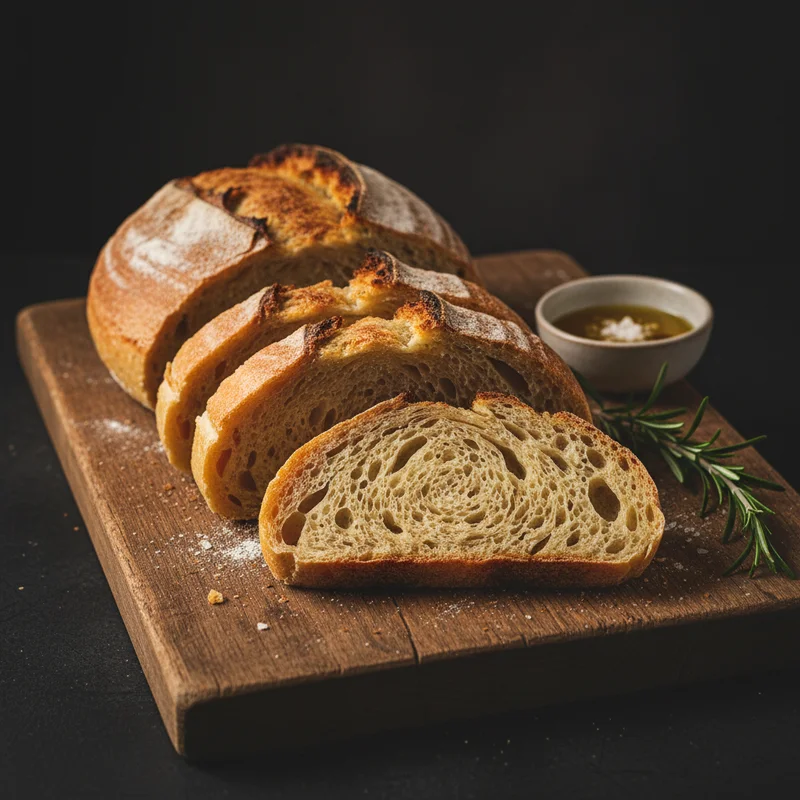
Baked staple food and foundation of sandwiches worldwide.

Battle Analysis

Durability Cat Wins
70%
30%
Cat Bread

Cat

The domestic cat demonstrates remarkable biological durability, with an average lifespan of 15 to 20 years under optimal indoor conditions. Individual specimens have documented survival well into their thirties, outlasting multiple human relationships, several career changes, and countless items of furniture sacrificed to territorial marking behaviours.

Feline resilience extends beyond mere longevity. Cats survive falls from considerable heights through the so-called righting reflex, maintain functionality across wide temperature ranges, and demonstrate immune systems capable of processing dietary indiscretions that would hospitalise most mammals. The redundancy built into feline biology suggests engineering tolerances far exceeding domestic requirements.

Storage requirements prove minimal. Unlike perishable goods, cats maintain themselves at ambient temperature and require no special preservation techniques. They do, however, deteriorate emotionally if neglected, a form of spoilage that manifests in behavioural rather than physical symptoms.

Bread

Bread durability varies dramatically based on formulation and storage protocols. Standard white bread maintains optimal quality for five to seven days at room temperature before mould colonisation renders it unsuitable for consumption. Artisan sourdoughs extend this window marginally through natural acidity. Industrial products laden with preservatives push boundaries further still.

The fundamental fragility of bread has driven considerable innovation. Freezing extends viability to several months. Toasting rescues slightly stale specimens. The invention of breadcrumbs represents humanity's refusal to accept defeat even when the loaf has clearly expired. Yet despite these interventions, bread remains temporally limited in ways cats simply are not.

Archaeological evidence indicates that bread, once consumed, provides no further service. The cat, by contrast, continues generating value for decades following initial acquisition. From a pure durability standpoint, the mathematics favour the mammal decisively.

VERDICT

A lifespan measured in decades versus one measured in days represents an insurmountable durability advantage for the feline competitor.
Reliability Bread Wins
30%
70%
Cat Bread

Cat

Cat reliability follows patterns that consistently defy prediction. Feeding schedules establish themselves, then shift without notice. Affection arrives abundantly, then withdraws entirely for reasons known only to the cat. Sleep locations rotate through furniture in sequences that resist mathematical modelling.

This unreliability, paradoxically, constitutes part of feline appeal. Cats maintain operational independence that requires no human intervention during extended absences. They do not malfunction when left unattended for reasonable periods. Unlike mechanical systems, cats self-diagnose and self-repair most minor ailments without external input.

The reliability that cats offer is reliability of presence rather than behaviour. They will be there. What they will do upon arrival remains perpetually uncertain. For humans seeking predictable responses, this represents significant deficiency. For those embracing variability, it represents feature rather than fault.

Bread

Bread demonstrates consistency approaching industrial standardisation. A loaf of bread performs identically whether purchased on Monday or Friday, in London or Leeds. Slicing produces uniform results. Toasting achieves predictable outcomes within equipment-specific parameters. Bread does exactly what bread is expected to do, every single time.

This reliability extends to preparation. Baking follows thermodynamic principles with minimal variation. Given identical inputs, outputs match within acceptable tolerances. Commercial bakeries achieve consistency metrics that would impress aerospace manufacturers. Home bakers encounter more variation but still operate within understood parameters.

The limitation of bread reliability lies in temporal constraints. Bread reliably becomes stale. It reliably attracts mould. It reliably goes from useful to useless within predictable timeframes. The reliability is perfect but bounded, excellent performance followed by inevitable obsolescence.

VERDICT

Consistent, predictable behaviour represents superior reliability compared to feline operational variability, despite the cat's impressive self-maintenance capabilities.
Versatility Cat Wins
70%
30%
Cat Bread

Cat

Cats provide services across multiple domestic categories simultaneously. Pest control remains their original function, with even well-fed specimens maintaining hunting protocols sufficient to discourage rodent colonisation. Emotional support represents a secondary function, with purring frequencies demonstrated to reduce human stress hormones and blood pressure.

Additional applications include paperweight duties, keyboard warming, and serving as conversation topics during otherwise awkward social interactions. Cats function as living alarm clocks, typically more reliable than mechanical alternatives though considerably less negotiable regarding snooze functions. They also serve as ambient heating elements during winter months, positioning themselves strategically across laps and keyboards.

The versatility extends to entertainment. Cats provide unpredictable behavioural displays requiring no electricity, subscription fees, or internet connectivity. A cat pursuing a laser pointer generates engagement metrics rivalling streaming services at a fraction of the operational cost.

Bread

Bread demonstrates versatility that has made it humanity's most successful food technology. As a delivery system, it transports other foods from plate to mouth with minimal structural failure. Toast, sandwiches, croutons, stuffing, breadcrumbs, and bread pudding represent mere fractions of possible applications. Every culture has developed indigenous bread variants optimised for local conditions.

Beyond consumption, bread serves surprising secondary functions. Stale bread cleans wallpaper. Fresh bread removes glass shards from carpets. Bread dough teaches children basic chemistry and provides stress relief through kneading. Artists have employed bread as erasers, sculptors have used it as medium, and economists have used it as baseline pricing metrics throughout history.

However, each application destroys the bread in question. Versatility comes at the cost of continued existence, a trade-off cats studiously avoid. A cat that catches a mouse remains available for subsequent mousing duties. Bread that becomes a sandwich becomes nothing thereafter.

VERDICT

Reusable versatility across decades outperforms single-use versatility, however impressive the range of that single use may be.
Affordability Bread Wins
30%
70%
Cat Bread

Cat

Cat acquisition costs range from zero to several thousand pounds depending upon sourcing methodology. Shelter adoption typically costs between 50 and 150 pounds including initial vaccinations and sterilisation. Pedigree specimens command substantial premiums, though functional specifications remain largely identical regardless of price point.

Ongoing operational costs prove more substantial. Annual veterinary care, food, litter, and incidental expenses average 500 to 1,000 pounds in the United Kingdom. Emergency medical interventions can spike costs dramatically. Over a fifteen-year lifespan, total cat expenditure easily exceeds 10,000 pounds before accounting for furniture replacement and deposit forfeitures.

The cost-per-day calculation, however, reveals different economics. At 15 years of service, even substantial total investments translate to remarkably modest daily rates. The cat amortises impressively when viewed through appropriate temporal frameworks.

Bread

Bread maintains position as one of humanity's most accessible foodstuffs. Basic loaves retail for under one pound in most markets, with premium artisan options rarely exceeding five pounds. Home production costs reduce further still, requiring only flour, water, salt, and yeast, ingredients available virtually anywhere human civilisation has established foothold.

Annual bread expenditure for average households rarely exceeds 200 pounds, even accounting for premium preferences and frequent consumption. No unexpected bread emergencies arise requiring four-figure interventions. Bread insurance does not exist because bread risks remain comprehensively manageable.

The affordability advantage compounds over time. One could purchase bread daily for fifty years and not approach the lifetime cost of a single cat. From pure acquisition and operational standpoints, bread represents the more economical domestic presence by substantial margins.

VERDICT

Lifetime costs differing by orders of magnitude create an insurmountable affordability advantage for the carbohydrate competitor.
Emotional value Cat Wins
70%
30%
Cat Bread

Cat

The emotional bond between humans and cats represents one of domestication's more peculiar achievements. Cats did not evolve to please humans. They express no pack hierarchy requiring human leadership. Yet humans form attachments to cats that persist through decades and survive the loss of the animals themselves.

Neuroscience reveals the mechanisms. Interaction with cats triggers oxytocin release in human brains, the same neurochemical underlying parent-child bonding. Cat purring frequencies correlate with reduced cortisol levels. The presence of cats in households correlates with measurable decreases in cardiovascular disease risk, though causation remains debated.

The emotional value compounds over time. A cat known for fifteen years becomes biographical, its presence woven through memory in ways no inanimate object achieves. Loss of such companions triggers grief responses indistinguishable from human bereavement, testament to the genuine emotional significance these relationships attain.

Bread

Bread provides emotional satisfaction through comfort and ritual rather than relationship. The smell of baking bread ranks among humanity's most universally positive sensory experiences, triggering nostalgic associations and appetite responses simultaneously. Breaking bread serves as metaphor for human connection precisely because the act carries genuine emotional weight.

The comfort bread provides is real but circumscribed. It satisfies immediate hunger. It recalls childhood kitchens and family gatherings. It represents security against want, an assurance that basic needs will be met. These emotional functions should not be dismissed, as they operate at fundamental levels of human psychology.

Yet bread cannot reciprocate. It does not learn its owner's routines. It does not position itself for contact at appropriate moments. It does not purr. The emotional exchange remains entirely one-directional, comfort taken rather than comfort shared.

VERDICT

Reciprocal emotional bonding with a living creature provides depths of emotional value that consumable products, however comforting, cannot approximate.
👑

The Winner Is

Cat

58 - 42

The cat prevails through the simple mathematics of irreplaceability. Any loaf of bread can substitute for any other with minimal adjustment. No cat substitutes for another. The specific patterns of behaviour, the particular warm weight on the lap, the individual quirks accumulated over years of cohabitation, these cannot be replicated through bakery visits.

Bread will continue to hold its essential place in human nutrition and culture. It remains civilisation's foundational technology, the innovation that enabled settlement, specialisation, and ultimately the surplus that permitted keeping cats as companions rather than mere pest controllers.

Yet in the final accounting, companionship outweighs calories. The cat offers something bread never could: a presence that notices when you arrive home, that seeks proximity without requiring consumption, that transforms mere shelter into something resembling home. Against such offerings, even the finest sourdough cannot compete.

Cat
58%
Bread
42%

Share this battle

More Comparisons