Topic Battle

Where Everything Fights Everything

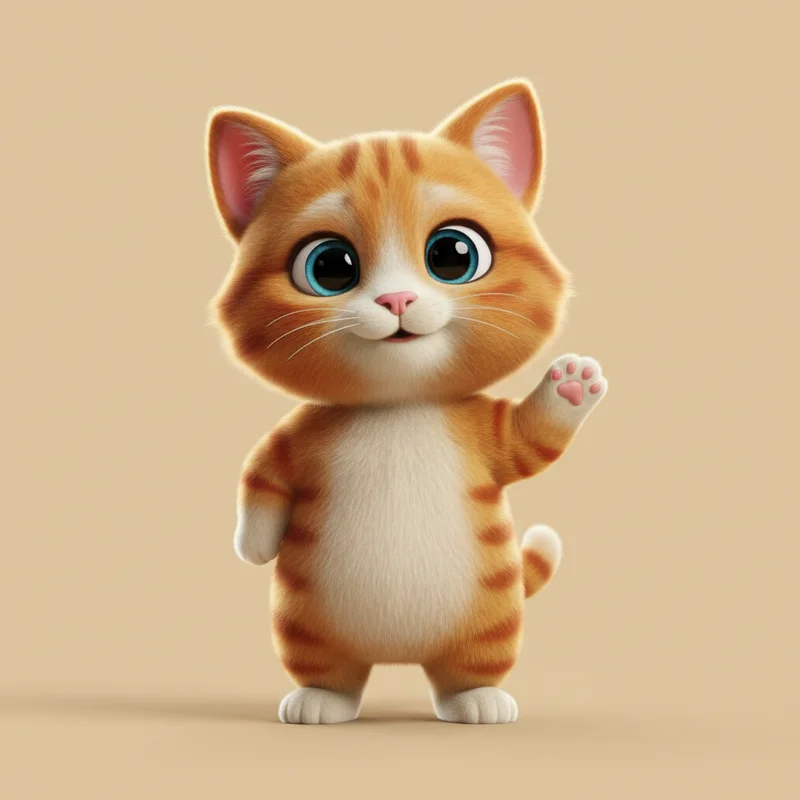
Cat

Cat

Domestic feline companion known for independence, agility, and internet fame. Masters of napping and keyboard interruption.

VS
Drone

Drone

Unmanned aerial vehicle revolutionizing photography and delivery.

Battle Analysis

Agility Cat Wins
70%
30%
Cat Drone

Cat

The feline musculoskeletal system represents one of evolution's most refined movement platforms. Cats execute 180-degree mid-air rotations in under 0.3 seconds, utilising a flexible spine containing 53 vertebrae compared to humanity's modest 33. This anatomical advantage enables positional corrections that no mechanical system has successfully replicated.

Ground-based agility proves equally impressive. Cats achieve directional changes at speeds exceeding 30 miles per hour, with reaction times measured at 20 to 70 milliseconds. The integration of visual processing, vestibular balance, and muscular response occurs without conscious thought, a level of automation that drone manufacturers can only approximate through increasingly complex algorithms.

Perhaps most remarkably, cats maintain this agility whilst appearing entirely unconcerned about its impressiveness. They execute physics-defying manoeuvres with the casual indifference of entities for whom such movements represent baseline functionality rather than achievement.

Drone

Modern consumer drones achieve impressive manoeuvrability through quadcopter configurations that enable hovering, lateral movement, and rapid altitude adjustment. Racing drones reach speeds of 100 miles per hour with directional changes limited primarily by pilot skill and structural integrity. The physics involved, whilst well understood, remain genuinely remarkable.

However, drone agility operates within narrowly defined parameters. Strong winds reduce control authority. Obstacle detection systems introduce latency. Battery depletion degrades performance progressively rather than catastrophically, offering pilots the minor consolation of watching their craft become increasingly sluggish before eventually plummeting earthward.

The fundamental constraint remains electronic rather than mechanical. Drones respond to commands transmitted, processed, and executed across multiple systems, each introducing microseconds of delay. A cat's response time measures in milliseconds because decision and action occur within a single integrated system.

VERDICT

Four billion years of evolutionary refinement produces agility that silicon and carbon fibre cannot yet approximate.
Stealth Cat Wins
70%
30%
Cat Drone

Cat

Feline stealth operations benefit from evolutionary pressures that demanded silent approach across millions of years. Cats walk on digitigrade foot structures with retractable claws, enabling movement that produces sound levels below most detection thresholds. The pad surfaces provide natural sound absorption that synthetic materials attempt to replicate with limited success.

Behavioural stealth compounds physical advantages. Cats instinctively freeze when detected, utilise available cover, and time movements to coincide with ambient noise. These tactical behaviours emerge without training, representing inherited knowledge encoded across thousands of generations of predatory refinement.

Colouration patterns further enhance concealment. Domestic cats exhibit coat variations specifically evolved to disrupt visual recognition against varied backgrounds. No external coating or modification is required; the camouflage system operates continuously and maintenance-free.

Drone

Consumer drones generate 70 to 80 decibels of acoustic signature at operational altitudes, comparable to vacuum cleaners and impossible to overlook. Even military-grade systems designed for reduced detection produce sound levels that trained observers identify with minimal difficulty. The fundamental physics of air displacement through spinning rotors resists acoustic mitigation.

Visual detection proves equally problematic. Drones present distinctive silhouettes against sky backgrounds, with rotor blade reflections creating visible flicker patterns. Size reduction improves concealment but correspondingly reduces payload capacity, camera quality, and flight duration.

Electromagnetic emissions compound detection vulnerability. Radio control signals, video transmission frequencies, and GPS positioning all create signatures that increasingly common detection systems identify automatically. Drones announce their presence across multiple spectra simultaneously.

VERDICT

Millions of years of predatory evolution produced stealth capabilities that engineering cannot replicate against physics.
Reliability Cat Wins
70%
30%
Cat Drone

Cat

Cats demonstrate operational reliability across environmental conditions that would disable most electronic systems. Temperature tolerance ranges from minus 30 to plus 45 degrees Celsius, with behavioural adaptations automatically adjusting activity levels to preserve core functionality. Rain, humidity, and dust pose negligible operational impact.

System redundancy appears throughout feline design. Loss of a single limb reduces but does not eliminate mobility. Partial vision loss is compensated through enhanced auditory and whisker-based spatial awareness. These failover capabilities emerge from evolutionary pressures that punished single points of failure with extinction.

Maintenance requirements prove remarkably modest. Cats self-clean, self-medicate through selective plant consumption, and self-repair from injuries that would require workshop intervention for mechanical equivalents. Operational readiness approaches 95 percent availability across normal lifespans.

Drone

Drone reliability correlates directly with component quality and environmental exposure. Consumer models achieve mean time between failures measured in hundreds of flight hours, with motor bearings, electronic speed controllers, and battery cells representing common failure points. Each flight accumulates wear that eventually renders systems inoperable.

Environmental tolerance remains strictly limited. Most consumer drones specify operating temperatures between 0 and 40 degrees Celsius, with precipitation immediately grounding operations. Salt air, sand, and dust accelerate bearing wear and contaminate optical systems. Winter operations prove particularly problematic as battery chemistry reduces capacity dramatically at low temperatures.

Software reliability introduces additional concerns. Firmware updates occasionally introduce regressions. GPS signal interference causes erratic behaviour. Compass calibration requirements vary by location and prove entirely mysterious to typical operators. The system complexity that enables functionality simultaneously enables failure modes impossible in simpler designs.

VERDICT

Biological systems refined across evolutionary time demonstrate durability that consumer electronics cannot approach.
Entertainment value Cat Wins
70%
30%
Cat Drone

Cat

Cats provide entertainment through behavioural unpredictability that no algorithm successfully simulates. The phenomenon colloquially termed 'the zoomies', wherein cats sprint at maximum velocity through living spaces for reasons known only to themselves, generates reliable amusement precisely because it defies prediction or explanation.

Interactive entertainment emerges through play behaviours that cats appear to enjoy independently of human involvement. String pursuit, box investigation, and the stalking of entirely imaginary prey all occur spontaneously, transforming mundane domestic environments into stages for inexplicable feline performances.

Digital entertainment derivatives deserve acknowledgment. Cat-related content dominates internet engagement metrics, with videos accumulating billions of collective views annually. The entertainment value extends far beyond individual cat ownership, creating cultural phenomena that transcend traditional media categories.

Drone

Drones provide entertainment through capability rather than personality. First-person-view piloting creates visceral experiences comparable to flight simulation but occurring in actual physical space. Racing competitions draw significant audiences, with professional circuits offering prize pools that legitimate the activity as genuine sport.

Aerial photography transforms ordinary locations into extraordinary visual content. Perspectives previously available only through helicopter hire become accessible to anyone willing to invest modest sums in consumer hardware. Wedding videography, real estate marketing, and travel documentation all benefit from angles that ground-based cameras simply cannot achieve.

However, entertainment value diminishes with familiarity. The novelty of drone footage degrades as audiences become accustomed to aerial perspectives. A cat's entertainment value, by contrast, appears inexhaustible, with the same behavioural patterns remaining amusing across years of observation.

VERDICT

Unpredictable biological behaviour generates sustained entertainment that technological capability cannot indefinitely provide.
Surveillance capability Drone Wins
30%
70%
Cat Drone

Cat

Cats possess surveillance capabilities that predate human civilisation by considerable margins. Their visual system includes a tapetum lucidum reflective layer enabling functional vision at light levels one-sixth of human requirements. Night patrols occur without illumination, battery concerns, or flight time limitations.

Auditory surveillance proves equally sophisticated. Feline ears rotate 180 degrees independently, detecting frequencies up to 64,000 Hz, well beyond human perception and sufficient to identify rodent vocalisations through solid walls. This directional sound mapping creates acoustic awareness that microphone arrays struggle to match.

The operational duration deserves particular note. Cats conduct surveillance operations continuously across lifespans of 15 to 20 years, requiring only periodic feeding and the occasional strategic nap. No drone manufacturer offers comparable service intervals.

Drone

Drones equipped with modern camera systems capture footage of 4K resolution at 60 frames per second, with gimbal stabilisation eliminating vibration artefacts that would render biological vision useless. Thermal imaging accessories detect heat signatures invisible to any organic eye, revealing patterns that evolution never required animals to perceive.

Altitude capabilities transform surveillance potential entirely. Consumer drones legally operate to 400 feet in most jurisdictions, with professional systems reaching considerably higher. This vertical advantage provides perspective that ground-based observers, regardless of species, simply cannot achieve without mechanical assistance.

Data transmission occurs in real-time to remote operators, enabling surveillance from positions of complete safety. This separation of sensor from observer represents a fundamental advance over biological systems that require physical presence within observation range.

VERDICT

Mechanical systems achieve resolution, altitude, and recording capabilities that biological evolution never optimised for.
👑

The Winner Is

Cat

55 - 45

The cat prevails through advantages earned across evolutionary time that engineering has not yet matched. Agility refined by predation, stealth perfected by survival pressure, and reliability tested by extinction all combine to produce a domestic companion whose specifications exceed most consumer electronics.

Drones will continue their rapid advancement. Flight times will extend, cameras will improve, and noise signatures will reduce through engineering persistence. These improvements represent genuine achievement and deserve recognition as such.

Yet the cat remains unimpressed by such progress, as cats remain unimpressed by most human endeavour. It will continue stalking imaginary prey, executing impossible mid-air rotations, and providing entertainment that technology cannot algorithmically generate. In the final assessment, biological sophistication earned across geological time retains advantages that silicon cannot yet purchase, however rapidly the gap narrows.

Cat
55%
Drone
45%

Share this battle

More Comparisons