
Topic Battle

Where Everything Fights Everything

Cat

Cat

Domestic feline companion known for independence, agility, and internet fame. Masters of napping and keyboard interruption.

VS
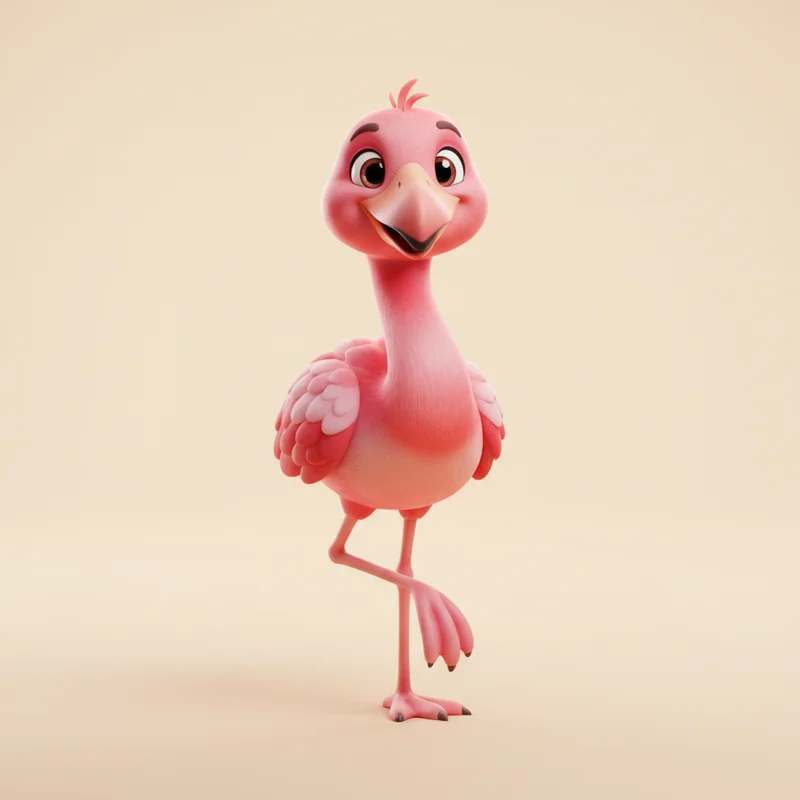
Flamingo

Flamingo

Pink wading bird whose color comes entirely from diet, known for one-legged standing and synchronized displays.

Battle Analysis

Aesthetic presence flamingo Wins
30%
70%
Cat Flamingo

Cat

The domestic cat presents a study in calculated elegance. Its fur, available in some 300 distinct colour patterns, has been refined through millennia of selective breeding and arbitrary human preference. The cat's liquid movements—the stretch, the prowl, the inexplicable midnight sprint—demonstrate a kinetic grace that painters and photographers have attempted to capture for centuries. However, the cat's aesthetic appeal relies heavily on its willingness to be observed, which remains entirely at its discretion.

Flamingo

The flamingo approaches aesthetic presence through an entirely different philosophy: aggressive visibility. Its pink plumage, derived from carotenoid pigments in its diet of brine shrimp and algae, creates a colour profile that refuses to be ignored. The flamingo's signature single-leg stance, maintained for hours without apparent discomfort, has puzzled scientists and delighted tourists in equal measure. When assembled in flocks numbering in the thousands, flamingos create landscapes of coordinated pink that no cat colony could hope to replicate.

VERDICT

The flamingo's chromatic commitment and collective visual impact surpass feline subtlety
Social intelligence cat Wins
70%
30%
Cat Flamingo

Cat

Feline social intelligence operates through a framework of strategic ambiguity. Cats have developed vocalisations used exclusively for human communication—the meow is notably absent from cat-to-cat interactions. They understand human emotional states, recognise their names, and choose to respond only when convenient. The cat's social intelligence is deployed selectively, creating an impression of mysterious depth that may or may not reflect actual cognitive complexity. This uncertainty, scientists suspect, is entirely deliberate.

Flamingo

Flamingo social intelligence manifests through collective behaviour on a scale cats cannot comprehend. These birds engage in synchronised courtship displays involving hundreds of individuals, coordinating head movements, wing salutes, and marching formations with military precision. Their social bonds persist across years and breeding seasons. However, individual flamingo-human relationships remain essentially non-existent. The flamingo does not recognise human emotional states because the flamingo does not recognise humans as relevant.

VERDICT

Cats have developed human-specific manipulation; flamingos remain magnificently disinterested
Cultural significance cat Wins
70%
30%
Cat Flamingo

Cat

The cat's cultural footprint spans millennia and continents. Ancient Egyptians worshipped the cat goddess Bastet; medieval Europeans associated cats with witchcraft; the internet has transformed felines into a dominant content category. Cats have inspired art from Japanese ukiyo-e to contemporary memes, featured in literature from Poe to Pratchett, and generated economic activity measured in billions annually. The cat has achieved cultural saturation that few animals can match.

Flamingo

The flamingo occupies a more specific cultural niche, though one of considerable distinction. The bird has become synonymous with tropical kitsch—lawn ornaments, Miami vice aesthetics, and resort hotel décor. Flamingo imagery evokes leisure, warmth, and mild eccentricity. Yet beyond this decorative function, the flamingo's cultural presence remains limited. No religion has worshipped the flamingo; no flamingo has launched a viral video career. The bird excels within its aesthetic lane but lacks the cat's comprehensive cultural penetration.

VERDICT

Cats dominate across historical worship, contemporary internet culture, and everything between
Survival adaptability cat Wins
70%
30%
Cat Flamingo

Cat

The domestic cat has demonstrated survival adaptability of the highest order—specifically, by convincing another species to handle survival on its behalf. Cats have colonised every continent except Antarctica, not through physical fortitude but through psychological manipulation. The cat's retractable claws, night vision, and hunting instincts remain intact, allowing feral populations to thrive independently. Yet the species' most successful adaptation has been its capacity to present itself as simultaneously independent and desperately in need of tinned food delivered at precise intervals.

Flamingo

The flamingo's survival strategy relies on ecological specialisation rather than domestic infiltration. These birds thrive in hypersaline and alkaline environments that would destroy most organisms—lakes with pH levels approaching 10, temperatures exceeding forty degrees Celsius. Their unique bill, featuring lamellae that filter microscopic organisms from mud, represents engineering that no cat could replicate. However, this specialisation creates vulnerability: flamingos cannot simply relocate to human homes when wetlands disappear.

VERDICT

Cats have mastered the ultimate survival strategy: making humans responsible for their welfare
Physiological efficiency cat Wins
70%
30%
Cat Flamingo

Cat

The domestic cat operates as a remarkably efficient organism. Sleeping between twelve and sixteen hours daily conserves energy whilst maintaining peak alertness for the remaining hours. The cat's digestive system processes protein with minimal waste; its grooming regime maintains hygiene without external intervention; its thermoregulatory capabilities allow comfort across a broad temperature range. The cat has optimised for minimum effort whilst extracting maximum resources from its environment—a strategy MBA programmes might study.

Flamingo

The flamingo's physiological efficiency reveals itself in its celebrated single-leg standing position. Research has demonstrated this posture requires less muscular effort than standing on two legs, allowing flamingos to conserve energy whilst remaining vertical. Their circulatory system includes a counter-current heat exchange mechanism preventing heat loss through legs submerged in cool water. However, the flamingo's dietary requirements—filtering microscopic organisms from alkaline mud—demand considerably more energy than opening a tin of cat food.

VERDICT

The cat has achieved peak laziness as an evolutionary strategy; the flamingo still works for its meals
👑

The Winner Is

Cat

52 - 48

This investigation reveals a contest between two creatures united by their capacity for elegant disdain, yet divergent in their approaches to planetary existence. The flamingo claims victory in aesthetic presence, its pink plumage and architectural poses creating visual spectacles no cat congregation could replicate. Standing on one leg whilst remaining magnificently indifferent to observers represents a form of performance art the cat cannot match.

Yet the cat prevails in survival adaptability, social intelligence, physiological efficiency, and cultural significance—four of five assessed criteria. The cat has not merely survived but thrived by converting an entire species into its support staff. This achievement surpasses any adaptation the flamingo has managed, however impressive its alkaline-lake tolerance may be.

By a margin of 52 to 48, the domestic cat emerges victorious. This narrow victory acknowledges the flamingo's genuine accomplishments whilst recognising that the cat has played a different game entirely—one in which appearing helpless whilst maintaining absolute control represents the ultimate evolutionary strategy.

Cat
52%
Flamingo
48%

Share this battle

More Comparisons