Topic Battle

Where Everything Fights Everything

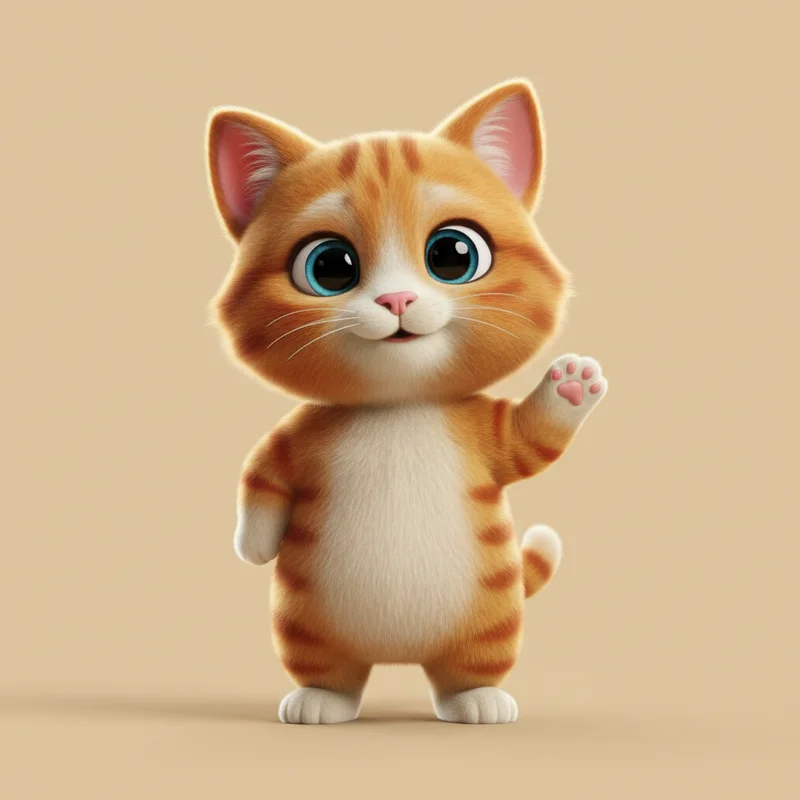
Cat

Cat

Domestic feline companion known for independence, agility, and internet fame. Masters of napping and keyboard interruption.

VS
Hoverboard

Hoverboard

Self-balancing scooter that disappointed Back to the Future fans.

Battle Analysis

Injury potential Hoverboard Wins
30%
70%
Cat Hoverboard

Cat

Cats maintain a sophisticated arsenal of injury-inflicting mechanisms. Claws capable of penetrating leather jackets deploy without warning during what begins as affectionate interaction. Teeth designed for severing small mammalian spines occasionally redirect toward human appendages. The average cat carries approximately 130 million bacteria per square centimetre of claw surface, transforming minor scratches into potential medical events.

Beyond direct assault, cats excel at indirect injury facilitation. The strategically placed hairball creates slip hazards rivalling professional ice rinks. The 3 AM vocalisation induces sleep-deprived humans to stumble into furniture. The simple act of existing on a duvet causes human feet to seek stable purchase where none exists.

Hoverboard

Hoverboard injuries present with impressive clinical variety. Emergency department data catalogues fractures, contusions, lacerations, and burns, the latter resulting from thermal events within battery compartments of dubiously certified models. Wrist fractures predominate, as humans instinctively extend arms to break falls that the hoverboard itself initiated.

The device demonstrates particular aptitude for ankle injuries, applying rotational forces at angles the human joint never evolved to accommodate. Property damage frequently accompanies personal injury, as uncontrolled hoverboards continue their trajectories into furniture, walls, and occasionally through doors into outdoor environments where their rampage may continue unwitnessed.

VERDICT

The hoverboard's capacity for dramatic, hospital-worthy injuries exceeds feline damage potential in both severity and entertainment value for observers.
Balance disruption Cat Wins
70%
30%
Cat Hoverboard

Cat

The cat approaches balance disruption with the patience of a seasoned tactician. Primary methodologies include positioning directly underfoot during stair navigation, threading between moving legs at precisely the moment weight transfer occurs, and appearing from concealment at angles calculated to maximise startle response. These techniques have been refined across countless feline generations, resulting in near-perfect execution rates.

Advanced practitioners employ the midnight sprint, a technique wherein the cat launches itself across sleeping humans at velocities approaching 30 miles per hour, using the human torso as a launching pad. The resulting disruption extends beyond mere physical balance to encompass circadian rhythms, REM cycles, and general faith in a just universe.

Hoverboard

The hoverboard disrupts balance through more mechanical means. The device's self-balancing algorithms, whilst mathematically sound, fail to account for the average human's complete absence of core stability and the widespread condition known as overconfidence. The learning curve proves deceptively steep, with most incidents occurring during what riders describe as 'basically having got the hang of it.'

Environmental factors compound the difficulty. Carpet transitions, imperceptible inclines, and the mere presence of observers all increase failure probability. The hoverboard offers no warning before capitulation, transitioning from apparent stability to spectacular collapse within milliseconds, a timeline insufficient for even athletic humans to mount defensive responses.

VERDICT

Feline balance disruption operates continuously across decades, whilst hoverboards eventually find their way to cupboards.
Internet fame generation Cat Wins
70%
30%
Cat Hoverboard

Cat

Cats achieved internet dominance before most current platforms existed. The species has generated estimated billions of hours of human attention through images, videos, and obsessive documentation of entirely mundane behaviours. Cats sitting in boxes, cats failing jumps, cats expressing what humans interpret as existential disdain: all constitute reliable engagement content transcending cultural and linguistic boundaries.

The infrastructure supporting feline internet presence dwarfs small national economies. Dedicated platforms, professional photographers, brand partnerships, and merchandising empires all orbit the simple fact that humans find cat content inexplicably compelling. This represents perhaps the greatest evolutionary advantage any species has achieved through pure memetic dominance.

Hoverboard

Hoverboard content follows a more specific formula: humans falling off hoverboards. The compilation video format proved particularly suited to this subject matter, with individual clips rarely exceeding fifteen seconds yet collectively consuming hours of aggregate viewing time. Peak cultural penetration occurred between 2015 and 2017, when celebrity misfortune aboard hoverboards dominated entertainment news cycles.

The genre maintains appeal through schadenfreude mechanisms that psychology has yet to fully explain. Watching other humans fail at ostensibly simple tasks provides reliable dopamine release, particularly when those humans exhibited pre-fall confidence. However, the hoverboard's novelty has diminished, reducing content generation compared to the evergreen appeal of feline footage.

VERDICT

Cats have sustained internet dominance for decades; hoverboard content peaked and faded within three calendar years.
Domestic chaos sustainability Cat Wins
70%
30%
Cat Hoverboard

Cat

The cat's chaos production operates on a sustainable long-term model. With lifespans averaging 15 to 20 years, a single feline represents two decades of knocked objects, shredded furniture, and inconveniently timed biological deposits. The chaos adapts and evolves, with elderly cats developing new methodologies as physical capabilities shift, proving that innovation transcends age.

Resource requirements for sustained chaos remain modest. Basic nutrition, minimal veterinary intervention, and the occasional cardboard box maintain output indefinitely. The cat requires no charging, no firmware updates, and no replacement parts, operating instead on biological systems refined across millions of years of carnivorous predation.

Hoverboard

Hoverboard chaos follows boom-and-bust cycles. Initial acquisition produces intense disruption as household members attempt mastery, followed by declining engagement as injuries accumulate and enthusiasm wanes. The average hoverboard sees active use for approximately 3 to 6 months before relegation to storage, where it awaits the next surge of misplaced optimism.

Battery degradation further limits operational lifespan. Lithium-ion cells lose capacity regardless of use, meaning the garage-dwelling hoverboard may prove inoperable when rediscovered years hence. This planned obsolescence, whether intentional or inherent, fundamentally caps chaos potential at levels cats would consider amateurish.

VERDICT

Feline chaos production spans decades; hoverboards represent brief seasonal disruptions before inevitable storage.
Dignified coexistence possibility Cat Wins
70%
30%
Cat Hoverboard

Cat

Dignified coexistence with cats remains theoretically possible, though documented cases prove rare. Successful arrangements typically require human capitulation to feline preferences across all domestic domains: furniture selection, sleeping arrangements, feeding schedules, and the fundamental question of who actually owns the residence. Humans who accept their subordinate status report satisfactory outcomes.

The cat offers occasional dignity restoration through demonstrations of affection, typically timed to coincide with feeding requirements. These moments, whilst transparently transactional, provide sufficient positive reinforcement to maintain human investment in the relationship. Stockholm syndrome dynamics may apply, though researchers hesitate to make definitive pronouncements.

Hoverboard

Dignity and hoverboard usage exist in inverse correlation. The learning phase inherently involves visible failure, typically before witnesses. Mastery, should it ever arrive, provides only modest dignity restoration, as the activity itself retains an irreducibly juvenile quality that adult participation struggles to overcome.

The hoverboard offers no reciprocal affection to offset dignity costs. It does not purr when approached, does not curl beside its owner during evening relaxation, and demonstrates complete indifference to human emotional states. The relationship remains purely transactional, with humans providing maintenance and storage whilst receiving only transportation of debatable utility.

VERDICT

Cats occasionally permit dignified coexistence; hoverboards offer only undignified transportation between furniture collisions.
👑

The Winner Is

Cat

58 - 42

The cat emerges victorious not through any single spectacular display but through the relentless accumulation of minor chaos across years that become decades. The hoverboard, for all its capacity for dramatic intervention, simply cannot sustain competitive output against an organism evolved specifically for domestic infiltration.

The hoverboard will continue to occupy its seasonal niche, appearing at gift-giving occasions and generating brief surges of household entropy before returning to darkness. Its contribution to human entertainment, particularly in compilation video format, should not be dismissed. Some would argue that a single spectacular hoverboard failure provides more concentrated joy than months of standard feline misbehaviour.

Yet longevity determines legacy. The cat has outlasted countless human technological enthusiasms, from record players to MySpace, from pagers to planking. It will outlast the hoverboard as well, sitting upon whatever furniture remains after the wheels have stopped spinning, regarding humanity with the patient contempt of a species that mastered domestic chaos whilst humans were still living in caves. In this eternal contest, biology defeats engineering through simple, inexorable persistence.

Cat
58%
Hoverboard
42%

Share this battle

More Comparisons