
Topic Battle

Where Everything Fights Everything

Cat

Cat

Domestic feline companion known for independence, agility, and internet fame. Masters of napping and keyboard interruption.

VS
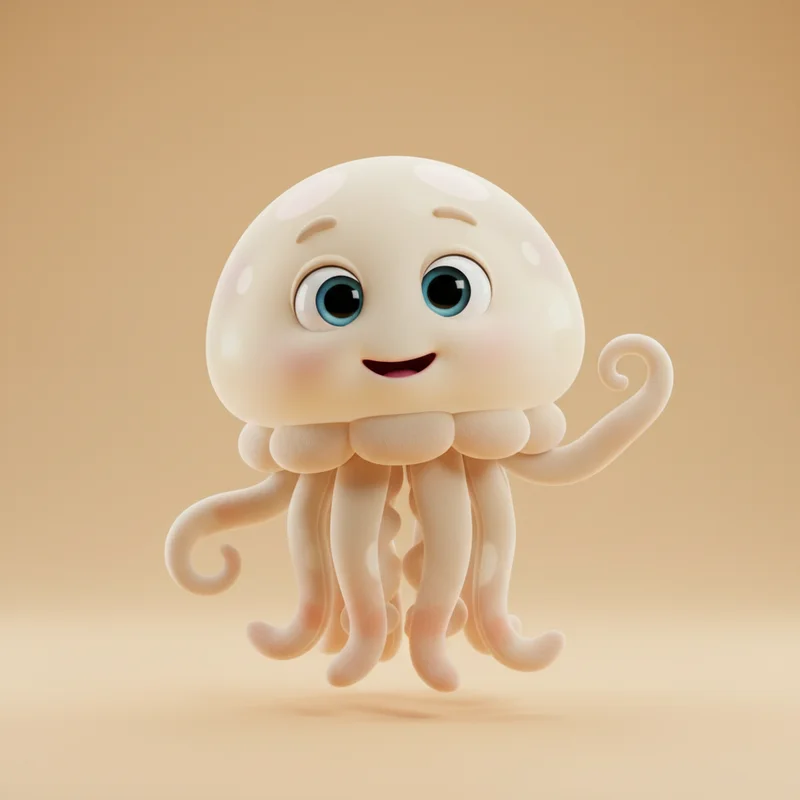
Jellyfish

Jellyfish

Brainless yet beautiful marine creature drifting through oceans for over 500 million years.

Battle Analysis

Durability Jellyfish Wins
30%
70%
Cat Jellyfish

Cat

The domestic cat presents a reasonably durable biological package. With an average lifespan of 12 to 18 years under optimal conditions, cats outlast most consumer electronics and many household appliances. Their skeletal structure permits falls from considerable heights, and their immune systems handle a respectable range of pathogens.

However, cats require significant environmental support to achieve this durability. Temperature regulation demands shelter. Hydration requires fresh water. Caloric needs necessitate regular feeding. Remove any of these inputs, and feline durability diminishes rapidly. The cat is durable, but conditionally so, much like a luxury vehicle that performs excellently provided one maintains the service schedule.

Jellyfish

The jellyfish approach to durability eliminates failure points through radical simplification. With no brain, no heart, and no bones, jellyfish have remarkably few components capable of malfunction. Some species, notably Turritopsis dohrnii, have achieved biological immortality, reverting to juvenile stages when stressed rather than accepting death like reasonable organisms.

This durability comes with trade-offs. Individual jellyfish prove extraordinarily fragile when removed from water, achieving structural collapse within minutes. Their durability operates at the species level rather than the individual level, a strategy that has proven effective for half a billion years but offers little comfort to any specific jellyfish currently being digested by a sea turtle.

VERDICT

Species-level immortality and 500 million years of continuous existence trump individual feline lifespans.
Social utility Cat Wins
70%
30%
Cat Jellyfish

Cat

The domestic cat has embedded itself into human society with remarkable thoroughness. Approximately 600 million cats currently reside in human households worldwide, providing companionship, pest control, and content for social media platforms. The economic value of cat-related industries exceeds tens of billions annually.

Cats serve documented therapeutic functions, with cat ownership correlating with reduced cardiovascular disease risk and improved mental health outcomes. Their presence triggers oxytocin release in humans, creating genuine biochemical bonding effects. The cat has made itself not merely tolerated but actively desired by its host species.

Jellyfish

Jellyfish provide social utility primarily through their absence. Beach closures due to jellyfish blooms cost tourism industries hundreds of millions annually, making their most significant social contribution the economic stimulus of not appearing. Scientific research into jellyfish bioluminescence has yielded valuable applications, though the jellyfish themselves seem unaware of their contributions to biotechnology.

Aquarium jellyfish displays attract millions of visitors yearly, their hypnotic movement patterns providing measurable stress reduction in observers. This represents perhaps the jellyfish's most positive social contribution: being watched. Unlike cats, they require no interaction, no feeding from observers, no emotional engagement. They simply exist decoratively.

VERDICT

Active companionship and measurable therapeutic benefits substantially outweigh passive decorative value.
Sustainability Jellyfish Wins
30%
70%
Cat Jellyfish

Cat

The domestic cat presents a mixed sustainability profile. Cats are obligate carnivores, requiring meat-based diets that carry significant environmental footprints. The annual carbon pawprint of a medium-sized cat approximates 310 kilograms of CO2 equivalent, comparable to a small car driven 1,500 kilometres.

Additionally, outdoor cats inflict substantial ecological damage. Studies estimate domestic and feral cats kill between 1.3 and 4 billion birds annually in the United States alone, contributing to population declines in numerous species. The cat's success has come partially at the expense of biodiversity, a debt that environmental accountants have begun to document.

Jellyfish

Jellyfish sustainability credentials prove paradoxically strong. They require no feeding by humans, generate no waste requiring processing, and reproduce without assistance. Their carbon footprint approaches zero, as they neither consume processed foods nor require manufactured habitats. From an environmental accounting perspective, jellyfish represent nearly perfect organisms.

Indeed, jellyfish populations appear to benefit from human environmental damage. Ocean warming, acidification, and overfishing of jellyfish predators have triggered jellyfish bloom events of increasing frequency and magnitude. The creatures thrive as ecosystems collapse around them, a sustainability victory of distinctly pyrrhic character.

VERDICT

Zero carbon footprint and thriving amid ecological collapse demonstrate superior environmental sustainability, however concerning the implications.
Hunting efficiency Cat Wins
70%
30%
Cat Jellyfish

Cat

Cats rank among Earth's most efficient predators by success rate. Domestic cats achieve kill rates of approximately 32 percent on hunting attempts, compared to 25 percent for lions and 10 percent for tigers. This efficiency derives from exceptional stealth, explosive acceleration, and sensory equipment calibrated for detecting small mammal movement.

The cat's hunting methodology demonstrates sophisticated cognitive processing. Stalking behaviour involves route planning, timing calculations, and prediction of prey movement patterns. Each hunt represents a complex optimisation problem solved in real-time, a feat requiring substantial neural architecture and caloric investment in brain tissue.

Jellyfish

Jellyfish hunting operates on entirely different principles. Rather than pursuing prey, jellyfish simply exist in locations where prey happens to be, trailing tentacles equipped with nematocysts that fire automatically upon contact. No decision-making occurs. No energy expenditure on pursuit. The jellyfish drifts, and food eventually touches its tentacles, at which point chemistry handles the rest.

This passive hunting strategy achieves remarkable efficiency in terms of energy expenditure per calorie obtained. The jellyfish invests nothing in chase, nothing in calculation, nothing in learning from failed attempts. It simply waits, armed with toxins, until probability delivers sustenance. The strategy lacks elegance but cannot be faulted for cost-effectiveness.

VERDICT

Active hunting with cognitive processing demonstrates superior mastery of predation as a skill rather than a statistical inevitability.
Environmental adaptability Cat Wins
70%
30%
Cat Jellyfish

Cat

Cats have colonised every continent except Antarctica, adapting to environments ranging from Siberian tundra to Arabian deserts. This adaptability stems partly from physiological flexibility and partly from the cat's signature strategy of convincing local humans to provide climate control.

The domestic cat's environmental range expands dramatically when human infrastructure is factored in. A cat in Norway and a cat in Thailand experience remarkably similar thermal environments, both having secured indoor positions with heating or cooling as appropriate. This parasitic approach to environmental adaptation proves extraordinarily effective, if somewhat dependent on continued human civilisation.

Jellyfish

Jellyfish occupy marine environments globally, from surface waters to abyssal depths exceeding 7,000 metres. Certain species tolerate temperature ranges from near-freezing polar waters to tropical seas. This adaptability emerges not from sophisticated physiology but from having so little physiology that environmental conditions struggle to find anything to damage.

However, jellyfish remain categorically limited to aquatic environments. The ocean comprises 71 percent of Earth's surface, but jellyfish cannot access the remaining 29 percent under any circumstances. A cat, by contrast, can occupy any habitat a human can occupy, expanding its effective range considerably beyond what biology alone would permit.

VERDICT

Access to both terrestrial and human-climate-controlled environments provides broader total adaptability than purely marine existence.
👑

The Winner Is

Cat

58 - 42

The cat prevails through the accumulation of qualities that matter to beings capable of caring. A nervous system sophisticated enough to form bonds, behaviour complex enough to interpret, presence warm enough to comfort. These attributes count for nothing in pure survival terms, yet they count for everything in the terms by which conscious creatures measure value.

The jellyfish offers a compelling alternative philosophy: exist simply, persist indefinitely, require nothing, provide nothing, and drift through eons untouched by the complications of awareness. It is a strategy that has worked for 500 million years and will likely continue working long after cats have joined trilobites in the fossil record.

Yet when the question shifts from 'what survives longest' to 'what would you choose to be', the calculus changes entirely. Given the option between experiencing life as a cat, with all its pleasures, relationships, and eventual mortality, or drifting eternally as a jellyfish, unaware of one's own existence, consciousness chooses consciousness, complexity chooses complexity, and the creature capable of purring wins over the creature incapable of anything at all.

Cat
58%
Jellyfish
42%

Share this battle

More Comparisons