
Topic Battle

Where Everything Fights Everything

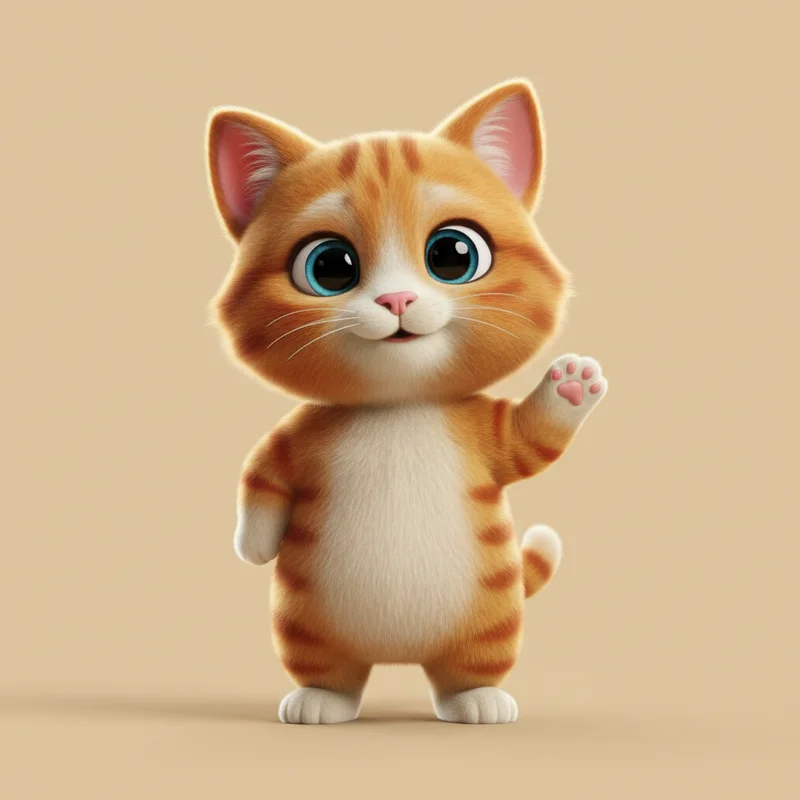
Cat

Cat

Domestic feline companion known for independence, agility, and internet fame. Masters of napping and keyboard interruption.

VS
King Kong

King Kong

Giant ape with a thing for tall buildings.

Battle Analysis

Cultural significance Cat Wins
70%
30%
Cat King Kong

Cat

Cats have achieved divine status in multiple civilisations. Ancient Egyptians worshipped them as manifestations of Bastet, imposed death penalties for their harm, and mummified them in quantities exceeding human burials in some periods. Japanese culture venerates the maneki-neko, whilst the internet has essentially been constructed as a cat-appreciation infrastructure. Conservative estimates suggest that 15% of all internet traffic consists of feline imagery. Cats appear in literature from T.S. Eliot to contemporary publishing phenomena, command social media followings exceeding many nation-states, and have inspired an entire theatrical production that defies rational explanation.

The cat has transcended species to become cultural institution.

King Kong

King Kong occupies a significant but more constrained cultural position. Since 1933, the image of an enormous ape clutching a woman atop the Empire State Building has symbolised the tragic collision between nature and modernity. Kong has inspired academic discourse, feminist critique, and genuine philosophical inquiry. The character appears in art history courses, cultural studies programmes, and the collective unconscious of several generations.

Yet Kong remains singular where cats are legion. There is one Kong; there are 600 million owned cats and countless more operating independently.

VERDICT

Whilst Kong achieved iconic status through singular mythological power, cats have achieved cultural saturation through multiplication. The cat wins through sheer omnipresence in human culture.

Destructive potential King Kong Wins
30%
70%
Cat King Kong

Cat

The domestic cat's destructive capacity, whilst limited in scale, demonstrates remarkable precision. Annual furniture damage attributed to cats exceeds $2 billion globally, with particular expertise demonstrated in the systematic destruction of upholstery, curtains, and any object placed upon elevated surfaces. Cats have evolved specific behaviours designed to cause maximum inconvenience with minimum effort, including the strategic vomiting upon carpeted rather than hard-floor surfaces.

Ecological impact studies further reveal that domestic and feral cats eliminate approximately 1.3-4 billion birds annually in the United States alone, representing a quiet apocalypse conducted with characteristic feline efficiency.

King Kong

King Kong's destructive potential operates at an entirely different magnitude. A single appearance in Manhattan resulted in the destruction of multiple elevated railway carriages, significant damage to the Empire State Building's observation deck, and the deployment of military aviation. Conservative damage estimates for a genuine Kong incursion into a major metropolitan area exceed several billion dollars, not including psychological trauma counselling for witnesses.

Kong represents destruction as spectacle rather than the slow, grinding attrition preferred by cats.

VERDICT

Whilst cats achieve impressive cumulative destruction, Kong's capacity for instantaneous urban devastation cannot be matched. Kong claims this criterion through superior immediate destructive force.

Territorial behaviour Cat Wins
70%
30%
Cat King Kong

Cat

The domestic cat maintains territorial claims with ruthless efficiency, marking boundaries through sophisticated chemical signalling and strategic furniture destruction. A single cat may claim dominion over an entire household, multiple gardens, and the psychological territory of its human cohabitants. This territory is defended through intimidation displays, nocturnal vocalisation, and the depositing of biological evidence in locations calculated to cause maximum distress.

Remarkably, cats maintain these territories whilst expending minimal energy, having perfected the art of territorial dominance through sheer presence rather than active patrol.

King Kong

King Kong's territorial behaviour, whilst more visually impressive, suffers from fundamental scalability issues. The great ape can certainly claim Skull Island with authority, and his brief forays into Manhattan demonstrated capacity for vertical territorial expansion via landmark occupation. However, Kong's territory remains singular and geographically constrained.

One Kong cannot patrol multiple locations simultaneously, cannot slip through cat flaps to access neighbouring territories, and cannot maintain the subtle, pervasive presence that defines successful territorial mammals.

VERDICT

Cats maintain distributed territorial networks across millions of households worldwide, whilst Kong's territory remains cinematically limited. The cat prevails through territorial multiplication.

Cohabitation viability Cat Wins
70%
30%
Cat King Kong

Cat

Cats have achieved successful cohabitation with humans for approximately 10,000 years, making them one of evolution's most successful domestic partnerships. A cat can be accommodated in virtually any human dwelling, from studio flat to country estate, requiring minimal infrastructure modification beyond litter facilities and scratch-resistant furnishings. The cat adapts to human schedules (by which we mean it ignores them entirely), tolerates other household members (with visible contempt), and provides genuine companionship benefits including reduced blood pressure and increased tolerance for passive-aggressive behaviour.

The cat has proven itself the ideal cohabitant for modern human existence.

King Kong

King Kong presents insurmountable cohabitation challenges. No existing residential structure can accommodate an eight-storey primate, and local planning authorities have consistently declined to approve Kong-compatible modifications. Food requirements alone would necessitate industrial-scale provisioning, whilst Kong's documented emotional volatility suggests poor compatibility with neighbouring properties. Insurance underwriters have universally declined coverage for Kong-related domestic arrangements.

Kong remains fundamentally incompatible with human cohabitation at any practical level.

VERDICT

Cats integrate seamlessly into human domestic arrangements whilst Kong cannot fit through standard doorways. The cat achieves decisive victory through practical cohabitation compatibility.

Psychological dominance Cat Wins
70%
30%
Cat King Kong

Cat

The domestic cat has achieved something unprecedented in the animal kingdom: voluntary enslavement of 600 million humans who provide food, shelter, and veterinary care in exchange for sporadic affection and the privilege of cleaning faeces from designated receptacles. Scientists have documented that cats have essentially domesticated themselves, selecting for traits that humans find irresistible whilst maintaining complete psychological independence. The cat need not demonstrate loyalty, perform tricks, or provide any tangible service; it need merely exist in a sufficiently appealing manner.

Research indicates that cat ownership correlates with increased tolerance for being ignored, willingness to rearrange furniture around sleeping animals, and the belief that 3 AM is an appropriate time for spontaneous athletics.

King Kong

King Kong's psychological impact, whilst dramatic, operates through fear rather than affection. The great ape inspires awe, certainly, and has provided generations of filmgoers with contemplation of nature's raw power. However, Kong cannot be invited into one's home, cannot curl upon one's lap during evening television viewing, and generally fails to integrate into domestic routines without significant structural modification.

Kong's psychological dominance is temporary and catastrophic rather than permanent and insidious. He appears, terrifies, and departs. The cat remains, judging silently from the armchair for years at a time.

VERDICT

Whilst Kong inspires temporary terror, the cat has achieved permanent psychological colonisation of human consciousness. The cat claims this criterion through superior long-term manipulation.

👑

The Winner Is

Cat

62 - 38

This investigation concludes with the domestic cat achieving victory at 62-38, a result that may surprise those who measure dominance in purely physical terms. The cat's triumph rests upon four fundamental pillars: psychological manipulation of 600 million human servants, territorial presence across every inhabited continent, cultural saturation spanning ancient deity worship to modern internet infrastructure, and perhaps most decisively, the capacity to actually live alongside humans without destroying the building.

King Kong, despite securing a decisive victory in destructive potential, ultimately fails the most basic criterion of comparative evaluation: accessibility. One cannot adopt King Kong. One cannot feed him from a small ceramic bowl. One cannot photograph him sleeping in an amusing position and share the resulting image with fellow enthusiasts. Kong remains permanently beyond reach, a creature of cinema and imagination rather than quotidian reality.

The cat, that seemingly modest predator, has achieved what Kong never could: permanent integration into human domestic life, claiming beds, sofas, and hearts whilst demanding tribute in the form of premium nutrition and unconditional attention. The great ape climbs buildings; the cat has climbed the evolutionary ladder to a position of unprecedented parasitic success.

Cat
62%
King Kong
38%

Share this battle

More Comparisons