
Topic Battle

Where Everything Fights Everything

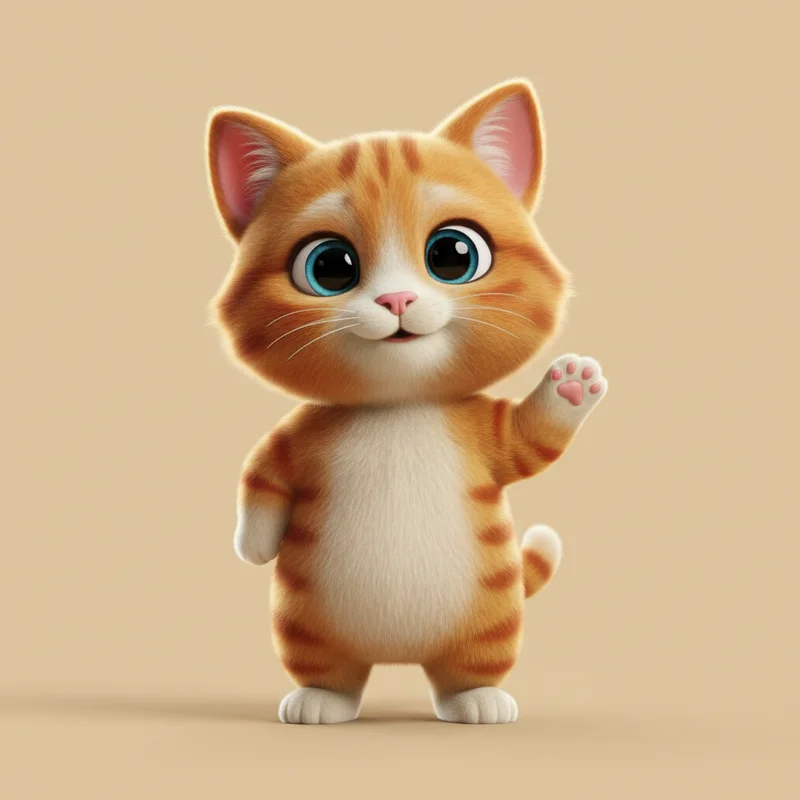
Cat

Cat

Domestic feline companion known for independence, agility, and internet fame. Masters of napping and keyboard interruption.

VS
Mirror

Mirror

Reflective surface for self-examination and jump scares.

Battle Analysis

Durability mirror Wins
30%
70%
Cat Mirror

Cat

The domestic cat possesses remarkable physical resilience, with an average lifespan of 12 to 18 years under appropriate care. Cats survive falls, recover from injuries, and demonstrate considerable resistance to environmental stressors. However, they require constant biological maintenance: feeding, hydration, veterinary care, and eventual replacement as mortality claims its inevitable due. The cat is, fundamentally, a temporary resident of any household, no matter how beloved its tenure.

Mirror

A well-maintained mirror may persist for centuries without degradation of function. The silvered glass requires only occasional cleaning and protection from impact. Mirrors from the 17th century remain in perfect working order, reflecting faces that have not existed for three hundred years. The mirror does not age, does not tire, and does not require sustenance. Its only vulnerabilities are physical damage and obsolescence through replacement—neither of which the mirror itself can perceive or regret. In durability terms, the mirror outlasts not merely individual cats but entire feline lineages.

VERDICT

Glass and silver outlast flesh and bone by orders of magnitude
Entertainment value cat Wins
70%
30%
Cat Mirror

Cat

The domestic cat provides autonomous entertainment of considerable variety. Cats chase, pounce, investigate, and interact with their environment in ways that humans find genuinely amusing. A cat confronting a mirror produces entertainment through its visible confusion, territorial displays, and eventual resignation or retreat. The cat's entertainment value derives from its consciousness—its genuine reactions to stimuli create the comedy. Without the cat's bewilderment, there would be nothing to observe.

Mirror

The mirror, in isolation, provides negligible entertainment. It reflects whatever stands before it with perfect accuracy and complete neutrality. One cannot be amused by a mirror alone; one requires something worth reflecting. However, the mirror serves as essential infrastructure for much entertainment—from theatrical performances to viral cat videos. The mirror amplifies and enables entertainment without generating it independently. Its value is multiplicative rather than additive, requiring external input to produce output of any interest.

VERDICT

The cat generates entertainment autonomously; the mirror merely facilitates it
Psychological impact mirror Wins
30%
70%
Cat Mirror

Cat

The domestic cat approaches most challenges with supreme confidence, having evolved as an apex predator in miniature. Yet the mirror presents a unique psychological challenge: an opponent who cannot be intimidated, outmanoeuvred, or ignored. Studies indicate that cats lack the cognitive framework for mirror self-recognition, perceiving their reflection as a genuine intruder. This creates ongoing territorial anxiety in some felines, whilst others simply learn to avoid certain rooms. The psychological burden falls entirely upon the cat, who must process the inexplicable presence of an identical rival.

Mirror

The mirror experiences no psychological impact whatsoever, possessing neither psychology nor the capacity to experience anything at all. This apparent limitation constitutes, paradoxically, an extraordinary advantage. The mirror cannot be stressed, confused, or traumatised by repeated feline confrontations. It absorbs each arched back and threatening hiss with perfect equanimity, returning them in kind without expenditure of energy or emotional resources. Where the cat exhausts itself in territorial displays, the mirror simply exists, serenely reflecting whatever chaos unfolds before it.

VERDICT

The mirror's complete absence of psychology renders it immune to the very conflict it creates
Tactical versatility mirror Wins
30%
70%
Cat Mirror

Cat

The cat brings considerable tactical resources to any confrontation. Its repertoire includes the lateral approach (attempting to outflank the opponent), the slow blink (signalling non-aggression), the paw swipe (testing the rival's reflexes), and the strategic retreat (maintaining dignity whilst exiting). Cats have been observed attempting to look behind mirrors, suggesting sophisticated spatial reasoning. However, every tactic fails against an opponent who perfectly mirrors each move, creating an unwinnable game of identical responses.

Mirror

The mirror's tactical approach might be characterised as perfect mimicry. Whatever the cat does, the mirror does simultaneously and identically. This is not strategy in the conventional sense but rather the complete elimination of strategic advantage. The mirror cannot be surprised, cannot be outpaced, and cannot be deceived. Its 'tactics' require no learning, no adaptation, and no energy expenditure. The mirror has, in effect, solved the game by ensuring perpetual stalemate through instantaneous replication of all opponent actions.

VERDICT

Perfect mimicry neutralises all tactical innovation; the cat cannot outmanoeuvre itself
Existential significance mirror Wins
30%
70%
Cat Mirror

Cat

The cat serves as a profound reminder of autonomous consciousness within the household. Its presence confirms that other minds exist, that affection can be earned rather than assumed, and that companionship requires negotiation between independent beings. The cat's mortality, too, carries existential weight—its eventual absence will be genuinely mourned. Philosophers from Montaigne to Derrida have contemplated the cat's gaze and found in it questions about consciousness, perception, and the nature of the other.

Mirror

The mirror has served as humanity's primary tool for self-examination since antiquity. It confronts the viewer with their own existence, their physical form, the passage of time upon their features. Mirrors feature prominently in mythology, psychology, and philosophy as symbols of self-knowledge, vanity, and truth. The phrase 'mirror, mirror' invokes ancient anxieties about self-perception. The mirror forces the question Socrates considered paramount: know thyself. In compelling such reflection—literal and metaphorical—the mirror achieves existential significance beyond mere household utility.

VERDICT

The mirror has served as humanity's primary instrument of self-examination for millennia
👑

The Winner Is

Mirror

48 - 52

This investigation reveals a contest between agency and permanence, consciousness and reflection. The cat claims victory in entertainment value—the sole criterion requiring genuine animation to satisfy. Without the cat's bewildered reactions, no viral videos would exist; without its confused territorial displays, no comedy would emerge from the cat-mirror encounter.

Yet the mirror prevails in psychological impact, tactical versatility, durability, and existential significance. It wins by refusing to compete, by absorbing every feline stratagem and returning it unchanged, by persisting across centuries whilst cats come and go, and by forcing self-examination upon every creature that stands before it.

By a margin of 52 to 48, the mirror emerges victorious in this assessment. This verdict acknowledges a peculiar truth: sometimes the most effective strategy is no strategy at all. The mirror simply exists, reflecting reality without interpretation, and in that pure passivity discovers an unassailable position.

Cat
48%
Mirror
52%

Share this battle

More Comparisons