Topic Battle

Where Everything Fights Everything

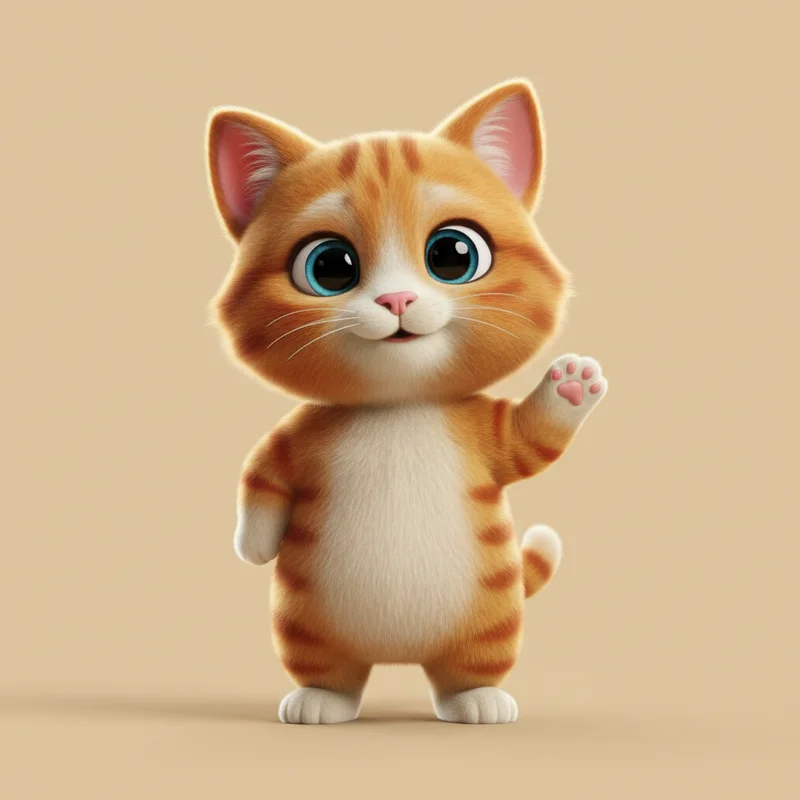
Cat

Cat

Domestic feline companion known for independence, agility, and internet fame. Masters of napping and keyboard interruption.

VS
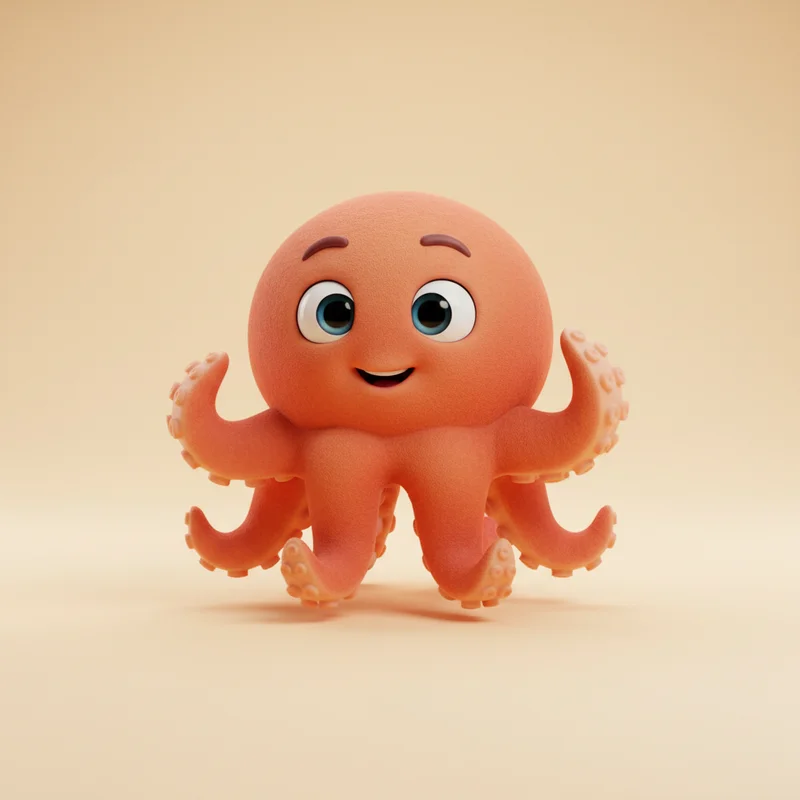
Octopus

Octopus

Eight-armed cephalopod demonstrating remarkable intelligence, escape artistry, and camouflage abilities.

Battle Analysis

Stealth octopus Wins
30%
70%
Cat Octopus

Cat

The cat's approach to stealth has been refined across approximately 10,000 years of co-evolution with human prey species, namely rodents attracted to grain stores. Feline anatomy incorporates numerous stealth adaptations: retractable claws that eliminate clicking on hard surfaces, padded paws that absorb sound, and a flexible spine permitting the characteristic low stalking posture. Cats can reduce their movement velocity to imperceptible levels whilst maintaining forward progress.

The domestic cat's stealth extends beyond mere physical concealment to what might be termed psychological camouflage. Cats routinely appear in locations their owners did not observe them entering, suggesting either supernatural abilities or simply superior awareness of human attention patterns. The familiar experience of being watched, turning, and finding a cat staring from an unexpected position testifies to feline mastery of undetected movement.

Octopus

The octopus achieves stealth through mechanisms that defy mammalian comprehension. Possessing chromatophores, papillae, and leucophores, the creature can modify not only its colour but its apparent texture within milliseconds. An octopus resting upon a coral formation becomes, to all visual purposes, coral. The same specimen moving across sand becomes sand. This is not concealment; this is transformation.

The boneless cephalopod body permits passage through any aperture exceeding the diameter of its beak—approximately two centimetres for a creature the size of a small dog. Combined with active camouflage, this anatomical flexibility permits the octopus to vanish into crevices that would not appear capable of harbouring any organism larger than a shrimp. Marine biologists have lost track of tagged specimens mere metres away, only to discover them wedged into impossible locations.

VERDICT

Active camouflage technology and boneless infiltration capabilities exceed even feline stealth evolution
Adaptability cat Wins
70%
30%
Cat Octopus

Cat

The domestic cat has demonstrated remarkable environmental adaptability, successfully colonising habitats from Antarctic research stations to Saharan oases. Cats thrive in urban, suburban, rural, and wilderness environments across every inhabited continent. Their dietary flexibility permits survival on commercial cat food, hunted prey, or scavenged human refuse, depending upon circumstance.

Behavioural adaptability proves equally impressive. Cats adjust sleeping schedules to match human routines, modify vocalisation patterns based on observed human responses, and demonstrate what ethologists term social plasticity—the ability to thrive either as solitary hunters or colony members depending upon resource availability. A single cat species has filled ecological niches from household companion to apex predator of island ecosystems.

Octopus

The octopus adapts to environmental challenges through mechanisms unavailable to vertebrate life. When threatened, it deploys ink clouds providing visual and olfactory confusion. When pursued, it engages jet propulsion achieving burst speeds of 40 kilometres per hour. When cornered, certain species detach arms that continue moving independently, distracting predators whilst the main body escapes. The lost limb regenerates completely within weeks.

The octopus's short lifespan—typically one to two years—might appear an adaptive disadvantage until one considers the implications. Each generation represents an opportunity for rapid evolutionary response. The octopus does not adapt as an individual; the species adapts as a collective, with unsuccessful variations eliminated and successful ones propagated within years rather than millennia.

VERDICT

Terrestrial habitat flexibility and demonstrated colonisation of every continent exceeds ocean-bound distribution
Intelligence octopus Wins
30%
70%
Cat Octopus

Cat

The domestic cat demonstrates cognitive abilities that have long puzzled researchers. Feline subjects consistently solve novel problems, remember spatial layouts for extended periods, and exhibit what behaviourists term social manipulation—the ability to modify human behaviour through strategic vocalisation and physical positioning. The cat's brain, whilst comprising merely 0.9 percent of body mass, contains approximately 300 million neurons in the cerebral cortex.

Notably, cats have proven capable of understanding object permanence, recognising their own names, and distinguishing between human emotional states. Their hunting strategies demonstrate sophisticated prediction of prey movement, suggesting a working model of physics that permits accurate interception calculations. Whether this constitutes genuine intelligence or highly refined instinct remains a matter of considerable academic debate.

Octopus

The octopus possesses what can only be described as alien intelligence. With approximately 500 million neurons—two-thirds distributed throughout its arms—the creature operates a decentralised nervous system unlike any vertebrate. Each arm can independently taste, touch, and make basic decisions without consulting the central brain, creating what researchers describe as a committee of semi-autonomous limbs.

Laboratory studies have documented octopi opening screw-top jars, navigating complex mazes, using tools, and—most troublingly—recognising individual human faces and treating them differently based on prior interactions. Specimens have been observed escaping enclosures, travelling across laboratory floors, entering other tanks to consume fish, and returning to their original enclosures before morning staff arrive. The implications of such behaviour for our understanding of consciousness remain deeply unsettling.

VERDICT

Decentralised neural architecture and documented escape behaviours demonstrate cognitive flexibility beyond feline capabilities
Global influence cat Wins
70%
30%
Cat Octopus

Cat

The domestic cat has achieved a level of cultural penetration that few species can claim. Feline imagery dominates internet content, ancient religious iconography, contemporary advertising, and artistic traditions across virtually all human cultures. The cat has been worshipped as divine, feared as diabolical, and currently generates more online engagement than any other animal species.

Economic influence proves equally substantial. The global pet care market exceeds $150 billion annually, with cat-related products comprising a significant portion. Cats have inspired literature from ancient Egypt to T.S. Eliot, and their behavioural patterns have infiltrated human language through phrases like 'cat nap,' 'let the cat out of the bag,' and 'curiosity killed the cat.' Few creatures have so thoroughly colonised human consciousness.

Octopus

The octopus occupies a more ambiguous position in human culture, associated with both maritime terror and scientific fascination. Cephalopod imagery appears in ancient mythology, notably the Kraken of Norse legend, and persists in contemporary media through creatures like Doctor Octopus and various Lovecraftian entities. The octopus serves as a symbol of alienness, intelligence, and the unknowable depths.

Recent cultural penetration has accelerated significantly. The documentary 'My Octopus Teacher' achieved Academy Award recognition, introducing millions to cephalopod intelligence. Marine research facilities report increased public interest, and octopus-themed merchandise has expanded beyond niche markets. However, the octopus remains a creature of curiosity rather than adoration, admired from a distance rather than invited into homes.

VERDICT

Dominant internet presence and $150 billion industry influence exceeds octopus cultural penetration
Hunting efficiency cat Wins
70%
30%
Cat Octopus

Cat

The domestic cat maintains hunting instincts that produce measurable environmental impact. Studies estimate that free-roaming cats kill between 1.3 and 4 billion birds annually in the United States alone, establishing the species as one of the most prolific predators in recorded history. Individual cats have been documented eliminating entire populations of island-endemic species, a testament to their hunting efficiency.

Feline hunting methodology demonstrates sophisticated understanding of prey behaviour. Cats position themselves along predicted movement routes, calculate strike timing to intercept rather than pursue, and employ a characteristic killing bite to the cervical vertebrae that terminates prey with minimal energy expenditure. Their success rate against detected prey exceeds 30 percent, remarkable for a predator operating without pack coordination.

Octopus

The octopus hunts through methods that combine ambush predation with active pursuit. The creature typically conceals itself within crevices, extending arms to explore nearby substrate whilst remaining hidden. When prey is detected—crustaceans, molluscs, or small fish—the octopus envelops it within a web of tentacles whilst delivering paralytic venom through its beak. Escape from this embrace is rarely documented.

Particularly remarkable is the octopus's ability to learn and adapt hunting strategies. Specimens have been observed blocking crab escape routes before commencing attacks, carrying coconut shells for use as portable ambush shelters, and using tools to extract prey from defended positions. One researcher documented an octopus systematically testing hermit crab shells of increasing size until locating an occupied specimen worth the extraction effort.

VERDICT

Documented kills in the billions annually demonstrate population-level hunting impact exceeding cephalopod predation
👑

The Winner Is

Octopus

45 - 55

This cross-kingdom analysis reveals a remarkably balanced competition between two predatory entities that have, through entirely different evolutionary pathways, arrived at similar conclusions about the value of intelligence, stealth, and patience. The cat claims victory in adaptability, hunting efficiency, and global influence—metrics reflecting its successful colonisation of human civilisation and the terrestrial world beyond.

Yet the octopus prevails in intelligence and stealth—the fundamental tools of predation that both species have refined to remarkable degrees. The cephalopod's advantages in these categories prove sufficient to secure overall victory, albeit by the slenderest of margins.

The final score of 55 to 45 in favour of the octopus reflects a scientific assessment rather than a popularity contest. The cat may dominate internet culture and human households, but the octopus demonstrates capabilities that suggest an intelligence fundamentally different from, and in certain respects superior to, mammalian cognition. Evolution has run two parallel experiments in predatory intelligence; the one conducted in salt water has produced the more unsettling results.

Cat
45%
Octopus
55%

Share this battle

More Comparisons