
Topic Battle

Where Everything Fights Everything

Cat

Cat

Domestic feline companion known for independence, agility, and internet fame. Masters of napping and keyboard interruption.

VS
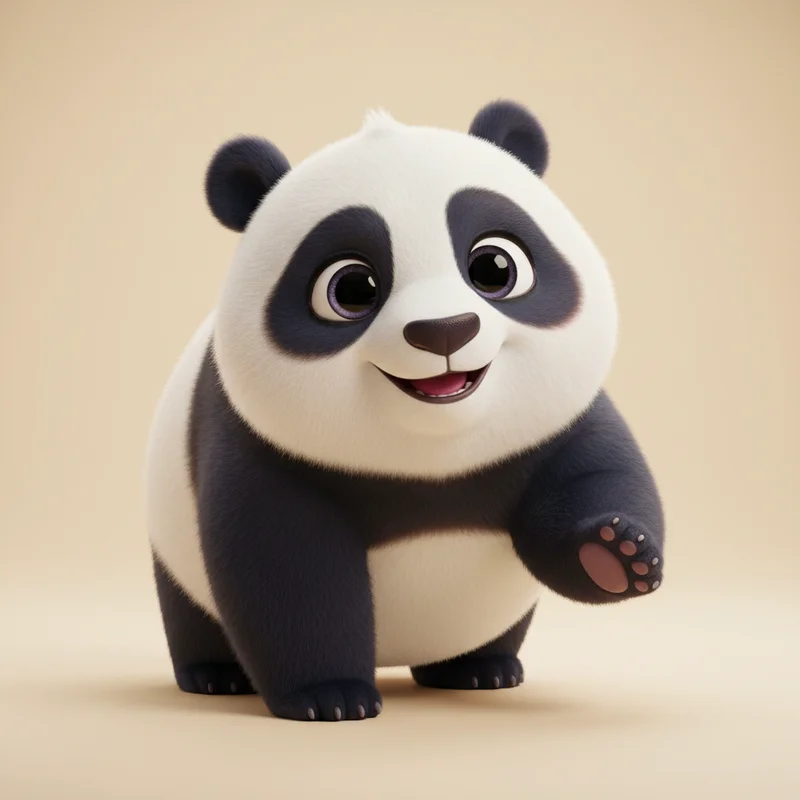
Panda

Panda

Beloved bamboo-eating bear from China, famous for black-and-white coloring and conservation symbolism.

Battle Analysis

Accessibility Cat Wins
70%
30%
Cat Panda

Cat

The domestic cat has achieved a distribution network that would make multinational corporations envious. Present on every continent except Antarctica, cats occupy an estimated 33% of households in the United Kingdom alone. One need not travel, queue, or plan ahead to experience a cat. They appear unbidden in gardens, lurk in neighbourhood streets, and populate social media feeds with such density that avoiding them requires active effort.

Acquisition is similarly straightforward. Cats are available through shelters, breeders, friends, and the simple expedient of leaving a door open. Many humans report that their cats acquired them, rather than the reverse. The barrier to cat access is so low that the greater challenge lies in maintaining catlessness.

Panda

The panda has adopted the opposite strategy: aggressive scarcity. Approximately 1,864 pandas exist in the wild, confined to six mountain ranges in central China. Captive populations number roughly 600, distributed across fewer than 50 facilities globally. Viewing a panda requires either considerable travel or residence near one of the select institutions deemed worthy of a loan.

Even upon arrival, access is not guaranteed. Pandas spend 14 hours daily sleeping and the remainder eating bamboo in quantities that preclude entertaining visitors. Queue times at major panda exhibits routinely exceed two hours. The panda does not so much meet its public as occasionally acknowledge its existence whilst chewing.

VERDICT

The cat's strategy of ubiquity defeats the panda's strategy of exclusivity. 600 million cats versus 2,500 pandas represents a market penetration differential that renders comparison almost embarrassing. One can experience a cat within minutes of deciding to do so; experiencing a panda requires the logistical planning typically reserved for international summits.

Cost efficiency Cat Wins
70%
30%
Cat Panda

Cat

The domestic cat operates on a remarkably economical basis. Annual costs in the United Kingdom average between 500 and 1,000 pounds, covering food, veterinary care, and the inevitable destruction of soft furnishings. A cat provides companionship, entertainment, and pest control services for a decade or more at this rate, representing exceptional value per pound spent.

For the financially constrained, cats can be acquired at no cost from shelters or neighbourhood strays. Feral cats provide services at zero expense, though with reduced predictability. The cat-to-satisfaction ratio remains favourable across all economic demographics.

Panda

The giant panda represents conservation's least cost-efficient enterprise. Annual expenditure on panda conservation exceeds 100 million dollars globally. The cost per surviving panda in the wild has been estimated at over 1 million dollars per individual per lifetime. Zoo pandas cost approximately 500,000 to 1 million dollars annually to maintain, plus loan fees, plus facility construction.

This expenditure has produced results: wild populations have increased from approximately 1,000 in the 1980s to 1,864 today. Yet the cost per additional panda would fund the protection of entire ecosystems containing thousands of less photogenic species. The panda is conservation's luxury brand.

VERDICT

The mathematics admit no ambiguity. One million dollars maintains a single panda annually or supports hundreds of cat-owning households for the same period. The cat provides comparable emotional returns at a fraction of the investment. In terms of affection per pound spent, the cat achieves returns that would satisfy the most demanding accountant.

Entertainment value Cat Wins
70%
30%
Cat Panda

Cat

The domestic cat has become the undisputed sovereign of internet entertainment. Cat videos accumulated over 26 billion views on YouTube by 2015, a figure that has since become incalculable. The species has generated memes of such cultural penetration that phrases like 'I Can Has Cheezburger' entered the linguistic mainstream. Grumpy Cat's estate was valued at approximately 100 million dollars at the time of her passing.

In domestic settings, cats provide endless unpredictable entertainment. They attack invisible enemies, insert themselves into boxes of inappropriate size, and conduct midnight sessions of inexplicable sprinting. A cat need do nothing to be entertaining; its mere existence in proximity to a cardboard box generates content.

Panda

The panda's entertainment value derives largely from its apparent incompetence at being a bear. Videos of pandas falling from trees, tumbling from play equipment, and rolling down hills accumulate millions of views. The species has been described as 'nature's blooper reel' by observers who perhaps underestimate the evolutionary cost of these pratfalls.

However, panda entertainment occurs at a distance. One cannot share a sofa with a panda whilst it knocks objects to the floor. The entertainment is mediated through screens and glass barriers, providing spectacle without intimacy. The panda entertains; the cat companions. These are different categories of value.

VERDICT

Both species have mastered the art of viral content, yet the cat operates at industrial scale. A single cat can generate daily entertainment in a household; a panda generates annual entertainment for a zoo's viewing public. The cat's proximity advantage proves decisive: entertainment delivered to one's lap outperforms entertainment requiring a safari.

Survival competence Cat Wins
70%
30%
Cat Panda

Cat

The domestic cat retains the full arsenal of its wild ancestors whilst enjoying the benefits of human hospitality. Cats are obligate carnivores with hunting instincts intact, responsible for the estimated deaths of 1.3 to 4 billion birds annually in the United States alone. They can survive feral existence indefinitely, establishing colonies in environments from Arctic research stations to tropical islands.

The cat's survival strategy combines self-sufficiency with optional dependency. It can hunt if necessary, scavenge if convenient, and manipulate humans if optimal. This flexibility has enabled the species to colonise every environment humans have colonised, and several humans have not.

Panda

The giant panda presents a case study in survival improbability. Having evolved from carnivorous ancestors, the panda committed to a diet of bamboo, a food source providing such minimal nutrition that individuals must consume 12 to 38 kilograms daily merely to survive. Their digestive systems remain poorly adapted to this diet even after millions of years.

Reproduction compounds the challenge. Female pandas are fertile for approximately 24 to 36 hours annually. Male pandas have been documented demonstrating more interest in bamboo than in mating opportunities. The species' continued existence represents humanity's refusal to accept evolution's apparent verdict.

VERDICT

The cat survives because it is good at surviving. The panda survives because humans have decided it shall survive regardless of its own contributions to the project. In terms of autonomous survival competence, this comparison approaches the absurd. Cats require nothing; pandas require international cooperation, scientific intervention, and billions in funding.

Diplomatic influence Panda Wins
30%
70%
Cat Panda

Cat

The cat's influence operates at the domestic and digital level. Cats have shaped human architecture (cat flaps), human language ('letting the cat out of the bag'), and human internet infrastructure (approximately 15% of all web traffic was estimated to be cat-related at the medium's peak cat saturation). Politicians pose with cats; authors acknowledge cats in their dedications; ancient Egyptians mummified cats for the afterlife.

However, cats have never brokered international agreements. No nation has deployed cats as instruments of foreign policy. The cat influences millions of individuals; it has never influenced the policies of nations.

Panda

The panda operates at the highest levels of international diplomacy. 'Panda diplomacy' has been deployed by China since the 1950s, with loans and gifts of pandas marking significant diplomatic moments. The United States received pandas following Nixon's 1972 visit; the United Kingdom received pandas following a series of bilateral agreements in 2011.

Panda loans command fees of approximately 1 million dollars annually, with additional payments for any cubs produced. Acquiring a panda signals diplomatic favour; losing one signals political cooling. No other animal has achieved this level of geopolitical significance since Hannibal's elephants, and those were military rather than diplomatic assets.

VERDICT

In the rarefied atmosphere of international relations, the panda reigns supreme. Cats influence individuals; pandas influence nations. When world leaders wish to signal rapprochement, they do not exchange cats. The panda has weaponised cuteness at the state level, achieving a form of soft power unavailable to species that can actually be owned.

👑

The Winner Is

Cat

58 - 42

The evidence accumulated through rigorous analysis points toward an inevitable conclusion. The domestic cat emerges victorious with a score of 58 to 42, claiming decisive victories in accessibility, entertainment value, survival competence, and cost efficiency. The panda's sole triumph in diplomatic influence, whilst impressive, cannot compensate for its categorical deficiencies in practical metrics.

This verdict should not be interpreted as criticism of the giant panda, which has achieved something remarkable: the mobilisation of global resources to preserve a species that appears committed to its own extinction. That humanity has chosen to intervene speaks well of our species, even if the cost-benefit analysis might trouble economists.

The cat's victory reflects a fundamental truth about effective manipulation. The panda demanded conservation empires and international cooperation. The cat simply walked into human dwellings ten thousand years ago and declined to leave. One strategy required the resources of nations; the other required only patience and the strategic deployment of purring. The more economical approach prevailed.

Cat
58%
Panda
42%

Share this battle

More Comparisons