
Topic Battle

Where Everything Fights Everything

Cat

Cat

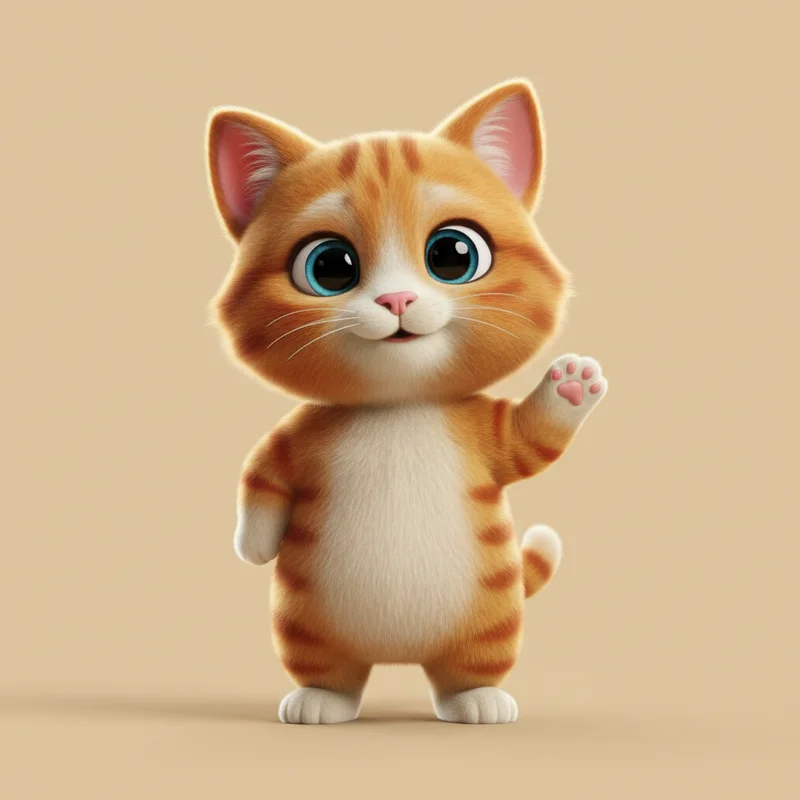
Domestic feline companion known for independence, agility, and internet fame. Masters of napping and keyboard interruption.

VS
Poker

Poker

Card game of skill, luck, and psychological warfare.

Battle Analysis

Skill development Poker Wins
30%
70%
Cat Poker

Cat

Cat ownership develops skills applicable across numerous life domains. Interpreting nonverbal communication improves through constant practice reading feline body language. Patience increases through repeated exposure to creatures operating on their own schedules. Negotiation abilities sharpen through daily interactions with entities possessing zero interest in compromise.

These skills transfer effectively to professional contexts. Managing cats provides excellent preparation for managing humans who possess similar tendencies toward independence, unpredictability, and selective responsiveness. The crossover between cat ownership and effective middle management has been noted by organisational researchers, though causation remains difficult to establish.

Poker

Poker develops a sophisticated skill set with direct professional applications. Probability assessment, risk management, and decision-making under uncertainty all improve through sustained poker practice. Reading opponents builds interpersonal perception. Managing variance teaches emotional regulation. The game functions as a concentrated training environment for capabilities valued across business contexts.

These skills compound over time and transfer with unusual directness. Many successful investors, entrepreneurs, and negotiators cite poker as foundational to their professional development. The game provides feedback loops that accelerate learning whilst simulating high-stakes decision-making in controlled environments.

VERDICT

Poker develops quantifiable professional skills with direct career applications, whilst cat ownership provides less structured developmental benefits.
Patience requirements Cat Wins
70%
30%
Cat Poker

Cat

Feline patience represents an evolutionary adaptation refined over countless generations of ambush predation. A cat will observe potential prey for extended periods exceeding several hours, maintaining absolute stillness whilst calculating optimal strike timing. This patience transfers seamlessly to domestic contexts, where cats will wait beside closed doors, near feeding stations, or in positions blocking human movement for as long as necessary.

The patience proves genuinely inexhaustible. Unlike humans, cats experience no apparent frustration from extended waiting, treating temporal duration as simply another variable to be managed rather than endured. This capacity provides substantial advantages in negotiations over food timing, attention allocation, and territorial boundaries.

Poker

Poker demands patience that many humans find genuinely intolerable. Professional players may fold 80 to 85 percent of dealt hands, waiting hours for situations offering positive expected value. Tournament play amplifies these demands, requiring sustained concentration across sessions lasting ten hours or more whilst the blinds gradually increase.

However, this patience operates against human nature rather than with it. The game's structure creates continuous temptation to act, to participate, to find reasons why marginal hands might prove playable. Successful players must override fundamental psychological impulses through conscious discipline, a process requiring constant energy expenditure that cats never experience.

VERDICT

Cats possess patience as an inherent characteristic rather than a learned discipline, making their waiting capacity effectively unlimited.
Psychological warfare Cat Wins
70%
30%
Cat Poker

Cat

The cat's psychological arsenal has been refined across millennia of human cohabitation. The species maintains complete emotional opacity as a default state, revealing affection only when strategically advantageous. A cat may ignore its owner for hours before suddenly demanding attention at the precise moment maximum disruption can be achieved.

This warfare operates on multiple fronts simultaneously. The slow blink signals conditional trust. The exposed belly presents an invitation that proves, upon acceptance, to be a trap. The midnight vocalisation serves no purpose beyond demonstrating that the cat's schedule supersedes all human requirements. Each behaviour reinforces the fundamental power dynamic: the cat acknowledges no master.

Poker

Poker's psychological warfare operates within more formalised parameters but achieves comparable sophistication. The bluff represents poker's core mechanism, requiring players to project false confidence or false weakness with sufficient conviction to alter opponent behaviour. Tournament professionals spend years developing faces that reveal nothing under pressure.

The game's psychological dimension extends beyond individual hands. Table image, betting patterns, and historical interactions create complex webs of expectation that skilled players manipulate across entire sessions. A reputation for tight play can be cashed in through occasional wild aggression; a loose image creates opportunities for trapping opponents with genuine strength.

VERDICT

Cats conduct psychological warfare continuously and without conscious effort, whilst poker players must actively maintain their deceptions.
Social respectability Cat Wins
70%
30%
Cat Poker

Cat

Cat ownership occupies a position of near-universal social acceptability across contemporary Western cultures. Mentioning feline companions at professional gatherings generates predictable positive responses, photograph sharing proves welcome in most contexts, and the 'crazy cat person' stereotype, whilst extant, carries considerably less stigma than in previous decades.

The social benefits compound through network effects. Cat ownership provides immediate conversational common ground with the estimated 10.8 million UK households containing felines. Online communities dedicated to cat appreciation generate substantial engagement, and cat-related content consistently outperforms algorithmic expectations across all major platforms.

Poker

Poker occupies a more complicated social position. In some circles, poker skill signals analytical intelligence, risk management capability, and psychological sophistication. Professional players command respect and substantial media attention. The World Series of Poker main event receives coverage comparable to traditional sporting championships.

However, poker remains associated with gambling's broader stigma. Mentioning regular poker participation at professional gatherings may generate concern rather than interest. The game's proximity to addiction, financial ruin, and disreputable venues creates social friction absent from cat ownership. One may freely discuss one's cat at job interviews; discussing one's poker results requires considerably more contextual judgement.

VERDICT

Feline companionship generates consistent positive social responses, whilst poker participation requires careful contextual management.
Financial implications Cat Wins
70%
30%
Cat Poker

Cat

Cat ownership generates predictable financial obligations across the animal's lifespan. Annual costs average between £500 and £1,500 depending upon veterinary requirements, dietary preferences, and the owner's susceptibility to accessory marketing. Emergency medical expenses can spike dramatically but remain insurable events with calculable probability distributions.

The financial model operates on straightforward extraction principles. The cat provides companionship; the human provides resources. Value exchange remains stable across time, with occasional renegotiations around food quality or furniture replacement. No cat has ever bankrupted its owner through a single poor decision, though many have incrementally depleted savings through sustained demands.

Poker

Poker's financial implications span the complete spectrum from modest entertainment expense to catastrophic life destruction. Recreational players might budget £50 to £200 monthly for casino visits or home games, treating losses as entertainment costs comparable to cinema attendance or restaurant dining.

Professional and problematic engagement, however, introduces variance capable of erasing savings within single sessions. The game's mathematical structure ensures that even skilled players experience substantial losing periods, and its psychological hooks create vulnerability to chasing behaviour that transforms minor setbacks into major financial events. No cat has ever created a need for gambling addiction helplines.

VERDICT

Feline financial exposure remains bounded and predictable, whilst poker introduces unbounded downside risk.
👑

The Winner Is

Cat

55 - 45

The cat prevails through the simple expedient of being alive. Poker, for all its strategic depth and psychological complexity, remains a game, a voluntary activity that participants choose to engage with and may choose to abandon. A cat permits no such freedom. Once accepted into a household, feline presence becomes a constant, demanding attention on its own schedule, disrupting activities according to its own priorities, and providing companionship that no winning hand can approximate.

Poker players may achieve fame, fortune, and the respect of their peers. They may develop skills that transfer to boardrooms and negotiating tables worldwide. They may experience the pure intellectual joy of reading an opponent perfectly and executing the precise play that extracts maximum value from the situation.

Yet when they return home, it is the cat that greets them, or more accurately, the cat that acknowledges their return with the studied indifference that represents the species' highest form of affection. In the eternal contest between games that simulate life's challenges and creatures that complicate life's simplicities, the living creature holds advantages no card game can overcome.

Cat
55%
Poker
45%

Share this battle

More Comparisons