
Topic Battle

Where Everything Fights Everything

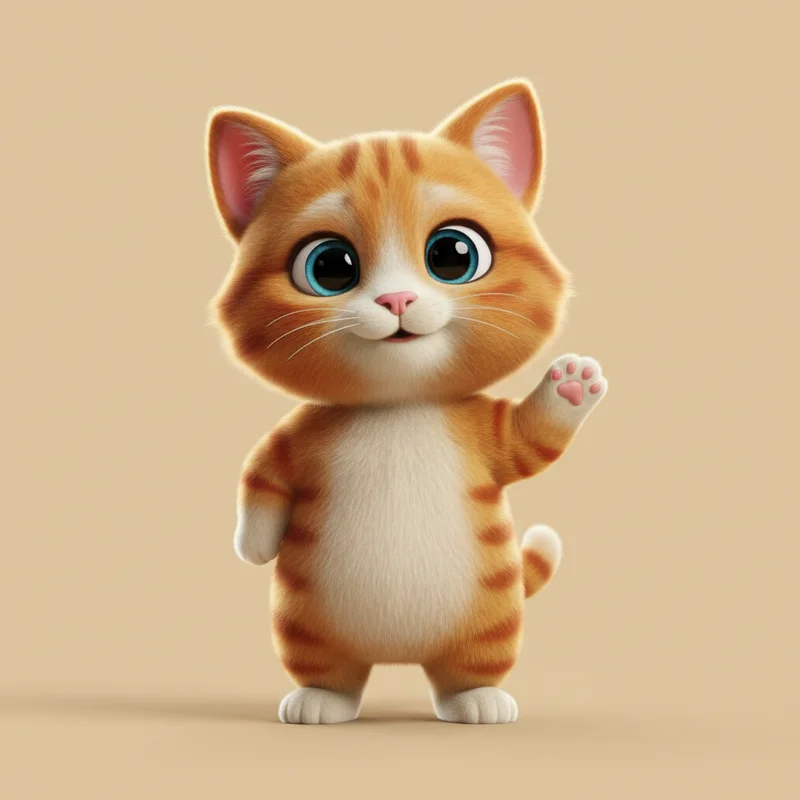
Cat

Cat

Domestic feline companion known for independence, agility, and internet fame. Masters of napping and keyboard interruption.

VS
Rabbit

Rabbit

Prolific burrowing mammal known for impressive reproduction rates and twitchy nose appeal.

Battle Analysis

Lifespan return Cat Wins
70%
30%
Cat Rabbit

Cat

Domestic cats routinely achieve 15 to 20 years of companionship when properly maintained. This extended lifespan allows deep relationship development, with behavioural patterns evolving across distinct life stages. The cat encountered in year fifteen differs substantially from the kitten initially acquired, yet continuity of identity remains recognisable.

This longevity carries corresponding obligations. Veterinary costs accumulate across decades. Age-related conditions demand medication schedules and dietary modifications. The emotional investment compounds annually, making eventual loss proportionally more significant.

Rabbit

Domestic rabbits achieve lifespans of 8 to 12 years with appropriate care, significantly exceeding the expectations of owners who assumed guinea pig-equivalent longevity. This duration allows meaningful relationship development without extending into periods of significant age-related decline common in longer-lived companions.

The shorter comparative lifespan presents both limitation and advantage. Commitment horizons remain manageable for lifestyle uncertainty. However, the accelerated timeline also compresses relationship development, with rabbit personality emerging fully within the first two years rather than evolving across decades.

VERDICT

Extended companionship duration provides greater cumulative return on initial bonding investment.
Dietary complexity Rabbit Wins
30%
70%
Cat Rabbit

Cat

The obligate carnivore designation renders feline nutrition deceptively simple yet practically demanding. Cats require taurine, arachidonic acid, and preformed vitamin A that plant-based diets cannot provide. Commercial cat food has solved this equation for most owners, but the underlying biological inflexibility remains.

Feeding schedules present additional complexity. Free-feeding protocols lead to obesity in many cats, necessitating portion control that transforms humans into meal-dispensing servants operating on feline-determined timetables. The average cat expresses dietary preferences with sufficient force to override veterinary recommendations.

Rabbit

Rabbit nutrition demands constant attention to fibre intake. The species requires unlimited timothy hay comprising 80% of dietary intake, supplemented by carefully portioned vegetables and minimal pellets. Dental health depends entirely upon adequate fibre, as continuously growing teeth require constant wear.

However, once dietary parameters are established, rabbit feeding proves remarkably economical. Hay costs significantly less than commercial cat food per kilogram. Vegetable supplements derive from human kitchen scraps with minimal additional expense. The rabbit's herbivorous nature also eliminates ethical concerns surrounding meat production that trouble some cat owners.

VERDICT

Lower ongoing costs and simpler base requirements outweigh the initial learning curve for rabbit nutrition.
Spatial efficiency Cat Wins
70%
30%
Cat Rabbit

Cat

Cats occupy space with remarkable efficiency, collapsing their skeletal structure to fit containers of implausible dimensions. A standard domestic cat requires approximately one square metre of personal territory to achieve contentment, though it will claim significantly more through strategic positioning at household chokepoints.

Vertical space utilisation distinguishes feline spatial strategy. Cats exploit three-dimensional living environments that rabbits cannot access, effectively multiplying their available territory without demanding additional floor space. This vertical lifestyle also provides predator-avoidance benefits, though in domestic settings the primary predator avoided is typically the vacuum cleaner.

Rabbit

Rabbits demand considerably more dedicated floor space than casual observers might expect. Welfare guidelines recommend minimum enclosures of three metres by two metres for adequate movement, with additional exercise areas required daily. The species' inability to utilise vertical space efficiently limits housing options in urban environments.

However, rabbits demonstrate superior space-sharing protocols. Multiple rabbits cohabit successfully when properly bonded, effectively reducing per-capita space requirements. Cats, by contrast, maintain strict territorial boundaries that scale poorly with population increases, often requiring complete household separation to prevent diplomatic incidents.

VERDICT

Three-dimensional territory utilisation and flexible spatial requirements favour the feline in modern housing.
Entertainment value Cat Wins
70%
30%
Cat Rabbit

Cat

Cats provide entertainment through unpredictability operating within narrow behavioural parameters. The species alternates between explosive bursts of activity and extended periods of photogenic inertia. Peak entertainment typically occurs between 3:00 and 5:00 AM, when mysterious forces compel cats to sprint through homes at maximum velocity for reasons that remain scientifically unexplained.

Internet documentation confirms cats as humanity's primary source of visual amusement, generating more shared content than any other animal category. A single cat can produce sufficient material for years of social media posting without repeating scenarios, primarily because cats refuse to repeat scenarios on demand.

Rabbit

Rabbit entertainment operates on different frequencies. The binkyโ€”a spontaneous leap and twist expressing rabbit joyโ€”provides one of nature's most concentrated doses of witnessed happiness. Rabbits also engage in elaborate grooming rituals, territorial claiming behaviours, and the peculiar phenomenon of flopping sideways when sufficiently relaxed.

Interactive engagement proves higher with rabbits than cats. Rabbits respond to training, learn their names, and develop individual games with consistent human playmates. The species' daylight activity patterns also align better with human schedules than crepuscular feline preferences, providing entertainment during waking hours rather than primarily during sleep.

VERDICT

Superior internet virality and the reliable comedy of feline indifference generate more documented amusement.
Independence coefficient Cat Wins
70%
30%
Cat Rabbit

Cat

The domestic cat operates on a self-sufficiency model that borders on the philosophical. Given basic provisions, a cat requires remarkably little human intervention to maintain acceptable quality of life. Self-cleaning protocols operate continuously. Entertainment derives from environmental stimuli including, but not limited to, sunbeams, shadows, and the occasional hallucinated threat invisible to human observers.

This independence manifests most clearly during human absence. Cats tolerate solitude with equanimity bordering on preference, provided automated feeding systems remain operational. The average cat, upon human return from extended travel, offers approximately four seconds of acknowledgement before resuming whatever activity the human's arrival interrupted.

Rabbit

Rabbits present a more complex independence profile. Whilst capable of extended self-maintenance in appropriate environments, domestic rabbits develop social dependencies that demand regular interaction. The species' natural inclination toward warren living translates into genuine distress when isolated from companions, whether human or lapine.

Practical independence proves higher than commonly assumed, however. Rabbits can be litter-trained with surprising reliability, navigate homes without constant supervision, and establish self-directed activity patterns. Yet they actively seek human interaction rather than merely tolerating it, a distinction that complicates simple independence metrics. The rabbit requires attention; the cat merely permits it.

VERDICT

Feline self-sufficiency reduces maintenance burden whilst rabbit social needs demand consistent engagement.
๐Ÿ‘‘

The Winner Is

Cat

55 - 45

The cat prevails through the accumulation of small efficiencies rather than dramatic superiority in any single domain. Lower maintenance requirements, superior environmental adaptability, and longer companionship duration combine to produce marginally better value across the full spectrum of domestic pet ownership considerations.

The rabbit's merits should not be dismissed. For owners seeking interactive engagement, ethical dietary simplicity, or the pure joy of witnessed binkies, Oryctolagus cuniculus presents compelling arguments. The species has earned its place among humanity's beloved companions through genuine charm rather than manipulative psychology.

Yet the cat's evolutionary refinement of human manipulation has produced a companion requiring less whilst appearing to offer more. This efficiency, however one chooses to characterise it, represents peak domestic optimisation. The cat has solved the equation of maximum benefit for minimum contribution, a formula the rabbit, in its earnest desire for connection, has never quite matched. In the cold calculus of companionship economics, strategic indifference proves more sustainable than enthusiastic availability.

Cat
55%
Rabbit
45%

Share this battle

More Comparisons