
Topic Battle

Where Everything Fights Everything

Cat

Cat

Domestic feline companion known for independence, agility, and internet fame. Masters of napping and keyboard interruption.

VS
Ramen

Ramen

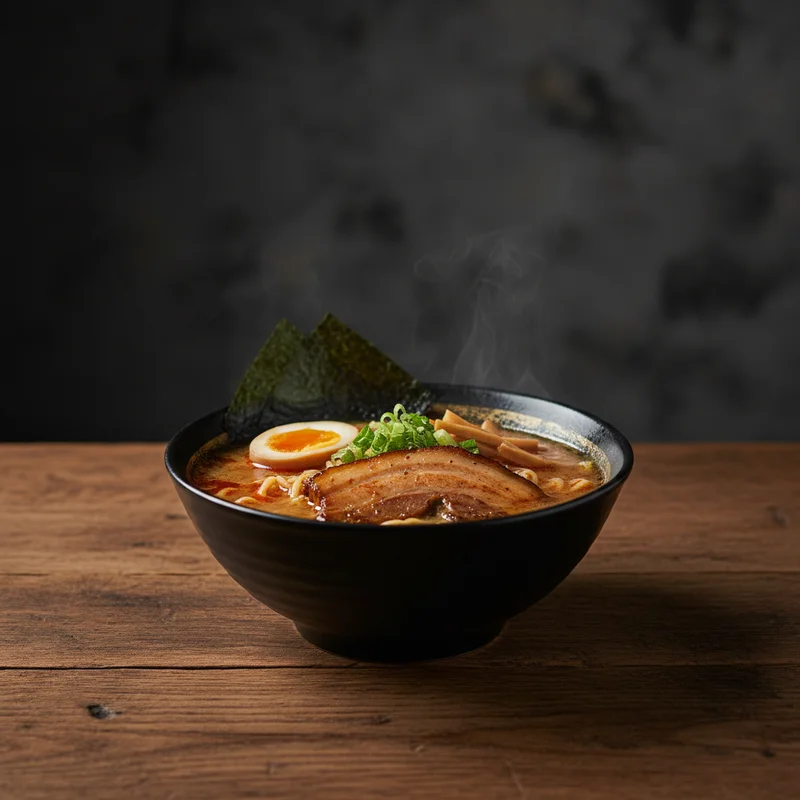
Japanese noodle soup that ranges from instant to transcendent.

Battle Analysis

Availability Ramen Wins
30%
70%
Cat Ramen

Cat

Cat availability operates on what economists would recognise as an inverted demand curve. When humans most desire feline presence, cats demonstrate remarkable talent for absence, concealing themselves in locations that defy architectural logic. When human attention focuses elsewhere, cats materialise with insistent demands for immediate interaction.

Acquisition presents its own challenges. Cats require adoption or purchase, followed by veterinary appointments, equipment procurement, and the gradual acceptance that one's furniture will never again remain unscratched. The initial barrier to cat availability extends over weeks or months before the creature becomes fully integrated into domestic routines.

Ramen

Ramen achieves availability levels approaching ubiquity in developed urban environments. Instant varieties occupy shelf space in virtually every grocery establishment worldwide, while dedicated ramen establishments have proliferated to the point where major cities average one ramen shop per 3,000 residents. The substance can be acquired and consumed within minutes of desire manifestation.

Home preparation from scratch requires several hours of broth development, though most practitioners opt for accelerated methods involving concentrated bases and pre-prepared noodles. Even ambitious preparations complete within a single evening, presenting no barrier comparable to cat acquisition timelines.

VERDICT

Immediate availability across multiple acquisition channels provides decisive advantage over creatures that maintain autonomous schedules.
Ongoing costs Ramen Wins
30%
70%
Cat Ramen

Cat

Cat ownership generates expense streams that compound relentlessly across the animal's lifespan. Annual expenditure for a single cat in the United Kingdom averages between 500 and 1,000 pounds, encompassing food, litter, veterinary care, and the periodic replacement of destroyed household items. Exceptional medical events can spike costs into four figures with alarming speed.

The fifteen-year average lifespan of a domestic cat translates to total ownership costs potentially exceeding 15,000 pounds, a sum that would fund approximately 2,500 bowls of quality restaurant ramen. This calculation, whilst mathematically accurate, somehow fails to dissuade cat acquisition in any measurable way.

Ramen

Ramen costs scale linearly with consumption frequency, ranging from 30 pence per serving for basic instant varieties to 15 pounds for premium restaurant experiences. The average committed ramen enthusiast consuming twice weekly at mixed venues might spend 1,500 pounds annually, comparable to cat maintenance without the emotional attachment.

Unlike cat costs, ramen expenditure remains entirely voluntary and infinitely adjustable. Financial constraints prompt temporary ramen abstinence without welfare concerns or moral complications. No ramen bowl has ever required emergency midnight veterinary intervention.

VERDICT

Controllable, predictable expenditure with no emergency cost exposure provides financial advantages over unpredictable animal maintenance.
Warmth delivery Cat Wins
70%
30%
Cat Ramen

Cat

The domestic cat maintains a core body temperature of 38.1 to 39.2 degrees Celsius, significantly exceeding human body temperature and creating a natural heat transfer gradient when physical contact occurs. This warmth arrives self-regulating, requiring no external energy source beyond the cat's metabolic processes and whatever food has been provided at considerable expense.

Distribution patterns vary according to feline preference rather than human need. The cat positions itself based on internal calculations invisible to human observation, sometimes providing warmth to laps, sometimes to feet, and occasionally to faces at three in the morning. The warmth persists for as long as the cat deigns to remain stationary, a duration ranging from seconds to several hours with no predictable pattern.

Ramen

Ramen delivers warmth with industrial efficiency, arriving at temperatures between 75 and 85 degrees Celsius, sufficient to cause actual tissue damage if consumed without appropriate caution. This thermal intensity diminishes predictably over time, following standard heat dissipation curves that physics students could calculate if they were not too busy eating ramen instead of studying.

The warmth penetrates internally, radiating outward from the digestive system to create a full-body warming effect impossible to achieve through external heat sources alone. On cold evenings, this internal heating proves remarkably effective, though the effect lasts only as long as the metabolic processing of the meal, typically several hours at most.

VERDICT

Renewable warmth that replenishes itself indefinitely outperforms single-serving thermal delivery, however intense that delivery may be.
Stress reduction Cat Wins
70%
30%
Cat Ramen

Cat

Feline interaction triggers measurable physiological changes associated with stress reduction. The act of stroking a cat reduces cortisol levels whilst increasing oxytocin production, creating a biochemical environment conducive to relaxation. Cat purring, occurring at frequencies between 25 and 150 Hz, has been associated with reduced blood pressure and accelerated healing processes.

The stress reduction compounds over time through relationship deepening. A cat that has shared living space for years provides reassurance through its mere presence, a constant in otherwise variable existence. This accumulated comfort proves impossible to replicate through any consumable product, however satisfying that product may be.

Ramen

Ramen provides stress reduction through the ancient mechanism of comfort eating, now understood to involve complex interactions between the gut microbiome, vagus nerve signalling, and dopamine reward pathways. The warmth, salt, and fat content of quality ramen activate pleasure centres with pharmaceutical precision.

The ritual aspects enhance the effect. The process of preparing or anticipating ramen creates positive expectancy states. The act of consumption demands present-moment focus, displacing anxious rumination with sensory engagement. These mechanisms prove genuine but ephemeral, lasting only through consumption and brief digestive aftermath.

VERDICT

Sustained biochemical stress reduction through living companionship exceeds temporary relief provided by even the most satisfying meal.
Cultural significance Cat Wins
70%
30%
Cat Ramen

Cat

Cats have achieved cultural significance spanning millennia and continents. Ancient Egyptian worship elevated Felis catus to divine status, whilst modern internet culture has created new forms of feline veneration through memes, videos, and social media accounts commanding millions of followers. No other domestic animal maintains such consistent cross-cultural cachet.

The cat appears as symbol and subject across every artistic medium, from ancient tomb paintings to contemporary digital art. Writers from Hemingway to Murakami have found feline companions essential to creative process. The cultural footprint extends so broadly as to resist comprehensive cataloguing.

Ramen

Ramen has achieved remarkable cultural penetration despite its relatively recent emergence. The dish serves as both budget sustenance and premium culinary experience, a range few foods successfully span. Films, documentaries, and television programmes have elevated ramen preparation to artistic endeavour, whilst ramen tourism drives international travel decisions.

In Japan, ramen culture has developed regional variations, competitive rankings, and devoted followings approaching religious intensity. The export of this culture has created global ramen appreciation, though purists maintain that true understanding requires pilgrimage to original sources. This gatekeeping, however tiresome, confirms cultural significance.

VERDICT

Ten thousand years of cultural accumulation across virtually every human civilisation outweighs even the most passionate noodle devotion.
👑

The Winner Is

Cat

55 - 45

The cat emerges victorious through the simple mathematics of duration and reciprocity. A bowl of ramen provides perhaps twenty minutes of active pleasure before transitioning to memory. A cat provides years of accumulated moments, building into something that resists reduction to temporal measurement.

Ramen will continue to serve its essential function as rapid-deployment comfort, warming bodies and settling minds with admirable efficiency. It asks nothing beyond payment and grants nothing beyond sustenance, a transaction both parties understand perfectly. This clarity has its own virtue.

The cat, by contrast, enters into open-ended arrangement whose terms shift continuously across years of cohabitation. It offers unpredictable affection on unknowable schedules, creating anticipation that no guaranteed delivery can match. In the end, chosen presence outweighs prepared provisions, however perfectly seasoned those provisions may be.

Cat
55%
Ramen
45%

Share this battle

More Comparisons