
Topic Battle

Where Everything Fights Everything

Cat

Cat

Domestic feline companion known for independence, agility, and internet fame. Masters of napping and keyboard interruption.

VS
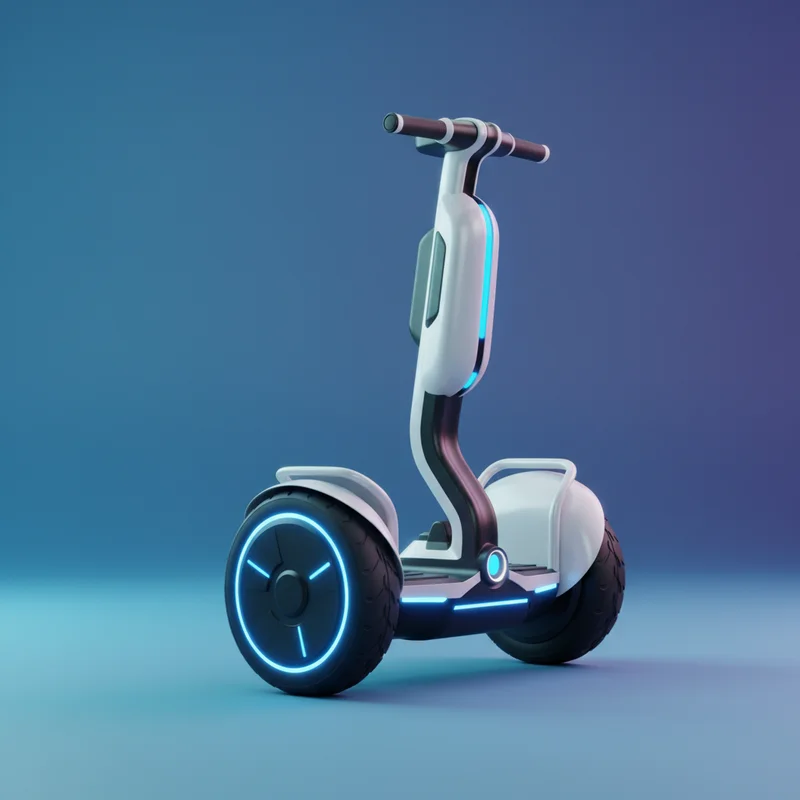
Segway

Segway

Self-balancing personal transporter that never quite caught on.

Battle Analysis

Maintenance costs Cat Wins
70%
30%
Cat Segway

Cat

Annual cat maintenance costs in the United Kingdom average between 500 and 1,000 pounds, encompassing food, veterinary care, insurance, and the inevitable furniture replacement programme. This figure assumes no major medical events, a assumption cats frequently challenge through their enthusiasm for combat with neighbourhood rivals and exploratory consumption of dubious substances.

The cat, however, performs considerable self-maintenance. Grooming occupies up to 50% of waking hours, requiring no human intervention beyond occasional hairball management. The creature lubricates its own joints, sharpens its own tools, and disposes of its own waste with minimal supervision.

Segway

Segway maintenance begins with the purchase price of 4,000 to 8,000 pounds, a figure that causes physical pain to contemplate. Ongoing costs include battery replacement every three to five years at approximately 500 pounds, tyre replacement, and the occasional electronic component failure that renders the entire device inoperable.

Professional servicing proves essential, as the device's complexity exceeds typical consumer repair capabilities. The Segway performs no self-maintenance whatsoever, sitting inert between uses, silently depreciating whilst consuming no resources but also providing no companionship.

VERDICT

Despite veterinary expenses, cats provide continuous utility whilst Segways depreciate silently in garages.
Operational range Segway Wins
30%
70%
Cat Segway

Cat

A cat's operational range depends entirely upon its assessment of the situation's merit. Indoor cats may choose to operate within a radius of three metres from their preferred sleeping location, venturing further only when food, prey, or atmospheric disturbance demands investigation.

Outdoor cats demonstrate considerably greater range, with some documented territories spanning several square kilometres. However, this expansion occurs entirely at feline discretion. No amount of human encouragement will convince a cat to exceed its self-determined boundaries, a limitation some might frame as a design feature rather than a defect.

Segway

The Segway offers a maximum range of approximately 24 miles on a single charge, depending upon terrain, rider weight, and how aggressively one has been leaning. This predictable, measurable distance allows for reliable journey planning, a concept entirely foreign to feline transportation.

Recharging requires 8 to 10 hours from standard outlets, during which the device provides no utility whatsoever. The Segway's range, whilst substantial, remains fundamentally limited by infrastructure availability and the rider's willingness to be seen astride the device.

VERDICT

When range is actually desired, the Segway delivers measurable, reliable distance the cat cannot match.
Practical utility Cat Wins
70%
30%
Cat Segway

Cat

Cats provide practical utility primarily through pest management, with even well-fed domestic cats maintaining hunting instincts that discourage rodent populations. Beyond this, cats serve as effective ambient heating devices, emotional support mechanisms, and alarm systems calibrated to detect the sound of treat packaging from three rooms distant.

Their utility as transportation devices remains limited to the theoretical. Whilst some cultures have historically employed larger felines for various purposes, the domestic cat's maximum carrying capacity restricts its freight applications to small rodents and the occasional bird.

Segway

The Segway transports a single human at speeds up to 12.5 miles per hour, faster than walking but slower than cycling, occupying an awkward middle ground that limited its adoption. It excels in specific applications: warehouse traversal, airport monitoring, and tour group management, where its ability to elevate the rider's eyeline proves advantageous.

As a general transportation solution, the Segway failed to achieve its revolutionary promise. Pavements proved too narrow, roads too dangerous, and the device too expensive for casual adoption. Its utility, whilst real, remains confined to niche applications its inventors never anticipated.

VERDICT

Cats deliver continuous passive utility whilst Segways require active operation for sporadic benefit.
Social perception Cat Wins
70%
30%
Cat Segway

Cat

Cat ownership carries universally positive social connotations across virtually every culture. Internet metrics confirm cats as humanity's most shared visual content, with cat-related posts generating engagement rates that marketers study with professional envy. Admitting to cat ownership opens conversational doors worldwide.

The cat itself remains indifferent to these social benefits, a detachment that somehow enhances its appeal. The creature's complete disregard for human approval paradoxically increases human desperation to obtain it, a dynamic psychologists find endlessly fascinating.

Segway

Segway ownership carries complex social implications that vary dramatically by context. Security personnel and tour guides receive grudging acceptance. Private owners face questions ranging from the genuinely curious to the barely concealed mockery. The device has become shorthand for a particular type of technological optimism that failed to manifest.

Public Segway operation requires a degree of confidence that many users struggle to maintain, particularly when navigating crowds who part with expressions suggesting simultaneous amusement and pity. The Segway's social utility peaked in 2002 and has declined steadily since.

VERDICT

Cats enhance social standing whilst Segways invite speculation about the owner's judgment.
Stability and balance Cat Wins
70%
30%
Cat Segway

Cat

The cat's relationship with gravity represents one of evolution's more impressive achievements. The righting reflex, fully developed by seven weeks of age, allows cats to rotate mid-fall and land feet-first from heights that would hospitalise humans. Terminal velocity for a cat reaches approximately 60 mph, at which point the animal simply relaxes and distributes impact across all four limbs.

Beyond mere falling, cats demonstrate preternatural balance in horizontal applications. They navigate fence rails, mantelpiece edges, and impossibly narrow ledges with the casual confidence of creatures who have never once questioned their own competence. This self-assurance proves justified approximately 98% of the time, with the remaining 2% generating considerable entertainment for observers.

Segway

The Segway achieves balance through continuous electronic intervention. Five gyroscopes and two tilt sensors monitor rider position up to 100 times per second, making micro-adjustments to prevent the inevitable tumble that physics demands. Remove the battery, and the device becomes an extraordinarily expensive obstacle.

This technological achievement comes with notable limitations. Uneven surfaces, unexpected kerbs, and moderate inclines all present challenges the Segway's sensors struggle to address. The learning curve claims numerous victims, typically in front of audiences, creating a genre of internet video that has brought joy to millions who have never personally operated the device.

VERDICT

Biological systems refined over millions of years outperform gyroscopic technology requiring constant electronic correction.
👑

The Winner Is

Cat

62 - 38

The cat emerges triumphant through the simple expedient of having solved stability millennia before humans attempted the problem with electronics. A creature that lands on its feet from any orientation requires no gyroscopes, no sensors, and no charging cables. It requires only food, warmth, and the occasional acknowledgment of its magnificence.

The Segway deserves recognition for its genuine engineering achievement. Maintaining a human upright on two wheels whilst stationary represents no small accomplishment. Yet the device remains fundamentally a solution to a problem most people solved in childhood through the bicycle, a technology requiring neither batteries nor firmware updates.

In the final analysis, biological elegance defeats technological complexity. The cat offers companionship, pest control, and infinite entertainment without requesting anything beyond basic sustenance. The Segway offers transportation at speeds marginally exceeding walking, whilst demanding storage space, charging infrastructure, and considerable courage to operate publicly. The market has delivered its verdict, and the cat continues its quiet domination of human households worldwide.

Cat
62%
Segway
38%

Share this battle

More Comparisons