
Topic Battle

Where Everything Fights Everything

Cat

Cat

Domestic feline companion known for independence, agility, and internet fame. Masters of napping and keyboard interruption.

VS
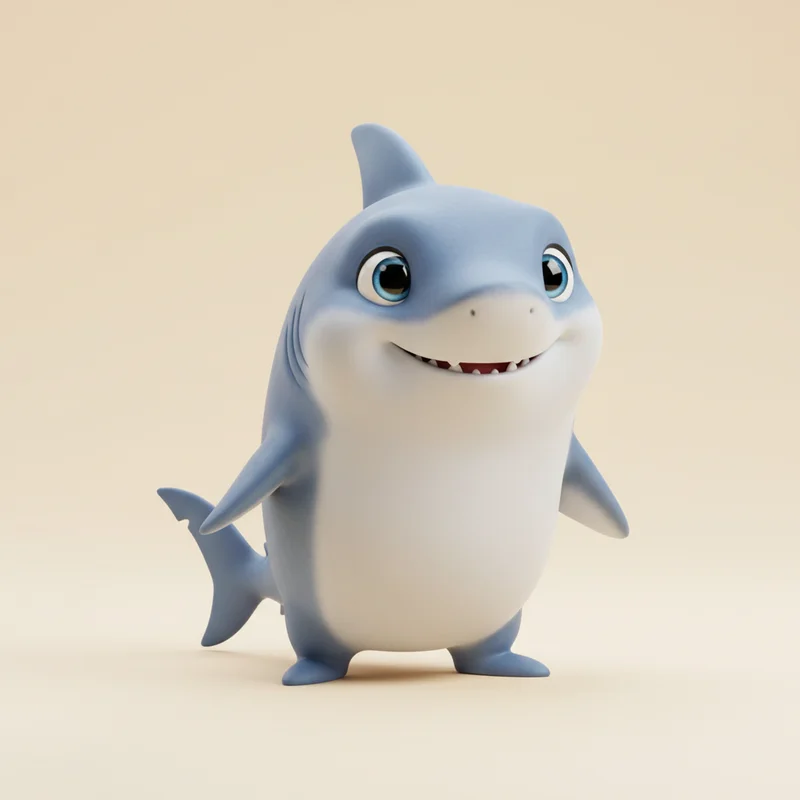
Shark

Shark

Apex ocean predator with 450 million years of evolutionary refinement and unfair movie villain reputation.

Battle Analysis

Adaptability Cat Wins
70%
30%
Cat Shark

Cat

The domestic cat demonstrates remarkable environmental flexibility, thriving across virtually every climate zone humans inhabit. From the frozen settlements of Scandinavia to the humid tropics of Southeast Asia, cats have established viable populations. They occupy apartments, farms, ships, libraries, and the occasional government ministry.

This adaptability extends to diet; cats successfully transition between commercial food, human offerings, and self-procured prey with minimal apparent difficulty. They adjust sleep schedules to match household patterns, though they reserve the right to disrupt these schedules at will. The cat represents a generalist predator capable of exploiting whatever ecological niche presents itself, provided that niche includes soft surfaces and consistent temperature control.

Shark

Sharks occupy diverse marine environments, from sunlit surface waters to abyssal depths exceeding 2,000 metres. Species have adapted to polar conditions, tropical reefs, and brackish estuaries. The bull shark notably tolerates freshwater, navigating rivers thousands of kilometres from the ocean.

However, sharks remain fundamentally constrained by aquatic requirements. No amount of evolutionary pressure has produced a terrestrial shark, nor does one appear forthcoming. This limitation excludes sharks from 70 percent of Earth's surface and 100 percent of its furniture. The shark cannot follow prey into burrows, trees, or IKEA showrooms, representing a significant competitive disadvantage.

Threat assessment Shark Wins
30%
70%
Cat Shark

Cat

Domestic cats cause approximately 400 human deaths annually, primarily through disease transmission and allergic reactions rather than direct predation. The cat's physical threat to humans remains limited by size constraints, though anyone who has attempted to administer medication to an unwilling feline will attest to their disproportionate capacity for resistance.

The greater threat materialises ecologically. Cats are responsible for the extinction of 63 species worldwide, primarily birds and small mammals. Australia classifies feral cats as among the continent's most destructive invasive species, responsible for approximately 1 billion native animal deaths annually. The cat's threat profile, whilst modest to humans individually, proves catastrophic at ecosystem scale.

Shark

Sharks cause approximately 70-100 unprovoked attacks annually, resulting in 5-10 fatalities. These figures position sharks below coconuts, vending machines, and champagne corks in annual human mortality rankings. The shark's reputation as a relentless man-eater proves, upon statistical examination, substantially exaggerated.

Most shark attacks represent investigatory behaviour rather than predatory intent; humans simply fail to meet shark dietary expectations once sampled. The great white's preferred prey profile includes seals, sea lions, and fish, none of which humanity particularly resembles when viewed from below through 38 metres of murky water. Sharks, in essence, are victims of their own sensory limitations and humanity's poor silhouette choices.

Predatory efficiency Cat Wins
70%
30%
Cat Shark

Cat

The domestic cat maintains a kill rate of approximately 32 percent, placing it among the most efficient predators on Earth. This figure surpasses lions, wolves, and most other celebrated hunters. The methodology involves a combination of stalking, ambush tactics, and what can only be described as psychological warfare against the local rodent population.

A single outdoor cat may dispatch between 30 and 150 prey animals annually, ranging from mice to birds to the occasional ambitious rabbit. This productivity occurs despite the cat receiving perfectly adequate nutrition from commercial food sources, suggesting that hunting serves purposes beyond mere sustenance. Researchers theorise this may constitute recreational predation, though the cat declines to confirm.

Shark

Shark hunting efficiency varies considerably by species, with the great white achieving success rates of approximately 55 percent when targeting seals. However, this figure masks considerable variability; many attacks represent exploratory bites rather than committed predation attempts.

The shark's sensory array provides substantial advantages: electroreceptive ampullae of Lorenzini detect electrical fields as weak as 5 nanovolts per centimetre, whilst lateral line systems register minute water pressure changes. Yet despite this formidable detection apparatus, the shark cannot hunt on land, in houses, or in the spaces beneath furniture where mice traditionally shelter. This represents a significant territorial limitation.

Human cultural impact Cat Wins
70%
30%
Cat Shark

Cat

The cat has achieved a cultural penetration that borders on total information dominance. Internet traffic analyses suggest that cat-related content accounts for approximately 15 percent of all web activity. Ancient Egyptians elevated cats to divine status; modern humans have simply transferred this worship to digital platforms.

The economic implications prove equally staggering. The global cat industry, encompassing food, accessories, veterinary care, and an inexplicable variety of costumes, generates USD 126 billion annually. This figure exceeds the GDP of 120 nations. Humanity has, in essence, constructed an economic system to service an animal that displays consistent disinterest in reciprocating.

Shark

Shark cultural impact follows a distinctly different trajectory, centring primarily on fear-based fascination. The 1975 film Jaws generated USD 470 million whilst simultaneously devastating shark populations through fear-induced culling campaigns. Shark Week commands 40 million annual viewers, suggesting sustained public interest despite limited narrative variety.

Yet the shark's cultural position remains fundamentally problematic. Humans do not purchase shark merchandise for their children's bedrooms. Shark cafes do not proliferate in urban centres. The shark has failed to monetise its celebrity in any meaningful way, largely because it remains unaware that celebrity exists and continues pursuing fish with characteristic single-mindedness.

Evolutionary longevity Shark Wins
30%
70%
Cat Shark

Cat

The domestic cat's lineage traces to the Near Eastern wildcat approximately 10,000 years ago, coinciding with humanity's agricultural revolution. This timeline, whilst respectable, represents a mere geological instant. The cat has spent this period refining a single core competency: convincing humans to provide shelter and sustenance whilst surrendering nothing in return.

Modern Felis catus retains approximately 95 percent genetic similarity to wild ancestors, suggesting that domestication has been, at best, a superficial arrangement. The cat has simply relocated its hunting grounds from African grasslands to suburban gardens, adapting its prey profile accordingly.

Shark

Sharks emerged during the Ordovician period, establishing themselves 450 million years before the present. To contextualise this duration: sharks predate trees by approximately 100 million years. They witnessed the evolution of fish, the emergence of land-dwelling vertebrates, the rise and fall of dinosaurs, and the invention of indoor plumbing.

This extraordinary persistence reflects what marine biologists term evolutionary conservatism. The shark discovered a successful formula in the Devonian period and has since demonstrated minimal interest in innovation. The basic architecture of cartilaginous skeleton, multiple gill slits, and replaceable teeth has required only minor refinements across geological epochs. If the shark were a technology company, it would have released one product and immediately retired.

👑

The Winner Is

Cat

55 - 45

The cat prevails in this improbable contest of predatory philosophies, demonstrating that evolutionary success need not require fearsome size or oceanic dominion. The cat has achieved through strategic positioning what the shark has pursued through raw capability: complete territorial control over its chosen domain.

Consider the mathematics of influence. The cat commands USD 126 billion in annual human expenditure. It occupies 25 percent of households in developed nations. It has converted the world's information infrastructure into a distribution network for its image. The shark, for all its 450 million years of refinement, has accomplished none of these feats.

The shark remains magnificent, ancient, and profoundly alone in its oceanic realm. The cat, by contrast, has discovered something far more valuable than predatory perfection: it has discovered humanity's weakness for soft fur and apparent indifference. This represents perhaps the greatest evolutionary adaptation of all.

In the final reckoning, the cat scores 55 to the shark's 45, a margin reflecting not superior predation but superior parasitism, if one may use the term charitably. The cat has domesticated humanity. The shark has merely frightened it. One strategy, it appears, proves considerably more sustainable.

Cat
55%
Shark
45%

Share this battle

More Comparisons