Topic Battle

Where Everything Fights Everything

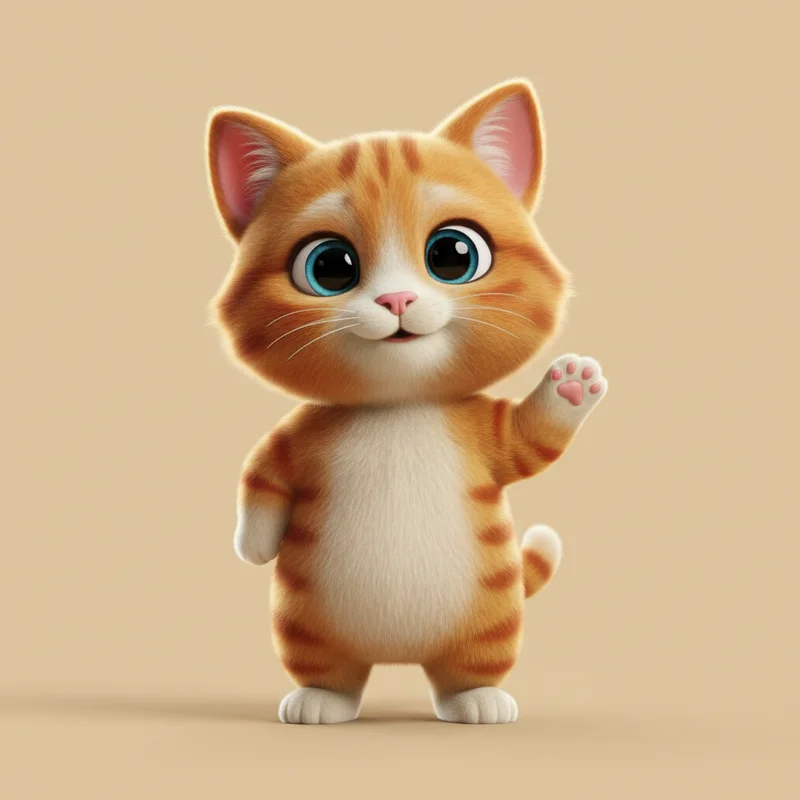
Cat

Cat

Domestic feline companion known for independence, agility, and internet fame. Masters of napping and keyboard interruption.

VS
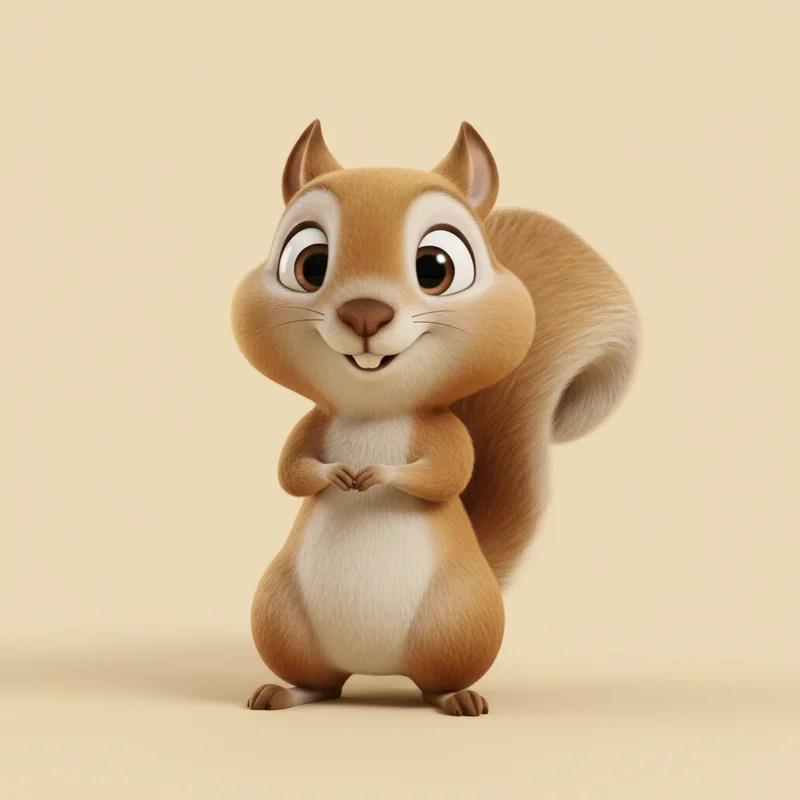
Squirrel

Squirrel

Acrobatic rodent obsessed with nut collection, featuring impressive jumping skills and bushy tail.

Battle Analysis

Hunting strategy Cat Wins
70%
30%
Cat Squirrel

Cat

Domestic cats retain hunting instincts refined over 10,000 years of coevolution with human settlements. Their strategy centres on ambush predation: patient waiting followed by explosive acceleration. A stalking cat can reduce heart rate and respiration to near-imperceptible levels, becoming effectively invisible until the moment of attack.

The approach proves devastatingly effective against ground-dwelling prey, with success rates exceeding 30% against mice and small birds. Against squirrels, however, this strategy suffers from a fundamental flaw. The ambush predator requires surprise, and the squirrel has evolved specifically to detect and neutralise surprise as a tactical element.

Squirrel

Squirrels do not hunt in the traditional sense, but their survival strategy constitutes a form of tactical brilliance. They maintain constant vigilance through a distributed awareness system: elevated feeding positions, rotating sentry duties within loose social groups, and alarm calls that propagate through squirrel networks faster than any cat can travel.

More remarkably, squirrels appear to engage in active intelligence gathering regarding local predators. They learn individual cat behaviour patterns, recognise which cats pose genuine threats versus those who merely go through the motions, and adjust their boldness accordingly. This counterintelligence operation transforms passive prey into active participants in their own survival.

VERDICT

Despite low success rates against squirrels specifically, the cat's predatory toolkit remains more sophisticated than the squirrel's purely defensive repertoire.
Territorial dominance Cat Wins
70%
30%
Cat Squirrel

Cat

Cats establish and maintain territories through a sophisticated system of scent marking, patrol routes, and occasional direct confrontation. A typical domestic cat claims roughly 0.5 hectares of defended space, though this varies considerably based on population density and resource availability.

Within their territory, cats achieve genuine dominance over most intruders. Other cats, dogs, and humans all acknowledge feline territorial claims to varying degrees. The cat's position at the apex of suburban predator hierarchies remains largely unchallenged, conferring genuine psychological benefits visible in their confident deportment.

Squirrel

Squirrel territorial behaviour defies simple categorisation. Rather than defending fixed boundaries, squirrels maintain overlapping home ranges organised around food resources and escape routes. They will aggressively defend active food sources whilst largely ignoring trespassers in other contexts.

Against cats specifically, squirrels display remarkable territorial confidence. They routinely feed within metres of resting cats, occasionally appearing to deliberately antagonise them through chittering vocalisations and tail-flagging displays. This boldness suggests that squirrels have accurately assessed the threat level posed by most domestic cats and found it wanting.

VERDICT

Established territorial systems providing psychological security and acknowledged dominance over most suburban competitors outweigh the squirrel's more fluid approach.
Agility and acrobatics Squirrel Wins
30%
70%
Cat Squirrel

Cat

Feline agility represents one of nature's more impressive engineering achievements. Cats possess a flexible spine containing 53 vertebrae, enabling rotational capabilities that allow them to right themselves mid-fall from virtually any position. Their muscular hindquarters generate sufficient force for vertical leaps reaching six times their body length.

However, this agility operates primarily in two-dimensional space. Cats excel at horizontal sprinting and vertical jumping but struggle with the complex three-dimensional navigation required for arboreal pursuit. Once a chase moves into the tree canopy, the cat's architectural advantages diminish considerably, often leaving them stranded on branches whilst contemplating life choices.

Squirrel

Squirrel acrobatics operate on an entirely different plane of existence. These rodents navigate three-dimensional space with a fluency that borders on the supernatural. Their ankles rotate 180 degrees, allowing them to descend trees headfirst at speeds that would cause any sensible mammal to reconsider. They calculate jump trajectories involving multiple moving branches with computational precision that aerospace engineers might envy.

The squirrel's tail functions as both counterbalance and parachute, enabling mid-air course corrections that transform potential falls into controlled glides. When pursued, squirrels employ a technique researchers term 'unpredictable path generation,' essentially random movement patterns that make interception mathematically improbable for any pursuer relying on prediction.

VERDICT

Three-dimensional acrobatic mastery and rotating ankles provide decisive advantages in the vertical pursuit scenarios where most confrontations occur.
Long term survival prospects Squirrel Wins
30%
70%
Cat Squirrel

Cat

Domestic cats enjoy survival guarantees that wild animals can scarcely comprehend. Human caretakers provide food, shelter, and medical care regardless of hunting success. A cat's survival no longer depends on catching anything at all, transforming hunting from necessity into recreational activity.

This arrangement, whilst comfortable, produces a peculiar evolutionary pressure toward hunting incompetence. Cats that rely entirely on human provision face no survival penalty for failed hunts, allowing predatory skills to atrophy across generations. The domestic cat may be slowly forgetting how to be a cat.

Squirrel

Squirrel survival depends entirely on individual competence. Those who fail to cache sufficient food, who misjudge predator threats, or who cannot navigate their environments with precision simply do not survive to reproduce. This relentless selection pressure maintains cognitive and physical capabilities at peak evolutionary sharpness.

Urban squirrel populations demonstrate remarkable adaptability to human modification of their environment. They exploit bird feeders, raid unsecured rubbish, and have learned to navigate traffic patterns with casualty rates that, whilst non-zero, remain surprisingly low. The squirrel adapts; the squirrel persists; the squirrel multiplies.

VERDICT

Maintaining survival skills through genuine selective pressure produces more robust long-term prospects than comfort-dependent domestic arrangements.
Intelligence and problem solving Squirrel Wins
30%
70%
Cat Squirrel

Cat

Feline intelligence manifests primarily in social manipulation and spatial memory. Cats demonstrate remarkable ability to train their human cohabitants, employing vocalisations specifically developed for human interaction that wild cats never produce. They remember complex home layouts and can solve puzzle feeders designed to challenge their cognitive abilities.

However, cat problem-solving tends toward the single-minded. When a strategy fails, cats often repeat it with minor variations rather than fundamentally reconsidering their approach. This persistence, admirable in some contexts, proves less effective when the problem involves prey that has already anticipated and countered every variation.

Squirrel

Squirrel intelligence has been systematically underestimated throughout scientific history. These creatures demonstrate spatial memory capable of locating thousands of buried food caches months after burial, employing both landmark navigation and dead reckoning in combination. They solve novel problems with creativity that researchers describe as 'frustratingly innovative.'

The squirrel's most impressive cognitive feat involves deception. They have been documented creating false food caches when observed by potential thieves, engaging in tactical misinformation that requires theory of mind, the ability to understand that other creatures hold beliefs that can be manipulated. This cognitive sophistication places squirrels among the more intellectually capable rodents yet studied.

VERDICT

Spatial memory spanning thousands of locations and documented deceptive behaviour indicate cognitive capabilities exceeding typical expectations for either species.
👑

The Winner Is

Squirrel

45 - 55

The squirrel prevails through a combination of three-dimensional agility, genuine cognitive sophistication, and the ruthless competence that survival selection demands. Against domestic cats, squirrels win not through strength but through the accumulated advantages of creatures who must win to continue existing.

The cat will doubtless continue its ritual pursuits across suburban gardens worldwide. These chases provide exercise, mental stimulation, and connection to ancestral programming that domestication has not entirely erased. Their entertainment value to human observers remains considerable, and perhaps that contribution to household wellbeing constitutes victory enough.

Yet when the chase concludes, as it inevitably does, with the squirrel chittering from a branch whilst the cat pretends sudden disinterest, both creatures understand the truth of their relationship. The squirrel has mastered its environment through genuine capability, whilst the cat has mastered its humans through strategic adorability. Both represent valid survival strategies; only one involves actually catching squirrels.

Cat
45%
Squirrel
55%

Share this battle

More Comparisons