Topic Battle

Where Everything Fights Everything

Cat

Cat

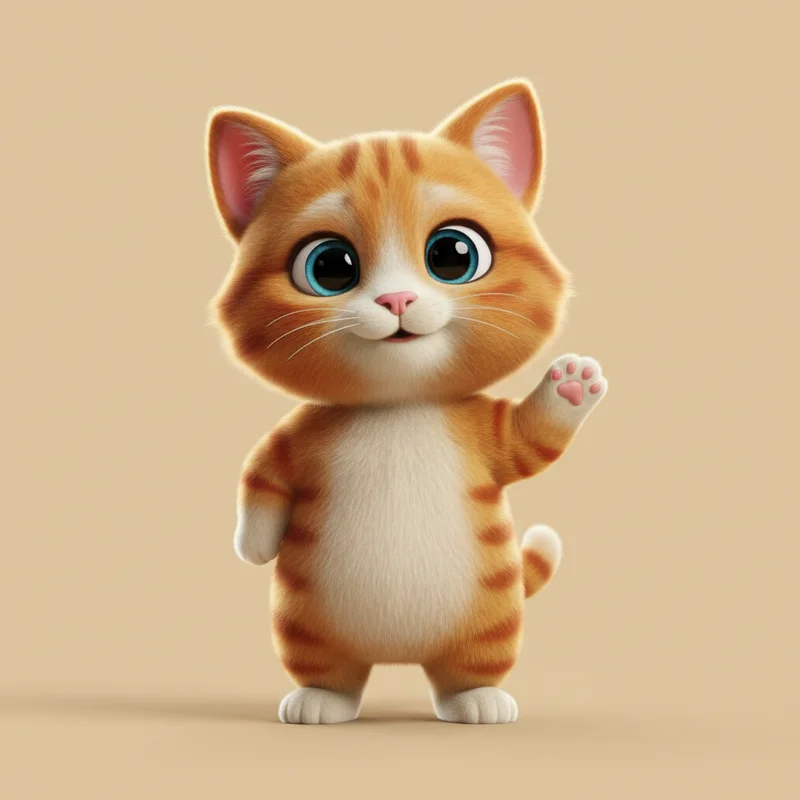
Domestic feline companion known for independence, agility, and internet fame. Masters of napping and keyboard interruption.

VS
Tetris

Tetris

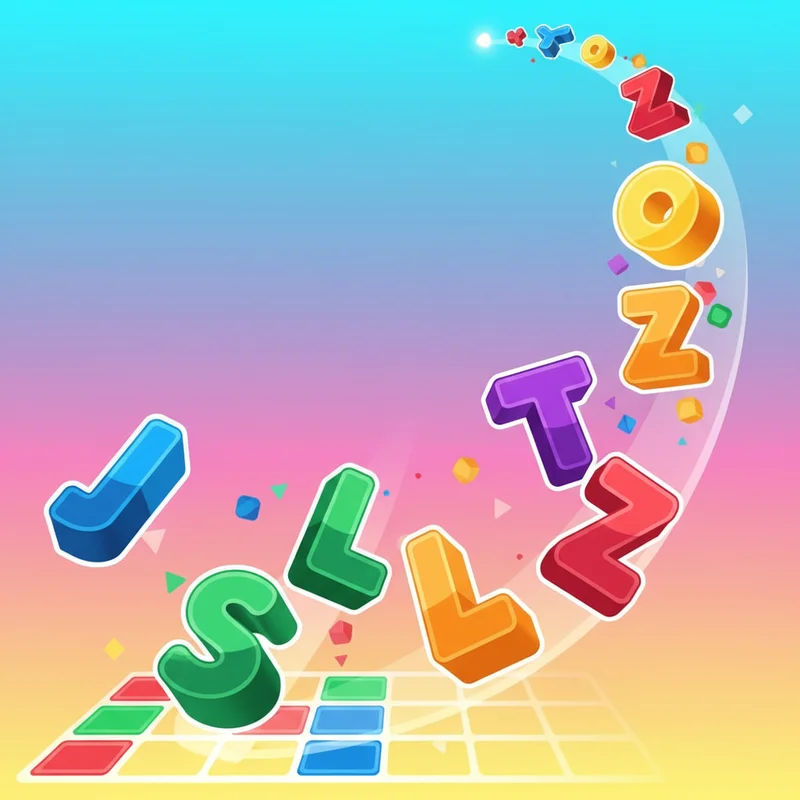
Block-stacking puzzle that haunts dreams.

Battle Analysis

Stress reduction cat Wins
70%
30%
Cat Tetris

Cat

The stress-reducing properties of cats have been subjected to considerable scientific scrutiny. Cat ownership correlates with reduced cardiovascular disease risk and lower baseline cortisol levels. The feline purr, oscillating between 25 and 150 hertz, has been associated with measurable calming effects in human listeners. The rhythmic motion of stroking a cat's fur engages meditative neural pathways. However, cats also introduce stressors: veterinary emergencies, furniture destruction, and the 3 AM vocalisation demanding breakfast. The cat's stress reduction arrives packaged with stress creation of approximately equivalent magnitude.

Tetris

Tetris presents a more complex stress profile. The game has demonstrated clinical efficacy in reducing anxiety and PTSD symptoms—a 2017 study showed that Tetris play following traumatic events reduced subsequent flashback frequency. The cognitive engagement required displaces anxious rumination. However, Tetris simultaneously generates its own stress through increasing difficulty curves and the perpetual threat of the dreaded 'topping out.' The game offers stress relief only insofar as its own stressors eclipse whatever preceded them. This is stress substitution rather than stress reduction.

VERDICT

Cats provide genuine physiological stress reduction; Tetris merely redirects anxiety onto falling blocks
Time consumption cat Wins
70%
30%
Cat Tetris

Cat

Cats consume human time with elegant efficiency. The average cat owner dedicates approximately six hours weekly to direct cat-related activities: feeding, grooming, play, veterinary transport, and the extended observation sessions that constitute 'watching the cat do nothing in particular.' Additional time vanishes into cat photography, cat video consumption, and conversations about cat behaviour with other cat enthusiasts. The cat extracts this time tribute whilst offering the illusion that human attention is optional—a sophisticated manipulation technique refined over millennia of domestication.

Tetris

Tetris time consumption operates without pretence of reciprocity. The game simply consumes hours through its 'one more game' mechanic—a deceptively simple feedback loop that transforms intended ten-minute sessions into multi-hour marathons. The current world record for continuous Tetris play exceeds 32 hours. Unlike cat ownership, Tetris provides no companionship return on this temporal investment; completed lines simply vanish, leaving no persistent evidence of time's passage. The game is pure temporal extraction, offering only the recursive pleasure of playing more Tetris.

VERDICT

Both consume hours ruthlessly, but cats provide companionship; Tetris provides only score statistics
Spatial awareness cat Wins
70%
30%
Cat Tetris

Cat

The domestic cat exhibits spatial awareness that borders on the supernatural. A cat will assess a cardboard box, a bathroom sink, or a salad bowl and determine—correctly, apparently—that its body mass can be accommodated within. This phenomenon, informally termed 'cat liquidity,' has generated considerable internet documentation. Cats routinely occupy spaces that appear physically inadequate, contorting their skeletal structure with an ease that suggests either remarkable flexibility or a casual relationship with Euclidean geometry. The cat does not merely fit into spaces; it colonises them with proprietorial satisfaction.

Tetris

Tetris, by its very nature, exists as a meditation on spatial arrangement. The game presents players with seven distinct tetromino shapes and challenges them to arrange these forms into complete horizontal lines. Optimal play requires the player to develop anticipatory spatial reasoning—visualising not merely where a piece can fit, but where it should fit to accommodate future pieces. Studies have demonstrated that Tetris play genuinely improves spatial cognition in human subjects. However, the game merely tests spatial awareness; it does not embody it. The blocks themselves possess no agency in their arrangement.

VERDICT

Cats demonstrate spatial mastery through physical action; Tetris merely provides spatial exercises
Addictive properties tetris Wins
30%
70%
Cat Tetris

Cat

The addictive nature of cat companionship operates through sophisticated neurochemical pathways. Physical contact with cats triggers oxytocin release in human subjects, creating genuine biochemical dependency. Cat owners report compulsive behaviours including excessive photography, unsolicited sharing of cat anecdotes, and the accumulation of multiple feline specimens beyond practical housing limits. The withdrawal symptoms of cat absence—observable in owners during holidays—include persistent checking of pet cameras and premature return journey planning. This addiction, whilst socially acceptable, is nonetheless clinically recognisable.

Tetris

Tetris addiction has been sufficiently documented to warrant its own psychological phenomenon: the Tetris Effect. Players who engage extensively with the game report intrusive imagery of falling blocks during non-play periods, including attempts to mentally 'fit' real-world objects into Tetris-appropriate configurations. Some players hallucinate tetrominoes whilst attempting sleep. The game exploits variable reinforcement schedules with perfect precision—occasional completed lines deliver dopamine rewards that sustain play through less satisfying intervals. Tetris has been used clinically to disrupt traumatic memory formation, so powerful is its cognitive capture.

VERDICT

Tetris has a clinically documented psychological phenomenon named after it; cats merely inspire affection
Cultural penetration cat Wins
70%
30%
Cat Tetris

Cat

The domestic cat has achieved cultural penetration spanning millennia and continents. Ancient Egyptians elevated cats to divine status; medieval Europeans blamed them for plagues; Japanese culture produced the maneki-neko beckoning cat; and the internet age has established cat imagery as the dominant form of online visual content. Cats have inspired literature from T.S. Eliot to Haruki Murakami, spawned a West End musical that defies rational explanation, and generated merchandise revenues exceeding many nations' GDP. The cat is not merely culturally present; it is culturally ubiquitous.

Tetris

Tetris claims a different but equally remarkable cultural position. The game is recognised by Guinness World Records as the most ported video game in history, appearing on over 65 distinct gaming platforms. Its theme music—a Russian folk tune called 'Korobeiniki'—has achieved recognition independent of the game itself. Tetris has been used in cognitive research, clinical therapy, and architectural criticism. The game's visual language—the distinctive L-shaped, T-shaped, and linear tetrominoes—has become universally recognisable iconography. Yet this penetration, whilst global, spans only forty years.

VERDICT

Cats have colonised human culture for ten thousand years; Tetris has managed only four decades
👑

The Winner Is

Cat

52 - 48

This investigation pits two masters of human attention against one another, and the result proves unexpectedly close. Tetris claims victory in addictive properties—a dubious honour, perhaps, but undeniable given its eponymous psychological effect. The game has literally rewired human brains to perceive falling blocks during non-play intervals.

The cat, however, prevails in spatial awareness, stress reduction, cultural penetration, and time consumption value. This dominance across four of five criteria reflects a fundamental truth: the cat offers something Tetris cannot. Tetris is a closed loop—blocks fall, lines clear, scores increment, and nothing persists. The cat, by contrast, exists in reciprocal relationship with its human, providing presence, warmth, and the peculiar satisfaction of being chosen by an entity under no obligation to remain.

By a margin of 52 to 48, the cat emerges victorious. Both entities excel at filling empty spaces, but only one fills the space with something that purrs.

Cat
52%
Tetris
48%

Share this battle

More Comparisons