Topic Battle

Where Everything Fights Everything

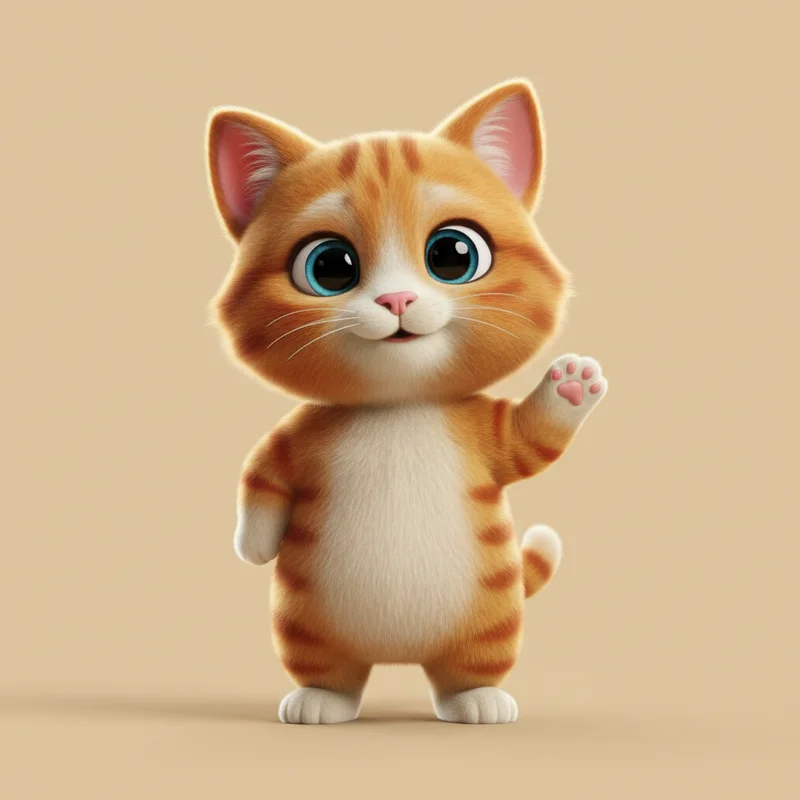
Cat

Cat

Domestic feline companion known for independence, agility, and internet fame. Masters of napping and keyboard interruption.

VS
Virtual Reality

Virtual Reality

Immersive technology transporting users to digital worlds.

Battle Analysis

Long term value Cat Wins
70%
30%
Cat Virtual Reality

Cat

A cat represents a commitment spanning 15 to 20 years of accumulated shared experience. Individual personalities develop and deepen over time. Routines establish themselves through years of cohabitation. The relationship gains richness with duration, creating memories, photographs, and stories that constitute genuine biographical significance.

This longevity carries corresponding weight. Veterinary care, dietary requirements, and eventual end-of-life decisions demand emotional and financial investment. The bond, once formed, creates vulnerability to loss that no technological device extracts. Yet this very vulnerability contributes to the relationship's meaning.

Virtual Reality

Virtual reality hardware operates on consumer electronics depreciation schedules, with meaningful improvements arriving every two to three years. Today's cutting-edge headset becomes tomorrow's dated equipment, requiring ongoing investment to maintain current experience quality. Software libraries may become inaccessible as platforms evolve.

The experiences themselves, however, persist in memory much as physical experiences do. A profound virtual reality moment carries lasting psychological weight. Yet the technology mediating these experiences changes continuously, creating a relationship defined by platform rather than continuity.

VERDICT

Living companions appreciate over time whilst technology depreciates, creating fundamentally different value trajectories.
Immersion quality Virtual Reality Wins
30%
70%
Cat Virtual Reality

Cat

Feline immersion operates through sensory engagement requiring no technological mediation. The tactile experience of cat fur registers across approximately 17,000 touch receptors per square centimetre of human hand, creating data throughput no haptic glove approaches. The purring frequency, measured between 25 and 150 Hz, produces vibrations felt throughout the human skeletal system.

However, cats control immersion duration and intensity according to their own preferences. A human may desire extended tactile engagement whilst the cat has determined that three minutes represents sufficient interaction. This unilateral termination capability creates immersion experiences that prove intense but frustratingly brief, operating entirely outside user control parameters.

Virtual Reality

Virtual reality immersion follows engineering specifications designed for human neurology. Modern headsets deliver 90 to 120 frames per second across fields of view exceeding 100 degrees, creating visual experiences indistinguishable from reality under optimal conditions. Spatial audio, hand tracking, and increasingly sophisticated haptic feedback extend immersion beyond mere visual spectacle.

The technology permits unlimited session duration, constrained only by battery life and human physiological tolerance. Users report genuine presence in virtual environments, with stress responses, spatial memory formation, and emotional engagement matching real-world equivalents. The immersion proves comprehensive, consistent, and entirely user-controlled.

VERDICT

Engineered immersion systems provide more comprehensive and controllable sensory engagement than biological entities operating on their own schedules.
Social connectivity Virtual Reality Wins
30%
70%
Cat Virtual Reality

Cat

Cats provide social connectivity through surprisingly robust mechanisms. Cat ownership creates immediate conversational common ground with the estimated 600 million cat owners worldwide. Photographs of cats generate more engagement on social media platforms than virtually any other content category. The shared experience of feline ownership bonds humans across demographic boundaries.

Physical cats, however, limit social options in certain regards. They cannot accompany owners to most social venues. They occasionally disrupt video conferences in ways that prove charming initially but professionally problematic upon repetition. Their social utility remains substantial but geographically bounded to the home environment.

Virtual Reality

Virtual reality offers social connectivity unconstrained by physical geography. Users collaborate, converse, and share experiences with others across the planet in real-time rendered environments. Social VR platforms host everything from professional meetings to dance parties to support groups, creating connection opportunities impossible in physical space.

The technology particularly benefits those with mobility limitations, social anxiety, or geographic isolation. A user in rural Scotland can attend gallery openings, gaming sessions, and intimate conversations with friends distributed globally, eliminating distance as a barrier to connection.

VERDICT

Geographic transcendence enables social connections impossible for a creature that refuses to leave the house.
Emotional authenticity Cat Wins
70%
30%
Cat Virtual Reality

Cat

Cats generate emotional responses through mechanisms evolution has refined across millions of years. The human-feline bond triggers genuine oxytocin release, creating attachment chemistry identical to that experienced in human relationships. When a cat chooses to occupy a lap, purr in response to stroking, or maintain eye contact with slow blinks, the emotional experience registers as authentically reciprocal to the human nervous system.

This authenticity carries weight precisely because it cannot be commanded. A cat's affection, when offered, represents a creature with options choosing proximity. The emotional value derives partially from its unpredictability, each positive interaction carrying significance because negative interactions remain equally possible.

Virtual Reality

Virtual reality generates emotional responses through carefully constructed stimuli designed by experience engineers. Fear in horror applications, wonder in exploration titles, and connection in social platforms all register as genuine emotional states within the human brain. Users report crying, laughing, and experiencing profound moments within virtual environments with regularity.

However, the emotions respond to constructed illusions rather than autonomous entities. The virtual character expressing affection follows programming parameters, not genuine preference. Whilst the emotional experience proves real to the experiencer, the underlying stimulus lacks independent existence, creating a philosophical asymmetry that some humans find troubling upon reflection.

VERDICT

Emotions triggered by autonomous living creatures carry authenticity that engineered experiences cannot fully replicate.
Physical health impact Cat Wins
70%
30%
Cat Virtual Reality

Cat

Cat ownership correlates with measurable health benefits across multiple physiological systems. Studies indicate cat owners experience 30 to 40 percent reduced risk of cardiovascular events compared to non-owners. The purring frequency range promotes bone density and tissue healing. Daily interaction requires movement, bending, and physical engagement that contributes to baseline activity levels.

Contraindications exist primarily for those with allergies, where the Fel d 1 protein triggers immune responses ranging from mild discomfort to severe respiratory distress. Additionally, cats occasionally cause physical injury through scratching or biting, particularly when humans misread feline communication signals regarding acceptable interaction boundaries.

Virtual Reality

Virtual reality's health impacts bifurcate sharply between beneficial and detrimental. Fitness applications deliver genuine cardiovascular exercise, with users burning 400 to 600 calories per hour during active gaming sessions. Therapeutic applications address phobias, PTSD, and chronic pain through controlled exposure and distraction mechanisms.

However, extended use produces concerning effects. Motion sickness affects 40 to 70 percent of users to varying degrees. Eye strain, neck strain, and disrupted circadian rhythms accompany heavy usage. Most significantly, the sedentary posture assumed during many applications contributes to the precise health issues modern humans already face in excess.

VERDICT

Passive health benefits from feline companionship outweigh VR's mixed profile of intensive exercise punctuated by sedentary eye strain.
👑

The Winner Is

Cat

55 - 45

The cat prevails through the irreducible fact of autonomous existence. A creature that chooses to share domestic space, that responds to presence without programming, that accumulates shared history through years of cohabitation, provides something no headset can render: genuine otherness that acknowledges human existence.

Virtual reality will continue advancing toward ever more convincing simulations of presence, connection, and experience. Its utility for education, entertainment, and social connection across distances remains considerable. These virtues deserve recognition and will drive continued adoption.

Yet when the headset comes off and the rendered worlds dissolve, it is the cat that remains, a warm presence requiring nothing beyond proximity, offering nothing beyond presence, and somehow making that exchange feel entirely sufficient. In the final accounting, actual companionship outperforms simulated experience, however impressive that simulation becomes.

Cat
55%
Virtual Reality
45%

Share this battle

More Comparisons