Where Everything Fights Everything

Cat vs Wolverine

😜 Just for fun — a tongue-in-cheek, gloriously unscientific showdown.

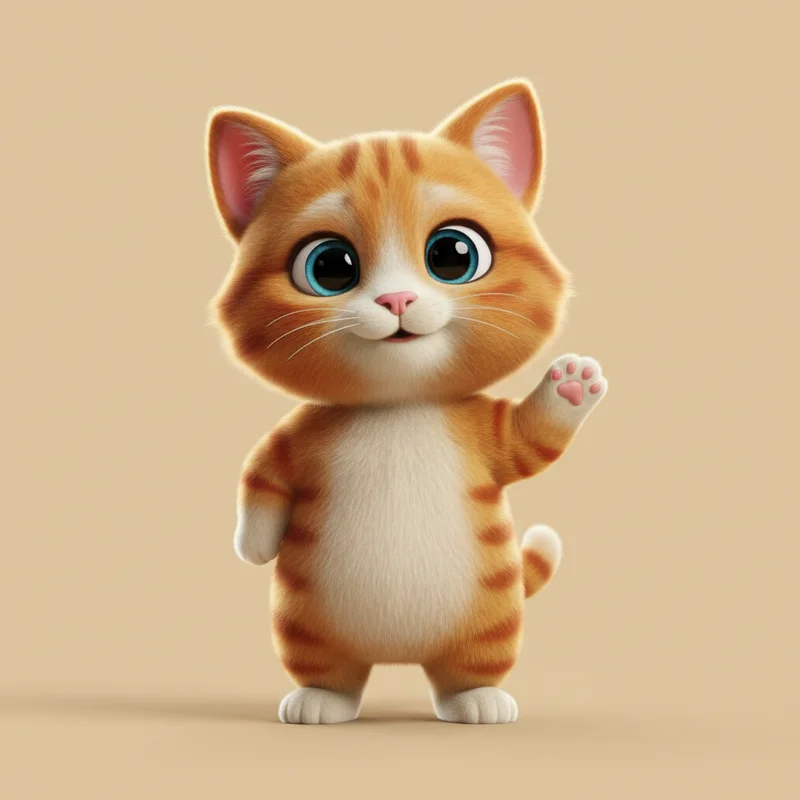
Cat

Cat

Domestic feline companion known for independence, agility, and internet fame. Masters of napping and keyboard interruption.

VS
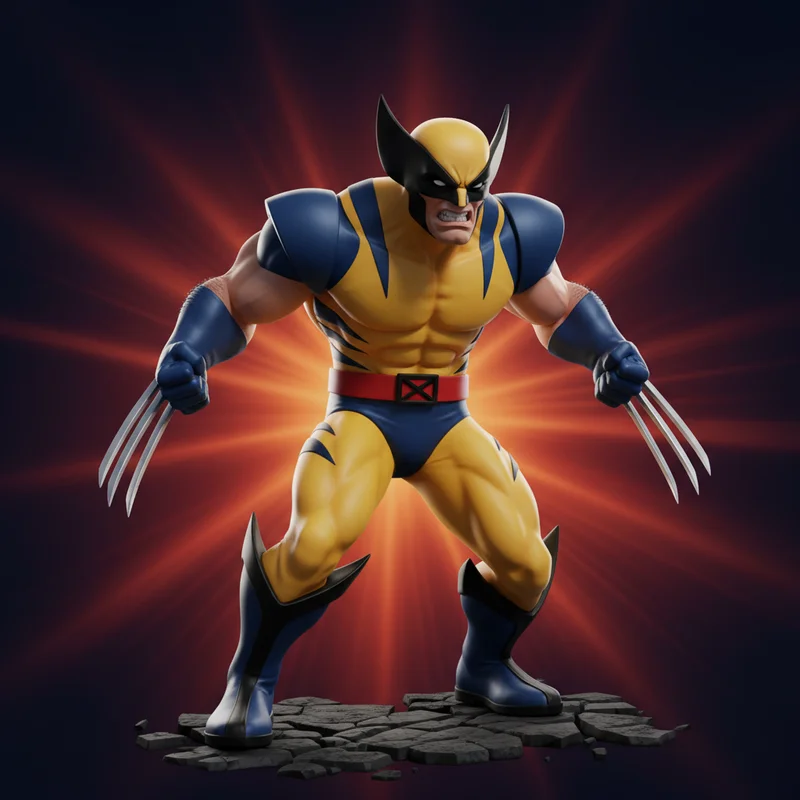
Wolverine

Wolverine

Clawed mutant with regeneration and anger issues.

Battle Analysis

Combat effectiveness Wolverine Wins
🏆 Wolverine takes this round

Cat

The domestic cat possesses eighteen retractable claws distributed across four paws, each capable of extending and retracting through a sophisticated arrangement of tendons and ligaments that has remained evolutionarily unchanged for millennia. These keratin weapons serve purposes including prey capture, defensive combat, and the systematic destruction of furniture that their human cohabitants foolishly believed was for sitting upon. Documented hunting success rates place cats among the most efficient predators on Earth, with studies indicating they kill between 1.3 and 4 billion birds annually in the United States alone.

The cat's combat methodology relies upon patience, ambush tactics, and an innate understanding that victory often requires waiting seventeen hours motionless beneath a wardrobe. Their flexible spine permits rotational movements impossible for larger predators, whilst their night vision provides advantages in low-light engagements. However, cats typically limit combat to prey significantly smaller than themselves, demonstrating strategic wisdom that some might characterise as cowardice but which evolutionary biologists term optimal energy expenditure.

Wolverine

Wolverine possesses six adamantium claws, three per hand, capable of extending from between his knuckles through what must be an extraordinarily painful process that he has nonetheless repeated thousands of times throughout his fictional existence. These claws can slice through virtually any material except plot armour worn by protagonists in adjacent franchises. His adamantium-reinforced skeleton renders him effectively immune to bone-related injuries, whilst his healing factor ensures that the damage caused by his own claws extending through his flesh repairs itself almost instantaneously.

Combat documentation suggests Wolverine has engaged opponents ranging from ordinary criminals to cosmic entities, employing techniques accumulated across multiple centuries of warfare. His berserker rage state provides additional combat effectiveness at the cost of tactical awareness, a trade-off that has produced mixed results depending upon narrative requirements. Unlike the domestic cat, Wolverine actively seeks combat rather than waiting for it to occur, suggesting either remarkable bravery or significant psychological issues requiring professional attention.

VERDICT

Adamantium claws capable of slicing through tank armour represent a measurable improvement over keratin weapons optimised for songbird capture.
Regenerative capacity Wolverine Wins
🏆 Wolverine takes this round

Cat

Cats possess limited regenerative capabilities compared to fictional mutants, though their reputation for having 'nine lives' reflects genuine resilience. Their ability to survive falls that would kill other animals of similar size derives from their righting reflex, flexible skeletal structure, and relatively low terminal velocity rather than tissue regeneration. Cats can recover from injuries that would prove fatal to dogs of equivalent mass, demonstrating a biological hardiness that has contributed to their survival success.

The domestic cat's healing capabilities operate within normal mammalian parameters, with wound closure and tissue repair occurring over days to weeks depending upon injury severity. Their grooming behaviour provides antiseptic benefits through saliva application, reducing infection risk and accelerating recovery. However, cats cannot regenerate from being torn in half, cannot survive nuclear explosions, and generally display appropriate concern about threats to their physical integrity.

Wolverine

Wolverine's healing factor represents the benchmark against which all fictional regeneration is measured, enabling recovery from injuries including but not limited to: complete exsanguination, organ removal, molecular dissolution, and being atomised by a sentinel. His regenerative capability operates at rates that would violate thermodynamic principles if applied to real biology, with severe wounds closing within seconds and lost tissue regenerating within minutes to hours depending upon dramatic requirements.

This healing factor additionally slows his ageing process, rendering him functionally immortal despite being born in the late 19th century. Wolverine has survived scenarios that would be immediately fatal to cats, humans, or indeed any carbon-based life form, including prolonged exposure to vacuum, submersion in molten metal, and being struck by Phoenix-empowered telekinetic blasts. His regenerative advantage in this category is absolute and unchallengeable.

VERDICT

Surviving nuclear explosions and molecular dissolution exceeds the documented capabilities of even the most resilient domestic cat.
Territorial dominance Cat Wins
🏆 Cat takes this round

Cat

Cats maintain territory through an elaborate system of scent marking, visual signals, and psychological warfare that has proven remarkably effective across diverse environments. A single domestic cat may claim territory ranging from a small flat to several hectares, depending upon available resources and the density of competing felines. This territory is defended through methods including urine spraying, scratch marking, and simply occupying the precise centre of any bed, sofa, or keyboard until rivals acknowledge defeat.

The domestic cat's territorial success can be measured by its global distribution across every inhabited continent. Cats have established populations in environments ranging from Arctic research stations to tropical islands, demonstrating adaptability that few other domestic species can match. Their capacity to maintain territorial claims whilst appearing completely uninvested in the outcome represents a masterclass in strategic ambiguity that human diplomats would do well to study.

Wolverine

Wolverine's territorial instincts manifest primarily through aggressive defence of the Xavier Institute and occasional claims to various bars across North America where he has established drinking precedence. His territory exists largely in fictional space, bounded by the limits of Marvel's intellectual property rather than physical geography. Within these confines, he has demonstrated willingness to defend claimed areas against threats including Sentinels, the Brotherhood of Mutants, and occasionally his own teammates when narrative tension requires internal conflict.

However, Wolverine's territorial behaviour is complicated by his frequent relocations and memory losses, which have left him with unclear claims to territory in Japan, Canada, and the Savage Land. Unlike cats, who remember precisely where they have urinated and why, Wolverine's century-spanning existence has created territorial confusion that would distress any estate solicitor attempting to establish clear title.

VERDICT

Cats have successfully claimed territory across all inhabited continents, whilst Wolverine's fictional geography provides no legally defensible property rights.
Global cultural impact Cat Wins
🏆 Cat takes this round

Cat

Cats have achieved unprecedented cultural saturation across human civilisation, worshipped as gods in ancient Egypt, celebrated in Japanese folklore as fortune-bringing maneki-neko, and currently dominating approximately 30% of all internet content. The domestic cat appears in art spanning from 3,600-year-old Egyptian tomb paintings to this morning's social media uploads, demonstrating cultural relevance that transcends temporal and geographical boundaries. An estimated 600 million cats currently cohabitate with humans globally, making them one of the most successful large predators in evolutionary history.

The cat's cultural influence extends to language itself, with phrases including 'let the cat out of the bag', 'cat got your tongue', and 'herding cats' embedded in English idiom. Cats have inspired musical theatre, numerous internet platforms dedicated to their images, and an entire category of video content featuring their reactions to cucumbers. No other domestic animal has achieved comparable cultural penetration across all inhabited regions of Earth.

Wolverine

Wolverine's cultural impact, whilst substantial within the entertainment sector, remains confined to media consumption rather than physical presence in human lives. The character has appeared in comics, animated series, and films grossing over $6 billion collectively, with Hugh Jackman's portrayal spanning seventeen years and earning considerable critical and commercial success. Wolverine merchandise adorns bedrooms, t-shirts, and action figure collections worldwide, particularly in regions with access to Marvel's distribution networks.

However, Wolverine's cultural influence depends entirely upon continued audience engagement with Marvel properties and cannot exist independent of media infrastructure. Unlike cats, who influence human behaviour through direct interaction, Wolverine influences only through representation. One cannot actually meet Wolverine at a rescue centre, cannot wake to find Wolverine asleep on one's keyboard, and cannot experience the particular form of contempt that only a real cat can communicate through its refusal to acknowledge one's existence.

VERDICT

Six hundred million cats represent physical cultural presence that no fictional character, however popular, can replicate.
Psychological manipulation Cat Wins
🏆 Cat takes this round

Cat

The domestic cat has spent ten millennia refining psychological manipulation techniques that have resulted in 600 million cats being voluntarily housed, fed, and medically cared for by humans who receive nothing in return except occasional tolerance of their presence. This represents perhaps the most successful long-term manipulation campaign in the history of interspecies relations. Cats have convinced humanity that their complete indifference constitutes affection, that their destructive behaviour is charming, and that their 4 AM vocalisations serve purposes other than psychological torture.

Research into cat psychology has revealed deliberate manipulation tactics including the 'slow blink', purring at frequencies that trigger human nurturing instincts, and the strategic deployment of apparent vulnerability. Toxoplasma gondii, a parasite for which cats serve as definitive hosts, has been documented altering rodent and potentially human behaviour in ways that favour cat interests, though whether cats deliberately weaponised this parasite remains scientifically unconfirmed but highly suspicious.

Wolverine

Wolverine's psychological manipulation capabilities are essentially non-existent, his approach to interpersonal relations favouring directness to the point of social dysfunction. His attempts at manipulation typically involve growling at people until they comply, a technique that produces short-term results but fails to generate the lasting devotion that cats extract from their human servants. His gruff demeanour is frequently described as 'charming' by fictional characters attracted to him, though this appears to represent their psychological issues rather than his manipulation skills.

The character does possess enhanced senses that could theoretically enable sophisticated manipulation through the detection of emotional states, but he consistently fails to employ this advantage for anything beyond combat awareness. Wolverine's inability to manipulate others into providing him with food, shelter, and affection without reciprocal effort represents a significant evolutionary disadvantage compared to any domestic cat.

VERDICT

Cats have domesticated humanity through millennia of refined psychological manipulation; Wolverine merely growls at people.
👑

The Winner Is

Cat

Takes 3 of 5 rounds

This investigation has illuminated two entities united by their retractable claws yet separated by the fundamental distinction between biological reality and fictional representation. The domestic cat emerges victorious with a score of 55 to 45, a margin reflecting its superior real-world impact despite Wolverine's undeniable advantages in the categories of not dying and possessing an adamantium skeleton.

Wolverine's victories in combat effectiveness and regenerative capacity cannot be disputed. He possesses weapons capable of slicing through virtually any material and a healing factor that renders him functionally immortal. However, these advantages exist exclusively within fiction, providing no practical benefit to the estimated seven billion humans who will never encounter a mutant of any variety. The domestic cat, by contrast, has actually conquered the planet, establishing presence in 25% of global households through methods requiring neither bone-grafting surgery nor exposure to mysterious experiments.

The decisive categories favour feline supremacy. Cats have achieved territorial dominance across every inhabited continent, manipulated humanity into providing them with food and shelter for ten millennia, and generated cultural impact that predates written history. Wolverine has stabbed things entertainingly since 1974. Both achievements have merit, but only one has demonstrably shaped human civilisation.

Perhaps most tellingly, cats have achieved their global dominance whilst appearing completely indifferent to the outcome, a strategic posture that Wolverine, with his growling and dramatic declarations, has never mastered. The cat's victory is not merely numerical but philosophical: it represents the triumph of patient manipulation over aggressive confrontation, of actual evolutionary success over fictional invincibility.

Share this battle

More Comparisons