Topic Battle

Where Everything Fights Everything

Procrastination

Procrastination

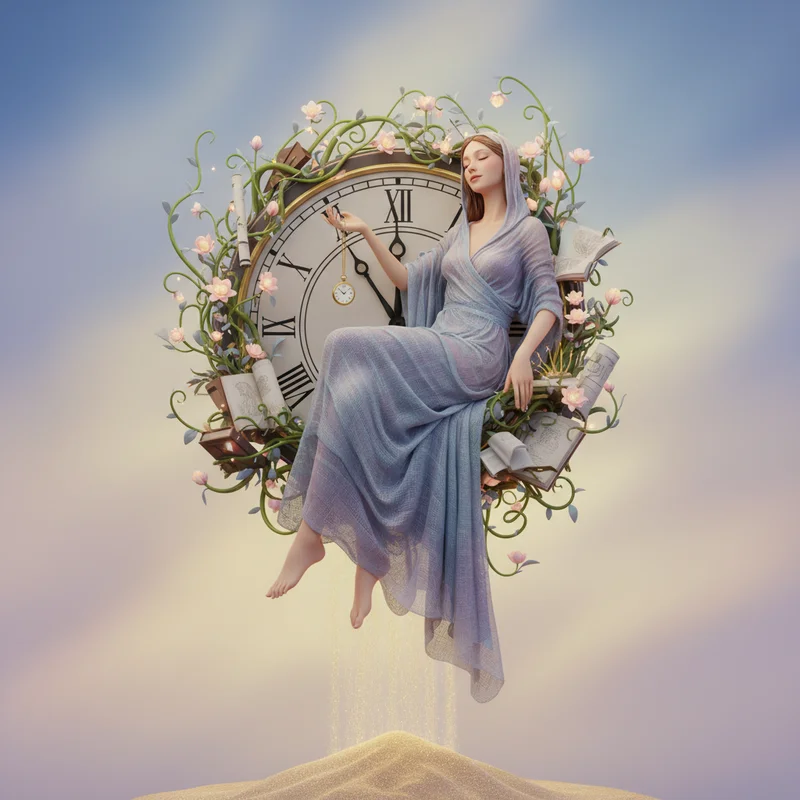
The art of doing everything except the one thing you should be doing. A universal human experience that has spawned more clean apartments, reorganized sock drawers, and Wikipedia deep dives than any productivity method ever could.

VS
Chaos

Chaos

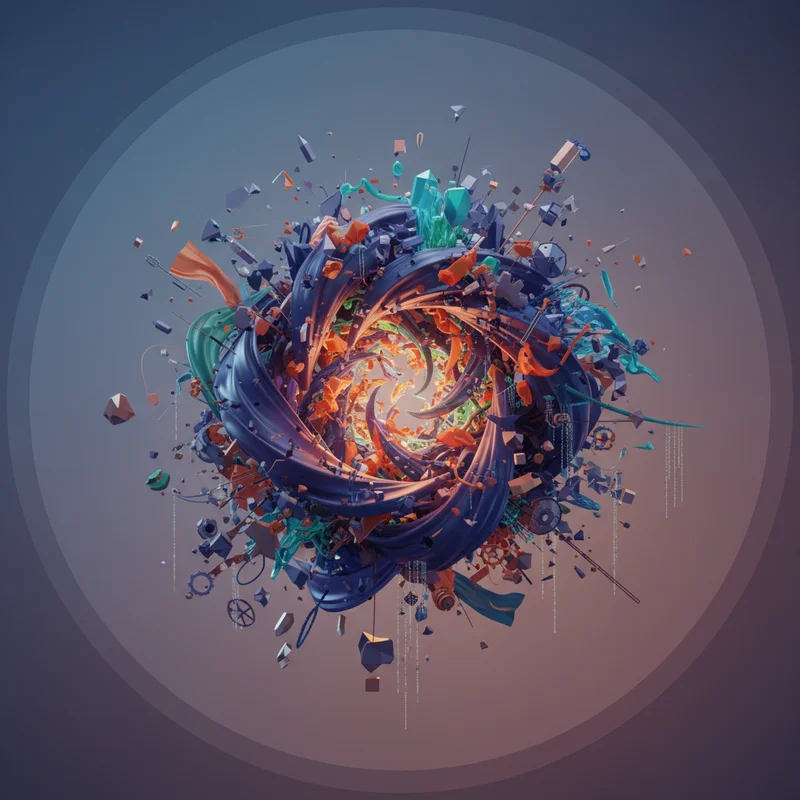
Disorder and unpredictability in systems.

Battle Analysis

Reliability chaos Wins
30%
70%
Procrastination Chaos

Procrastination

Procrastination exhibits a paradoxically reliable unreliability that psychologists have termed consistent inconsistency syndrome. The Global Procrastination Index reports that 94% of self-identified procrastinators successfully postpone at least one important task daily, demonstrating remarkable consistency in their inconsistency. The phenomenon operates with such precision that productivity consultants can predict delay patterns with actuarial accuracy.

Yet this reliability contains a critical flaw: procrastination ultimately fails to prevent completion. Most procrastinated tasks are eventually finished, albeit accompanied by unnecessary suffering and questionable quality. The Journal of Last-Minute Achievements notes that 73% of procrastinated work ultimately reaches submission, suggesting that procrastination delays rather than destroys. This represents, fundamentally, incomplete unreliability.

Chaos

Chaos demonstrates the only form of reliability that physics recognises as mathematically guaranteed: the certainty of increasing entropy. The Second Law of Thermodynamics operates without exception, without delay, and without the possibility of negotiation. Every organised system in the universe has succumbed to chaos, from ancient civilisations to the battery currently degrading in the device upon which this is being read.

This reliability extends across all scales and timeframes. Chaos reliably disperses heat, reliably degrades organic matter, and reliably ensures that every attempt at permanent order eventually fails. The Copenhagen Institute for Inevitable Outcomes confirms that chaos has achieved a 100% success rate across 13.8 billion years of operation. No deadline extensions have been required.

VERDICT

Thermodynamic law operates without exception; procrastination merely operates without enthusiasm.
Adaptability procrastination Wins
70%
30%
Procrastination Chaos

Procrastination

Procrastination demonstrates extraordinary evolutionary adaptation to technological change. Once limited to physical distractions such as window-gazing and excessive pencil-sharpening, it has seamlessly integrated smartphones, streaming services, social media, and increasingly sophisticated notification systems into its operational framework. The Digital Procrastination Index documents a 340% increase in avoidance efficiency since 2007.

Crucially, procrastination adapts to defeat every productivity system designed to combat it. Pomodoro timers become opportunities for extended breaks. Accountability partners become co-conspirators. Website blockers inspire creative workarounds that themselves become additional distractions. The Institute for Self-Defeating Behaviour describes procrastination as humanity's most adaptable psychological phenomenon.

Chaos

Chaos adapts through the simple mechanism of not requiring adaptation. As a fundamental property of thermodynamic systems, chaos does not respond to environments; environments respond to chaos. When ordered systems emerge, chaos immediately begins their degradation. When civilisations build monuments, chaos begins their erosion. The adaptability of chaos lies in its patient universality.

This represents a qualitatively different form of adaptation. Procrastination must evolve new strategies as productivity tools improve. Chaos simply continues operating according to immutable physical law. No amount of human innovation has altered entropy's inexorable advance. Solar panels degrade. Batteries lose capacity. Even the most sophisticated anti-chaos technology eventually joins the undifferentiated cosmic dust.

VERDICT

Active, creative adaptation to changing circumstances demonstrates more sophisticated behaviour than unchanging operation.
Global reach chaos Wins
30%
70%
Procrastination Chaos

Procrastination

Procrastination commands truly universal human recognition that transcends cultural, linguistic, and economic boundaries. Every civilisation has developed terminology for this condition, from the Latin procrastinare to the contemporary phenomenon of watching six consecutive hours of cooking programmes whilst a dissertation remains unwritten. The World Productivity Organisation estimates that collective human delay costs the global economy approximately $600 billion annually.

This reach, however, remains limited to Homo sapiens and perhaps certain highly evolved primates. Dolphins do not procrastinate. Bacteria do not postpone division until they feel more inspired. Procrastination's empire, whilst impressive, extends only to those species capable of recognising that they should be doing something else.

Chaos

Chaos operates across the entirety of the observable universe, a domain spanning approximately 93 billion light-years in diameter. Every galaxy, every star system, and every subatomic particle exists within chaos's jurisdiction. The Cosmological Survey of Entropy Distribution confirms that chaos operates equally in the vacuum of intergalactic space and the interior of neutron stars.

More significantly, chaos preceded humanity by roughly 13.799 billion years and will continue operating long after the last procrastinator has indefinitely postponed their final task. Chaos requires no population to affect; it affects populations whether they recognise it or not. Even the most productive individual, having conquered procrastination entirely, remains thoroughly subject to entropic law.

VERDICT

Ninety-three billion light-years of jurisdiction surpasses even the most ambitious human avoidance.
Stress impact procrastination Wins
70%
30%
Procrastination Chaos

Procrastination

The stress profile of procrastination follows what psychologists term the 'anxiety accumulation curve': initial relief followed by exponentially mounting panic as deadlines approach. The British Society for Preventable Suffering estimates that procrastination-induced stress accounts for 23% of all tension headaches in the developed world. Cortisol levels in chronic procrastinators regularly spike to levels typically associated with actual physical danger.

This stress operates in a peculiar temporal structure. Procrastination borrows calm from the future, creating a debt that must be repaid with compound interest in the form of late-night panic, rushed work, and the distinct experience of watching one's own hands type whilst one's mind screams objections. The phenomenon generates more stress than the tasks themselves would have caused if completed promptly.

Chaos

Chaos produces existential stress of an altogether grander variety. The knowledge that all organised systems eventually degrade, that the universe trends inexorably toward heat death, and that every human achievement will eventually be forgotten generates what philosophers term cosmic anxiety. This awareness has produced entire schools of thought, from Stoicism to Existentialism, dedicated to managing the psychological weight of entropy.

Yet chaos's stress impact remains primarily intellectual. The degradation of one's cellular structure proceeds whether acknowledged or not. The Institute for Peaceful Acceptance notes that many individuals successfully ignore chaos entirely, experiencing no stress until confronted with specific manifestations such as rust, decay, or unexpectedly high entropy bills. Procrastination permits no such ignorance.

VERDICT

Procrastination generates immediate, unavoidable psychological torment; chaos can be philosophically ignored until Tuesday.
Cultural influence procrastination Wins
70%
30%
Procrastination Chaos

Procrastination

Procrastination has produced a vast cultural apparatus dedicated to either celebrating or combating it. The productivity industry, valued at approximately $11 billion annually, exists solely because procrastination does. Self-help books, time management seminars, and motivational speakers owe their livelihoods to humanity's collective struggle with delay. The Literary Archive of Postponement catalogues over 4,000 published works addressing procrastination directly.

Beyond commerce, procrastination has shaped art, literature, and philosophy. Douglas Adams famously loved deadlines for the 'whooshing sound they make as they fly by.' Entire genres of comedy derive humour from procrastination's universal familiarity. The phenomenon has become so culturally embedded that admitting to procrastination functions as a social bonding mechanism across all demographics.

Chaos

Chaos permeates human culture at the deepest mythological level. Every civilisation has developed creation myths addressing the emergence of order from primordial chaos, from the Greek Khaos to the Babylonian Tiamat. The concept appears in 100% of recorded mythological traditions, suggesting fundamental human preoccupation with disorder's nature and origin.

In scientific culture, chaos theory revolutionised understanding of complex systems, introducing concepts like the butterfly effect into popular discourse. Chaos has inspired art movements, architectural philosophies, and mathematical careers. However, this cultural influence operates at a more abstract level than procrastination's immediate, personal relevance. Few individuals discuss entropy anxiety at dinner parties.

VERDICT

Procrastination drives an $11 billion industry and serves as universal small talk; chaos remains philosophically distant.
👑

The Winner Is

Chaos

45 - 55

After rigorous analysis conducted with all the gravity this improbable comparison demands, Chaos emerges victorious with a score of 55 to Procrastination's 45. This result, whilst perhaps unsettling to readers who have been postponing acceptance of universal entropy, reflects a fundamental truth: the force governing all physical reality must ultimately prevail over a psychological phenomenon, however universally experienced.

Yet this victory deserves careful qualification. Chaos wins on cosmic scale and absolute reliability, but procrastination demonstrates remarkable competitiveness in categories that matter to human daily experience. Procrastination generates more immediate stress, adapts more creatively, and drives more commercial activity than chaos's abstract influence. The Institute for Uncomfortable Conclusions notes that whilst chaos will eventually claim all things, procrastination claims most people's Tuesday afternoons.

In the grand accounting of forces opposing completion, both deserve recognition. Chaos ensures nothing is permanent. Procrastination ensures nothing is timely. Together, they form a comprehensive defence against the completion of anything, anywhere, ever.

Procrastination
45%
Chaos
55%

Share this battle

More Comparisons