
Topic Battle

Where Everything Fights Everything

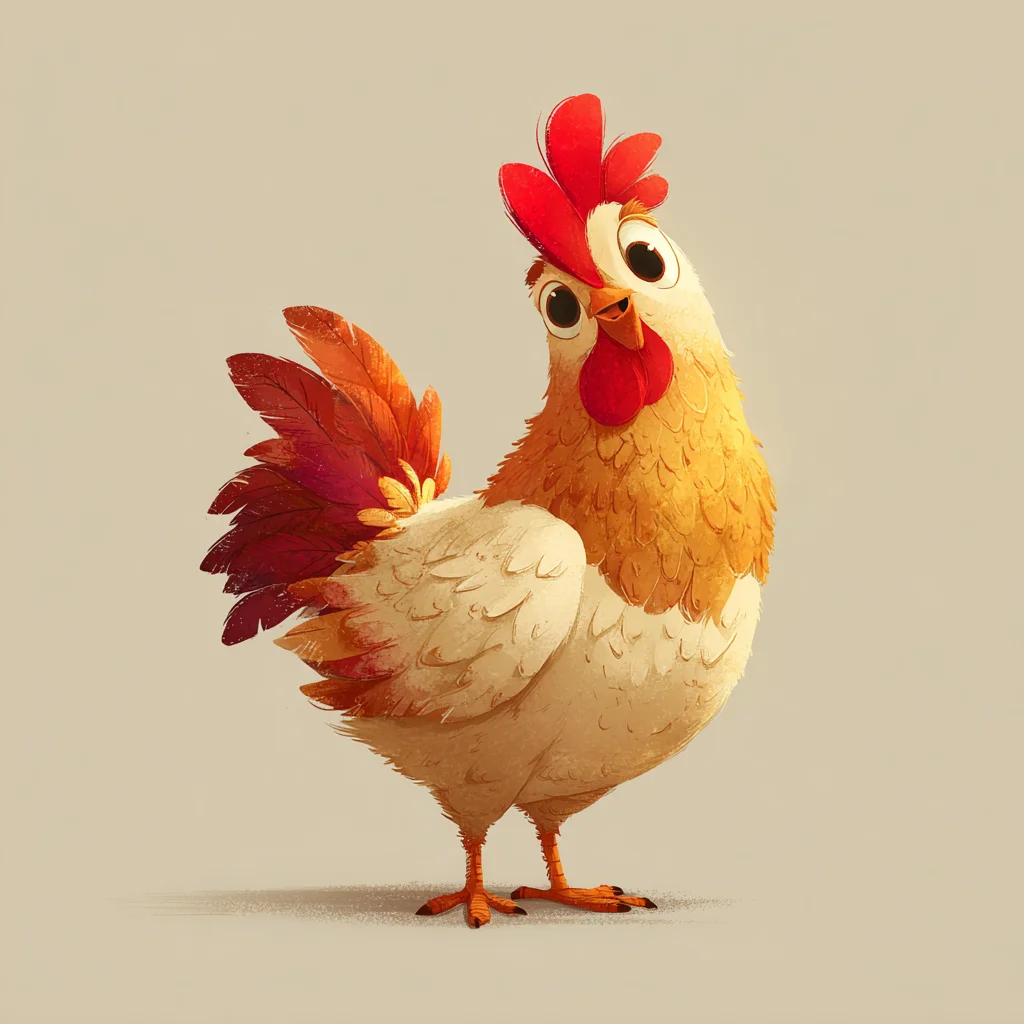
Chicken

Chicken

A domesticated fowl, a subspecies of the red junglefowl. One of the most common and widespread domestic animals.

VS
Coffee

Coffee

A brewed drink prepared from roasted coffee beans, the seeds of berries from certain Coffea species. The world's second-most traded commodity.

The Matchup

The modern world presents few confrontations as philosophically rich as the contest between Gallus gallus domesticus, the domestic chicken, and Coffea arabica, the caffeinated beverage that has fueled human productivity since Ethiopian goat herders first observed their livestock exhibiting unusual vigor after consuming certain red berries.

The chicken represents approximately 10,000 years of domestication, having evolved from Southeast Asian jungle fowl into humanity's most numerous avian companion. With a global population exceeding 33 billion individuals, chickens outnumber humans by more than four to one. They are the most successful bird species in recorded history, measured by sheer biomass.

The coffee bean, by contrast, has achieved dominance through chemical means. Caffeine, its primary active compound, functions as a naturally occurring insecticide that humans have inexplicably adopted as their preferred morning neurostimulant. Over 2.25 billion cups are consumed daily worldwide, making coffee the second most traded commodity on Earth after petroleum.

Battle Analysis

Speed Chicken Wins
70%
30%
Chicken Coffee

Chicken

The domestic chicken achieves a maximum ground velocity of 9 mph during short sprints, with sustained speeds of approximately 4-6 mph over moderate distances. This represents respectable performance for a bird bred primarily for egg production rather than athletic competition.

Flight capability exists but remains largely theoretical. Modern meat-breed chickens can achieve brief aerial bursts of 10-15 feet horizontally, with heritage breeds demonstrating marginally superior airborne duration. The chicken can respond to perceived threats within 0.3 seconds, a reflex time comparable to professional human athletes.

Notably, the chicken's speed is self-directed. It requires no external motive force, no brewing apparatus, and no human intervention to achieve locomotion.

Coffee

Coffee, in its liquid state, achieves zero independent velocity. As a beverage, it possesses no capacity for self-propelled movement and must rely entirely upon external containers and human transportation infrastructure.

However, coffee's influence on human speed requires consideration. Caffeine increases alertness and reduces reaction time by approximately 10-12% in controlled studies. Olympic athletes have been sanctioned for excessive caffeine consumption, suggesting meaningful performance enhancement.

The metabolic half-life of caffeine averages 5-6 hours in adult humans, meaning its speed-enhancing properties persist long after the chicken has returned to roosting. Yet coffee itself remains fundamentally stationary without intervention.

VERDICT

This category presents a clear philosophical distinction. The chicken possesses autonomous mobility; coffee possesses none. While coffee may enhance the speed of other organisms, it cannot itself achieve velocity.

The evaluation framework rewards intrinsic capability rather than proxy effects. A beverage that makes humans faster does not itself become fast, any more than a motivational poster becomes athletic by inspiring exercise.

The chicken secures this category through the fundamental advantage of possessing legs.

Durability Chicken Wins
70%
30%
Chicken Coffee

Chicken

The average commercial chicken achieves a lifespan of 5-8 weeks before processing. Heritage breeds maintained as laying hens or backyard companions commonly survive 8-12 years, with documented cases exceeding 15 years.

The species demonstrates remarkable resilience to environmental variation, thriving in climates ranging from tropical to subarctic. Chickens have successfully established feral populations on every inhabited continent, including extreme environments such as Hawaii and Key West.

Biological self-repair capabilities include feather regeneration, bone healing, and recovery from injuries that would disable many mammals. The chicken's immune system has evolved to combat diverse pathogens across millennia of human cohabitation.

Coffee

Brewed coffee maintains optimal quality for approximately 30 minutes before oxidation and temperature decline render it substandard by professional barista standards. Refrigerated, it may persist 3-4 days before developing off-flavors.

Unroasted green coffee beans demonstrate superior longevity, maintaining viability for 12-24 months under proper storage conditions. Roasted beans degrade more rapidly, with peak flavor occurring within 2-4 weeks of roasting.

Coffee plants themselves exhibit durability, with productive lifespans of 20-30 years and some specimens surviving a century. However, the competition specifies the prepared beverage, which proves remarkably ephemeral by any standard.

VERDICT

The durability comparison reveals a fundamental asymmetry. A chicken measured in years competes against a beverage measured in hours. This is not a close contest.

Even accounting for the coffee plant's respectable longevity, the prepared beverage exists in a state of continuous degradation from the moment water contacts grounds. The chicken, by contrast, actively maintains its own biological integrity.

The chicken prevails by a margin best expressed in orders of magnitude rather than percentages.

Versatility Chicken Wins
70%
30%
Chicken Coffee

Chicken

The chicken provides an extraordinary range of documented utilities. Primary applications include egg production (averaging 250-300 eggs annually for commercial breeds), meat provision, and feather harvesting for insulation and decorative purposes.

Secondary functions demonstrate remarkable breadth: pest control through insect consumption (a single chicken eliminates up to 80 ticks per hour), garden fertilization via nitrogen-rich waste products, alarm services through dawn vocalizations, and companionship for those who appreciate avian society.

Historical applications include divination in ancient Rome, fighting sports across multiple cultures (now largely prohibited), and emergency message delivery. The chicken served as a living calendar in pre-industrial societies, announcing sunrise with biological precision.

Coffee

Coffee's primary function remains cognitive stimulation through caffeine delivery. This singular purpose it executes with considerable effectiveness, increasing alertness, improving concentration, and temporarily suppressing adenosine-mediated drowsiness.

Secondary applications include social facilitation (coffee shops serving as community gathering spaces for centuries), breath freshening when chewed as beans, and use as a culinary flavoring in desserts and savory preparations.

Industrial applications encompass cosmetic exfoliation from spent grounds, garden fertilization, and experimental biofuel research. Used grounds have demonstrated effectiveness as an odor absorbent and as a natural dye for textiles and Easter eggs.

VERDICT

While coffee's cognitive enhancement function proves valuable to billions daily, the chicken's versatility portfolio encompasses a broader range of practical applications.

The chicken produces food, eliminates pests, fertilizes gardens, provides companionship, and announces temporal information. Coffee stimulates the nervous system and facilitates conversation. Both are valuable; one is demonstrably more versatile.

A single chicken replaces an alarm clock, pest control service, fertilizer subscription, and egg supplier. Coffee requires additional purchases to achieve comparable household utility.

Global reach Coffee Wins
30%
70%
Chicken Coffee

Chicken

Chickens maintain breeding populations on every inhabited continent, with an estimated global population exceeding 33 billion individuals at any given moment. This represents approximately four chickens per human on Earth.

The species has achieved this distribution through human agricultural expansion, establishing presence from tropical Indonesia to subarctic Alaska, from sea-level coastal regions to Andean highlands exceeding 4,000 meters elevation.

Cultural penetration proves equally comprehensive. Chicken appears in cuisines from every culinary tradition, from Southern American fried chicken to Japanese yakitori, from Indian tandoori to Ethiopian doro wat. No other domesticated bird approaches this level of global integration.

Coffee

Coffee consumption spans virtually every nation on Earth, with particularly concentrated markets in Scandinavia (Finland leads global per-capita consumption at 12 kg annually), the United States, and emerging markets across Asia.

The beverage has achieved remarkable cultural penetration despite cultivation being restricted to the equatorial band between the Tropics of Cancer and Capricorn. This geographic limitation has been overcome through sophisticated international trade networks.

Coffee culture manifests distinctly across regions: Italian espresso tradition, Turkish coffee ceremony, Vietnamese ca phe sua da, and American diner unlimited refills all represent localized adaptations of a single commodity.

VERDICT

This category presents the closest competition. Both contenders demonstrate exceptional global penetration, but through fundamentally different mechanisms.

Chickens are physically present everywhere humans live. Coffee is consumed everywhere humans live. The distinction matters: coffee achieves reach through trade while chickens achieve it through biological colonization.

Coffee edges ahead through cultural ubiquity. While chickens are eaten worldwide, coffee has generated distinct cultural practices, dedicated social spaces, and professional certification systems in virtually every market. The coffee shop represents a global institutional form with no poultry equivalent.

Sustainability Chicken Wins
70%
30%
Chicken Coffee

Chicken

The chicken operates on a renewable biological model. Energy derives from plant matter and insects, converted to protein with an efficiency of approximately 2:1 feed-to-meat ratio for broilers and effectively infinite return on egg production from sustained laying.

Waste products integrate into agricultural nutrient cycles without specialized processing. A chicken's end-of-life decomposition returns all materials to soil within months. The system has operated sustainably for ten millennia without industrial intervention.

Modern industrial chicken production introduces environmental concerns including concentrated waste management and antibiotic use. However, the fundamental chicken remains a solar-powered protein synthesizer requiring minimal technological support.

Coffee

Coffee cultivation presents significant environmental considerations. Traditional shade-grown methods support biodiversity and require minimal chemical inputs. Industrial sun-grown operations consume substantial water resources, with estimates suggesting 140 liters of water per cup when accounting for full agricultural requirements.

The supply chain extends across continents, with beans typically traveling 8,000-10,000 miles from equatorial growing regions to consumer markets. Roasting, packaging, and distribution compound the carbon footprint.

Single-use brewing systems, particularly aluminum and plastic pods, have generated environmental criticism. However, traditional brewing methods using reusable equipment demonstrate considerably lower impact.

VERDICT

Sustainability evaluation favors the localized biological system over the globalized agricultural commodity. A backyard chicken consumes kitchen scraps and produces eggs indefinitely with zero supply chain involvement.

Coffee's equatorial cultivation requirements ensure unavoidable transportation costs for most of the world's consumers. The beverage cannot be produced locally in temperate climates without heated greenhouse infrastructure.

The chicken represents a closed-loop system; coffee represents a complex international logistics network. By sustainability metrics, proximity matters.

👑

The Winner Is

Chicken

65 - 35

This analysis concludes with a decisive 65-35 victory for the chicken across standardized evaluation criteria. The margin reflects fundamental advantages inherent to autonomous biological organisms over passively consumed agricultural products.

Coffee performs admirably within its narrow functional domain, delivering reliable cognitive stimulation to billions of daily users. However, when evaluated across comprehensive metrics including mobility, durability, versatility, and sustainability, the beverage cannot compete with a creature capable of independent locomotion, self-reproduction, and multi-purpose utility.

The chicken represents ten thousand years of co-evolution with human civilization, adapting to serve roles from protein source to pest controller to companion animal. Coffee, despite its cultural significance and neurochemical efficacy, remains fundamentally a processed plant extract requiring extensive infrastructure for production and consumption.

Chicken
65%
Coffee
35%

Share this battle

More Comparisons