Topic Battle

Where Everything Fights Everything

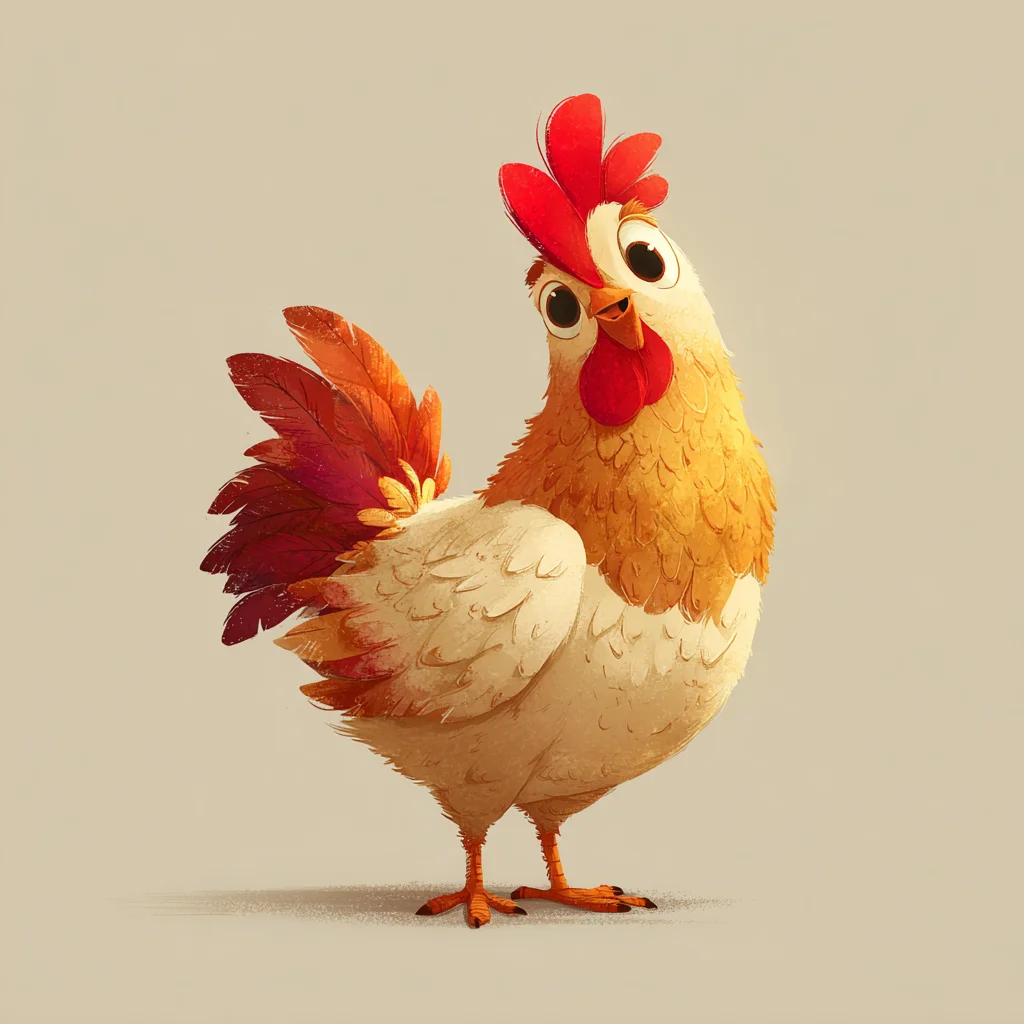
Chicken

Chicken

A domesticated fowl, a subspecies of the red junglefowl. One of the most common and widespread domestic animals.

VS
Rubber Duck

Rubber Duck

A debugging tool for programmers and bathtub companion for everyone else. This hollow yellow bird has solved more software bugs than most senior engineers. Also squeaks.

The Matchup

In the annals of ornithological classification, few comparisons have generated such spirited debate as that between Gallus gallus domesticus, the domestic chicken, and Anas plastica bathtimus, the common rubber duck. The former represents ten millennia of selective breeding, resulting in a creature that now outnumbers humans four to one. The latter emerged from the industrial revolution's marriage of vulcanised rubber and whimsy, achieving bathroom fixture status within a single century.

The chicken arrived first, domesticated in Southeast Asia approximately 8,000 years before the Common Era. Archaeological evidence suggests humans initially kept these red junglefowl descendants for cockfighting rather than consumption, a historical footnote that speaks volumes about early agricultural priorities. Today, with a global population exceeding 33 billion individuals, the chicken has achieved what no other bird species has managed: complete planetary domination through strategic deliciousness.

The rubber duck's origins prove considerably more recent and substantially less violent. Patented in the late 1800s as a solid rubber chew toy, the species evolved its characteristic hollow, squeaking form in the mid-twentieth century. By 1970, Sesame Street had immortalised the rubber duck in song, cementing its position as the preeminent bath companion for generations of Western children. Annual production now exceeds fifty million units globally, a figure that, whilst impressive, pales beside poultry statistics.

Battle Analysis

Speed Chicken Wins
70%
30%
Chicken Rubber Duck

Chicken

The domestic chicken achieves a maximum velocity of fourteen kilometres per hour during short terrestrial sprints, a respectable figure for a bird whose body mass has been optimised for consumption rather than athletics. Wild jungle fowl ancestors demonstrated superior speed, but modern broiler genetics have prioritised breast meat development over cardiovascular performance.

Flight remains technically possible for heritage breeds, with documented bursts covering ten to fifteen metres horizontally before gravity reasserts its authority. Commercial meat birds, bred to reach market weight in six weeks, typically lack the wing-to-body ratio necessary for meaningful aviation. Their attempts at flight resemble controlled falling with theatrical wing movements.

Reaction time, however, proves impressive. Chickens respond to perceived threats within three-tenths of a second, a reflex evolved during millennia of predator evasion. This speed serves little practical purpose in modern battery farms but remains encoded in ancestral memory.

Rubber Duck

The rubber duck achieves a consistent velocity of zero under standard conditions. As an inanimate object composed primarily of polyvinyl chloride, it possesses no internal propulsion mechanism and must rely entirely upon external forces for locomotion. This is not a design flaw but rather a fundamental characteristic of synthetic bath accessories.

Under specific circumstances, the rubber duck can achieve impressive speeds. When dropped from a significant height, terminal velocity approaches fifteen metres per second. When released from shipping containers into the Pacific Ocean, as occurred in the famous 1992 Friendly Floatees incident, rubber ducks have demonstrated capacity to traverse entire ocean basins over periods of years, riding currents at speeds determined by oceanographic conditions.

The species excels at passive displacement. In bathwater, convection currents, child-generated waves, and strategic placement can move a rubber duck considerable distances without any effort on its part whatsoever.

VERDICT

This category presents a fundamental ontological distinction. The chicken possesses autonomous mobility; the rubber duck possesses buoyancy and patience. Whilst the duck's ocean-crossing capabilities via shipping accident demonstrate remarkable passive range, the chicken's ability to initiate movement independently represents a qualitatively different form of speed.

The evaluation framework rewards self-directed velocity. A rubber duck that circles the globe on ocean currents has not become fast any more than a stone becomes athletic by tumbling downhill. The chicken, though hardly competing for land-speed records, can decide to move and then execute that decision using its own biological resources.

Victory goes to the chicken through the irreducible advantage of possessing functional legs and the neurological capacity to use them intentionally.

Durability Rubber Duck Wins
30%
70%
Chicken Rubber Duck

Chicken

The commercial broiler chicken achieves a lifespan of approximately forty-two days before processing, a figure representing agricultural efficiency rather than biological limitation. Heritage breeds maintained as laying hens routinely survive eight to twelve years, with documented cases exceeding twenty years under optimal conditions.

The species demonstrates remarkable environmental tolerance, thriving in climates ranging from tropical humidity to subarctic cold. Feral populations have established themselves in environments as diverse as Hawaiian beaches and English motorway service stations. The chicken's adaptability reflects millennia of human transport to progressively more challenging ecosystems.

Biological self-repair mechanisms include feather regeneration following moult, bone healing, and recovery from injuries that would permanently disable many mammals. However, the chicken remains vulnerable to predation, disease, and the fundamental fragility of organic tissue.

Rubber Duck

The polyvinyl chloride rubber duck demonstrates exceptional resistance to degradation. Laboratory testing suggests a functional lifespan exceeding three hundred years under normal household conditions, though fashion changes typically retire specimens long before material failure.

The 1992 Friendly Floatees spill provided an unplanned durability study. Rubber ducks released into the Pacific Ocean continued washing ashore decades later, having survived salt water exposure, ultraviolet radiation, temperature extremes, and impacts with coastlines across multiple continents. Marine biologists continue to recover specimens, faded but structurally intact.

The rubber duck's durability derives from its synthetic simplicity. With no biological processes to sustain, no metabolism to maintain, and no organs to fail, it outlasts organic competitors through sheer molecular stability. It cannot die because it was never, by any meaningful definition, alive.

VERDICT

Durability comparison reveals the fundamental advantage of non-existence over existence. The rubber duck cannot age because it has no cells to senesce. It cannot starve because it requires no calories. It cannot succumb to illness because pathogens find polyvinyl chloride an unsuitable host environment.

The chicken, despite biological resilience evolved over millennia, remains subject to mortality's non-negotiable terms. Even the longest-lived specimen represents a brief flash compared to the rubber duck's centuries-long projected functionality.

This category belongs decisively to the rubber duck, which achieves effective immortality through the expedient strategy of having never been alive in the first place.

Global reach Chicken Wins
70%
30%
Chicken Rubber Duck

Chicken

The domestic chicken maintains breeding populations on every inhabited continent, having achieved this distribution through systematic human transport over millennia. From Arctic research stations to tropical island nations, wherever humans have established permanent settlement, chickens have followed.

Current population estimates exceed 33 billion individuals, making Gallus gallus domesticus the most numerous bird species on Earth by a substantial margin. There are approximately four chickens for every human being, a ratio that continues to expand as global protein demand increases.

Cultural penetration proves equally comprehensive. Chicken appears in cuisines from virtually every culinary tradition, from Japanese yakitori to Jamaican jerk, from British Sunday roasts to Brazilian churrasco. The species has achieved universal food status in a way no other animal can claim.

Rubber Duck

The rubber duck has achieved distribution across all developed markets and substantial penetration in developing economies. Annual production exceeds fifty million units, with manufacturing concentrated in China but consumption occurring globally.

The 1992 container spill provided an unplanned demonstration of global reach. 28,800 rubber ducks and associated bath toys entered the Pacific Ocean near Hong Kong. Over subsequent decades, specimens washed ashore in Hawaii, Alaska, South America, and eventually the Atlantic coasts of Europe and North America. This accidental distribution study confirmed the rubber duck's capacity for planetary dispersal.

Cultural presence centres on Western markets but continues expanding. The rubber duck has been adopted as a universal symbol of bathing in cultures that previously lacked this association, demonstrating cultural export capacity.

VERDICT

Global reach comparison favours physical presence over market penetration. The chicken does not merely reach markets; it breeds, reproduces, and establishes permanent populations. The rubber duck requires continuous manufacturing to maintain global presence.

The chicken's four-to-one population ratio versus humans represents complete planetary saturation achieved through biological colonisation rather than commercial distribution. Every nation with food production has chickens; not every nation has rubber duck tradition.

The chicken secures this category through demographic superiority that no manufactured product can replicate through purely commercial means.

Affordability Rubber Duck Wins
30%
70%
Chicken Rubber Duck

Chicken

Live chicken pricing varies significantly by market and purpose. Day-old chicks from commercial hatcheries cost approximately two to four pounds sterling in bulk quantities. Heritage breeds command premiums reaching twenty to fifty pounds for rare varieties with particular plumage characteristics or historical significance.

The economic analysis becomes more nuanced when considering return on investment. A laying hen producing 250-300 eggs annually generates value substantially exceeding purchase price within months. The chicken, uniquely among common pets, produces a steady stream of edible outputs without requiring consumption of the animal itself.

Ongoing maintenance costs include feed (approximately fifty pounds annually per bird), housing, veterinary care, and time investment. However, the chicken's ability to convert kitchen scraps and garden pests into protein represents meaningful household economic contribution.

Rubber Duck

The standard rubber duck retails for one to three pounds sterling in most markets, positioning it firmly within impulse-purchase territory. Bulk purchases for promotional purposes reduce unit costs to mere pence. The species represents one of civilisation's most accessible consumer goods.

Premium variants exist. Artisanal rubber ducks featuring historical costumes, profession-specific attire, or corporate branding command prices reaching fifteen to twenty pounds. Collector's editions and limited releases occasionally exceed one hundred pounds on secondary markets, though such specimens typically remain unused for their intended purpose.

Maintenance costs prove effectively zero. The rubber duck requires no feeding, no shelter beyond a bathroom shelf, and no veterinary attention. Its total cost of ownership equals purchase price, a financial simplicity that few competitors can match.

VERDICT

The affordability analysis favours the lower-maintenance option. Whilst the chicken offers potential return through egg production, this requires ongoing investment of resources, time, and suitable housing. The rubber duck delivers its full value proposition immediately upon purchase, with no subsequent obligations.

For consumers seeking bath companionship on a budget, the rubber duck represents unbeatable economics. Its one-time cost structure, absence of ongoing expenses, and multi-generational durability create a total ownership cost approaching zero when amortised over likely service life.

The rubber duck secures this category through radical economic simplicity.

Entertainment value Chicken Wins
70%
30%
Chicken Rubber Duck

Chicken

The domestic chicken provides multifaceted entertainment to those who observe it closely. Behavioural complexity includes elaborate social hierarchies (the origin of "pecking order"), dust-bathing rituals of apparent spiritual significance, and predator-response behaviours ranging from frozen immobility to theatrical alarm calls.

Individual chickens demonstrate distinct personalities, with documented variation in boldness, curiosity, and social strategies. Owners report forming genuine bonds with their flocks, particularly with breeds selected for docility and human interaction. The chicken's capacity to recognise over one hundred individual faces, both human and chicken, suggests cognitive complexity exceeding previous assumptions.

As performers, chickens have appeared in circus acts, television programmes, and viral internet content. The famous "chicken playing piano" videos demonstrate trainability, whilst chickens playing tic-tac-toe at American state fairs have separated tourists from their currency for decades.

Rubber Duck

The rubber duck's entertainment value derives primarily from contextual humour and nostalgic association. Its presence in adult bathing scenarios generates amusement precisely because it represents childhood innocence in an adult context. This juxtaposition forms the basis of the rubber duck's cultural endurance.

Physical entertainment properties include the satisfying squeak produced when compressed, the bobbing motion when floating, and the pleasing tactile experience of its hollow form. These sensory inputs, whilst modest, have provided comfort to billions of bathers over multiple generations.

The rubber duck has achieved significant cultural penetration. Beyond the Sesame Street anthem, rubber ducks feature in charity races (with events attracting thousands of spectators), computer programming culture (as debugging companions), and protest movements (notably Hong Kong's 2013 adoption of the giant rubber duck as a symbol of peaceful resistance).

VERDICT

Entertainment evaluation requires consideration of active versus passive engagement. The chicken generates unpredictable, complex behaviours that can occupy observers for extended periods. The rubber duck provides consistent but limited amusement that diminishes with exposure.

The chicken's entertainment emerges from its autonomous decision-making. One cannot predict what a chicken will do next, creating genuine suspense absent from rubber duck observation. The duck floats, squeaks when squeezed, and otherwise remains inert. Its entertainment value, whilst real, proves fundamentally static.

For sustained engagement and genuine surprise, the chicken provides superior entertainment value through the simple expedient of being capable of decisions.

👑

The Winner Is

Chicken

58 - 42

This investigation concludes with a measured 58-42 victory for the domestic chicken, a margin reflecting the fundamental advantages of biological existence over synthetic simulation. The rubber duck performs admirably in categories favouring longevity and economic simplicity, but cannot overcome the chicken's autonomous capabilities in mobility, entertainment, and global biological presence.

The rubber duck's victories in durability and affordability demonstrate that existence carries significant costs. Living requires maintenance; the rubber duck's freedom from metabolic requirements grants it effective immortality and zero ongoing expenses. These advantages prove insufficient against a competitor capable of independent action.

Both specimens have achieved remarkable success within their respective domains. The chicken feeds humanity; the rubber duck comforts humanity during bathing. Neither function should be dismissed, and both reflect species-level accomplishments deserving recognition. However, by comprehensive metrics, the living bird outperforms its synthetic tribute.

Chicken
58%
Rubber Duck
42%

Share this battle

More Comparisons