
Topic Battle

Where Everything Fights Everything

Chicken

Chicken

A domesticated fowl, a subspecies of the red junglefowl. One of the most common and widespread domestic animals.

VS
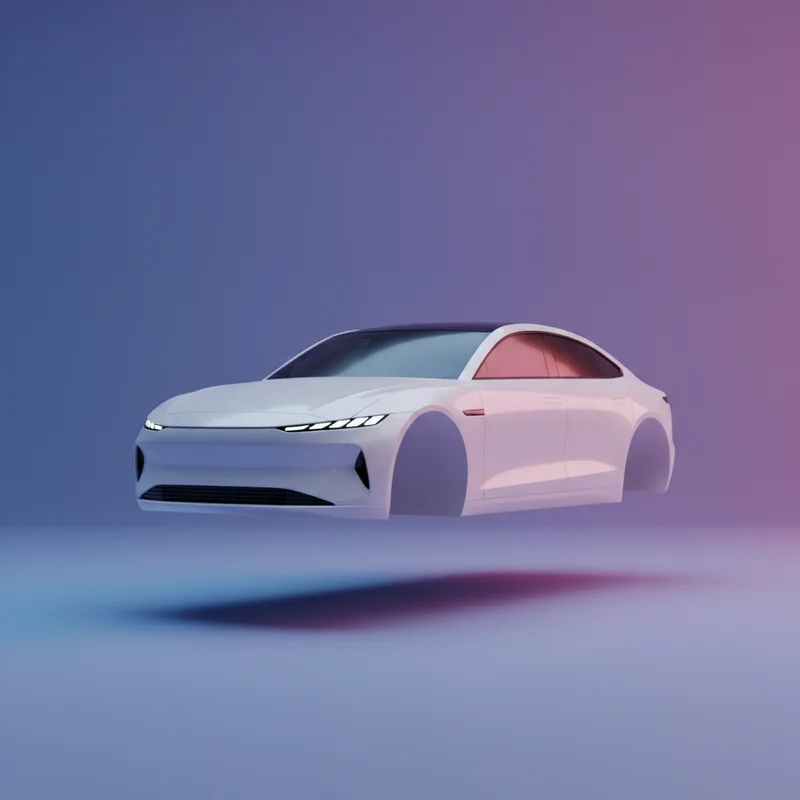
Tesla

Tesla

Electric vehicle manufacturer disrupting the automotive industry.

Battle Analysis

Reliability chicken Wins
70%
30%
Chicken Tesla

Chicken

The chicken's fundamental architecture has undergone 150 million years of quality assurance testing through natural selection. Systems that functioned poorly have been eliminated from the gene pool with ruthless efficiency. The resulting organism demonstrates remarkable resilience across environmental conditions, recovering from minor illness without veterinary intervention, self-regulating temperature through behavioural adaptation, and maintaining egg production with minimal human oversight.

Chickens require no software updates, experience no range anxiety, and do not spontaneously alter their functionality based on distant corporate decisions. The operating system—avian neurobiology—remains stable and predictable. Failure modes are well-documented after millennia of human observation. A chicken emergency can be addressed by virtually any veterinarian worldwide, or often by the bird's own immune system without external intervention.

Tesla

Tesla reliability presents a contested dataset. Consumer Reports has documented significant variation across model years and manufacturing facilities. Common complaints include panel gaps, paint defects, electronic malfunctions, and phantom braking incidents. Over-the-air updates occasionally remove features or introduce unexpected behavioural changes—a form of reliability that depends upon corporate decision-making thousands of kilometres distant.

Service centre wait times extend to weeks in many markets. Parts availability depends entirely upon manufacturer supply chains. The vehicles contain thousands of electronic components, each representing potential failure points. Range degrades in cold weather by up to 40%, whilst battery capacity diminishes over years regardless of maintenance. Tesla's reliability ultimately depends upon factors beyond owner control: software quality, corporate viability, and the continued function of complex interdependent systems.

VERDICT

The chicken's design has been debugged through 150 million years of natural selection; Tesla vehicles experience panel gaps, software anomalies, and phantom braking within their first year.
Versatility chicken Wins
70%
30%
Chicken Tesla

Chicken

The chicken demonstrates multifunctional utility that industrial products rarely achieve. Primary applications include protein production through both meat and eggs—the latter providing 6 grams of protein and 70 calories in convenient, naturally packaged form. Secondary functions encompass pest control, as free-ranging chickens consume substantial quantities of insects, ticks, and garden pests. Chickens provide companionship, with documented cases of owners forming genuine bonds with individual birds.

Tertiary applications include alarm functionality—roosters announcing dawn with reliability exceeding most electronic devices—and waste processing, as chickens convert kitchen scraps into protein and fertiliser. Cultural and religious ceremonies across multiple traditions incorporate chickens, from Kapparot rituals to Santeria practices. The feathers find application in fashion, crafts, and industrial materials. Few manufactured products serve such diverse functions.

Tesla

Tesla's versatility centres upon personal transportation with secondary functions appended through software. The vehicles transport passengers and cargo within battery range limitations, typically 300-400 kilometres per charge under optimal conditions. Climate control systems provide heating and cooling. Entertainment systems offer video streaming whilst parked. The 'Dog Mode' feature maintains cabin temperature for pet occupancy.

Frunk storage and folding seats expand cargo capacity. Some owners utilise Teslas for camping through 'Camp Mode' functionality. The vehicle may theoretically serve as emergency power backup, though this application remains limited. Tesla does not produce food, offspring, fertiliser, or alarm calls. Its versatility, whilst adequate for automotive purposes, cannot approach the biological multifunctionality inherent to a living organism shaped by millions of years of evolutionary adaptation.

VERDICT

The chicken provides food, eggs, pest control, fertiliser, companionship, and alarm services; Tesla provides transportation and climate-controlled seating.
Global reach chicken Wins
70%
30%
Chicken Tesla

Chicken

The chicken has achieved planetary distribution unmatched by any automotive manufacturer. The species thrives on every inhabited continent, from Icelandic farmsteads to equatorial villages, from Himalayan settlements at 4,000 metres elevation to coastal communities at sea level. Chicken consumption transcends virtually all cultural boundaries; only small populations with specific religious or ethical restrictions abstain entirely.

Annual global production exceeds 130 million tonnes of chicken meat, with China, the United States, and Brazil leading production. The backyard chicken renaissance in wealthy nations proceeds alongside industrial-scale operations serving global protein demand. Chickens require no roads, charging infrastructure, or service networks—merely feed, water, and minimal shelter. Their adaptive resilience to diverse climates and conditions ensures continued presence wherever humans establish settlements.

Tesla

Tesla's geographic footprint remains conspicuously concentrated in wealthy regions with developed electrical infrastructure. North America, Western Europe, and coastal China constitute the overwhelming majority of sales. Vast portions of Africa, South Asia, and Central Asia remain functionally inaccessible—not through lack of desire but absence of charging networks, service facilities, and purchasing power amongst local populations.

The company operates fewer than 1,000 service locations globally, compared to the chicken's presence in essentially every human settlement on Earth. Tesla requires stable electrical grids, paved roads, and digital payment systems—infrastructure absent for billions of potential users. The vehicle represents a solution for the global affluent, whilst the chicken serves humanity without discrimination based on gross domestic product per capita.

VERDICT

Chickens inhabit every continent and virtually every human settlement; Tesla's presence requires wealth, infrastructure, and service networks unavailable to most of humanity.
Affordability chicken Wins
70%
30%
Chicken Tesla

Chicken

Economic analysis reveals the chicken's extraordinary accessibility across income levels. A live chicken can be purchased for as little as $5-15 in most global markets, whilst processed chicken retails at roughly $3-6 per kilogram depending on market conditions and cut selection. The bird requires no financing arrangements, credit approval, or debt servicing. Maintenance costs consist primarily of feed, averaging $0.15-0.25 daily for backyard operations.

The chicken's total cost of ownership decreases over time as the animal produces eggs—approximately 300 annually from productive hens—representing an ongoing return on initial investment. A well-maintained chicken may generate more value in eggs than its original purchase price within months. No depreciation schedules apply; indeed, heritage breeds may appreciate in value amongst specialist collectors. Insurance requirements are minimal to non-existent.

Tesla

Tesla's affordability equation begins at approximately $40,000 for base models, escalating to $100,000+ for performance variants. This purchase price represents 8,000 chicken-equivalent units at average market rates—a flock capable of producing 2.4 million eggs annually. Financing typically spans 60-84 months at prevailing interest rates, accumulating thousands in additional interest charges.

Ongoing costs include comprehensive insurance averaging $2,000-4,000 annually, electricity costs for charging, and potential repair expenses at authorised service centres charging premium rates. Depreciation follows industry patterns, with vehicles losing 20-30% of value within the first year. The Tesla produces no eggs, offspring, or edible protein at any point during its operational lifespan—a fundamental economic limitation relative to poultry investment.

VERDICT

A chicken costs less than a Tesla insurance payment; moreover, it generates ongoing returns through egg production whilst the vehicle steadily depreciates toward worthlessness.
Sustainability chicken Wins
70%
30%
Chicken Tesla

Chicken

The chicken operates on a solar-powered metabolic system of remarkable elegance. Through consumption of grains, insects, and vegetable matter—themselves products of photosynthesis—the bird converts ambient environmental energy into protein with conversion ratios approaching 2:1 feed-to-meat efficiency. Unlike manufactured products, the chicken is fully biodegradable, returning nutrients to soil upon completing its lifecycle. Feathers find application in pillows, insulation, and emerging biotechnology applications. Chicken manure provides nitrogen-rich fertiliser valued by agricultural operations worldwide.

The species demonstrates self-replication without factory infrastructure, producing offspring through eggs incubated at no additional energy cost beyond the hen's body heat. A single breeding pair can theoretically generate unlimited descendants given adequate resources—a manufacturing capability no automotive facility can match. The chicken's environmental footprint, whilst not negligible in industrial farming contexts, remains orders of magnitude smaller than heavy industrial production.

Tesla

Tesla's sustainability credentials require examination through complete lifecycle analysis. Each vehicle begins with lithium extraction from Chilean salt flats or Australian hard rock mines, cobalt sourced from the Democratic Republic of Congo under conditions that invite ethical scrutiny, and nickel processing that generates substantial toxic waste. Battery manufacturing alone produces 8 to 16 tonnes of CO2 before the vehicle travels a single kilometre.

The compensatory argument hinges upon operational emissions approaching zero when charged from renewable sources—a condition met inconsistently across global electrical grids. Vehicle lifespan batteries degrade approximately 2% annually, eventually requiring replacement or contributing to growing electronic waste streams. Tesla's systemic contribution to accelerating automotive electrification provides genuine environmental benefit, yet the manufacturing apparatus required makes sustainability claims considerably more complex than the company's marketing suggests.

VERDICT

The chicken achieves carbon-neutral protein production through photosynthesis-based metabolism; Tesla requires transcontinental mining operations and complex industrial processes before delivering any environmental benefit.
👑

The Winner Is

Chicken

62 - 38

This rigorous analysis reveals a fundamental asymmetry between biological engineering perfected across geological time and industrial manufacturing dependent upon complex global systems. Tesla represents genuine innovation in automotive electrification, applying engineering talent and substantial capital toward addressing transportation's climate impact. Yet the company remains constrained by the inherent limitations of industrial production: resource extraction, manufacturing emissions, distribution networks, and the economic exclusion of most humanity from participation.

The chicken, by contrast, achieves its functions through elegant biological simplicity. It converts sunlight (via plants) into protein without factory infrastructure. It replicates without supply chain dependencies. It serves populations regardless of income, infrastructure, or geographic location. The bird asks only for feed, water, and shelter—providing in return eggs, meat, pest control, and fertiliser. Final score: Chicken 62, Tesla 38.

Chicken
62%
Tesla
38%

Share this battle

More Comparisons