
Topic Battle

Where Everything Fights Everything

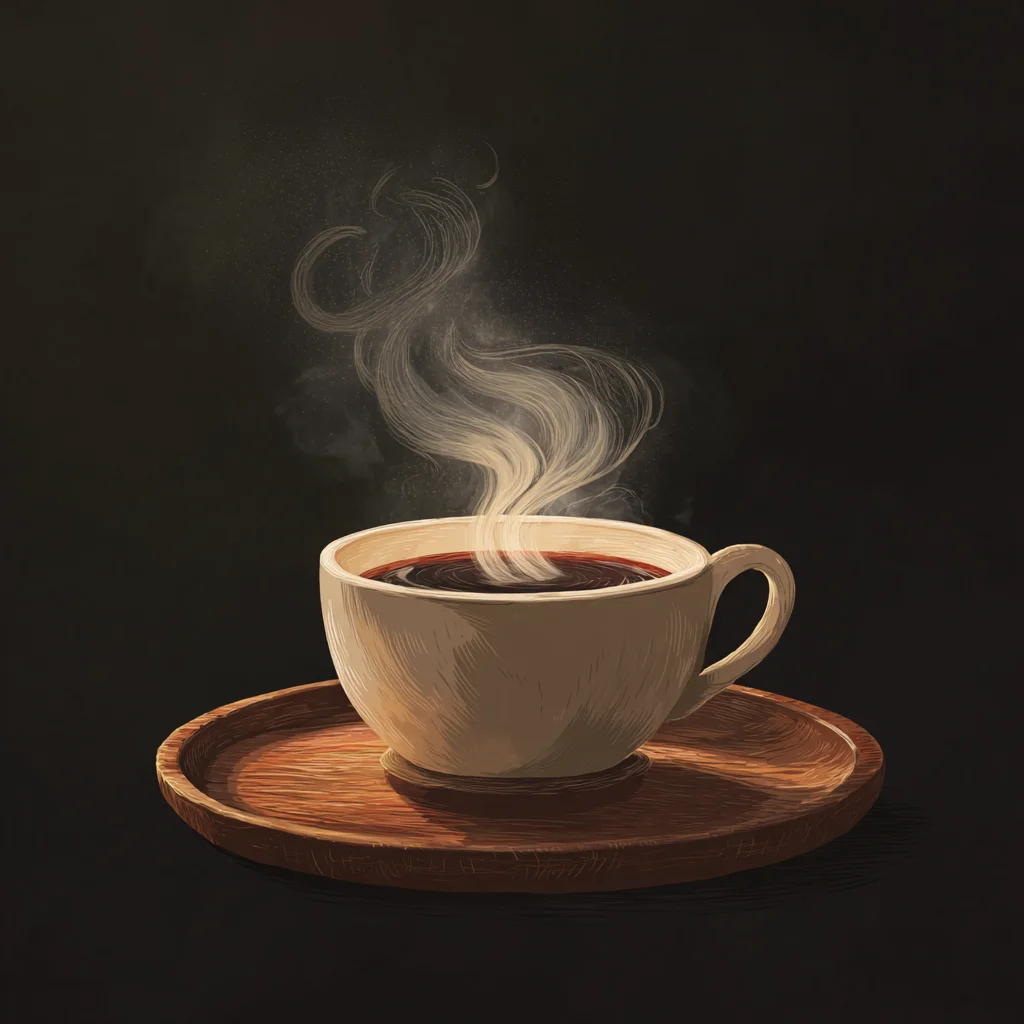
Coffee

Coffee

A brewed drink prepared from roasted coffee beans, the seeds of berries from certain Coffea species. The world's second-most traded commodity.

VS
Dog

Dog

Loyal canine companion celebrated for unconditional love, tail wagging, and being humanity's best friend for millennia.

The Matchup

In households across the globe, a silent competition unfolds each morning. Two billion cups of coffee are consumed daily, whilst 471 million dogs serve as companions worldwide. Both claim dominion over the precious first hours of human consciousness. Both promise to transform bleary-eyed shuffling into purposeful activity. Yet these morning allies operate through fundamentally different mechanisms of influence.

Coffee delivers its benefits through caffeine-mediated adenosine receptor antagonism, a chemical intervention that has shaped human productivity since the 15th century. Dogs, meanwhile, deploy an arsenal of evolutionary adaptations honed over 15,000 years of domestication, including the scientifically documented ability to produce oxytocin responses in their human companions. One requires grinding, brewing, and precise temperature management. The other requires walks, regardless of weather conditions or personal preference.

Battle Analysis

Social facilitation Dog Wins
30%
70%
Coffee Dog

Coffee

Coffee has structured human social interaction for over five centuries. The coffeehouse served as the birthplace of insurance markets, revolutionary movements, and literary careers. Today, the invitation to coffee remains the default mechanism for initiating professional relationships, romantic possibilities, and the reconciliation of disputes. Its neutrality makes it universally acceptable.

Coffee provides a prop, a reason for meeting, and a defined endpoint. When the cups empty, permission to depart has been granted.

Dog

Dogs transform their owners into involuntary public figures. Research published in the Journal of Social Psychology demonstrates that individuals accompanied by dogs receive three times more social approaches from strangers than those walking alone. Dog parks function as community centres where humans who would otherwise never interact discover common ground through their animals' sniffing preferences.

However, dogs also impose social obligations. Their presence requires acknowledgment, discussion, and the answering of questions about breed, age, and temperament that their owners may have answered several thousand times previously.

VERDICT

Coffee facilitates planned social interaction. Dogs create spontaneous community connections that planned interaction cannot replicate.

Wake up effectiveness Coffee Wins
70%
30%
Coffee Dog

Coffee

Coffee operates as a precision neurological instrument. Within twenty minutes of consumption, caffeine molecules cross the blood-brain barrier and begin blocking adenosine receptors, the very mechanisms responsible for drowsiness. A standard 240ml serving delivers approximately 95 milligrams of caffeine, sufficient to increase alertness by measurable cognitive metrics. The effect is reliable, reproducible, and requires no emotional investment from the user.

However, this effectiveness follows a predictable degradation curve. Regular consumers develop tolerance, requiring increased dosages for equivalent results. The half-life of five hours creates an afternoon dependency cycle that researchers describe as chronically suboptimal.

Dog

The domestic dog achieves wake-up functionality through methods that scientific literature classifies as unavoidable biological urgency. A dog requiring its morning constitutional will employ escalating tactics: direct eye contact, strategic placement of cold nose against exposed skin, and vocalisations calibrated to penetrate the deepest stages of sleep. Studies indicate that dog owners rise 23 minutes earlier on average than their pet-free counterparts.

This wake-up mechanism requires no preparation, brewing time, or purchase of specialised equipment. It is, however, entirely non-negotiable and operates without respect for weekends, holidays, or the consequences of the previous evening's decisions.

VERDICT

Whilst dogs provide more reliable activation, coffee offers the crucial advantage of being controllable. One cannot press snooze on a Labrador.

Long term health impact Dog Wins
30%
70%
Coffee Dog

Coffee

The epidemiological literature on coffee consumption reveals paradoxically positive associations with longevity. Meta-analyses encompassing over one million participants indicate that moderate coffee consumption correlates with reduced risks of type 2 diabetes, Parkinson's disease, and certain hepatic conditions. The antioxidant content of coffee exceeds that of most fruits and vegetables in typical Western diets.

However, excessive consumption disrupts sleep architecture, elevates cortisol, and may contribute to anxiety disorders in predisposed individuals. The dose makes the poison, as Paracelsus observed.

Dog

Dog ownership correlates with cardiovascular benefits significant enough to prompt statements from the American Heart Association. Dog owners demonstrate lower blood pressure, reduced cholesterol, and decreased rates of heart attack. A Swedish study tracking 3.4 million participants found dog ownership associated with a 33 percent reduction in mortality risk for individuals living alone.

The mechanisms appear multifactorial: enforced physical activity, stress reduction through companionship, and the establishment of daily routines that structure otherwise chaotic human lives.

VERDICT

Both demonstrate health benefits, but dog ownership's mortality reduction represents an outcome coffee's antioxidants cannot match.

Maintenance requirements Coffee Wins
70%
30%
Coffee Dog

Coffee

Coffee demands a supply chain of remarkable complexity. Beans must be cultivated in equatorial regions, harvested, processed, shipped across oceans, roasted, ground, and brewed with water heated to precisely 90-96 degrees Celsius. The modern coffee habit requires equipment purchases, ongoing consumable expenditure, and regular cleaning of apparatus that develops concerning biological colonies if neglected.

Annual costs for daily coffee consumption average $1,100 for home preparation, rising dramatically for those who outsource to commercial establishments.

Dog

The domestic dog requires comprehensive life support. Veterinary care, nutrition, grooming, exercise, training, accommodation modifications, and the procurement of toys that will be destroyed within seventy-two hours of purchase. The ASPCA estimates annual dog ownership costs between $1,500 and $4,500, with larger breeds commanding the premium end of this range.

Beyond financial requirements, dogs demand time. Two to three walks daily. Regular feeding schedules. Attention that cannot be postponed because a deadline approaches. They are, in economic terms, a non-discretionary ongoing commitment.

VERDICT

Coffee can be neglected without consequence. An unfed coffee maker does not whimper. An unwalked espresso machine does not develop behavioural problems.

Emotional support capacity Dog Wins
30%
70%
Coffee Dog

Coffee

Coffee provides what researchers term ritualistic comfort. The act of preparation, the familiar aroma, the warmth of the cup in hand, these elements trigger conditioned relaxation responses in regular consumers. Coffee breaks serve as socially sanctioned pauses in the working day, moments of permitted respite that carry genuine psychological benefit.

Yet coffee cannot detect human emotional states. It offers the same experience whether its consumer has received a promotion or a terminal diagnosis. Its comfort is consistent precisely because it is utterly indifferent to human circumstance.

Dog

Dogs represent 400 million years of mammalian evolution refined into a companion species exquisitely attuned to human emotional states. Research from Azabu University demonstrates that dogs can distinguish human facial expressions associated with different emotions with accuracy exceeding 75 percent. They respond to distress with proximity-seeking behaviour and have been documented providing unsolicited comfort during periods of human grief.

The hormone oxytocin, associated with bonding and trust, increases in both humans and dogs during positive interactions. This bidirectional chemical response creates what neurologists describe as a mutual reinforcement loop of affection.

VERDICT

Coffee cannot tell when you are sad. A dog will abandon its favourite sleeping spot to sit beside you during difficulty. This represents a categorically different form of support.

👑

The Winner Is

Dog

45 - 55

This analysis reveals a competition between fundamentally different categories of morning companion. Coffee excels as a controlled intervention, a tool deployed at human discretion to achieve specific neurological outcomes. Dogs operate as autonomous partners, entities with their own requirements and schedules who nonetheless provide benefits that chemistry cannot replicate.

The scoring reflects practical reality: coffee wins on controllability and maintenance simplicity, categories where its inanimate nature constitutes an advantage. Dogs claim victory in emotional support, social connection, and long-term health impact, domains where living companionship proves irreplaceable. The 55-45 margin acknowledges that whilst coffee serves human convenience more obediently, dogs serve human flourishing more completely.

Ultimately, the optimal morning may require both: the dog that ensures you rise, and the coffee that ensures you function once vertical.

Coffee
45%
Dog
55%

Share this battle

More Comparisons