
Topic Battle

Where Everything Fights Everything

Coffee

Coffee

A brewed drink prepared from roasted coffee beans, the seeds of berries from certain Coffea species. The world's second-most traded commodity.

VS
Mars

Mars

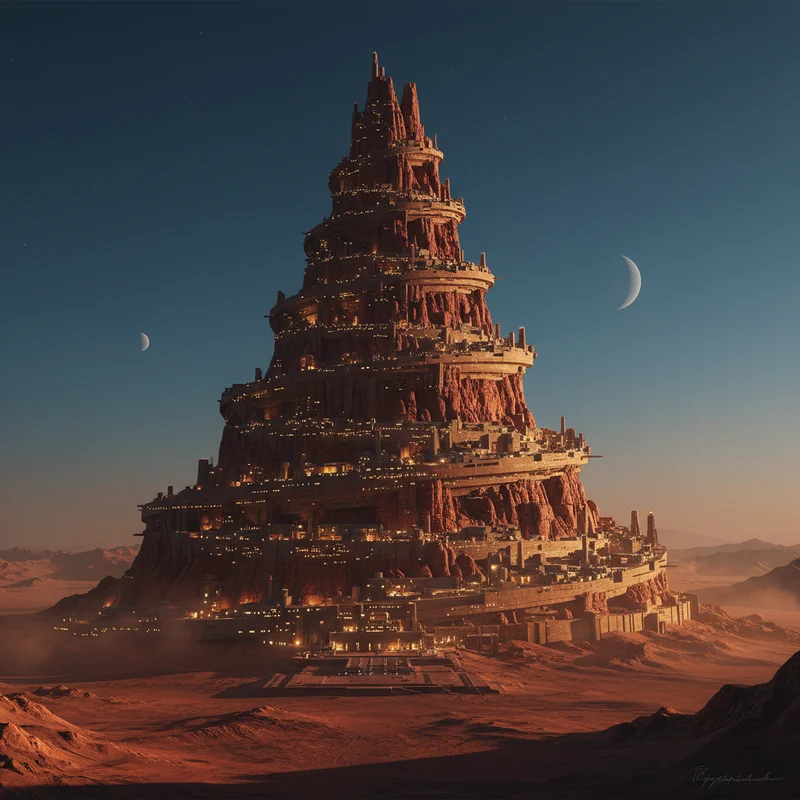
Red planet and humanity's next frontier.

Battle Analysis

Accessibility coffee Wins
70%
30%
Coffee Mars

Coffee

Coffee demonstrates remarkable ubiquity across human civilisation. From the sophisticated espresso bars of Milan to the instant granules dissolving in Antarctic research stations, Coffea arabica and its hardier cousin Coffea canephora have achieved near-universal distribution. The beverage requires minimal infrastructure—a heat source, water, and ground beans suffice for basic preparation. Modern accessibility has reached such extremes that one may now obtain coffee at 38,000 feet aboard commercial aircraft or from vending machines positioned in hospital corridors at 3 AM. The average urban dweller passes approximately 47 coffee-serving establishments during their daily commute. This level of accessibility borders on the inescapable.

Mars

Mars presents what specialists term significant accessibility challenges. The planet maintains an inconvenient orbital position requiring journey times of 7 to 9 months using current propulsion technology. No human has yet visited, and the total number of our species to have observed Mars from closer than the Moon remains precisely zero. Robotic emissaries have fared somewhat better, with 18 successful missions reaching the Martian surface or orbit. However, for the typical consumer seeking a Mars experience, options remain limited to telescope observation, planetarium presentations, and consuming media featuring Matt Damon cultivating potatoes. The accessibility gap between these two subjects could scarcely be more pronounced.

VERDICT

Coffee is available at 2.25 billion points of service daily; Mars requires a 225-million-kilometre journey and does not yet accept visitors.
Economic impact coffee Wins
70%
30%
Coffee Mars

Coffee

Coffee commands staggering economic significance. The global coffee market generates approximately $495 billion annually, ranking as the world's second-most traded commodity after petroleum. The industry supports 125 million livelihoods directly, with countless millions more employed in adjacent sectors—ceramic mug manufacturing, coffee table production, and the creation of ambient music suitable for cafe environments. In the United States alone, coffee contributes $225 billion to the economy and generates 1.7 million jobs. The beverage has spawned corporate empires; Starbucks alone operates 35,000 locations across 80 markets, generating revenues exceeding $32 billion annually.

Mars

Mars currently generates modest direct revenue, primarily through aerospace contracts, merchandise, and documentary licensing. However, projected economic potential staggers comprehension. Estimates suggest Martian colonisation could eventually support a $10 trillion economy, with asteroid mining, terraforming industries, and interplanetary trade creating entirely new economic sectors. Current Mars-related investment totals approximately $2 billion annually across government agencies and private ventures. SpaceX alone has attracted $9.9 billion in funding partially justified by Mars ambitions. The economic trajectory, whilst currently modest, points toward transformational future impact.

VERDICT

Present economic reality favours coffee by a factor of 250; Mars remains an investment in civilisational futures trading.
Survival utility mars Wins
30%
70%
Coffee Mars

Coffee

Coffee provides demonstrable survival benefits within specific parameters. The beverage enhances alertness, enabling completion of night shifts, dissertation deadlines, and transatlantic flights. Studies indicate coffee consumption correlates with reduced mortality risk of 12-16% for moderate drinkers. Caffeine improves reaction times, cognitive function, and physical endurance—qualities potentially useful during survival scenarios. However, coffee consumption without accompanying nutrition and hydration proves ultimately fatal; the beverage cannot substitute for food, and its diuretic properties may accelerate dehydration. Coffee extends functional capacity rather than providing fundamental sustenance.

Mars

Mars presents paradoxical survival characteristics. The planet cannot currently sustain human life—temperatures averaging -60 degrees Celsius, atmospheric pressure at 0.6% of Earth's, and radiation exposure of 0.67 millisieverts daily ensure rapid incapacitation without comprehensive life support. Yet Mars offers precisely the resources required for establishing secondary human civilisation—water ice for sustenance and fuel production, regolith for construction materials, and sufficient solar energy for power generation. Mars threatens individual survival whilst potentially ensuring species survival. This cosmic irony defines the planet's utility: immediately lethal, ultimately essential.

VERDICT

Coffee sustains individuals through difficult mornings; Mars could sustain civilisation through existential threats. Scale prevails.
Cultural influence coffee Wins
70%
30%
Coffee Mars

Coffee

The cultural footprint of coffee defies comprehensive documentation. Coffee houses of 17th-century London birthed the insurance industry (Lloyd's), the stock exchange, and arguably the Enlightenment itself. The beverage has inspired over 12,000 songs, countless novels, and the entire aesthetic category known as 'coffee-shop ambiance.' It has spawned subcultures ranging from third-wave artisanal roasters who speak of 'terroir' without irony to competitive baristas executing latte art depicting swans, rosettas, and occasionally the Mona Lisa. The phrase 'but first, coffee' has appeared on an estimated 340 million mugs, t-shirts, and wall hangings, suggesting coffee has achieved memetic immortality.

Mars

Mars has maintained cultural relevance across millennia, though with notably different characteristics. Named for the Roman god of war, the planet has represented conflict, masculinity, and otherworldly menace throughout recorded history. The War of the Worlds (1898) established Martians as archetypal invaders, whilst subsequent fiction from Bradbury to Weir has reimagined the planet as humanity's next frontier. Mars has influenced 197 major films, innumerable works of science fiction, and the entire conceptual framework of space colonisation. The planet's cultural weight derives not from daily presence but from aspirational symbolism—it represents what humanity might become rather than what it currently is.

VERDICT

Coffee shapes daily existence for billions; Mars shapes dreams for millions. Frequency multiplied by intensity favours the bean.
Chemical composition mars Wins
30%
70%
Coffee Mars

Coffee

Coffee presents a bewilderingly complex chemical profile. A single cup contains over 1,000 distinct chemical compounds, including the beloved stimulant caffeine (C8H10N4O2), various chlorogenic acids providing antioxidant properties, and the Maillard reaction products responsible for flavour and aroma. The beverage contains diterpenes (cafestol and kahweol), trigonelline, and volatile aromatics numbering in the hundreds. This chemical sophistication results from millennia of cultivation refinement and the application of heat to organic matter—processes humanity has mastered with considerable enthusiasm.

Mars

Mars offers chemical composition on an altogether grander scale. The planet's crust comprises primarily silicon dioxide, iron(III) oxide (responsible for its distinctive colouration), and various aluminium and calcium compounds. The atmosphere, whilst thin at 0.6% of Earth's pressure, contains 95% carbon dioxide with traces of nitrogen and argon. Perhaps most significantly, Mars harbours water ice at its poles and potentially subsurface, totalling an estimated 5 million cubic kilometres. The planet essentially constitutes a 144 million square kilometre chemistry set awaiting exploitation, containing sufficient raw materials to construct civilisations.

VERDICT

Coffee offers molecular complexity; Mars offers elemental abundance. Scale determines this criterion's outcome decisively.
👑

The Winner Is

Coffee

54 - 46

This analysis reveals a contest between immediate gratification and ultimate aspiration, between the comfort of the known and the promise of the unknown. Coffee emerges victorious in three of five criteria, demonstrating superior performance in accessibility, cultural influence, and present economic impact. The beverage has woven itself into the fabric of human existence with such thoroughness that its removal would constitute civilisational trauma.

Mars, conversely, prevails in chemical composition and survival utility—categories measuring potential rather than actuality. The planet represents humanity's insurance policy against extinction, a vast repository of resources awaiting the technology and ambition to exploit them. Its current limitations reflect merely the early chapters of a story spanning centuries.

The final score of 54-46 in coffee's favour acknowledges present reality whilst respecting future possibility. Coffee wins because it exists within human experience now, immediately, tangibly. Mars will have its moment—perhaps within decades, certainly within centuries. But in the eternal present where all comparisons must ultimately reside, the aromatic, caffeinated, economically dominant beverage claims victory.

One might reasonably argue that comparing a drink to a planet represents categorical confusion of the highest order. This objection, whilst technically valid, misses the essential point: both coffee and Mars represent human yearning made manifest—one toward daily functionality, the other toward cosmic significance. The comparison illuminates not the subjects themselves but the species that obsesses over both with equal fervour.

Coffee
54%
Mars
46%

Share this battle

More Comparisons